Weekly Recap: A weirdly successful month, somehow
Urgent Matter had a breakout period of exclusive reporting, surpassing 13,000 unique monthly visitors. Here is what we covered.

Urgent Matter had a breakout period of exclusive reporting, surpassing 13,000 unique monthly visitors. Here is what we covered.
Urgent Matter had a weirdly successful month for a publication that mostly runs at night, after two small children finally go to bed.
We received more than 13,000 unique readers in a single month. NPR interviewed us about our reporting. We have published nearly 600 articles since launching in October. The site now has 134 subscribers, a 40% increase from the 96 we had in early March.
This is not a media empire. Every article is written from the couch of my 700-square-foot apartment between the hours of 8 p.m. and 3 a.m. But it is growing.
This edition of Weekly Recap is also published publicly on the Urgent Matter website rather than only in inboxes. The hope is that new readers curious about subscribing can see what these recaps look like before deciding whether to support the work.
We have also released more episodes of Urgent Matter: Cold Take, the podcast that accompanies this newsletter and is supposed to help keep the recap schedule on track, even if we missed a few weeks of the newsletter itself.
And if we weren’t already spread thin, we are working to launch a monthly print-style digital edition for paid subscribers in July, focused on artist profiles and the economic, political and personal conditions shaping artists’ lives. We have about three pieces written, which is either a promising start or a warning sign, depending on the hour.
Artists interested in participating in the recurring profile questionnaire can reach out at adam@urgentmatter.press.
Now for the actual recap, which, as always, is not comprehensive. Perhaps the biggest story we kept following was the Brent Sikkema case.
Urgent Matter has continued to track both the U.S. and Brazilian sides of the case, rather than treating Daniel Sikkema’s New York conviction as the final chapter. A federal jury convicted him of conspiracy to commit murder-for-hire resulting in death, murder-for-hire resulting in death, and conspiracy to murder a person in a foreign country. U.S. prosecutors said he used a burner phone line to order the killing during a contentious divorce.
The Brazil case, where gallerist Brent Sikkema was killed and alleged killer Alejandro Triana Prevez was arrested in 2024, remains active and awaits a key ruling. Court records reviewed by Urgent Matter show the Rio case is short of trial and has moved through final written arguments toward a possible pronúncia decision, the screening ruling that determines if a homicide case goes to a jury.
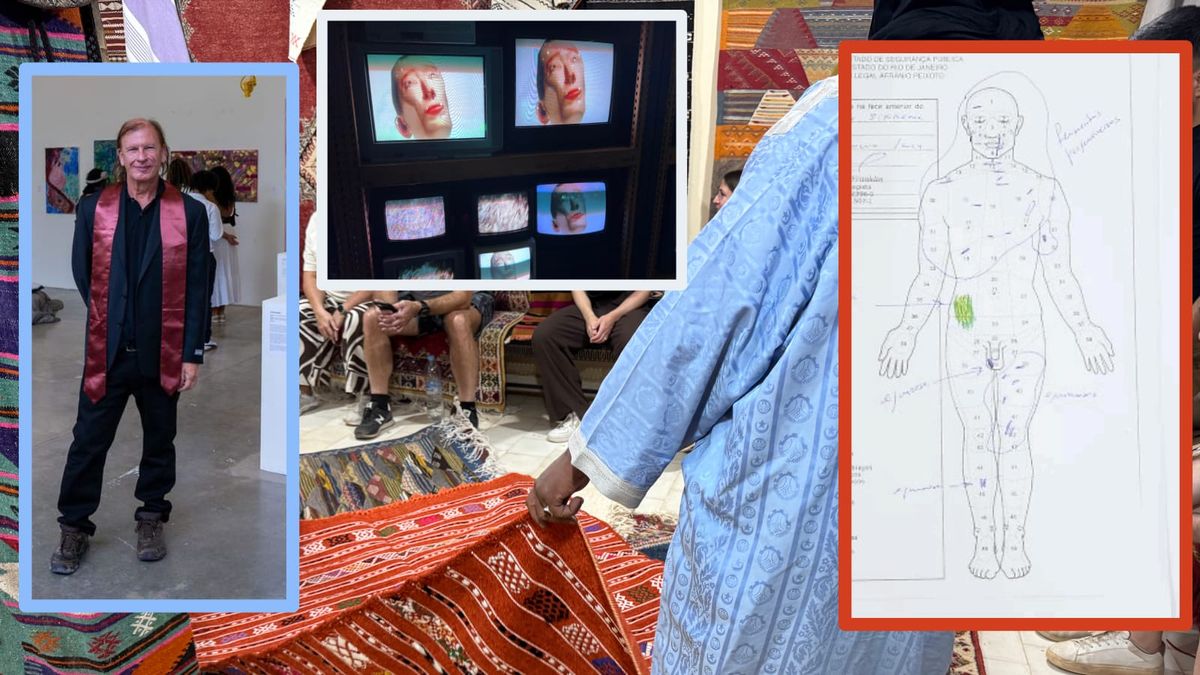
We also reported on autopsy records showing Brent Sikkema died from internal and external bleeding after 18 cutting and piercing actions to his face and torso. Those records now sit at the center of a fight over whether Prevez should face a cruelty allegation if the Brazilian case does go to a jury.
As for exclusive Urgent Matter stories stemming from public records and data-driven reporting, listen to Cold Take to hear us discuss how MoMA quietly altered the names of trustees on its website—but left Leon Black listed. MoMA has still not responded to two requests for comment.
And the National Endowment for the Arts claimed a records request could be “voluminous” before releasing just 12 files after a 119-day review. The request sought communications involving NEA chair Mary Anne Carter, White House architectural projects and federal commemorative initiatives. These examples show how opaque the art world can be when seeking transparency.
Public records showed UT Austin officials privately reviewed an anti-fascist student art exhibition over concerns it could “negatively impact the department” or strike “a chord with the wrong party.” A follow-up story showed the dean of the College of Fine Arts was later concerned about possible “attendant actions or activities” around the show in the days before it opened.
And we reported that the Whitney Museum of American Art posted more than $1 billion in net assets after investment gains. That article is part of a new series examining museum financial statements when they are released. Eventually, we plan to build a dedicated tracker for those filings, too.
In courts, lawsuits and legal disputes, several arcs we had been tracking reached something like an ending.
The U.S. Supreme Court declined to hear the Van Gogh Sunflowers restitution case, leaving in place a ruling that blocked descendants of Jewish banker Paul von Mendelssohn-Bartholdy from pursuing Sompo Holdings, the Japanese insurance company that owns the painting.
Charges were dropped against a woman accused in a $45,000 Flagler Museum check fraud case, closing another arc we had been following that was not covered elsewhere. Prosecutors filed a “no file” notice, saying the evidence was insufficient to support a criminal prosecution despite probable cause for an arrest.
The Norton Museum settled a phone-service dispute over a PIN. Michaels and Chicago artist Pose moved to settle a marketing lawsuit over Ironlak spray paint materials. An art teacher’s Charlie Kirk firing lawsuit ended with no public ruling.
This is why we keep a lawsuit tracker. Many stories simply fade away without resolution, leaving readers wondering what happened after the lawsuit was filed.
We also covered a federal lawsuit filed by former Newark Museum of Art employee Shawn Jones, who alleges he was fired after lost overtime, a workplace injury and complaints to human resources. The case is interesting partly because Jones is representing himself, raising the question of how feasible it really is for artists and art workers to pursue legal claims without a lawyer.
And the Copyright Office faces another lawsuit over Suryast, an A.I.-assisted artwork made from Ankit Sahni’s photograph using an A.I. painting app. The case does not argue that an A.I. system should be treated as an author. It argues that Sahni should be treated as the human author of a work made with the help of an A.I. tool and follows a similar case from Stephen Thaler.
In market coverage, our strongest stories came from our own analysis.
After news broke about Pace Gallery roster cuts, Urgent Matter coded and analyzed artists who appeared to have been removed from the gallery’s website. Our analysis found the cuts hit living artists and photography hardest.
Stepping slightly into luxury coverage, we reported a Chrono24 story about a Miami collector who said the platform let a dealer sell a Rolex it did not have. This is not strictly an art story, but it exists in the same environment of collectors, platforms, intermediaries, and expensive objects whose value depends on trust.
And while working on another story, we spotted that Taipei Dangdai’s website and email went dark after the 2026 fair was canceled. The fair had announced last year there would be no 2026 edition while organizers conducted a “strategic re-evaluation.” Months later, its domain no longer resolved and emails to its public inquiries account bounced back.
We also made a point to keep writing about shows, exhibitions and art itself, because otherwise this publication risks becoming just a legal blog. We do actually care about the art, too.
Our Ilse Bing coverage looked at how the Chrysler Museum exhibition follows the photographer from 1930s Paris, where she built a reputation with her Leica, to New York after she fled Nazi-occupied France as a Jewish refugee. And our Frantz Zéphirin story covered the Haitian artist’s first U.S. survey, which brings together more than 30 works spanning four decades and examines how he used animals, Vodou spirits and dense symbolic scenes to address Haitian politics and history.
For the first time since moving to New York more than a decade ago, I visited Governors Island in New York City to attend Bahar Behbahani’s Persian garden project, a work meant to bridge cultures through the form of the garden. The event brought together music, tea, rugs, flowers and children’s programming around the Damask rose, symbolizing migration and hospitality. Make sure to read our story for the full review.
Many of you may have wondered when exactly I made the decision to launch Urgent Matter. I had been contemplating it all summer last year. But it wasn’t until I went on a trip to Morocco in October that I decided to pull the trigger. I finally wrote a story stemming from that trip.
That essay, I titled “How to buy beautiful things from all over the world.” But it was really about the gap between two bad assumptions: that buying art abroad means either spending serious money in a gallery or settling for mass-produced trinkets from a gift shop.
The better way, I argued, is to start in tourist areas long enough to learn what you like and what is available, then move a little farther off the path and talk to the artists, artisans, and shopkeepers making or selling the things. Sometimes the best object is not the rarest or most expensive. It is the one that comes with a story you still care about when you get home.
One perk of being a journalist is that it sometimes allows you to do cool things you want to do. Our Radiohead review was, admittedly, written by someone with a Kid A/Amnesiac bear tattoo.
Please forward this to someone who thinks art news should include lawsuits, museum finances, stolen MILF magnets and the occasional sincere argument for buying rugs from strangers.
One last note, we recently became acquainted with Singapore-based arts journalist Reena Devi and had a good conversation about the importance of independent media in arts news coverage. If any other independent art news journalists would like to discuss ways to collaborate or support each other, feel free to reach out to me at adam@urgentmatter.press.