Supreme Court declines Van Gogh ‘Sunflowers’ restitution case
The justices left in place a ruling that blocked heirs of Paul von Mendelssohn-Bartholdy from pursuing Sompo over the painting.

The justices left in place a ruling that blocked heirs of Paul von Mendelssohn-Bartholdy from pursuing Sompo over the painting.

The U.S. Supreme Court on Monday declined to hear a restitution case brought by descendants of a Jewish banker who sold Vincent Van Gogh’s Sunflowers under pressure during the Nazi era.
The decision not to hear the case leaves in place a federal appeals court ruling that blocked their lawsuit against Sompo Holdings, the Japanese insurance company that owns the painting.
Paul von Mendelssohn-Bartholdy was the co-owner and director of Mendelssohn & Co., one of Germany’s largest private banks, and held a seat on the board of the Berlin Stock Exchange. After the Nazis came to power, he was removed from business and financial positions, and the family bank was forcibly transferred to non-Jewish ownership.
“Throughout the 1930s, he suffered increasingly severe sanctions that ultimately eroded his livelihood,” the lawsuit stated. “Finding himself in an untenable financial situation, Mendelssohn-Bartholdy had to liquidate his art collection.”
 Adam Schrader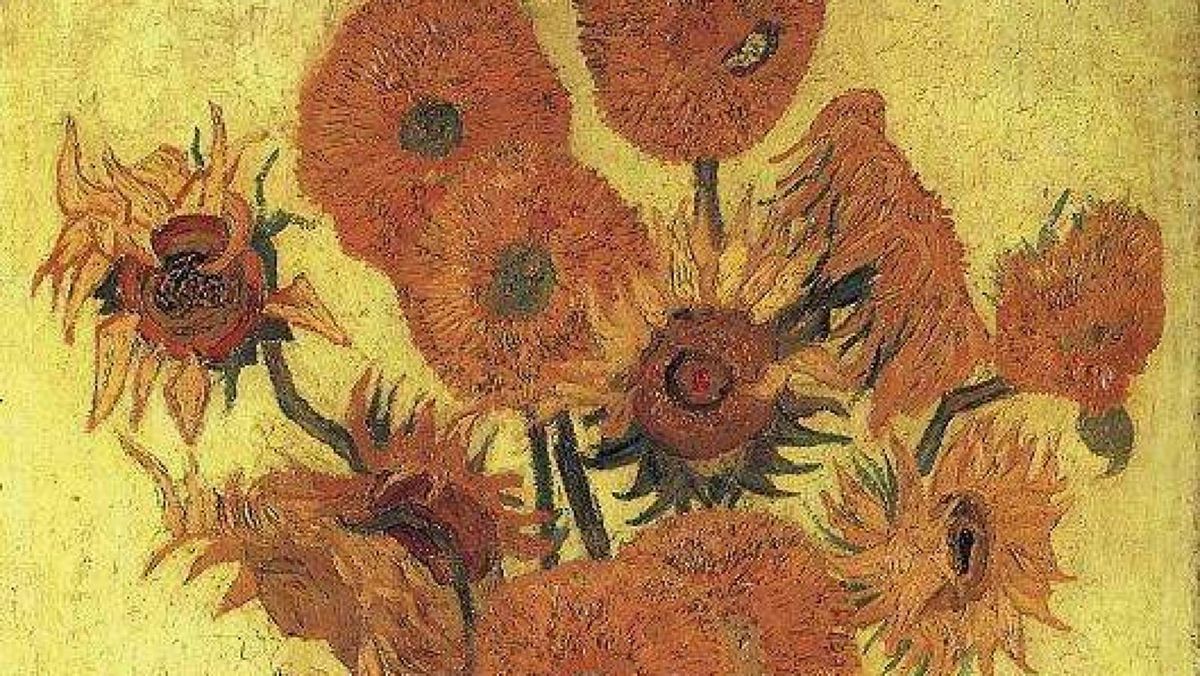
Mendelssohn-Bartholdy placed Sunflowers on consignment with Paris art dealer Paul Rosenberg in 1934. It was later sold to British American heiress Edith Beatty. Yasuda Fire and Marine Insurance Co., the predecessor of Sompo Japan Insurance, bought the painting for $40 million at Christie’s in London in 1987.
The lawsuit began in December 2022, when descendants of Mendelssohn-Bartholdy sued Sompo Holdings and related companies in federal court in Chicago.
The heirs — Julius H. Schoeps, Britt Marie Enhoerning and Florence von Kesselstatt — argued that the Holocaust Expropriated Art Recovery Act, known as the HEAR Act, allowed their claims to move forward in U.S. court and sought the return of the artwork, its current value or damages.
A federal judge dismissed the case in June 2024. The heirs appealed, but the U.S. Court of Appeals for the Seventh Circuit upheld the dismissal in November 2025.
The appeals court said the HEAR Act gave families more time to bring Nazi-era art claims, but did not create a new federal claim for restitution.
It also said Sompo’s ties to Illinois were too limited for the lawsuit to continue there. The painting’s main connection to the state was its loan to the Art Institute of Chicago for a 2001-2002 exhibition.
 Adam Schrader
The heirs asked the Seventh Circuit to reconsider, but the court denied that request in January.
They then filed their Supreme Court petition April 22, nine days after President Donald Trump signed amendments making the HEAR Act permanent. They argued the change showed Congress wanted Nazi-era art claims decided on their merits, not blocked before courts reach the artwork's history.
In their petition, the heirs also argued that the case raised whether the HEAR Act “allows federal courts to exercise their inherent federal equitable and common law authorities to adjudicate claims for the restitution of Nazi-confiscated artworks,” or instead leaves claimants to “inconsistent state laws of commercial duress and unpredictable state choice of law rules.”
Sompo did not file a response to the Supreme Court petition. The Supreme Court considered the petition at its June 4 conference and denied it Monday. No explanation was given for why it did not take the case.
The American Association of Jewish Lawyers and Jurists filed a brief supporting the heirs in May and urging the Supreme Court to take the case.
The AAJLJ said the case presented “an important and recurring question of Federal law” over whether the HEAR Act and its amendments preserve courts’ equitable authority to address Nazi-looted art claims.
The group said in its brief that the Seventh Circuit’s decision “paradoxically concluded that a statute meant to expand access to the courts had in fact contracted it by implicitly eliminating well-established judicial authority.”
It argued that if the Supreme Court were to deny the petition then “U.S. policy will suffer and the fundamental purpose of the HEAR Act will be frustrated.”
The Supreme Court’s denial ends the heirs’ current bid to revive the case in U.S. federal court.
Follow along with other lawsuits at Urgent Matter's art lawsuit tracker.
