Kimbell Art Museum battles subpoena as Romanian art dispute lands in Texas
The Kimbell is fighting a subpoena tied to an ownership battle over two El Greco masterpieces.

The Kimbell is fighting a subpoena tied to an ownership battle over two El Greco masterpieces.
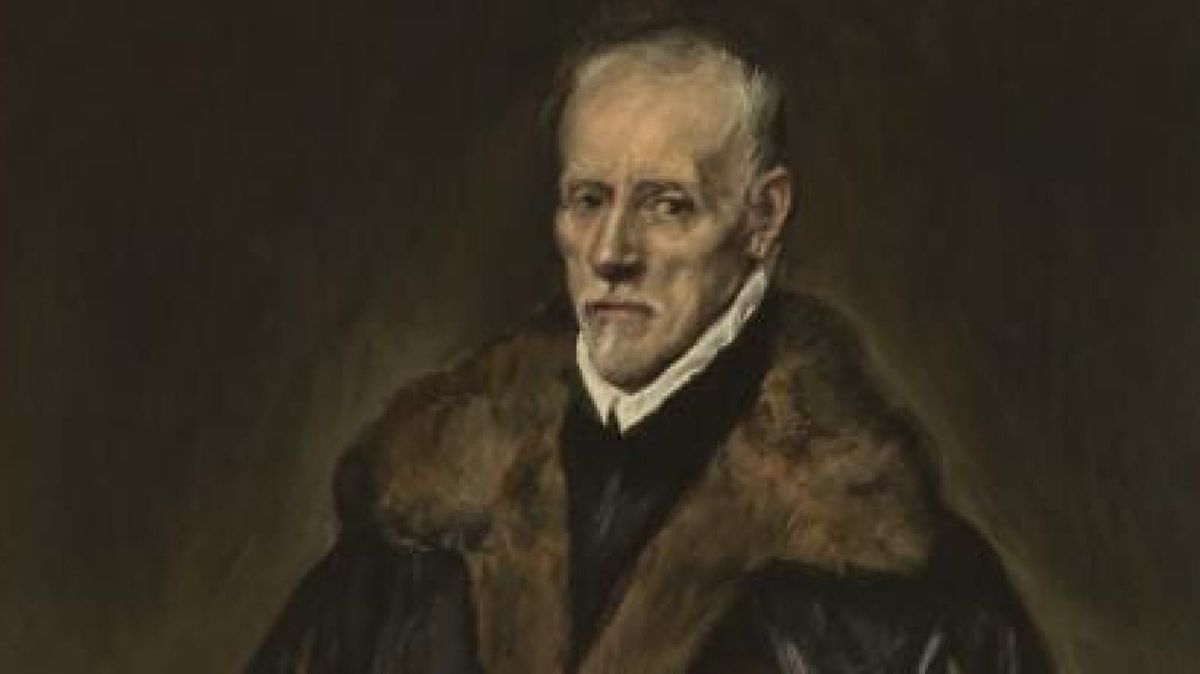
Two El Greco masterpieces that allegedly left Romania on the same train in 1947 are now at the center of a federal subpoena fight in Texas. The Kimbell Art Museum is battling to keep its painting out of court.
The complaint details how both El Grecos, one now held at Christie's in New York and the other hanging in the Kimbell in Fort Worth, were loaded into the same two boxcars attached to the Orient Express on the evening of November 12, 1947, at the train station near Castle Peleș in Romania.
Paul Philippe, who uses the title Prince and claims to be the grandson and principal heir of Romanian King Carol II, filed the lawsuit in New York in February 2025 seeking the return of Saint Sébastien. Christie's had estimated it between $7 million and $9 million before pulling it from the sale, according to news reports at the time.
A federal judge dismissed Paul Philippe's ownership claim for lack of jurisdiction in December 2025. The broader case continued as an interpleader — a proceeding in which Christie's asked the court to determine which of the competing claimants owns the painting.
Romania and Accent Delight International remain the active claimants. Accent Delight is a British Virgin Islands company linked to Russian billionaire Dmitry Rybolovlev, who purchased the painting in 2010. It has also filed crossclaims seeking exemplary and compensatory damages against Romania, according to the case documents.
The painting has remained at Christie's under a stipulation signed by all parties and ordered by the court on June 5, 2025.
Paul Philippe remains a named defendant in the interpleader. Three months after his claim was dismissed, his attorneys served the Kimbell with a subpoena seeking testimony and documents about Saint Sébastien and the El Greco hanging on its walls, which the museum calls Portrait of Dr. Francisco de Pisa.
The Kimbell filed a motion to quash the subpoena in April 2026 in the Northern District of Texas, where the museum is headquartered. The motion seeks to prevent Paul Philippe from dragging it into the lawsuit. Paul Philippe countered with a motion to transfer the fight to New York, where the main case is being heard. Both motions are pending before Judge Terry R. Means.
Paul Philippe alleges that his uncle King Michael — whom the complaint calls "the puppet king of Romania's Soviet-dominated government" — stole both paintings from his father's collection.
When the train arrived in Geneva, Michael's aide-de-camp, Jacques M. Vergotti, allegedly supervised the unloading and transferred possession to Arthur Lang, the director of Swiss bank UBS in Zurich, according to the complaint. The paintings sat in a UBS vault for the next 30 years.
In early 1977, Michael allegedly sold both paintings to the New York art dealer Wildenstein & Co. Wildenstein then allegedly resold both, then known as Canon Bosio and Saint Sébastien, to separate buyers. The Kimbell allegedly paid $3 million for Canon Bosio and renamed it Portrait of Dr. Francisco de Pisa. Saint Sébastien allegedly went to an unknown buyer.
A letter that Wildenstein sent to the Kimbell on April 14, 1977, confirmed the sale and promised to disguise the seller's identity.
"On the enclosed invoice you will note that the last owner is described as 'private collection, Switzerland' as we had promised the wife of King Carol and Prince Michael that their names would not be mentioned," the letter said.
The Kimbell's website recorded the painting's history as having been purchased by King Carol of Romania, then passing by descent to his nephew, King Ferdinand. From there, it passed by descent to King Carol II of Romania, then to "his heirs," before it was ultimately purchased by the Kimbell Art Foundation, according to the complaint.
The current provenance on the museum's website differs from the version recorded in the complaint. It now specifically names Michael I and describes the transfer as government-sanctioned, removing the language Paul Philippe challenged as "false and made in bad faith," and replacing it with a characterization that both Paul Philippe and Romania dispute.
Paul Philippe's complaint had said that "his heirs" was "false and made in bad faith." He alleged Michael concealed the sale from his older brother — Paul Philippe's deceased father, Prince Carol Mircea — who held an equal share of Carol II's estate under a 1955 Portuguese court ruling.
When Saint Sébastien resurfaced in New York in February 2025, Christie's offered it at auction. The Romanian government intervened and Christie's voluntarily withdrew the painting from sale. Paul Philippe said he learned of the painting's location from media reports on February 6, 2025, and filed suit three days later, seeking to prevent the consignor from removing it from New York.
Paul Philippe argued that both paintings were Carol II's personal property, not the Romanian state's, and that Michael had no right to sell them.
To rebut Romania's ownership claim, his complaint cited Michael's position from a 1993 Swiss lawsuit against him, in which Michael argued: "King Carol I did not decide that the paintings would belong to the Romanian State … but to the Crown personified by the King."
Romania argued that the "Crown of Romania" referred to the state, not the king personally, making both paintings national property rather than private inheritance.
The country has tried before to reclaim both paintings in American courts and failed both times.
In 1984, Romania's communist government sued the Kimbell Art Foundation in federal court in Texas to recover Canon Bosio, but the case was dismissed in 1986 as untimely under Texas's two-year statute of limitations.
A parallel 1985 federal lawsuit that Romania filed in the Southern District of New York, seeking both paintings from Wildenstein, was dismissed for Romania's repeated failure to comply with discovery.
In 1993, a post-communist Romanian government tried to reopen the New York case. A federal judge refused.
"Throughout history, governments change when political systems are altered or when the regime in power falls out of favor," the court held.
The court ruled that just because a current government would pursue a different litigation strategy than its predecessor, it does not constitute an extraordinary event sufficient to reopen a dismissed case.
Now, Paul Philippe, not Romania, is coming for the Kimbell.
"Paul Philippe's counsel is trolling for another suit, and his subpoena should be quashed," the museum's attorneys wrote.
"The Subpoena is nothing but a thinly veiled attempt by Paul Philippe to try to set up a claim regarding the ownership of Portrait of Dr. Francisco de Pisa."
Paul Philippe is pursuing the case from France, where he has lived since Romania convicted him in December 2020 on charges related to his efforts to reclaim Carol II's communist-confiscated properties.
He was not in Romania when the conviction was announced and was never arrested on Romanian soil.
Romania issued a European Arrest Warrant and an Interpol diffusion — which functions like a Red Notice — calling for his detention.
French police briefly arrested Paul Philippe in June 2022 but released him without bail. In November 2023, a French appellate court refused Romania's extradition request, finding his conviction violated his human rights. France's Supreme Court affirmed that decision.
In April 2024, Paul Philippe was arrested in Malta. A Maltese appellate court rejected extradition in August 2024.
Interpol vacated its own diffusion. The agency's decision concluded that his Romanian conviction "appeared to be politically motivated, violated his rights, and was contrary to Interpol's rules and regulations."
Paul Philippe's complaint noted that Romania's own highest court acknowledged in 2012 that he and his father were legitimate heirs to Carol II. The same court convicted him eight years later.
Follow along with other lawsuits at Urgent Matter's art lawsuit tracker.