Appeals court says artist sued Jeff Koons too late over 'Made in Heaven' snake sculpture
The panel held Michael Hayden should have found the allegedly infringing works years before he sued in 2021.

The panel held Michael Hayden should have found the allegedly infringing works years before he sued in 2021.
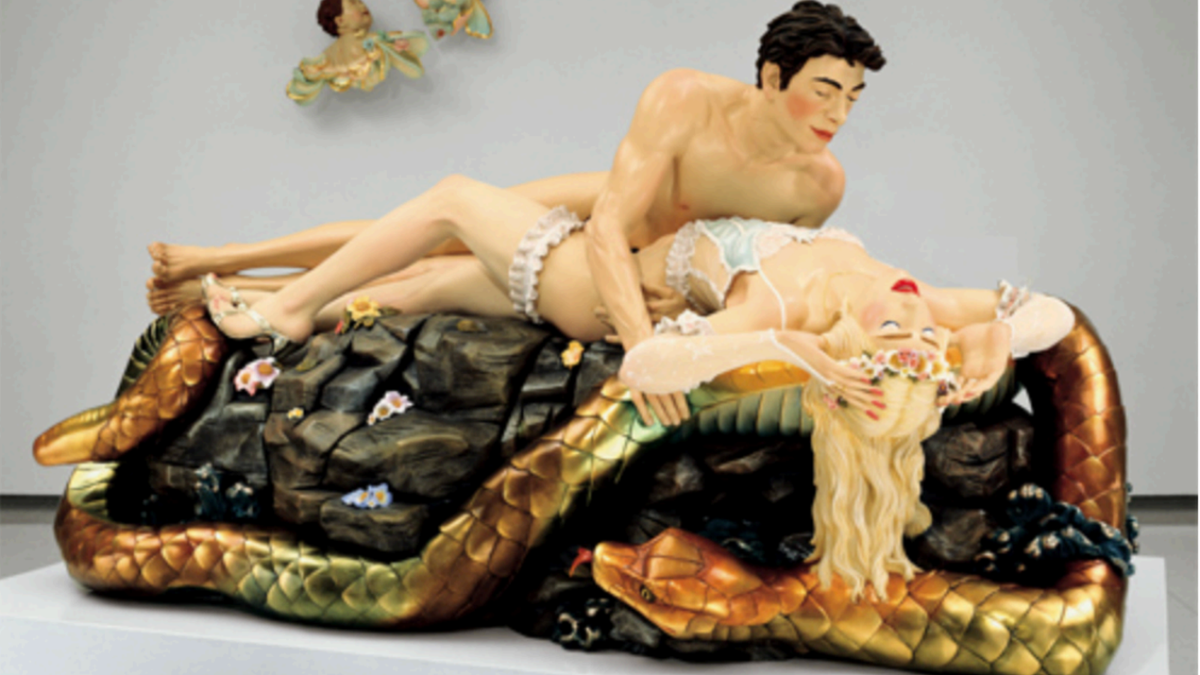
A federal appeals court in Manhattan has upheld the dismissal of a copyright suit accusing Jeff Koons of using another artist's Styrofoam snake sculpture without permission in three works from his "Made in Heaven" series, ruling that the artist waited too long to bring his claim.
The U.S. Court of Appeals for the Second Circuit on July 21 affirmed a February 2025 ruling by U.S. District Judge Timothy Reif, which determined that artist Michael Hayden had effectively waited too long to file his 2021 lawsuit since the alleged infringement happened decades prior, putting his claims outside the Copyright Act's three-year window.
Hayden created the sculpture in the 1980s for Ilona Staller, the Italian adult film star and politician known as Cicciolina, to use during her live shows.
Built from Styrofoam, glue, gauze and plaster, the work depicted a serpent coiled around a pedestal of boulders and was about 6.5 feet long, with a flat top low enough for Staller to step onto and stand on during her performances.
Hayden sold the piece in 1988 to Diva Futura, the production company owned by Staller and her manager, Riccardo Schicchi, for roughly $900 in cash, documents show. There was no written contract and no discussion about copyright or how the work might later be used.
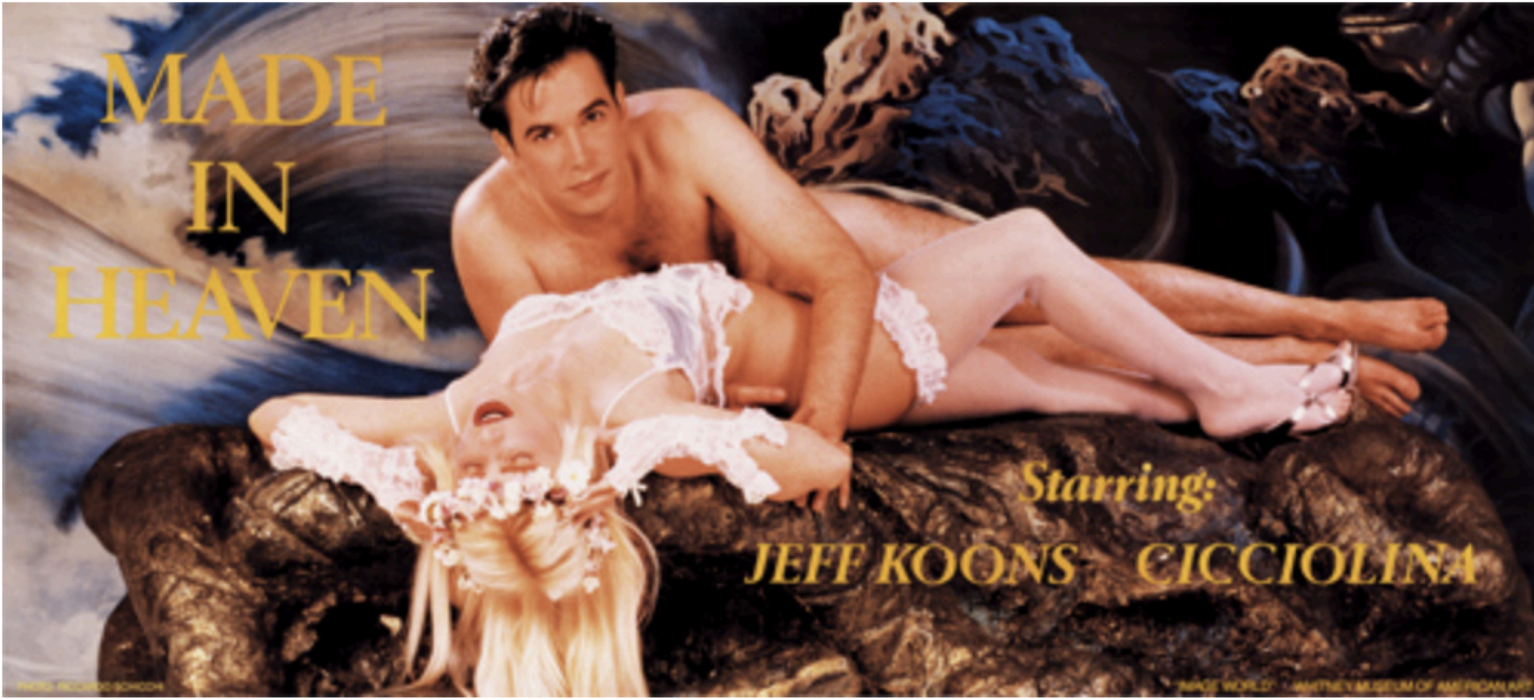
In early 1989, the Whitney Museum of American Art commissioned Koons to make a billboard for an exhibition. Koons hired Staller, who was much more famous than him at the time, to pose with him for erotic photographs on her own sets, using her regular photographer and staff to match the look of her existing work.
One of those sets was Hayden's serpentine structure.
Koons used the photos to make his "Made in Heaven" works, three of which were at issue in the case—each of which depicts him and Staller posing atop Hayden's structure. The body of work is widely seen as the breakthrough that established Koons as a major figure in the contemporary art world.
The first, Made in Heaven, is a 1989 lithograph first shown as a billboard in New York and designed to advertise a film starring Koons and Staller that was never produced. The second, Jeff and Ilona (Made in Heaven), is a 1990 polychromed wood sculpture that debuted at the Venice Biennale that year. The third, Jeff in the Position of Adam, is a 1990 oil painting later sold to a private collector.
Hayden wrote in his complaint that the series "caused a media sensation and scandal when it premiered" and "is regularly credited with launching Mr. Koons into the art world's stratosphere."
The works drew coverage across Europe and beyond. Photographs of Koons and Staller on the structure appeared on the cover of the April–May 1990 issue of the French magazine Galeries, and the August 1990 issue of Vogue reported that "all the talk was of Jeff Koons" at that year's Venice Biennale.
Koons and Staller began a relationship, married in 1991 and later divorced in a publicized custody fight over their son, Ludwig.
Hayden said he did not learn of the works until April 2019, when his then-business partner sent him a La Repubblica article about a separate lawsuit between Staller and Sotheby's. He registered a copyright in the sculpture that August, effective August 7, 2019, and accused Koons of infringement in a March 2020 letter through his lawyers.
The appeal focused on when Hayden's clock for when he had to file the lawsuit started running. The Second Circuit applies a "discovery rule," under which a copyright claim accrues when the owner discovers, or with reasonable diligence should have discovered, the infringement.
Hayden argued that the clock should not start until someone actually knew enough to suspect copyright infringement. The appeals court rejected that argument, citing a 2010 Supreme Court ruling that says a claim does not require that level of actual knowledge before the filing deadline begins.
The court pointed to Hayden's fluency in Italian, his years living in Rome with an Italian partner, his consumption of Italian news, and his direct work with Staller and her company. His time in Italy overlapped with the Biennale premiere and the coverage that followed.
"We do not expect a reasonable copyright holder to scour the news, comb through the internet, or keep apprised of pop culture," the appeals court ruling reads.
"At the same time, however, the discovery rule does not allow plaintiffs to bury their heads in the sand, ignore widespread international media coverage of allegedly infringing art, and then sue for potential infringement some thirty years later."
The court said its reliance on Koons's fame did not create a "celebrity privilege," describing widespread coverage and lasting popularity as only some of the factors in the analysis.
The panel also turned away Hayden's separate claim under the Digital Millennium Copyright Act, which he argued accrued independently based on later posts of the works to Koons's website.
The court found Hayden had not raised that theory before the district court and had not developed it on appeal, and declined to consider it.
It added that whether DMCA claims accrue separately from infringement claims "remains an open question."
Urgent Matter is reader-supported. Please consider subscribing to support independent arts journalism.