Judge rules $165,000 Keith Haring is real — but collector sued too late

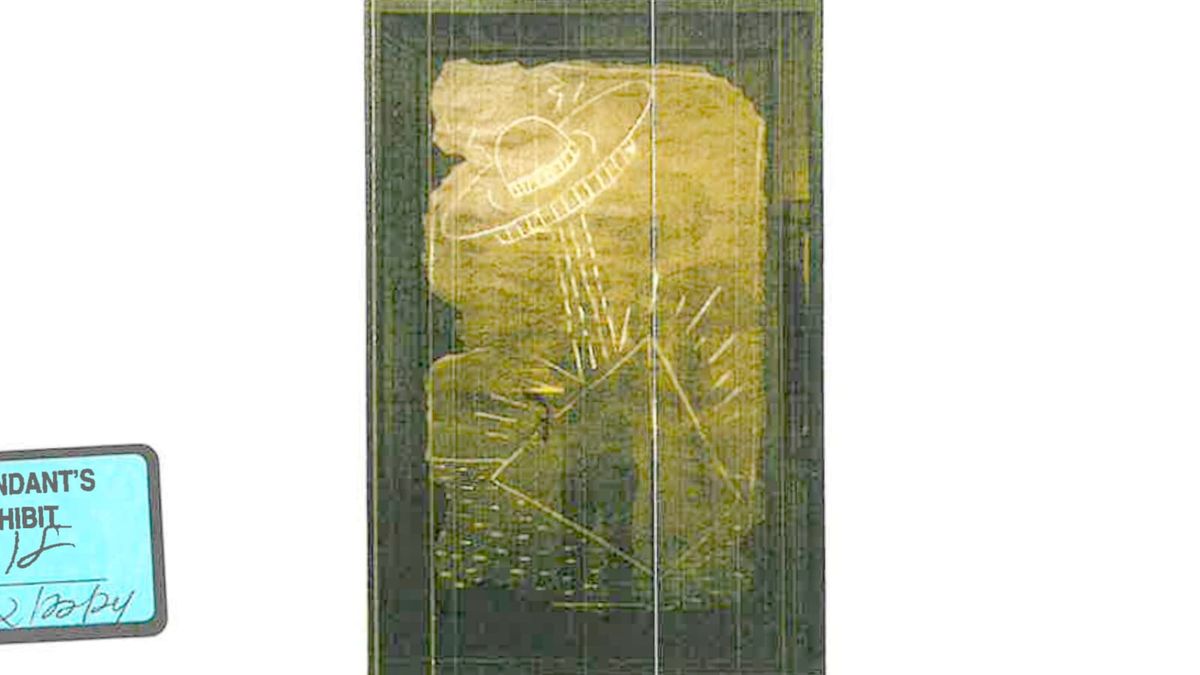
A collector paid $165,000 for a Keith Haring subway drawing at a Las Vegas gallery event in 2018. When he tried to resell it three years later, Christie’s and Sotheby’s refused to handle it. He was left with a work he could not sell for near what he paid.
He sued the gallery. Last month, a Connecticut judge ruled the drawing is a genuine Haring and that the collector proved he could not sell it at the auction houses where it would bring the most money. But the judge also ruled he sued too late to recover anything. He now owes the gallery’s legal fees.
Judge Robert L. Genuario entered judgment for the gallery on every count of Vernon Adam Hartung’s lawsuit in an August 25 decision. The case was tried before him without a jury in the Superior Court in Stamford.
Hartung sued Chalk & Vermilion Fine Arts in October 2023. The company operates as Martin Lawrence Galleries. He also sued the affiliated Martin Lawrence LLC and the gallery’s owner, David Rogath.
Paid subscribers can read the court documents used in this reporting.
 Adam Schrader
Hartung tried to sell the drawing in 2021, after deciding to downsize from his Nevada home to a smaller house in Napa, California. Christie’s refused to auction it. Sotheby’s refused in 2023, and Phillips passed as well.
Both Christie’s and Sotheby’s each apply a private test to Keith Haring subway drawings before offering one for sale. For Christie’s, the work must appear in published literature or exhibition history. For Sotheby’s, it must be documented in the archive of Tseng Kwong Chi, the photographer who shot roughly 3,000 of Haring’s subway drawings as Haring made them.
Hartung’s drawing met neither auction house’s documentation requirements.
The rules are not public. A Christie’s cataloguer and a former Sotheby’s specialist testified that the standards “are not in writing, are not published on their websites, are not published anywhere that is available to the public or the art community at large,” the decision said. They pass from employee to employee by word of mouth.
Neither auction house called the drawing a fake. A Sotheby’s cataloguer wrote to Hartung in January 2023 that the drawing “looks a bit off to be by the hand of Keith Haring,” documents show. A more senior specialist walked that back days later, telling Hartung the auction house “cannot opine directly on authenticity” and that the comment “was a personal opinion that shouldn’t have been shared.”
Without being able to auction it at Christie’s or Sotheby’s, the drawing is worth a fraction of the price. European dealers gave the gallery preliminary estimates of $20,000 to $30,000, the decision said. Genuine Haring subway drawings have sold for over $300,000.
Connecticut law requires goods a merchant sells to be good enough to change hands normally in their market. The statute says they must “pass without objection in the trade.” Hartung argued the drawing fails that test because top auction houses reject it, and the judge agreed.
“The plaintiff has demonstrated that the Saucer drawing cannot pass without objection in the most robust markets, where an owner of an authentic Keith Haring subway drawing might reasonably be expected to sell it,” Genuario wrote.
But under the law governing the sale of goods, the deadline to sue ran four years from the date the gallery delivered the drawing. A COVID-era order from Gov. Ned Lamont paused the deadline for 346 days.
The case came down to the delivery date. The judge ruled it was July 31, 2018, the day the gallery handed the drawing to a shipping company in Las Vegas, not August 6 of that year, when it reached the Illinois address Hartung named.
That put Hartung about five days past the deadline when the two sides signed an agreement to pause the clock. If the judge had used the August 6 date, the agreement would have landed one day inside the deadline.
Hartung initially alleged that the drawing was not authentic, but by trial he was no longer offering evidence that it was a fake. Instead, he argued that the gallery had sold him a work whose documentation was insufficient to make it marketable in the major auction market.
The judge found “by a preponderance of the evidence, that the drawing is authentic, in that it was done by the hand of Keith Haring, and there is no evidence that it is not.”
The gallery’s evidence traced to a letter dated December 2002 and signed “Richard Hambleton, artist.” Hambleton, who is dead, was a friend of Haring known for taking Haring’s drawings off subway walls. His letter says he had held the piece since 1982-83 and calls it an original Haring.
The gallery’s expert, Jose Martos, spent seven years at the Keith Haring Foundation before opening his own gallery in New York. He testified the signature looked like Hambleton’s and that the drawing is authentic. The judge noted Martos is not a handwriting expert and that the letter’s description could fit other Haring drawings.
The gallery bought the drawing in 2005 from a German dealer, Hauswedell & Nolte, for $6,507.28, the decision said. It sold the piece that October for $34,850 to a client who wanted it for his restaurant.
When the restaurant closed, the gallery bought the drawing back in June 2018 for $40,000. A month later, it sold to Hartung for $165,000.
Rogath, a lawyer by training who has sold art for 50 years, testified he never promises to buy a piece back but does so “when it is in his business interest to do so,” the decision said.
Hartung bought the drawing at a Martin Lawrence “VIP” weekend in Las Vegas, an invitation-only event that required attendees to put down $10,000 in advance, which was credited toward art purchases. The drawing was listed at $245,000. Hartung asked for a better price, and Rogath came back with $165,000.
Hartung put down $10,000 on top of the entry fee and paid the $145,000 balance by check days later. The gallery gave him a certificate calling the work an authentic Haring. Employees told him and his partner the gallery stood behind it. The judge credited that account.
Hartung lost his remaining claims. The judge found no fraud or misrepresentation because the gallery believed the drawing was real and said nothing false about it. He found no violation of Connecticut’s consumer protection law for the same reason.
A promise Hartung said he received — that the gallery would buy the drawing back — also failed. The judge found the remark, attributed to Rogath’s son Leo, was sales talk rather than a binding promise, and that no experienced buyer would have treated an offhand line as part of the deal.
Hartung testified that he never received the back of the sales form, where the terms were printed. The judge did not believe him and ruled he was “bound by the terms of the agreement whether he read them or not.” One term limits the gallery’s exposure to undoing the sale and refunding the price. Another makes a buyer who sues and loses pay the gallery’s legal fees.
“Since the plaintiff has made an unsuccessful claim against MLG, the Court determines that the plaintiff is liable to MLG for its reasonable attorneys’ fees in the defense of this action,” Genuario wrote. The amount has not been set. A status conference was scheduled for September 3.
The case ran nearly three years. An earlier judge, Edward Krumeich, refused to dismiss it on a 2024 motion. The trial before Genuario followed in January 2026.
The documents do not say whether Hartung will appeal or how much the gallery will seek in fees.
Follow this and other cases at Urgent Matter’s lawsuit tracker.