Why Gaza's Palestinian-led reconstruction must prioritize culture and archives
A new Oxfam report argues that Palestinians must decide how Gaza is rebuilt. The reconstruction must prioritize cultural sites.

A new Oxfam report argues that Palestinians must decide how Gaza is rebuilt. The reconstruction must prioritize cultural sites.
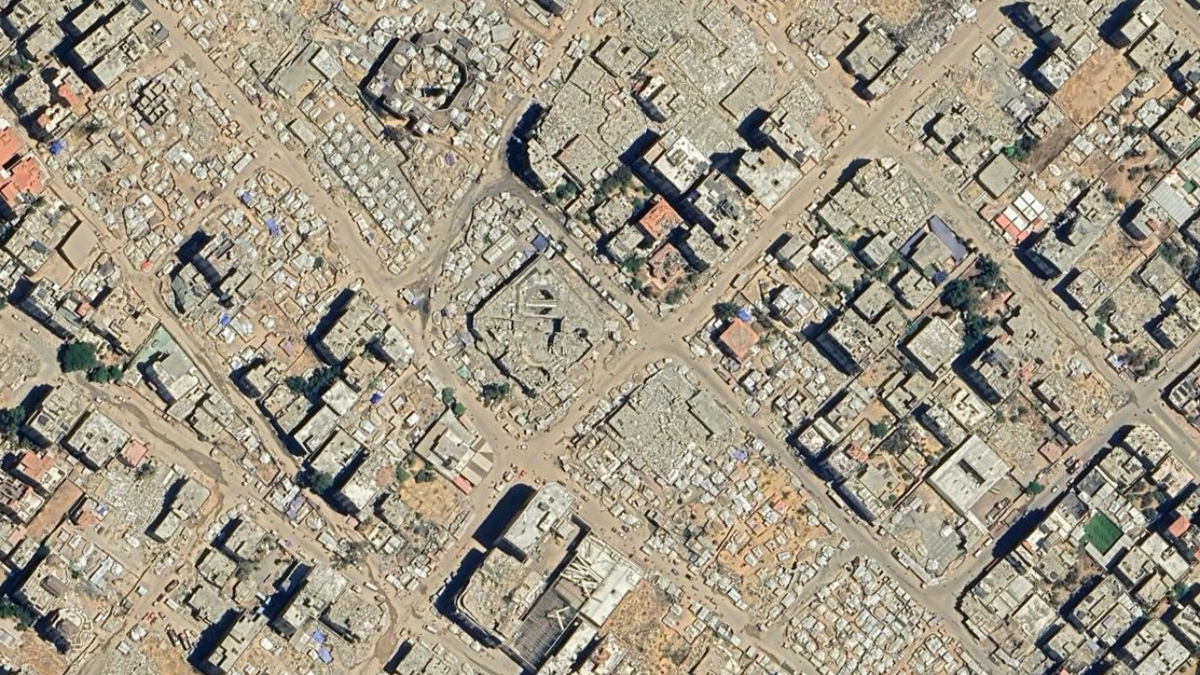
A new report commissioned by Oxfam puts the cost of rebuilding Gaza at $71.4 billion and says the work will fail unless Palestinians lead it. It counts at least 73,000 Palestinians killed, more than 173,000 injured, and human development set back an estimated 77 years.
Asmaa Abu Mezied, one of five researchers behind the report, is urging donors to fund archives, libraries and cultural centers in every reconstruction phase, arguing housing will stall on land whose ownership records burned with the buildings that held them.
Abu Mezied, a gender and economic justice expert from Gaza, co-conducted the report's gender, disability and inclusion analysis. She spoke with Urgent Matter by video about what Oxfam’s report Building the Gaza Strip Anew means for the arts and cultural heritage.
The destruction has gone beyond buildings and damaged what Gazans can imagine for their future, she said, pointing to an exhibition she saw during the research.
A feminist organization running art therapy for children had asked them to draw whatever they wanted, then hung the results in a room, Abu Mezied told Urgent Matter.
“One shocking thing in that exhibition was that most pictures and drawings had no color except gray,” she said. “No green, no blue, nothing. The only drawings that had color in them, it’s like red, the color of blood.”
“That tells us the destruction is even affecting our ability to imagine,” she said. “Those children were given free rein to draw whatever they wanted, to imagine a future.”
She said reconstruction has to go beyond replacing buildings to restoring everyday life.
Oxfam commissioned the study from the Palestine Economic Policy Research Institute, known as MAS, and the Palestine Trade Centre, or Paltrade. Released in late July, it credits a research team of Raja Khalidi, Misyef Misyef, Mohammed Skaik, Abu Mezied and Ali Abdel-Wahab.
Its $71.4 billion price comes from the April 2026 Rapid Damage and Needs Assessment by the World Bank, European Union, and United Nations, which counted $35.2 billion in physical damage and $22.7 billion in economic losses, with $26.3 billion needed in the first 18 months.
The report puts that price at seven times the combined cost of rebuilding after every major Israeli offensive in Gaza over the past two decades.
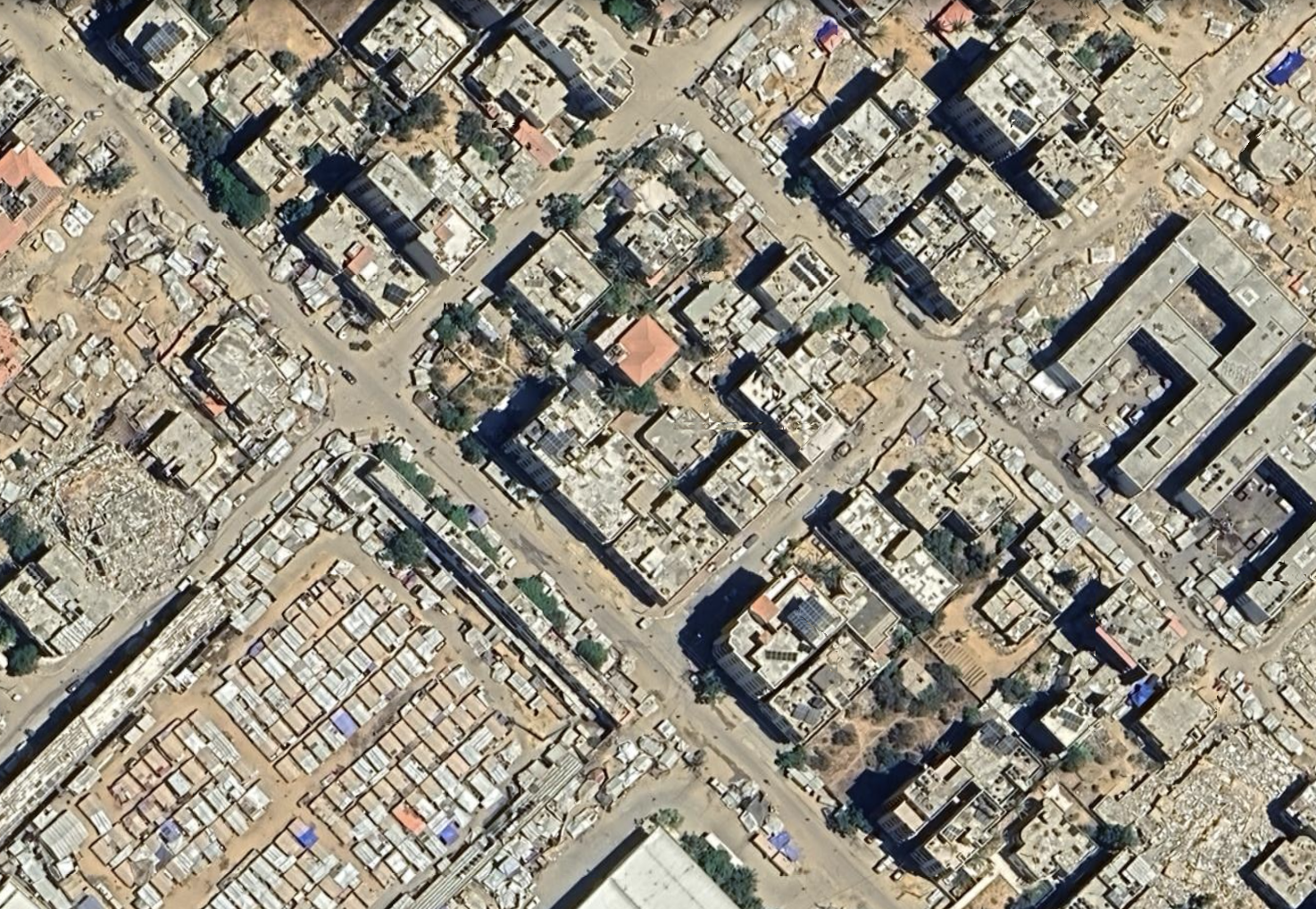
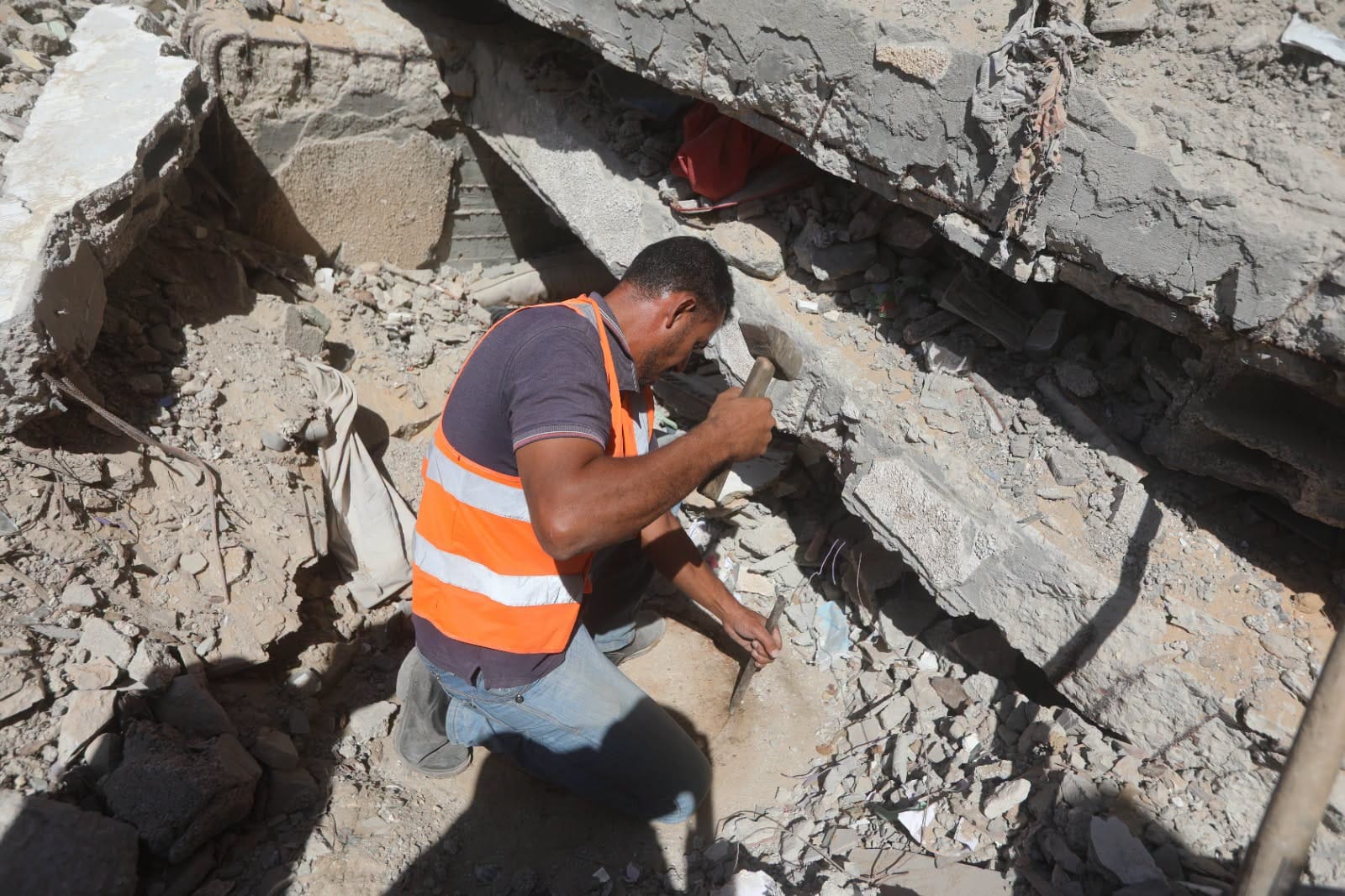
The study tallies more than 371,888 housing units damaged or destroyed and over 66 million metric tons of rubble to clear.
A February 2026 brief from the PLO’s Negotiations Affairs Department, citing a February 2025 assessment, put direct physical damage to the cultural and heritage sector at roughly $120 million, plus $55 million in economic losses from halted cultural activity.
“Any reconstruction, and the damage to buildings and residential houses and so on, cannot be disassociated from the destruction of knowledge production spaces and cultural spaces,” Abu Mezied said. “They are very connected, and the damage is very connected together.”
Her recurring example was the central archive of the Gaza municipality.
“This archive, it has over 100,000 files, and this file contains historical correspondences, contracts, architectural maps, photos, things related to people’s property and legal rights, rental contracts, even water subscription files,” she said.
“The destruction of this archive is not only a cultural destruction,” she said. “It affects how the municipality is functioning, it affects people’s access to property rights and their verification, it affects urban planning, it affects even compensation claims when it comes to reconstruction.”
“When we want to rebuild a neighborhood but lack papers showing ownership of each piece of land, that’s where the social fabric completely collapses,” she said. “That’s where conflict arises. Even attempts to build physical structures will be halted because it causes more damage.”
The report supports this with a proposed property documentation program run by the Palestinian Land Authority, using land registry files, satellite imagery, older records, and resident testimony. Documentation is a safeguard against destruction being exploited for land grabbing or property consolidation by powerful actors.
Abu Mezied said the first cultural priority is emergency documentation—an inventory of damage across libraries, archives, universities, religious buildings, and cultural centers, and what can still be salvaged. The second is protecting what survives, which depends on the crews clearing rubble.
 Adam Schrader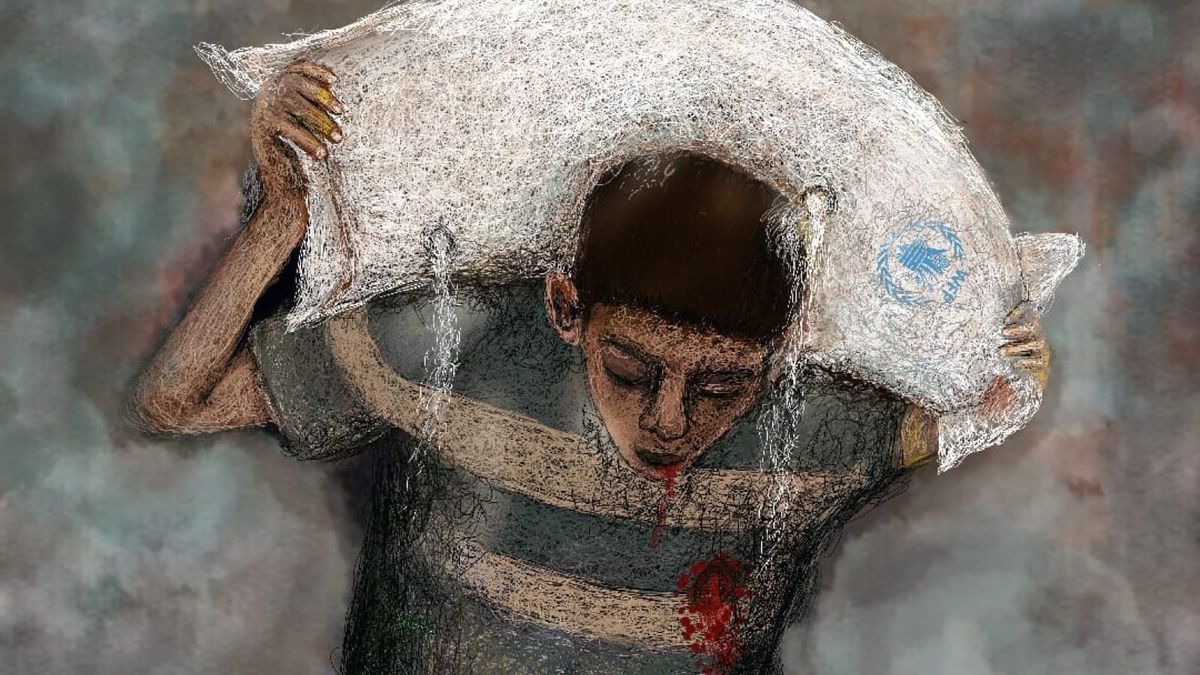
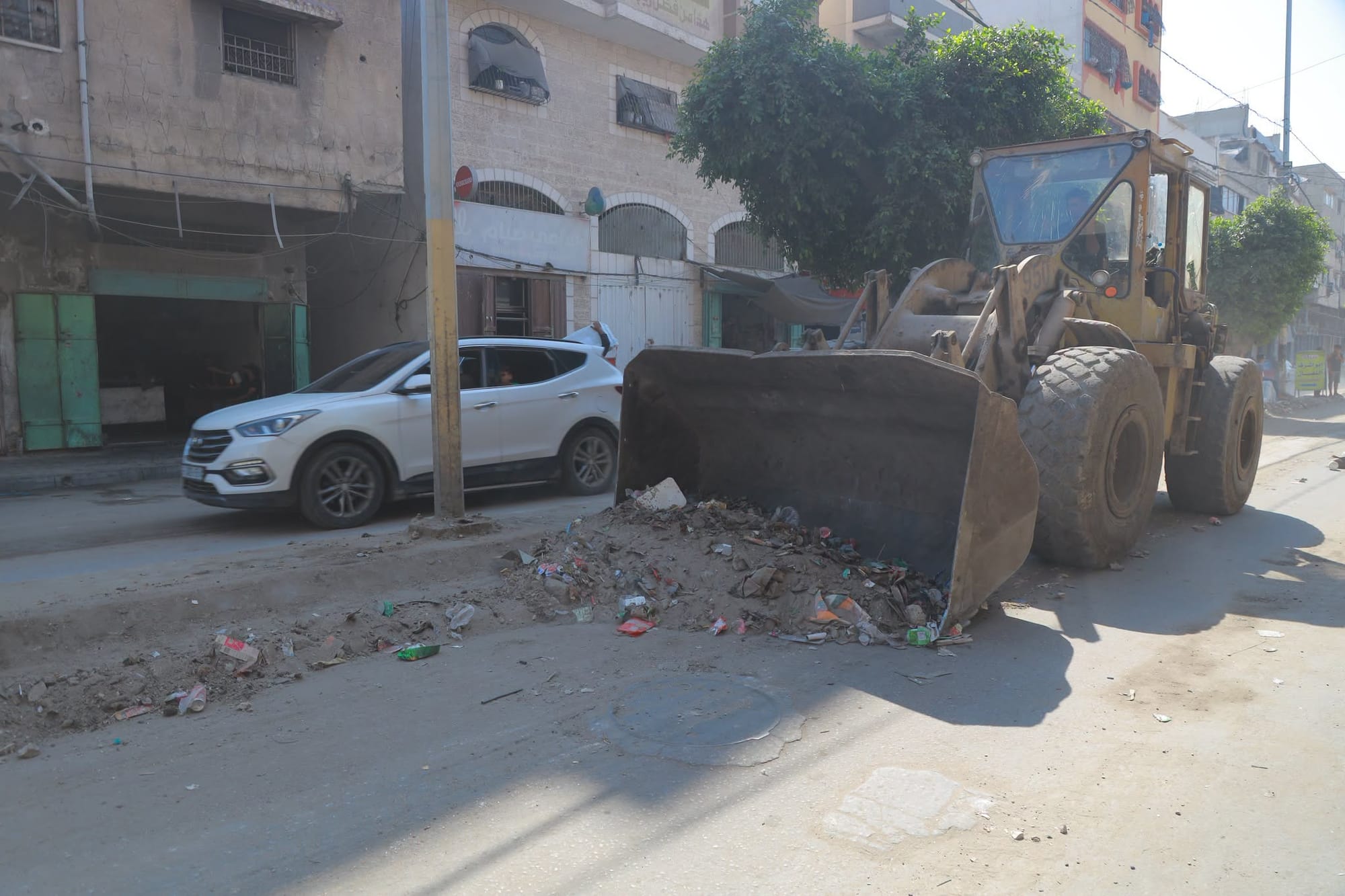
“When we think about rubble removal—one of the main priorities at the very early stages of reconstruction—you need to have archival experts accompany the team that is doing removal in areas with historical sites, archaeological sites, and archival sites, so that those experts can save manuscripts, artwork and records,” she said.
Asked how cultural work competes with housing for a finite pot of money, she disputed the premise.
“The assumption that funds are very limited is not 100% accurate, because globally, there are donors who are more interested in education, there are donors who are interested in health, there are donors who are interested in art,” she said.
Abu Mezied said reconstruction should include dedicated budget lines for arts and culture and a phased approach.
What reconstruction efforts typically lack, she said, is “a collective invitation for all donors with different interests to work in parallel.”
The scale of the cultural losses has been documented by Palestinian officials and the U.N. The Negotiations Affairs Department brief, published February 18, states that 226 of the 316 key archaeological and cultural sites counted by the Palestinian Ministry of Tourism and Antiquities have been destroyed or significantly damaged.
It estimates that some 20,000 rare artifacts have been looted or lost, including more than 17,000 formerly held at Qasr al-Basha, a 13th-century Mamluk palace-turned-museum, which reportedly went missing after Israeli forces entered the site in the summer of 2025. Roughly a dozen local museums were destroyed or looted, the brief states, and the government’s reconstruction program budgets about $210 million to safeguard heritage sites and restore cultural activity.
UNESCO’s rolling assessment, which added on-site surveys after the October 2025 ceasefire, had verified damage to 164 sites as of March 24 — 128 buildings of historical or artistic interest, 14 religious sites, nine monuments, eight archaeological sites, two museums and three depositories of movable cultural property.
A June 22 report by Friends of Palestinian Universities, a London-based charity, carries a fuller institutional inventory. The report Scholasticide in Gaza states that the Palestinian Ministry of Culture had 76 cultural centers on its prewar registry, along with 15 publishing houses and booksellers, 80 public libraries and three major theaters — and that nearly all of them are gone or badly damaged.
Its entries include the Central Archives of Gaza City, destroyed by shelling and fire on November 29, 2023, with roughly 150 years of records reaching to the late Ottoman period; the Islamic University of Gaza’s central library, which burned with over 240,000 books, more than 16,000 theses and 8,000 periodicals; the National Museum, housed inside Al-Israa University, which was detonated by Israeli forces after being looted, costing more than 3,000 archaeological artifacts; and the Sununu Organisation for Arts and Culture, which held hundreds of instruments and student compositions.
The report frames that erasure as memoricide — the deliberate destruction of the records and repositories through which a people remembers itself across generations.
The Rashad El-Shawa Cultural Centre in Gaza City, built in 1985 and home to the Diana Tamari Sabbagh Library, was found destroyed during a brief ceasefire on November 23, 2023. The report quotes former Gaza Municipality spokesperson Asem Alnabih calling its destruction “an attempt to kill the city, to kill its soul, its identity, and its history.”
The dead include Marwan Tarazi, killed in the October 19, 2023, strike on the compound of the Church of Saint Porphyrius, the oldest church in Gaza. Tarazi spent decades assembling photographs of everyday Gaza from the 1940s through the 1970s, an archive the report describes as belonging to no institution and existing in no digital copy.
The same report counts over 1,372 university students and over 246 academics and university staff killed since October 2023, and states that all 19 of Gaza’s recognized higher education institutions have been targeted.
For Abu Mezied, those institutions were load-bearing.
“If we look at universities, these are centers for education, these are centers for public debate, for producing the next new professionals in Gaza,” she said. “If we looked at churches and mosques, these are very important spaces for social support, for intergenerational memory, for learning, for gathering, for weaving the social fabric that is important for the continuity of life itself.”
Abu Mezied, who comes from a small village and a farming family in Gaza, described the flattening of the built environment as a change in what people can hear.
“If you live in the center of Gaza City, you cannot hear the sound of the Mediterranean waves,” she said. “Now people there can hear it because the whole architecture has been removed.”
The report reviews 14 spatial and reconstruction plans and rejects several.
The GREAT Trust proposal, which would install a U.S.-led trusteeship for as long as 50 years with a land tokenization scheme and $5,000-a-person relocation payments, raises concerns under the prohibition on forcible transfer, it states. Economist Joseph Pelzman’s plan, which fed the Trump-Kushner “Gaza Riviera” concept, would hand Gaza’s economic infrastructure to international investors for half a century.
The report favors the Gaza Phoenix Initiative, launched by a coalition of Palestinian architects, urbanists and researchers, which insists on rebuilding along the existing spatial, social and cultural patterns of Gaza’s neighborhoods.
“Treating Gaza as a blank slate to impose a certain vision of the future without considering how it affects community dynamics, social relationship, the identity of the place itself, how people perceive their relationship with homes and the land, is something completely bizarre,” Abu Mezied said.
Such proposals, she said, reflect a “colonial architecture of how community should behave and should not behave.”
"The whole assumption that Palestinians cannot decide on behalf of themselves, it's dehumanizing because it disregards that Palestinians have skill set and talent in order to identify what's needed for them and go forward," she said.
Externally designed plans produce solutions that do not fit, she said. "If communities most affected by the genocide are not the one who are contributing or key decision makers on what and how to build, it doesn't make sense. Foreign solutions will be imported while community knowledge and expertise are marginalized."
She said the failures are already documented. "The export of the GHF idea, a militarized humanitarian aid mechanism, has proven its failure," she said, referring to the Gaza Humanitarian Foundation. "The U.S. Pier in Gaza for aid entry has also proved its failure."
The report treats the National Committee for the Administration of Gaza, established under U.N. Security Council Resolution 2803, as a transitional body whose work must stay tied to a single Palestinian administration spanning Gaza and the West Bank. Abu Mezied said the committee’s contracts run to December 2027, leaving about a year and a half of operation.
Abu Mezied said cultural work runs against a specific Israeli aim. "Part of the Israeli policy is really separating Palestinian institutions, but also individuals, but also those who are thinking together," she said. "Fostering the spaces that bring Palestinians together for collective strategizing is extremely important when it comes to culture, when it comes to even knowledge production."
She said conditions on the ground fall short of the report’s premise of a full Israeli withdrawal from the 60% to 70% of Gaza under Israeli military control. Israel has kept expanding what it calls the yellow line, she said, and now controls more than 70% of Gaza’s land.
Israel has rejected allegations that its conduct in Gaza amounts to genocide, including in proceedings before the International Court of Justice.
Asked what Americans can do with the report, Abu Mezied named political pressure on U.S. officials to keep reconstruction Palestinian-led, demands that arts and education philanthropies show Palestinian leadership at every stage of what they fund, and partnerships between American universities, libraries and archives and their counterparts in Gaza through funding, technical expertise or twinning arrangements.
She warned funders off the rescue of individuals.
“One of the main results of the genocide is the destruction of the infrastructure and institutional capacities, and that’s where we need most of the support,” she said.
“Saving one artist — how can we think about helping all the artists that are still in Gaza who are unable to leave, rather than just extracting one artist and that’s it? So how do you think of sustainability when you are doing reconstruction support?”
She pointed to the Institute for Palestine Studies, which maintains a database documenting the targeting and destruction of Gaza’s cultural sector from Washington, D.C.
“The right to reconstruction, or reconstruction is a right, and this has to be stressed again and again, and this right has to be rooted in Palestinian agency and Palestinian self-determination,” she said.
“That means that there has to be political mobilizing, like pressuring donors, policymakers, EU, U.S. government and so on, to ensure that Palestinians are the one who are deciding the future, their future, rather than a Riviera in Gaza, which does not make sense.”
Urgent Matter is reader-supported. Please consider subscribing to support independent arts journalism.