Gaza artist creates under bombardment as her work travels without her
A displaced Gaza artist’s digital drawings have circulated through exhibitions and Venice Biennale protests.

A displaced Gaza artist’s digital drawings have circulated through exhibitions and Venice Biennale protests.
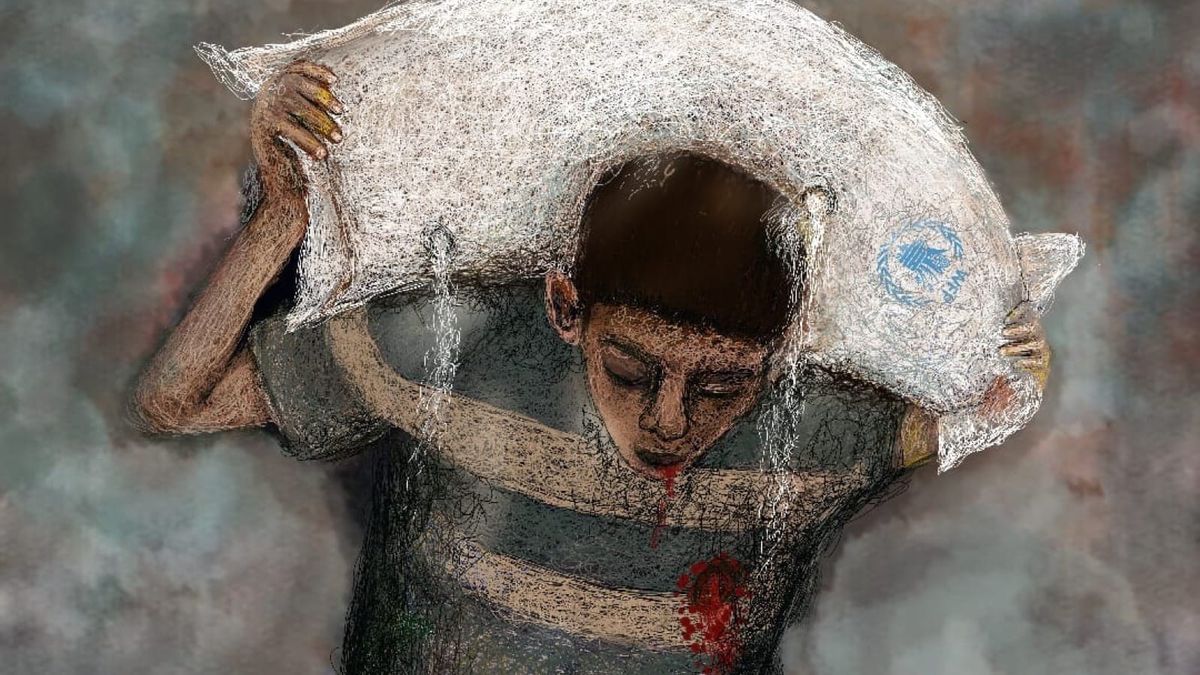
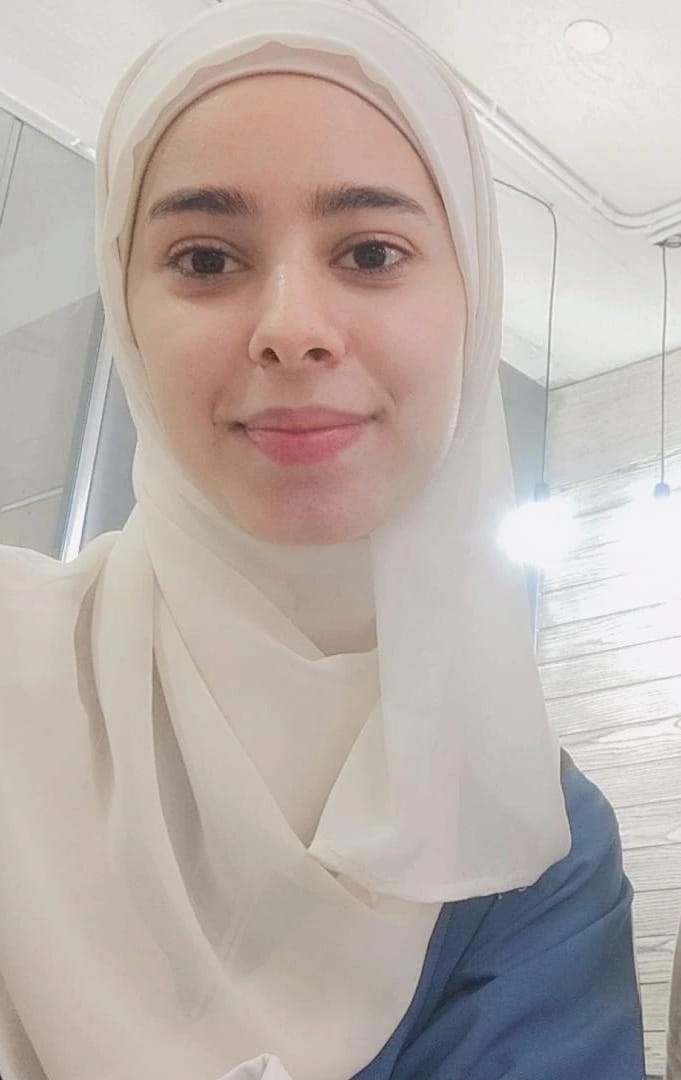
Malaka Mahmoud Abu Owda lost her home, art supplies, and many earlier works during the war in Gaza. But she has continued making digital drawings from displacement tents and shelters with an iPad, laptop, and digital pen when there is electricity.
The 20-year-old artist’s work has circulated through the Gaza Biennale, international partner exhibitions, protests and Venice Biennale-related solidarity events while she remains in Gaza, unable to leave the conditions that shaped the images.
“It was both painful and emotional at the same time,” Abu Owda told Urgent Matter. “While my artworks were being exhibited abroad, I was still living through war, displacement, and fear inside Gaza. Sometimes it feels strange that people stand in galleries looking at paintings created inside tents or under bombardment, while I myself cannot leave this place.”
Urgent Matter first contacted Abu Owda in November 2024 about her involvement with the Gaza Biennale, a Palestinian artist-led project organized during the war to show work by artists in Gaza through international partner exhibitions and digital circulation.
She responded this month, apologizing for the delay and saying that “because of the difficult circumstances and everything happening in Gaza,” she had not seen the message earlier. The interview was conducted in writing at her request due to conditions in Gaza.
Abu Owda studies software engineering at university and has also studied graphic design, entrepreneurship, and programming. She said she developed both traditional and digital art before the war, especially typography portrait art, which combines letters and drawing.
 Adam Schrader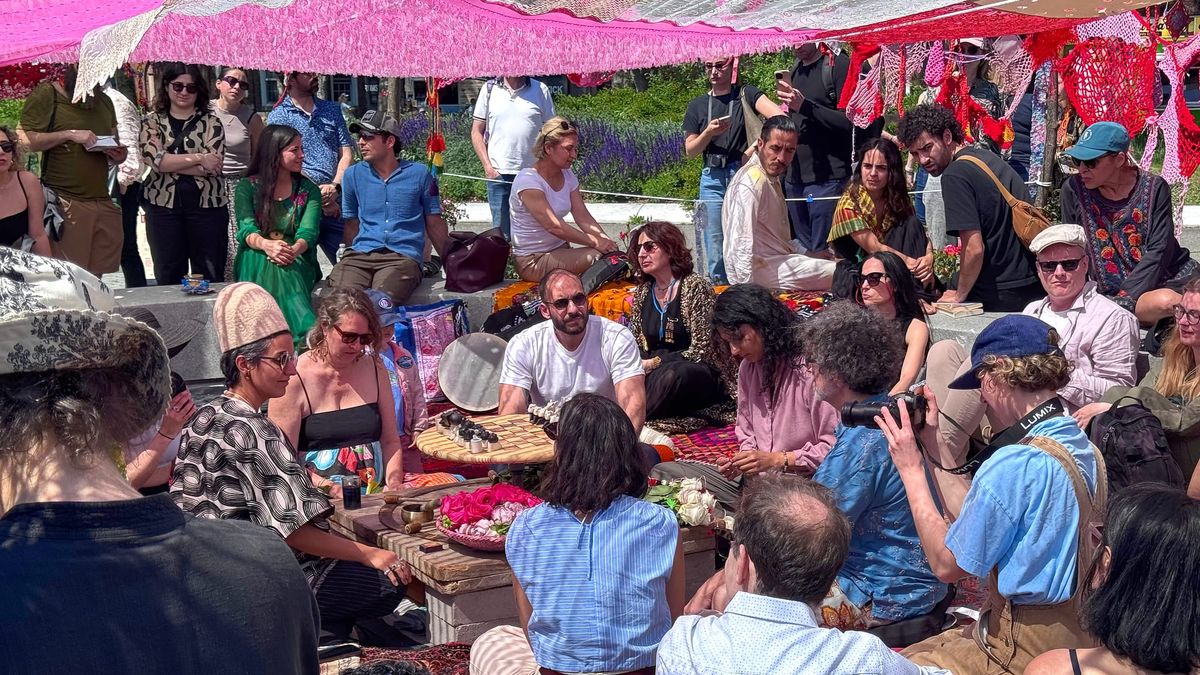
Abu Owda grew up in Gaza and already lived through five wars before the current one, the harshest of them all. Before the war, her work often used bright colors and carried a sense of hope. That changed after displacement, destruction and loss became part of daily life.
“Even my artistic style and colors became more intense and burning because they reflect the fear, destruction, and loss we are living through,” she said.
Abu Owda said her family fled under bombardment and fire, leaving behind objects that carried personal and artistic memory. Now, digital tools are the main way she continues to work, as traditional materials are difficult to find.
“Charging devices has become a daily challenge because of the constant electricity cuts,” she said. “Many of my artworks were created inside displacement tents or shelters.”
Abu Owda said the war has also changed the way she sees. Destroyed homes, hospitals, schools, burned tents, grieving mothers and displaced children have become part of the visual record she draws from.
“During this genocide, my eyes became like a camera capturing everything around me,” she said. “I try to translate all these scenes through my paintings, as if art has become my only psychological survival tool and my way of carrying our voice to the world.”
Abu Owda’s name and artwork were also featured in protests at the Venice Biennale this month. At the Biennale preview on May 5, a group of Palestinians gathered outside the main entrance and marched through the Giardini, wearing T-shirts bearing the names of artists from Gaza on the front and images of their work on the back. Her own work appeared on one of the shirts.
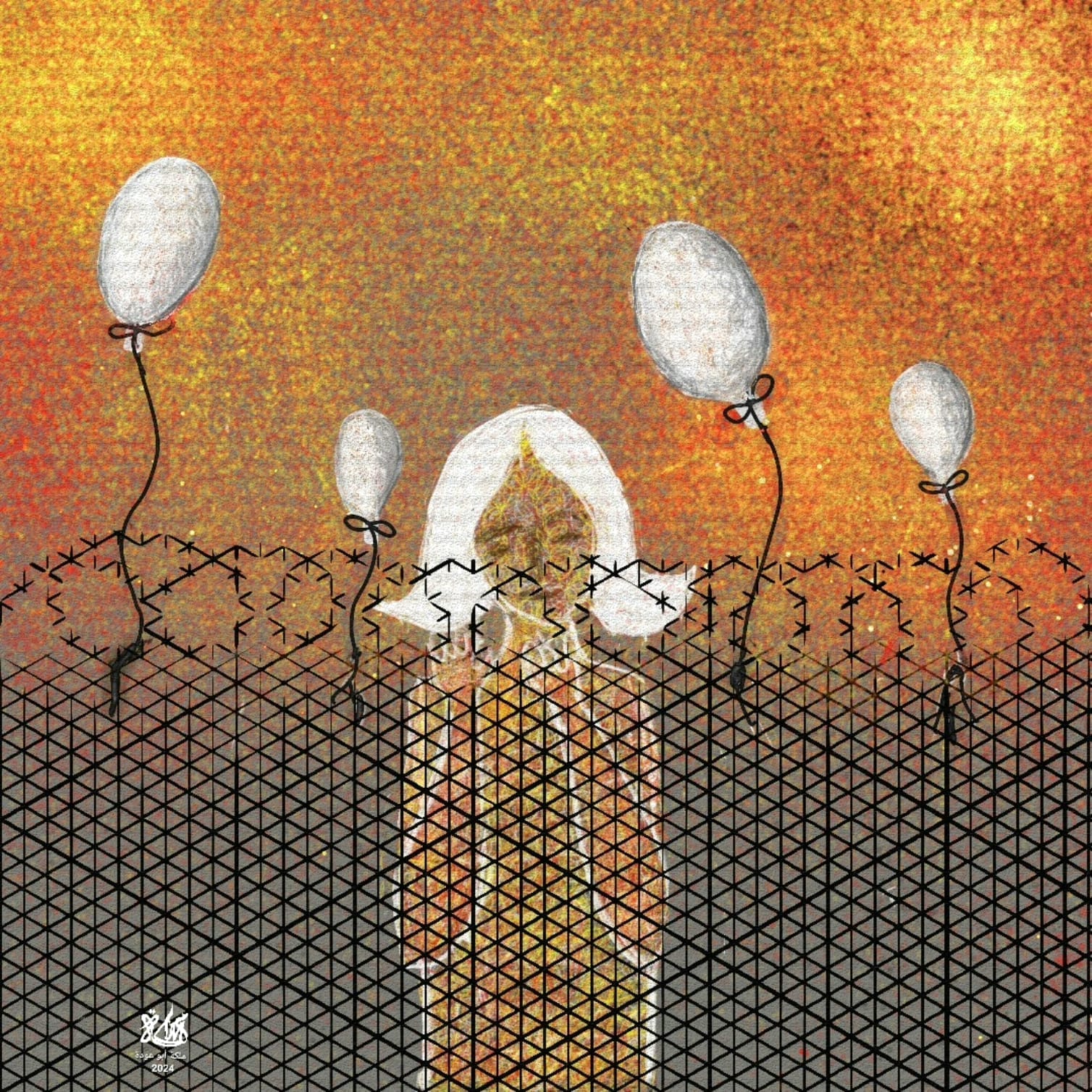
“My heart is filled with pride and gratitude that my name and my painting are present as part of this solidarity art event at the Venice Biennale in Italy, through the shirts and works carried by participants in support of Palestine and its free voice,” she said in a post to social media.
“Thank you to everyone behind this humanitarian and artistic initiative, and to everyone who chose to carry our names and works with love and sincerity.”
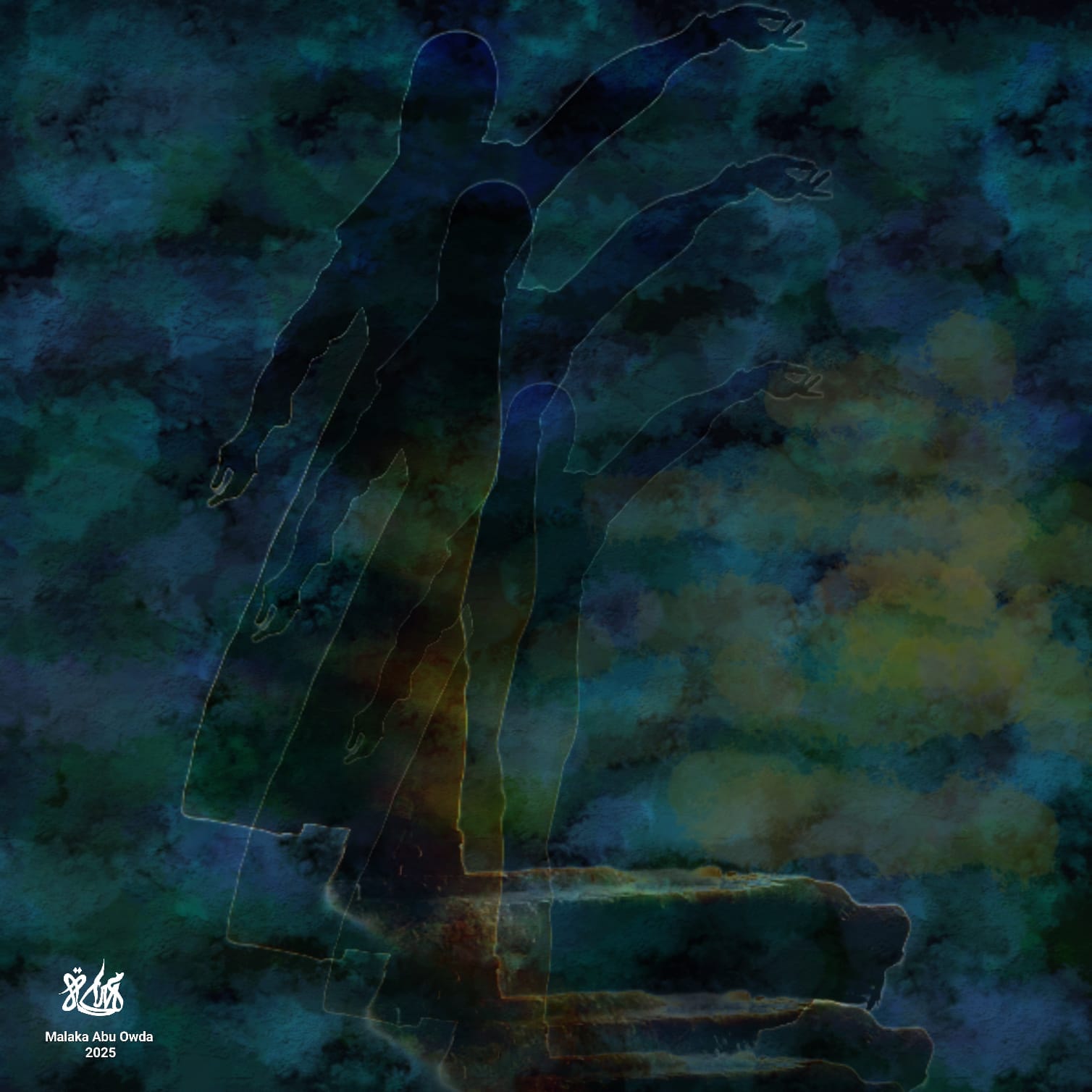
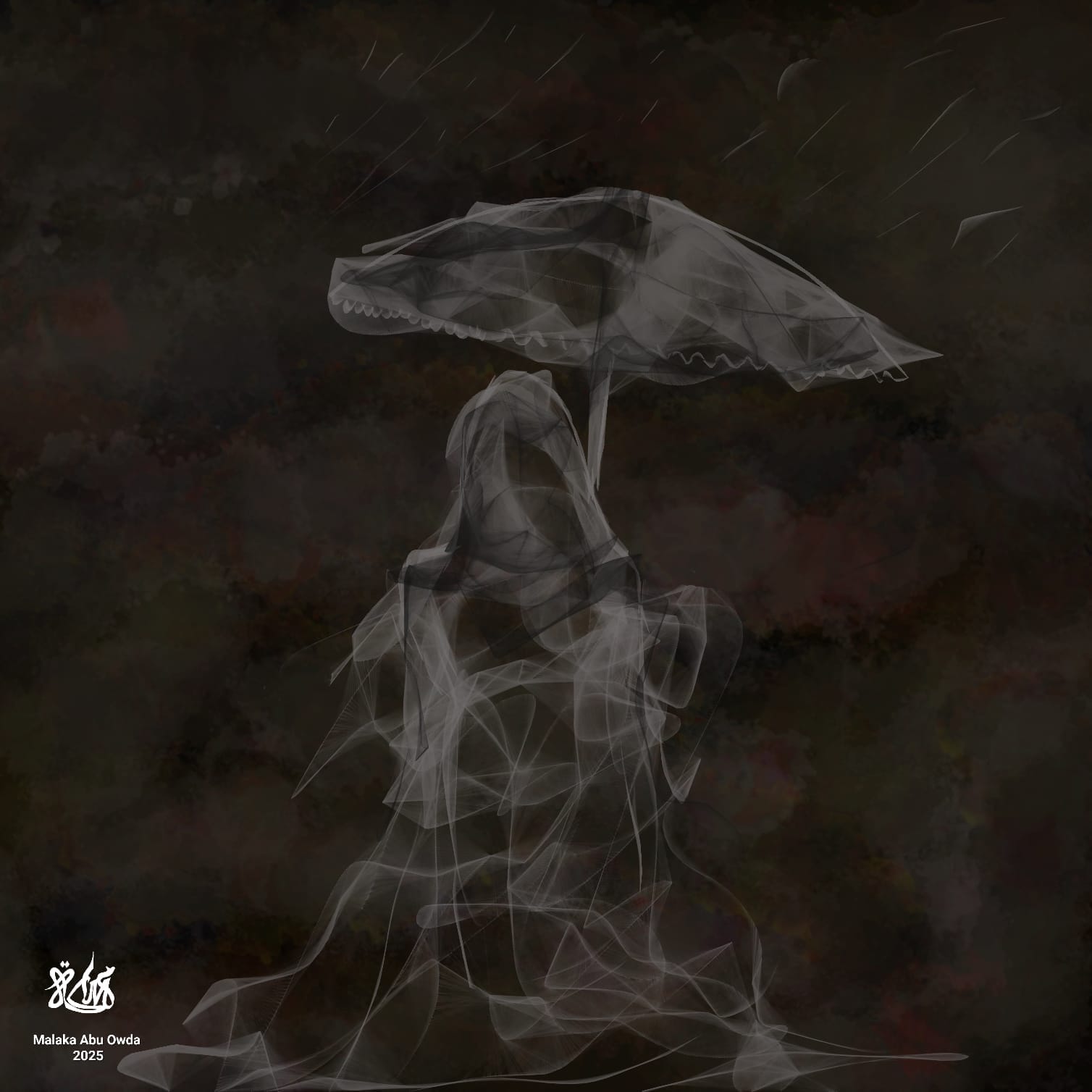
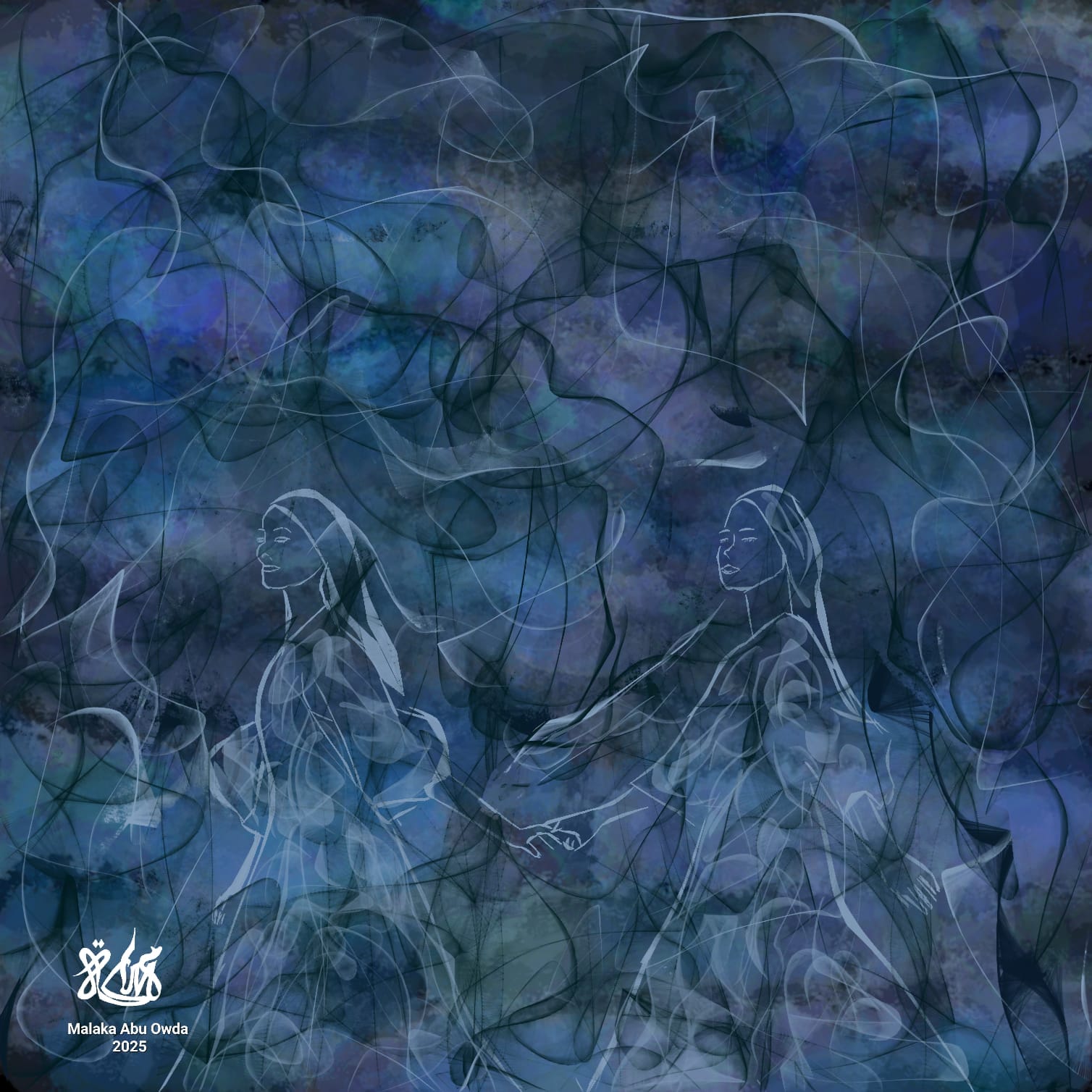
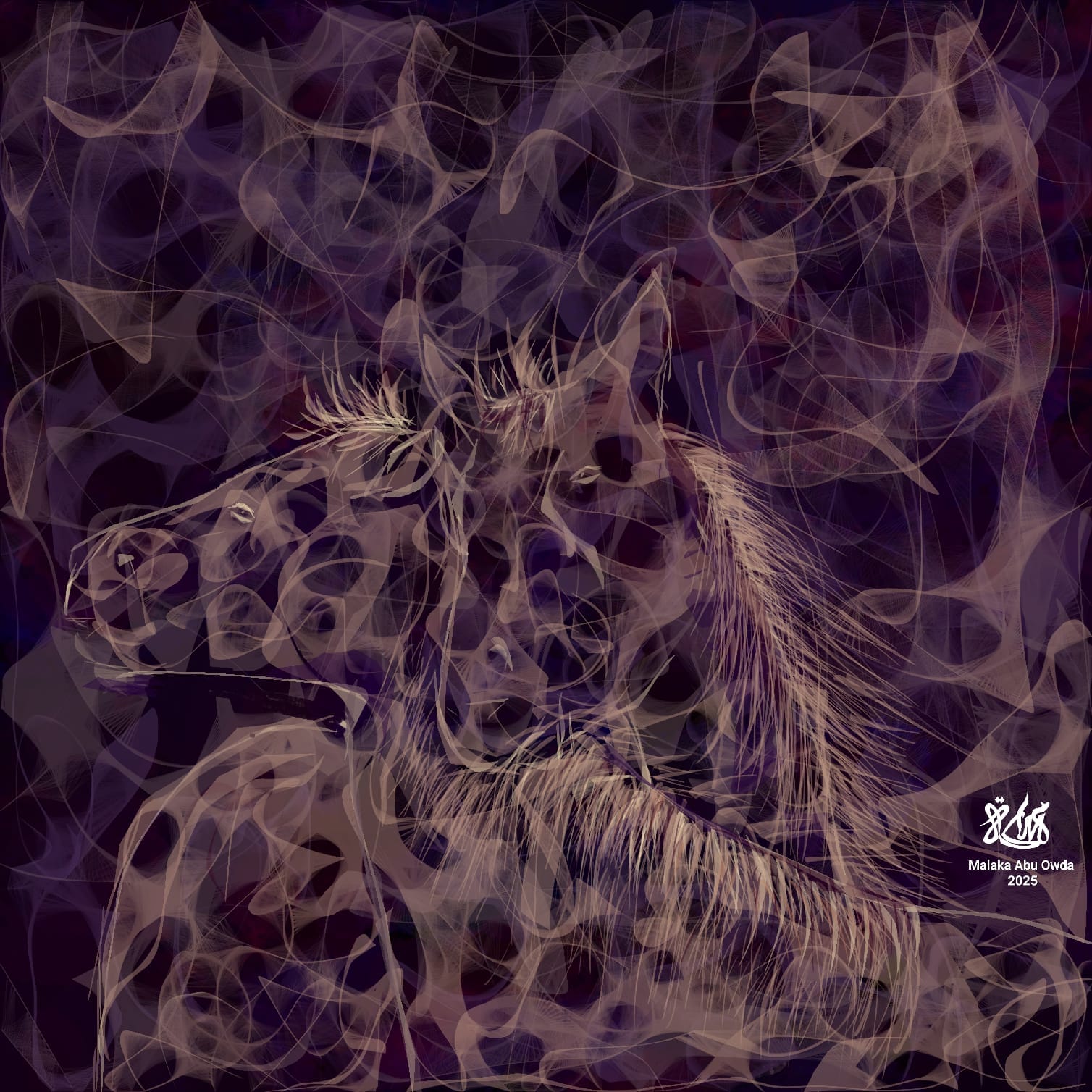
Artwork by Malaka Mahmoud Abu Owda
The action was part of a wider wave of protests around the Biennale’s opening week, as artists, cultural workers and activists objected to Israel’s participation and called attention to Palestinian artists amid the war in Gaza.
Abu Owda said the response abroad has surprised her, with poets, writers, and artists contacting her after seeing the work. Some wrote poems inspired by her paintings, while others used the images in exhibitions, books, and protests supporting Palestine.
“It gave me hope because I realized art can cross borders even when people cannot,” she said. “This confirmed that art can create a spiritual and human connection beyond political and geographical borders.”
Abu Owda said she became involved with the Gaza Biennale through cultural initiatives to amplify Palestinian artists during the war. For her, the project was not only about showing artwork.
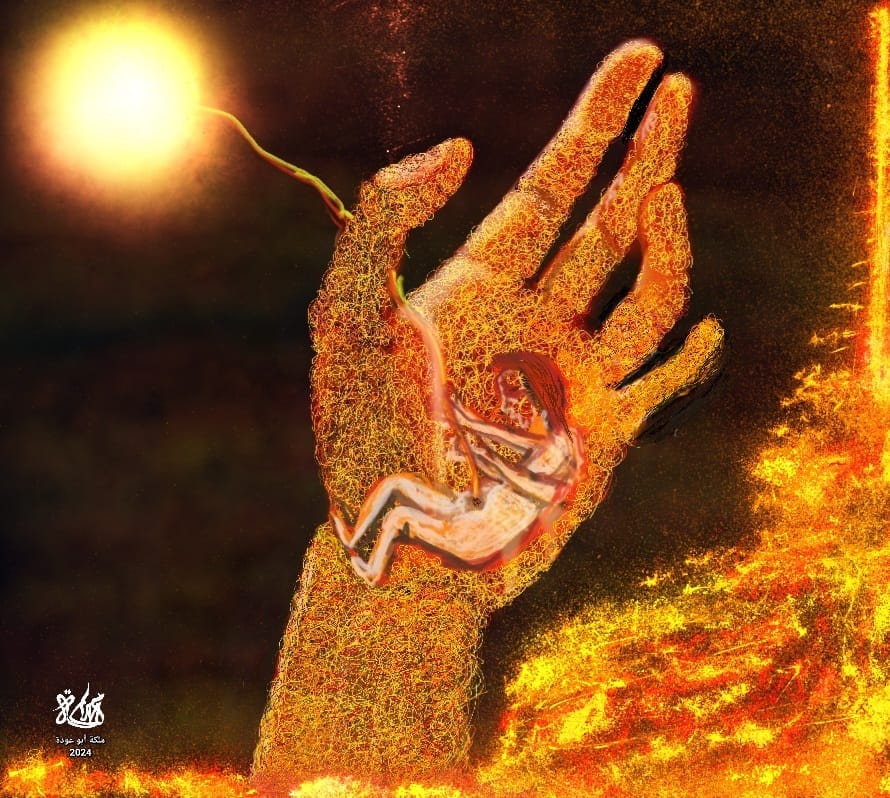
“Art for us is no longer just a form of expression, but also a way of documentation, survival, and resistance,” she said.
Abu Owda said artists carry a particular responsibility during war. “A photograph may capture a moment, but a painting can carry the inner grief, shock, and emotions that cannot always be expressed in words,” she said.
In her own work, she said, faces of mothers and children, fire, rubble, cactus plants, swallows and Arabic letters have become recurring symbols.
“Every color and line in my paintings carries a silent yet powerful message, so the world can understand that Gaza is not just numbers or breaking news headlines, but human lives, dreams, and souls being destroyed every day,” she said.
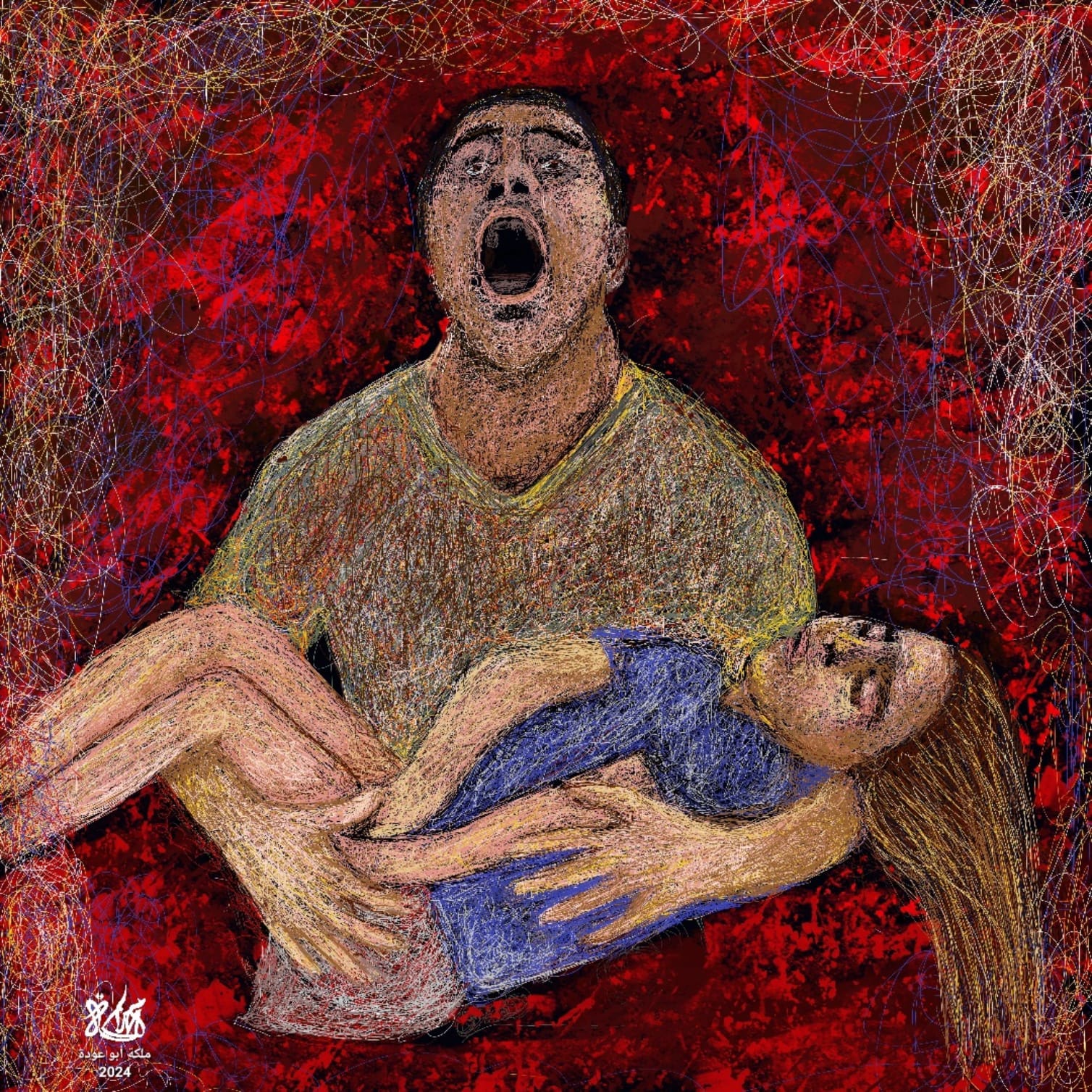
One of the works closest to her, she said, is titled The Scream of Death—a work listed by the Gaza Biennale. In the painting, Palestine appears as a grieving mother whose heart is burning as she screams for help.
“She represents the wounded woman of Gaza who witnessed every form of genocide among her loved ones and family,” Abu Owda said. “Some were buried, some wrapped in white shrouds, some burned, some torn into pieces, some remained under the rubble, and others survived with amputations, hunger, fear, displacement, and psychological trauma.”
In a statement published by the Gaza Biennale, Abu Owda described her paintings as “a message to translate our bitter reality and to stop the war.”
Abu Owda hopes the international art world treats Palestinian artists not only as victims but as artists with their own voices, experiences and methods of telling their stories.
“We do not create art only from imagination, but from real experiences we live through every day under bombardment, displacement, and fear,” she said.
 Guest Reporters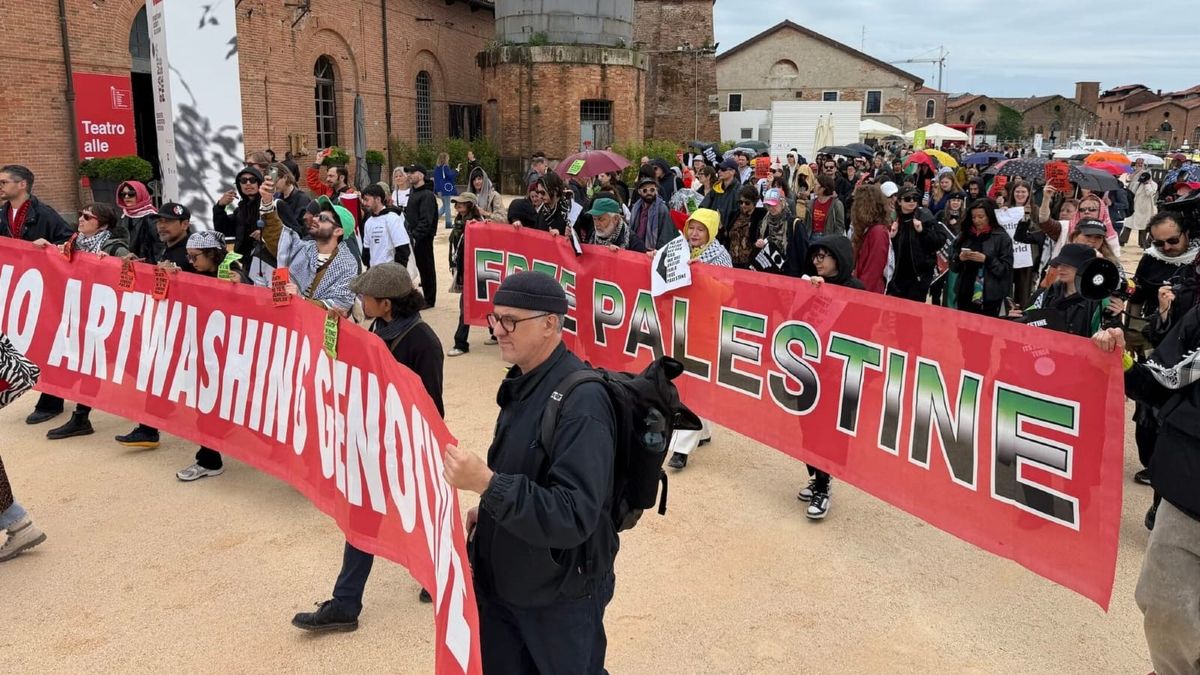
She said international artistic spaces should continue supporting Palestinian artists and giving them opportunities to speak in their own voices.
And Abu Owda hopes the war ends so she can continue her education and practice her life and art without fear, displacement or loss.
“I dream of exhibiting my paintings one day in Gaza,” she said. “Even if it is on the ruins of our destroyed home, because that place carries my memories, my life, and the artworks I lost.”
Stories like this take time, documents and a commitment to public transparency. Please support independent arts journalism by subscribing to Urgent Matter and supporting our work directly.