Brent Sikkema murder case in Brazil awaits key ruling after Daniel Sikkema conviction
Alejandro Triana Prevez’s case in Rio remains short of trial, even after Daniel Sikkema’s conviction in New York.

Alejandro Triana Prevez’s case in Rio remains short of trial, even after Daniel Sikkema’s conviction in New York.

The Brazilian murder case against the man accused of stabbing Brent Sikkema to death remained in a final written arguments stage this year, while a Manhattan federal jury convicted the New York art dealer’s estranged husband Daniel Sikkema of orchestrating the killing from the United States.
Daniel was convicted last week of conspiracy to commit murder-for-hire resulting in death, murder-for-hire resulting in death, and conspiracy to murder a person in a foreign country. He had pleaded not guilty.
The murder case in Rio, however, has not yet reached trial.
Alleged Cuban hitman Alejandro Triana Prevez is being prosecuted alongside Daniel in Rio de Janeiro. The case charges Prevez with homicídio qualificado, a more serious form of homicide under Brazilian law, and theft. Daniel is charged with taking part in the killing as the person accused of ordering it.
Under Brazil’s jury system, homicide cases generally move through a screening stage before trial. A judge first decides if there is enough evidence to send the case to a jury. This ruling, known as a pronúncia decision, also determines which charges and aggravating allegations jurors may consider.
Court records reviewed by Urgent Matter do not show that a trial date has been set or that a pronúncia decision has been issued, but indicate the case has moved into final written arguments.
At a hearing on December 16, 2024, Daniel appeared by videoconference and Prevez appeared from custody, according to a court record. After a defense witness testified, prosecutors said they had no more oral evidence to present. Both defendants chose to remain silent.
Judge Tula Correa de Mello issued an order on January 16, 2026, directing the defense to respond to forensic reports involving a laptop, a pendrive and a tablet and to file final arguments. The order was published on January 27 and reiterated in late February.
Prevez’s lawyer filed final arguments on March 2, asking the judge to remove several qualificadoras, the aggravating allegations that can increase the seriousness of a homicide charge under Brazilian law. Prosecutors alleged the killing was committed for money, tied to the Sikkemas’ divorce, carried out with cruelty and done while Brent could not defend himself.
Prevez’s lawyer said some allegations do not apply to him. He argued that if proven, the divorce motive would apply to Daniel, not Prevez. He also asked the judge to reject the theft charge, saying surveillance footage did not show Prevez leaving with a large amount of cash and that he was arrested with about 2,000 reais.
“Either the crime was committed through a promise of reward, or because of disagreement over the division of property arising from the divorce between the victim and the accused Daniel,” the defense wrote. “It makes no sense for that qualifier to apply to the defendant.”
Prevez’s lawyer also challenged the cruelty allegation. Prosecutors say Brent was stabbed 18 times; the defense cited medical examiner testimony that, according to the filing, found seven injuries and said four were serious enough to cause death.
 Adam Schrader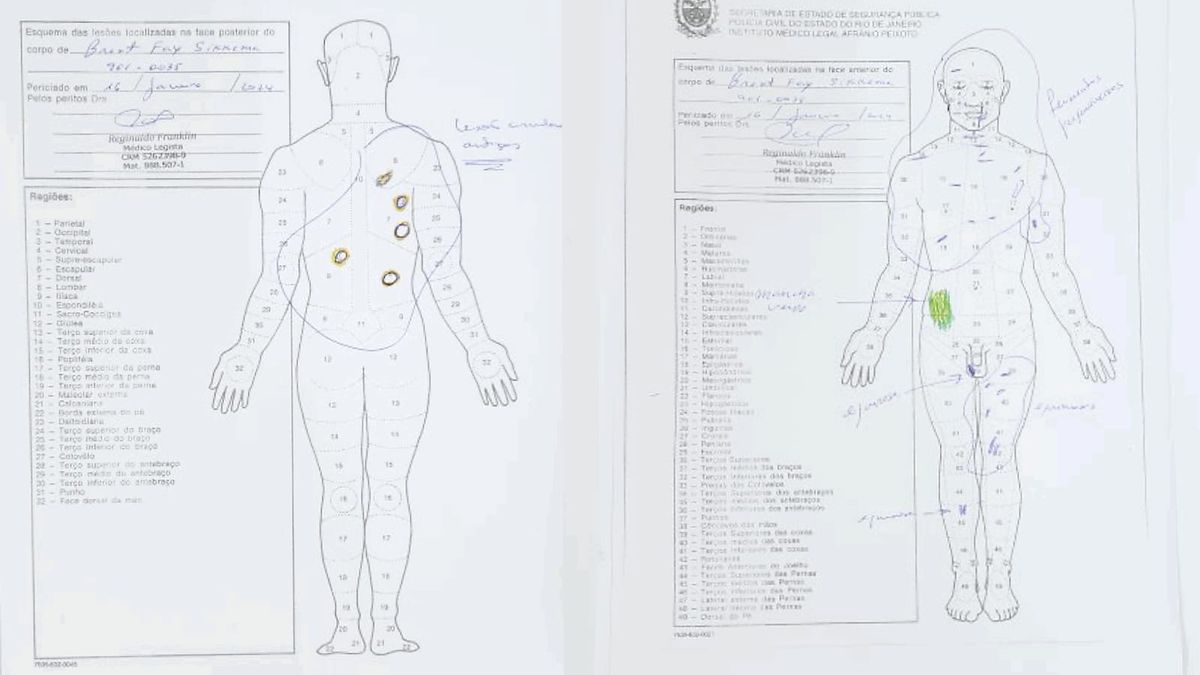
Urgent Matter separately reviewed Brazilian autopsy and crime-scene records that detail the forensic evidence now underlying that fight over the cruelty allegation.
The prosecution had already filed its own final arguments, asking the judge to send both defendants to a jury.
On March 17, a court clerk certified that Daniel’s defense had not responded to two notices about final arguments and forensic reports.
The clerk also noted that final arguments had been filed at two other docket indexes — the prosecution’s filing and Prevez’s filing. The case was sent to the judge the next day. The records reviewed do not show what action the judge took after that certification.
Urgent Matter has reached out to Prevez’s defense attorney for more information and additional comment but did not hear back by press time.
The Brazilian case developed in parallel with the U.S. prosecution.
In March 2024, the Federal Police’s international cooperation office in Rio told the court that Daniel, who was the subject of an active Interpol Red Notice, had been arrested in the United States on charges of passport fraud. The office said Brazil would need to make a formal request through the Justice Ministry’s international cooperation office to begin a possible extradition process.
The extradition packet includes a formal request routed through Rio court officials and addressed to U.S. authorities. A later email in the file shows Brazil’s Justice Ministry extradition sector forwarded documentation about Daniel to the Rio court in May 2025. Daniel has not been extradited to Brazil.
Daniel’s conviction in New York does not end the Brazilian case. The Brazilian records show that both Daniel Sikkema and Prevez remain listed as defendants in Rio, while the case awaits the next court ruling after final written arguments.
Stories like this take time, documents and a commitment to public transparency. Please support independent arts journalism by subscribing to Urgent Matter and supporting our work directly.