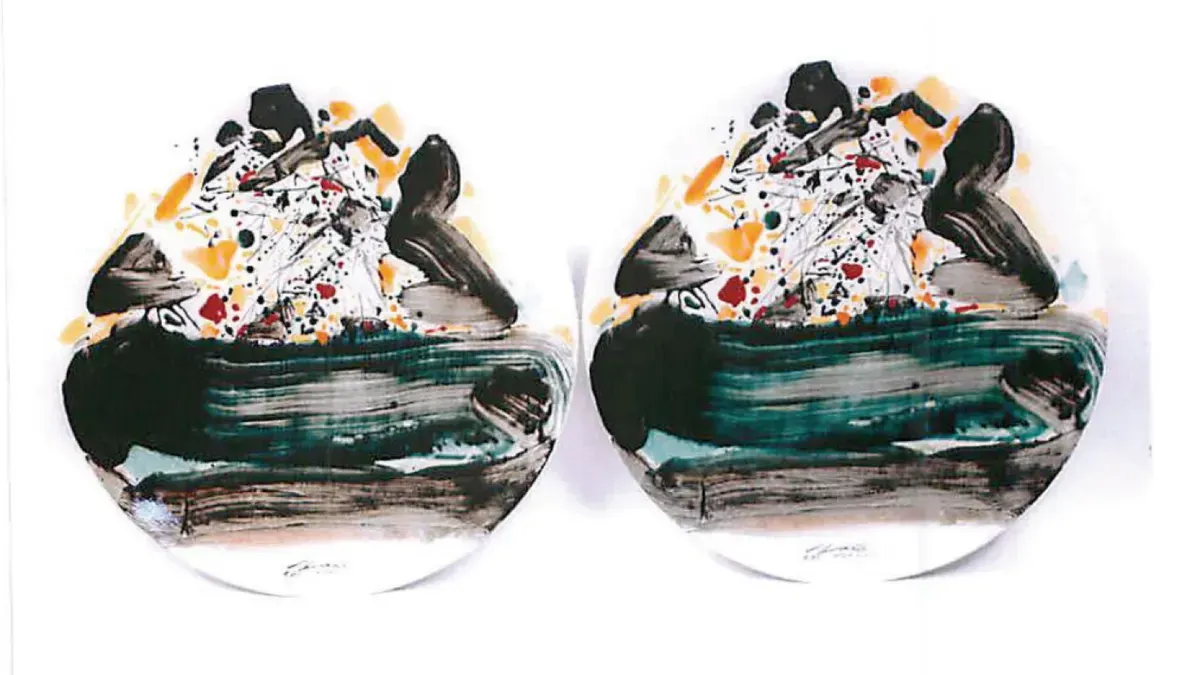
A New York judge dismissed claims that Marlborough Gallery pushed a celebrated painter to wreck a rival dealer's multimillion-dollar ceramics project, ending the central fight in a lawsuit lasting nearly seven years in state court and over a decade in courts across two countries.
New York Supreme Court Justice Joel M. Cohen delivered his decision from the bench in May and entered it formally on June 12. The trial, decided by the judge without a jury, ran from March 2 to March 18.
The dispute centered on ceramic plates designed by the French-Chinese painter Chu Teh-Chun. The Paris gallery S.A.R.L. Galerie Enrico Navarra held a contract to produce and sell the plates, and accused Marlborough of encouraging Chu to break that contract by publicly declaring the works fakes — a move Navarra said let the rival gallery pull the artist away as a client.
Cohen found that Chu broke his contract by publicly questioning whether the plates were authentic, even though records show the artist approved every design. But the judge found Navarra failed to prove Marlborough intentionally caused him to do it.
Sign up free for Urgent Matter
This article is provided free with the support of paying subscribers. Not ready for a paid subscription? Sign up for a free account today.
No spam. Unsubscribe anytime.
Records show the deal began in 2003 when Navarra, Chu, and a French ceramics publisher signed an agreement for Chu to create 24 designs for high-end, limited-edition ceramic works. Navarra financed the project, promoted it through a large catalog, and paid the artist royalties.
Chu approved each of the 24 designs by hand, writing "bon à tirer" French for "good to print" and signing the back of a final proof for each. He took his share of the finished plates, cashed royalty checks, exhibited the work, and posed with the pieces for Navarra's marketing catalog.
In May 2008, he wrote to Christie's auction house in Hong Kong to stop a sale, saying he had "never given written authorization to reproduce these ceramics." Months later, he published a notice in a French art journal calling the plates "not authentic because they were not the subject of a bon à tirer."
The judge said those public statements made the plates unsellable.
Evidence showed Chu discussed the dispute with Marlborough's director of Asian arts, Philippe Koutouzis, who referred him to lawyer William Bourdon. Bourdon then prepared a letter demanding Navarra back off and filed a case in French court seeking to end the contract.
Cohen acknowledged Marlborough had business reasons to grow closer to Chu and perhaps limit how much of his ceramic work circulated. But he found no persuasive evidence the gallery knew Chu's authenticity claims were baseless or tried to cause a breach intentionally.
"From Marlborough's perspective, they were assisting an artist that had been wronged," Cohen said.
"I found Koutouzis to be credible when explaining why it would be self-defeating for Marlborough to encourage Chu to falsely claim the ceramic plates were not authorized," Cohen said.
The trial unfolded without any central figures able to testify. Chu died in 2014. Pierre Levai, Marlborough's longtime co-president and a named defendant, died in February 2024, months before the gallery closed. His estate, represented by Rosemary Levai, stood in his place. Enrico Navarra, who brought the New York claims in 2019, died in 2020.
The judge noted that because Chu died before the case reached trial, "it is impossible to say at this point what exactly caused Chu to become concerned."
To fill the gap, Cohen relied on testimony recorded before the witnesses died. He found Levai's account of why a public reversal by an artist is so damaging to be credible.
"If somebody says what I have done is genuine, I did it myself. If they say afterwards, no, I did not do that, it's very bad for everybody who is dealing with that person because nobody will trust him," Levai said in a deposition.
Navarra first sued Marlborough in federal court in Manhattan in 2010. That case ran for years before it was dismissed in 2018 over federal court jurisdiction, and Navarra refiled in state court in 2019. Related disputes also played out in France, where courts ruled at various points between 2012 and 2024.
The June 12 decision dismissed the case for good, meaning Navarra cannot bring the same claim again, and the judge ordered Navarra to pay Marlborough’s court costs.
A proposed final judgment has not yet been signed because Navarra's lawyers plan to ask Cohen to set aside the decision and either change it or order a new trial.
In a letter filed June 26, Marlborough attorney Robert A. Freilich told the court the two sides had agreed on a schedule, subject to the judge's approval. Under it, Navarra would file its motion by July 13, with briefs continuing into September.
The judge separately granted Navarra's request to strike part of Bourdon's testimony after finding that Marlborough could not use his account of private discussions it had earlier shielded from disclosure.
Cohen noted he did not rely on that testimony in reaching his decision, and Freilich signaled the gallery may ask the judge to revisit that ruling.
Follow along with other lawsuits at Urgent Matter's art lawsuit tracker.