Market and Money
A former Sotheby's Americas chair says auction records trickle down to help artists' markets, but the money never reaches living artists.

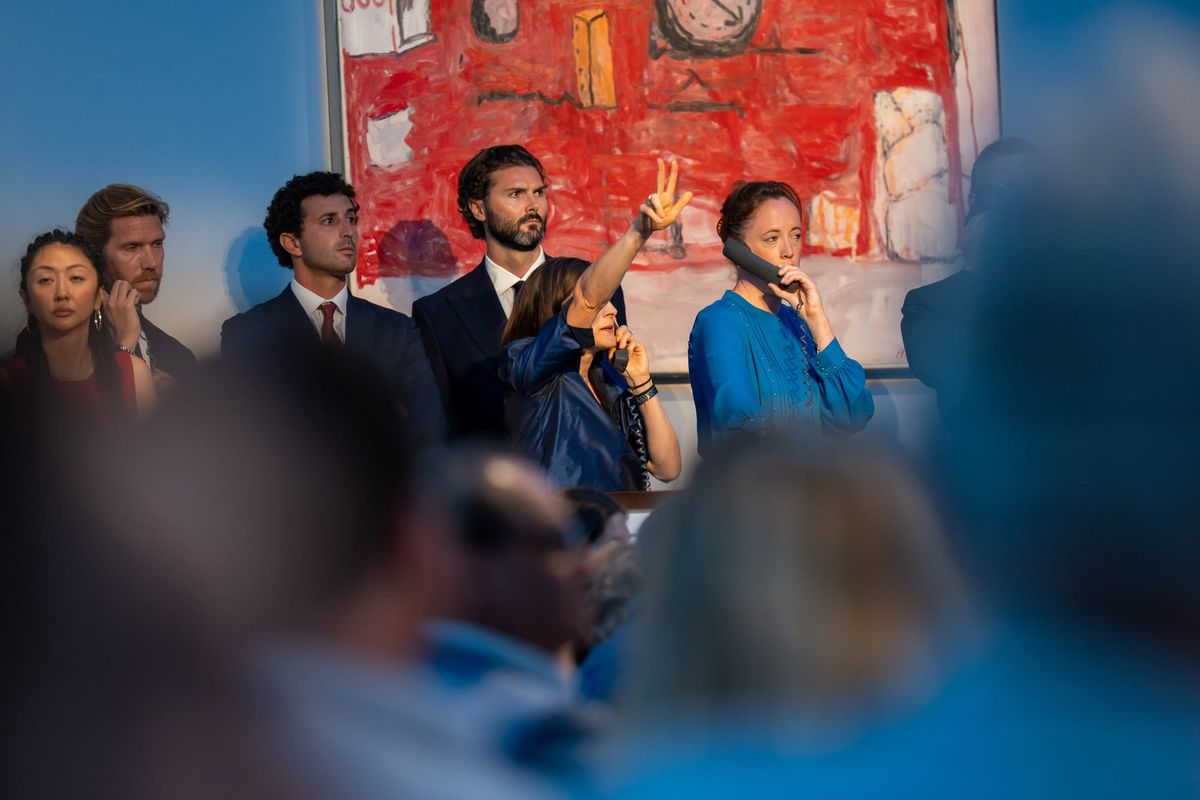
Works from the collection of Joe Lewis, the British billionaire and former Tottenham Hotspur owner, sold at Sotheby's in London last week in what has been billed as the most valuable single-owner sale ever staged in Britain.
The collection had a presale estimate of £190.2 million, or $251.6 million. Lewis, 89, was pardoned by President Donald Trump after pleading guilty to insider trading in 2024 and once held a stake in Christie's.
The London sale capped an auction season the art world called among its strongest in years. Urgent Matter spoke with Mari-Claudia Jiménez, who served as chairman and president for the Americas at Sotheby's before joining the international law firm Withers, about the auction market after the sale. Several of her answers challenged how the industry describes its health.
Jiménez was asked why the art world focuses so heavily on auction sales as a sign of the market's health, even amid a cascade of gallery closures and artists struggling to pay bills.
“I think the reason that the focus is on the market, not just on the auction sale itself, is because there is a trickle-down effect. Auctions don't live in a vacuum,” Jiménez said.
“So if there is an artwork that does particularly well at auction by a particular artist, then you're going to see that there will be more private sale interest in that particular work.”
She said frustrated underbidders will seek out works by that artist or similar works they missed in galleries or elsewhere.
“It's really about the fact that it builds demand in that type, in that artist, and it's something that it does trickle down,” Jiménez said.
Subscribe now and have access to all our stories, enjoy exclusive content and stay up to date with constant updates.
Already a member? Sign in