Chris Sharp calls Art Basel and Frieze a 'duopoly,' opens a $6,000 fair down the street
Post-Fair is opening its first edition outside Los Angeles, running October 19-24 at two buildings on Rue du Temple in Paris.

Post-Fair is opening its first edition outside Los Angeles, running October 19-24 at two buildings on Rue du Temple in Paris.
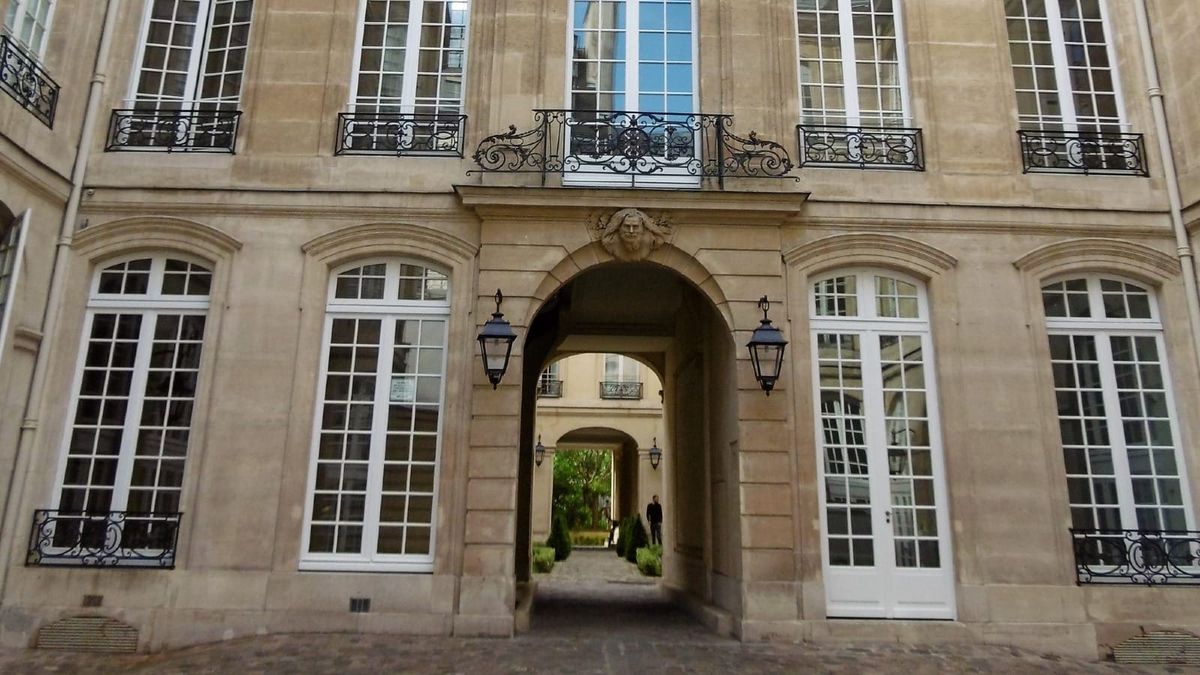
Art Basel and Frieze are "basically taking over the entire art world," dealer Chris Sharp said in a candid interview with Urgent Matter. Four days before Art Basel Paris opens to the public, Sharp will launch the Paris edition of Post-Fair, charging galleries a flat $6,000 fee.
Sharp’s Post-Fair is opening its first edition outside Los Angeles. It runs October 19-24 across two buildings on Rue du Temple, at numbers 74 and 79, the same building housing Marian Goodman's Paris gallery.
The fair will include 34 solo and two-person presentations by galleries from New York, Tokyo, Los Angeles, London, São Paulo, Paris and Buenos Aires.
"We're in a moment where there's this duopoly, and it's Art Basel, which is a great brand, and Frieze, which is a great brand as well, but has serious problems," Sharp said in an interview Friday.
"They're not in a position to respond to this ongoing commercial crisis," he said. "It's like they just raise their prices."
Frieze was acquired last year by Mari, the events company formed by Ari Emanuel, which announced a Frieze Abu Dhabi edition days after the deal closed. Frieze bought the Armory Show and Expo Chicago in 2023. Art Basel launched its Doha fair in February.
Art Basel Paris brings 206 galleries to the Grand Palais from October 23 to 25, with preview days October 21 and 22 and an invitation-only opening October 20. Its 2025 edition drew more than 73,000 people, the fair said.
Post-Fair joins a widening set of dealer-run alternatives. James Cope's London Invitational opens October 15 at the Chancery Rosewood in the former U.S. embassy on Grosvenor Square during Frieze week, as Urgent Matter previously reported, four days before Post-Fair opens in Paris.
Sharp also named Cope’s Dallas Invitational as well as Basel Social Club and Pavilion, the Taipei and Hong Kong fair started by the Hong Kong gallery PHD Group, which charged $3,850 a gallery in January as part of that trend.
Earlier this year, Art Warsaw was held at a former British Embassy in central Warsaw, continuing a format that shifts between locations rather than using a permanent site.
Sharp said there is no formal collaboration among the organizers, though he is in touch with Cope and keeps a formal and informal advisory panel. Post-Fair lists four advisers on its site: BB Beugelmans, Patrick Bova, Carlomar Rios and Jacob Robichaux. Sharp said five people run the whole operation.
What the alternatives have in common, he said, is the focus on beautiful buildings. Post-Fair LA took a post office, Cope took an embassy, and Basel Social Club moves every year.
Sharp said the $6,000 covers everything at Post-Fair. Lighting and storage are free, the type of things that can hide fees at larger fairs.
"It's just like a flat fee," he said. "And this is what you get."
He said a booth at Art Basel Miami Beach can cost around $25,000. His gallery showed there in December, in the fair's Nova section.
"There's something fundamentally and deeply wrong with the model, if that's how it works," Sharp said of fairs expensive enough to put a gallery under.
Post-Fair debuted in February 2025 in a 1938 Art Deco former post office in Santa Monica with 26 exhibitors paying $6,000, or $2,000 for project spaces. Its second edition ran February 26 to 28 this year with 30 galleries.
Before Los Angeles came Place des Vosges, a two-year project Sharp ran from a rented Paris apartment during Art Basel's Paris week. He said that fair had 11 galleries and he moved to Rue du Temple after the owner took back the earlier space.
 Adam Schrader
Sharp lived in Paris from 2002 to about 2012, working as a writer, curator and editor. The fair's press release describes the stay as eight years.
There will be no booths in the Marais. Two or three galleries will share each large room, with a wall apiece.
"I think it'll read more like a group show and still totally maintain that small, intimate boutique feeling," Sharp said.
Most art fairs are in convention centers, Sharp said, often in industrial parts of a city. He named Milan and Arco Madrid.
"It's better to offer people a unique experience of seeing art in a beautiful venue, while also, you know, granting them access to a special piece of architecture they otherwise wouldn't have access to," Sharp said.
He said the location should also produce return visits, which he described as a weakness of the Grand Palais slot. "There's no real reason to be out by the Grand Palais more than once," he said.
"It's like where people hang out, where people go shopping," Sharp said of the Marais. "There's a very good chance that they'll come back."
The attendance figures the big fairs publish do not interest him.
"They always brag about their 50,000 or 70,000 visitors," Sharp said. "I don't give a fuck about your 70,000 visitors."
He said the weekend at Art Basel Miami Beach was "fucking hell," that he had "probably like 30,000 people walk in front of my booth," and that he did not have "a single serious conversation."
"At that point, I was like, why are we open?" he said.
Sharp said Post-Fair LA drew about 3,000 people last year, which he called fine. He said fairs sell tickets because the model does not otherwise pay — he does not think a fair makes money below roughly 80 exhibitors — and that dealers should share in that revenue.
"The galleries should see some percentage of those ticket sales," he said. "We're offering the entertainment but not being paid for it."
Paris will be free, with visitors asked to register. Los Angeles sells tickets, which Sharp said are kept cheap.
Sharp does not expect his own model to last. "I see my projects as more of a temporary solution," he said, adding that "it's really hard not to become the thing you're trying to propose an alternative to."
Asked what a boutique fair offers artists, he said galleries at large fairs hang eight artists on one wall and visitors "don't really get a sense of the work or the practice."
"It's a question of economy, you know, where economy of attention, economy of material, economy of means," Sharp said. "A kind of general economy, which tends not towards cheapness, but towards what I hope to be a kind of elegance."
See what else is coming this year at Urgent Matter's global art fairs calendar.