Armory Show closes a quiet edition as Canadian dealers face new U.S. tariffs
A Montreal gallery said it shipped its booth to New York a week before a 50% duty on Canadian-made art took effect.

A Montreal gallery said it shipped its booth to New York a week before a 50% duty on Canadian-made art took effect.
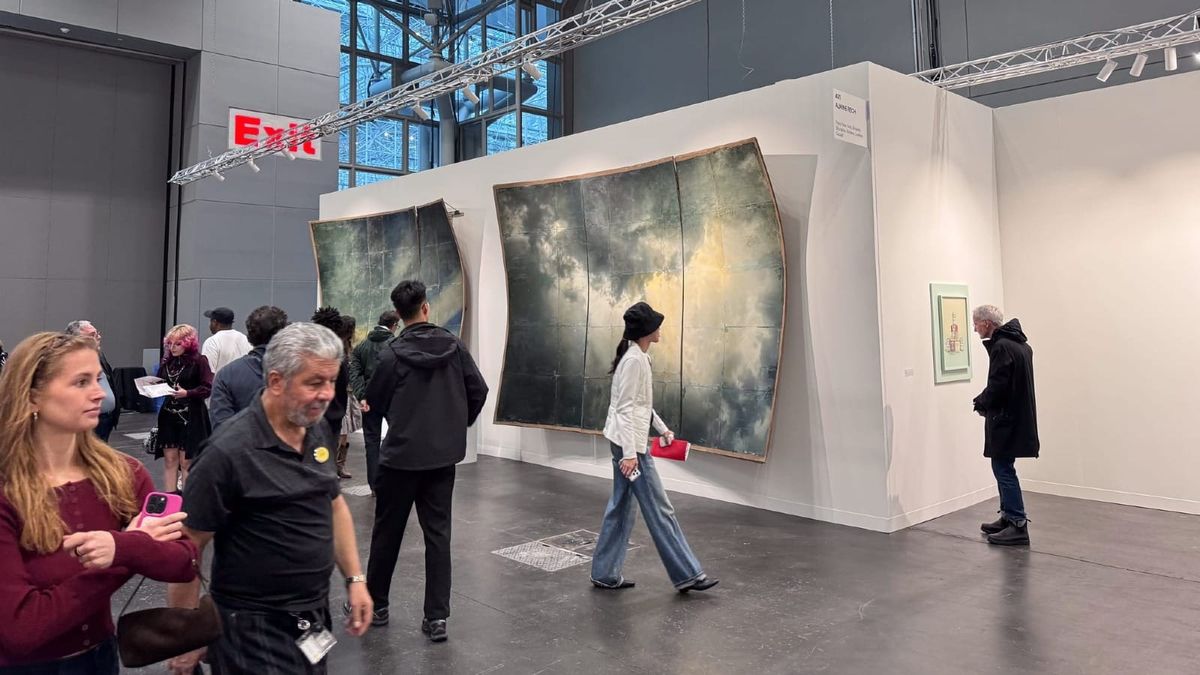
On Sunday, the fair’s last day at the Javits Center, a nor’easter was blowing outside. After escaping the sideways rain, I was greeted by two massive storm-cloud pictures by Doug and Mike Starn at Wetterling Gallery, titled be courteous to all; bow down to none and abandoned by the rule of law.
“These are pictures of the sky but this work is about all of us, we are all under the same sky,” the Starns wrote in the booth’s wall text.
Inside, the dealers I spoke with mostly said the fair went well. One from Montreal said new U.S. tariffs on Canadian-made art could make it hard for his gallery to come back.
Hyperallergic called this year’s Armory Show “awfully quiet and downcast” in a one-sentence review published on opening day.
Julius Miller, a gallery associate with Ellie Rines Gallery, the former 56 Henry, said the gloom other outlets described was likely “derivative of the downcast weather and just the general kind of uncanniness of this building.”
“There is a definite muteness, I think, to Armory that exists just because of this building,” Miller said.
Miller said he has come to the Javits for other events, including the American Kennel Club’s Meet the Breeds, and that a small boat fair filled the same space last year.
“So in my mind, I do kind of just see this space as like a commercial entity and not that profound of an artistic entity,” he said.
“I’ve seen small business fairs here before, and of course, we’re all small businesses. But maybe there’s no difference between an art gallery and a car salesman.”
While there were probably thousands inside, it seemed sparse. I pushed a double stroller through the show with both my kids and never felt in anyone’s way.
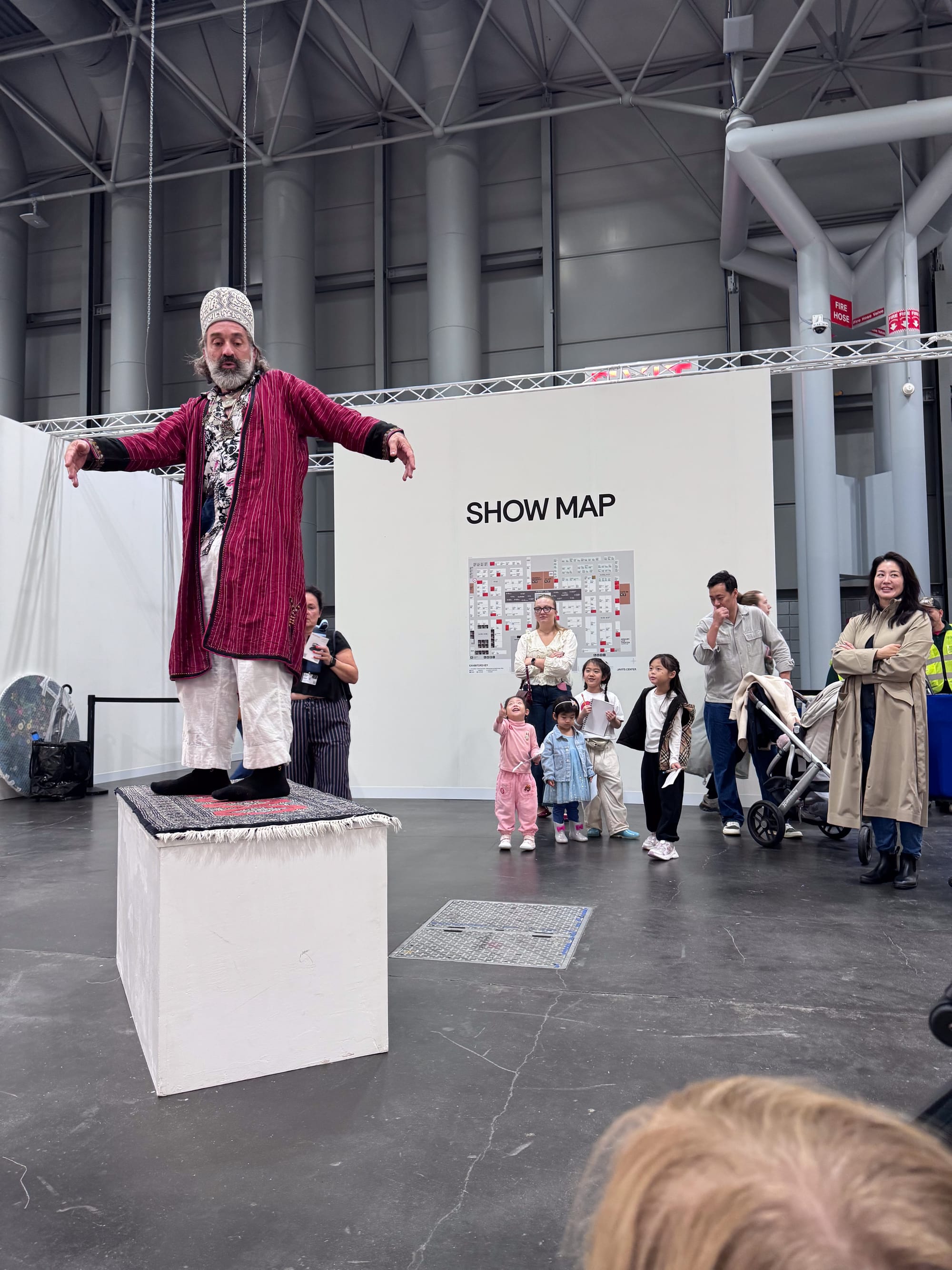
There was a lot of good stuff, as expected from one of the largest art fairs globally. I ran through the show with the kids in about three hours and didn’t feel I missed anything.
Nick Gillett, 40, a collector who said he works in tech, had the same experience.
“We’ve only been here two hours. I don’t feel like I’ve missed anything,” Gillett said.
Gillett said he started collecting seriously about a year ago, when he bought his first big piece from New York’s Magenta Plains. He said only “maybe 20%, 30%” of the work at the fair this year attracted him, but he still left with a piece by an artist he had been tracking.
In its first announcement, the fair said about 230 galleries from more than 30 countries would take part, with the fair pushed later into September.
 Adam Schrader
Peter Gazendam, a director at large for Galerie Nicolas Robert of Montreal and Toronto, said foot traffic was better than when the gallery last showed two years ago.
“I think it’s maybe been our best Armory fair ever,” he said.
Gazendam said the gallery shipped its work a week before the tariffs came in.
“So, any artwork that is brought into the United States has a 50% tariff,” Gazendam said.
 Adam Schrader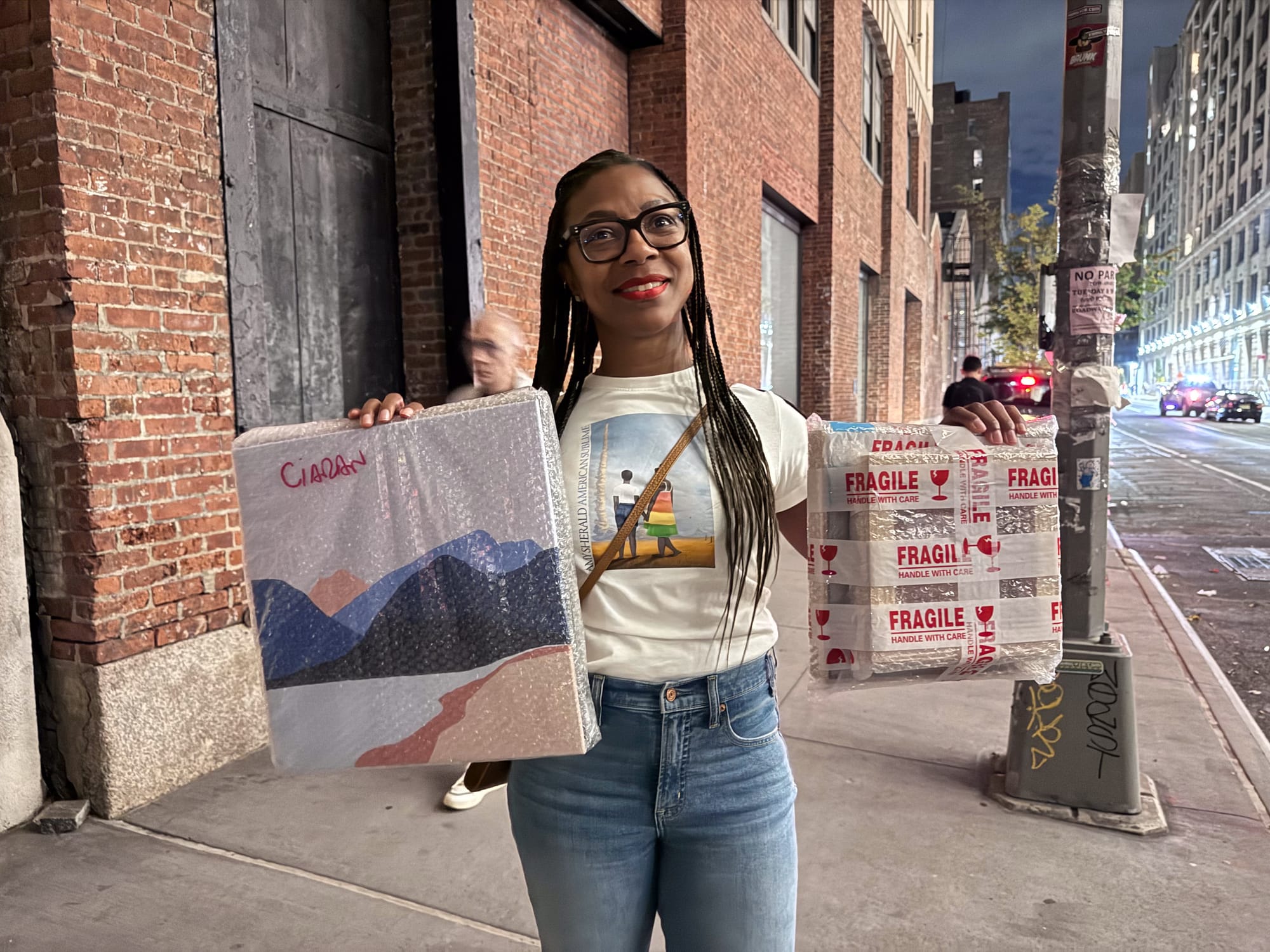
President Trump signed three proclamations on July 20 adding a 50% duty on a list of Canadian-made goods, Federal Register records show. The duty applies to goods entering the country on or after the effective date, which a temporary suspension pushed to August 22.
The proclamations are titled for Canadian policies on alcohol, dairy and cars. The taxed goods are listed by tariff code in a Customs and Border Protection attachment, and that list includes Canadian-made paintings, drawings, collages, original prints and sculptures. CBP guidance shows the 50% is charged on the value declared at entry.
Galerie Nicolas Robert’s booth featured paintings by Natia Lemay, who Gazendam said “graduated from Yale, has a lot of supporters in the United States.” He said the colors in her paintings are nearly all drawn out of black paint.
If conditions hold, returning would be “very difficult unless we’re working with U.S. artists exclusively or work that’s made in that space,” Gazendam said. He said visitors were “very apologetic in understanding of our situation.”
Subscribe now and have access to all our stories, enjoy exclusive content and stay up to date with constant updates.