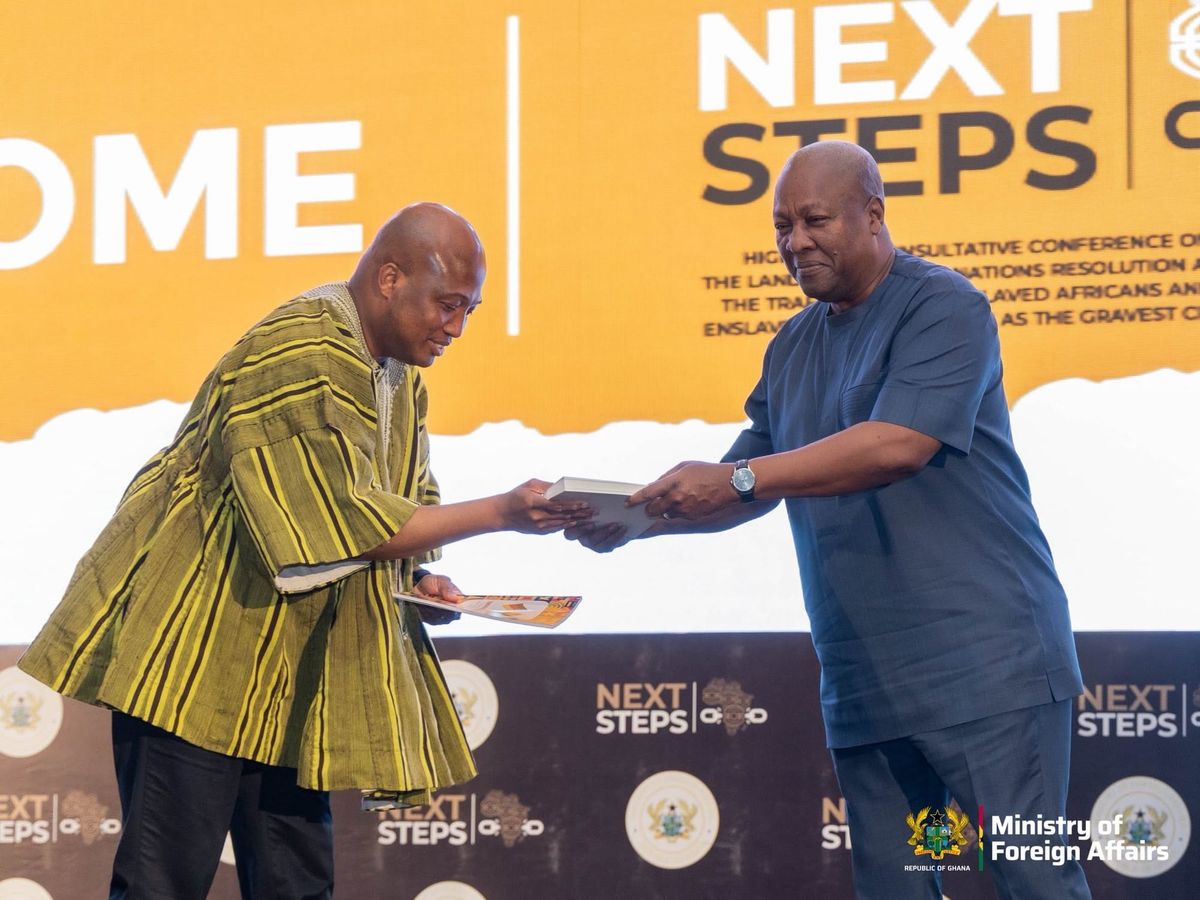
The Netherlands and Germany have agreed to return more than 2,000 cultural artifacts taken from Ghana during the colonial era, Ghanaian officials announced.

The commitments came at the High-Level Consultative Conference on the Next Steps to the Landmark United Nations Resolution on the Trafficking of Enslaved Africans, a three-day gathering hosted by President John Dramani Mahama from June 17 to 19.

In a symbolic handover during the conference's plenary, Dutch Ambassador to Ghana Jeroen Verheul presented a catalog of about 2,000 objects to Mahama, who serves as the African Union's champion on reparations.

Germany separately presented an inventory of a smaller set of objects linked to the Kpando area of Ghana's Volta Region.

Samuel Okudzeto Ablakwa, Ghana's foreign minister, announced the returns at the close of the conference on June 19 and in a post on social media the following day. He said the Dutch government had finished cataloging the objects and decided to send them to Ghana.

"The exact provenance of these objects is not yet fully known, but this catalog is a starting point for continuing this return process together," Verheul said, according to the Bantu Gazette.

The Dutch catalog was compiled by the World Museum in Leiden, which gave Ghana an inventory of its Ghanaian holdings in January, the Ministry of Tourism, Culture and Creative Arts said at the time.

Germany's catalog documents provenance research into four objects from Kpando, said German Ambassador Frederik Landshöft. According to the Bantu Gazette, they were two war drums and two war horns tied to the Dagadu ruler.

Landshöft described them as carrying "history, memory and authority,” and said the research found that the items entered German possession during the colonial period in circumstances shaped by unequal power relations and colonial violence.

The Kpando objects are royal regalia of the Akpini state, whose king, Togbe Dagadu III, was arrested and exiled by German colonial forces in 1914. Their return has been the subject of a restitution campaign spanning more than a decade.

Ablakwa did not specify where the objects are currently held or when they would physically return to Ghana.

The conference was convened in response to UN General Assembly Resolution A/RES/80/250, adopted March 25, which declared the trafficking of enslaved Africans and racialized chattel enslavement the "gravest crime against humanity."

The Ghana-sponsored resolution, the first UN measure in 80 years dedicated solely to slavery and the transatlantic slave trade, passed 123 to 3 with 52 abstentions. Argentina, Israel and the United States voted against it. It calls for the "prompt and unhindered restitution" of cultural property to countries of origin.

Ablakwa also said Denmark's foreign minister apologized for the country's role in the transatlantic slave trade and pledged to help preserve Christiansborg Castle and other coastal forts the Danes built. The conference's final day included a Juneteenth commemoration at the castle, a former hub of the slave trade in Accra.

Ghana has intensified pressure on European nations to return colonial-era objects.

In 2024, an exhibition at the Manhyia Palace in Kumasi displayed Asante regalia that had returned after roughly 150 years abroad. The Netherlands agreed in 2025 to return 113 Benin bronzes from the Dutch State Collection to Nigeria and pledged to return a 3,500-year-old pharaonic bust to Egypt.

Read more about repatriation at Urgent Matter’s repatriation tracker, and please sign up for a paid subscription if you value this reporting.

Share this article
The link has been copied!