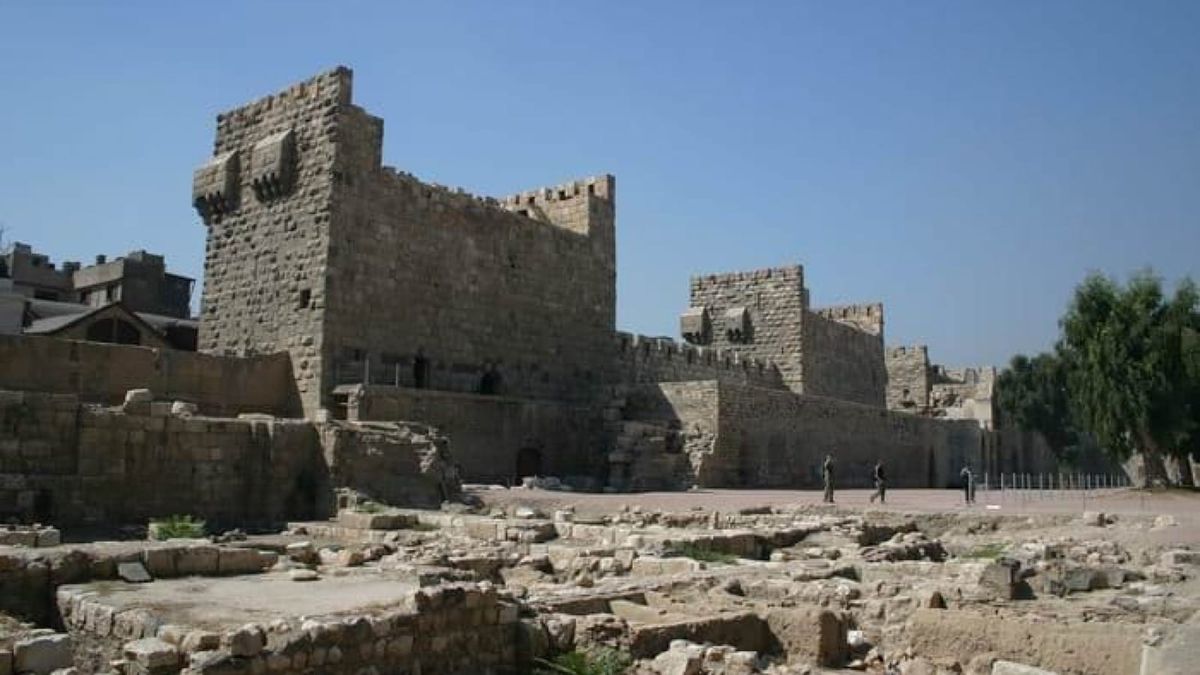
Syria’s antiquities directorate responded to backlash over restaurants and cafes at the Damascus Citadel by framing the state’s new heritage approach as a break from the Baathist regime of former President Bashar al-Assad.

In a statement in Arabic posted to Facebook on Sunday, the Directorate-General of Antiquities and Museums said it was trying to present heritage to the public differently from “the legacy of the defunct regime.”

The directorate said the previous regime handled heritage “in a rigid manner consistent with the ideology of the Baath Party, which ruled the state and society, including heritage.” The old approach ignored society’s role and weakened Syrians’ bond with their heritage and identity, the directorate said.

The statement responded to images from the state-sponsored festival inside the fortress that drew online criticism.

The directorate said social media accounts claiming the citadel was converted into restaurants and cafes were “incorrect,” and that the service facilities served residents and visitors to the Syria Summer 2026 festival, a family event under the Ministry of Culture’s patronage.

The facilities are temporary and can be removed when the festival ends “without leaving any trace,” the statement said, adding they are “far from direct contact with the archaeological elements” of the site.

“It is the right of the Syrian people, who have sacrificed throughout the past years, to see the beauty of their country and enjoy its cultural and civilizational heritage,” the statement said.

The festival opened at the citadel on August 6 with officials, media, cultural figures, and families attending, according to the independent Syrian outlet Enab Baladi.

Culture Minister Mohammad Yassin al-Saleh said the choice of the citadel aimed to turn the site into a space for cultural and educational activity, and he urged visitors to preserve it, state news agency SANA reported.

The dispute began with the opening of a restaurant called Abu Daniel inside the citadel, whose sign and fixtures appeared in photos and video circulating online, the Russian state media RT reported.

The criticism widened into what opponents called signs of "privatization" of a national monument, Enab Baladi reported, with residents and archaeologists arguing the site was being put to commercial use and activists saying the modern fittings clashed with its Ayyubid-era architecture.

Abd al-Razzaq Moaz, a former director-general of the antiquities directorate and a former deputy culture minister who left Syria over his opposition to the Assad government, told RT he was not against putting the citadel to use.

He said he had previously called for a formal request for artistic proposals to program the site in a considered way, but that what happened inside "amounted to overreaches that damaged an archaeological building" listed as part of the World Heritage city.

Moaz said recent changes to sensitive posts within the directorate had "weakened specialized expertise in engineering, restoration and historic-buildings files," and he called for strengthening the agency's independence and assigning heritage work to specialists.

Ajaj Salim, a professor at the Higher Institute of Dramatic Arts, told RT that states which respect their heritage impose strict protections, and criticized treatment of the citadel that he said went as far as "drilling into it to hang a cooking ad."

The journalist Khaled Maamari said that when he first saw the photo, he took it for "artificial intelligence, like any scandal and the excuse for it," before realizing it was real.

Some fixtures appeared to be mounted near the archaeological walls, raising concern about the stone, RT reported. but said the worry could not be treated as a confirmed accusation without a site inspection or an official clarification. It remained unclear which authority approved the vendors, under what license, or whether the arrangement met the protection rules for the site.

The Ancient City of Damascus, including its citadel, has been on UNESCO’s World Heritage list since 1979.

Inside the citadel’s Throne Hall, the festival is showing two exhibitions, the directorate said: Syrian antiquities recently returned by France and a display of mosaics. France returned 23 Syrian artifacts in July, about 15 years after they were lent to an exhibition at the Arab World Institute in Paris and never returned.

The objects, flown to Damascus aboard the French presidential plane, included Roman bronzes, a mosaic panel from the Umayyad Mosque, and Palmyrene funerary reliefs dating to the second and third centuries. Their handover coincided with a visit by French President Emmanuel Macron, the first by a major Western leader since Assad was ousted.

A selection went on view in the Throne Hall on August 7, Türkiye Today reported, citing the Anadolu Agency.

The new government has drawn the same contrast at cultural venues before.

In March, Urgent Matter reported that the Culture Ministry and the antiquities directorate staged a show at the National Museum of Damascus by Saleh al-Hajr, an artist the Assad government arrested in 2014. The ministry said detainees “endured the worst forms of injustice and oppression at the hands of the Assad regime.”

The transitional authorities have moved to dismantle Assad-era institutions and reassert control over state cultural sites.

The directorate has made other public claims later disputed. In December, the Aga Khan Trust for Culture told Urgent Matter that a restoration project the directorate announced—converting a historic building in the coastal city of Jableh into a national museum—was “incorrect” and that it had no such plans.

The directorate had not issued a public correction as of that story’s publication.

The new authorities have worked to reopen Syrian heritage sites to international missions after Western governments eased many sanctions in 2025. Urgent Matter reported in March that the directorate launched a drone survey to map war damage at Palmyra and signed an agreement to support the return of foreign restoration teams.

Assad fled to Russia in December 2024 after a rebel offensive led by Hayat Tahrir al-Sham entered Damascus. Its leader, Ahmed al-Sharaa, was named Syria’s transitional president in January 2025.

Urgent Matter is reader-supported. Please consider subscribing to support independent arts journalism.

Share this article
The link has been copied!