Beanie Babies billionaire lays out legal strategy in Santa Barbara museum suit appeal
A new brief argued that the museum that removed his name in 2014 later asked him for a $50 million estate gift.

A new brief argued that the museum that removed his name in 2014 later asked him for a $50 million estate gift.
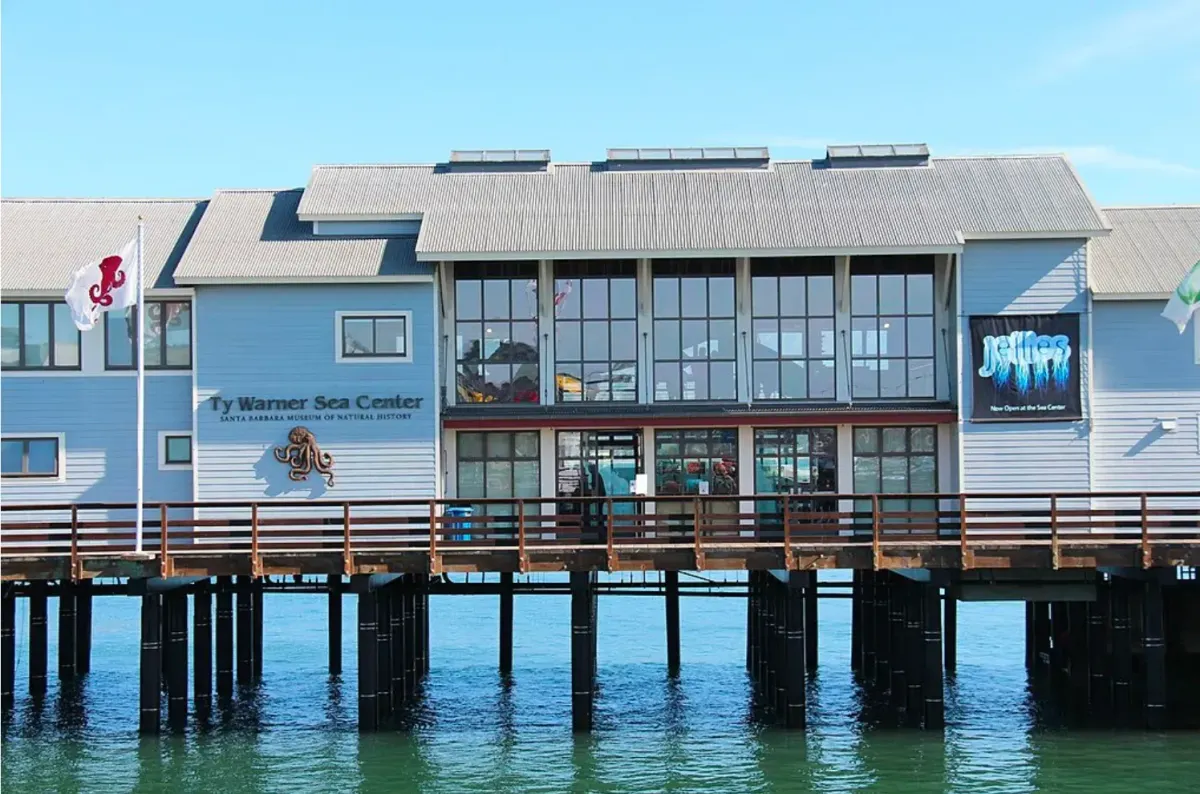
Ty Warner has asked a federal appeals court to revive his lawsuit against the Santa Barbara Museum of Natural History. In a brief filed August 10, he argued that the museum, which stripped his name from its Sea Center in 2014, solicited a $50 million gift from him a decade later.
The Beanie Babies billionaire is asking the U.S. Court of Appeals for the Ninth Circuit to overturn a January order that threw out his case, or, failing that, to send the case back with instructions letting him rewrite his complaint.
Warner sued the museum in September 2025 over a $1.5 million donation he made in the early 2000s to finish rebuilding the Sea Center, a marine science center the museum operates on Stearns Wharf. In exchange, the museum agreed to name the facility the Ty Warner Sea Center and to keep his name on it for at least 25 years, through at least April 23, 2030.
U.S. District Judge R. Gary Klausner dismissed all five of Warner’s claims in January. He ruled that Warner waited too long to sue because his own complaint acknowledged the museum removed his name in 2014. The suit filed in 2025 fell outside the statute of limitations, the judge found.
Paid subscribers can read the full brief.
 Adam Schrader
Warner’s opening brief argued that the deadline for suing had not yet begun. Citing a 1996 California Supreme Court ruling, his lawyers said that when a contract requires ongoing actions, a breach does not automatically end the agreement or start the clock on a lawsuit. They argued Warner continued to treat the contract as valid until he filed suit.
Central to the appeal is a May 16, 2025, letter in which the museum, according to the brief, invited Warner to make a new multi-decade commitment: an annual gift of $100,000 for life and a $50 million planned estate gift to endow the Sea Center permanently.
In return, the museum offered donor-recognition signage inside the Sea Center honoring his 2004 “transformative gift that enabled the Museum to renovate the Sea Center.”
Warner argued that it was only after receiving that proposal that he realized the museum’s stated 2014 reason for removing his name had been a pretext.
“If Warner’s name was so scarred by the conviction, apparently at the right price it could be ignored,” his lawyers wrote in the brief.
The museum removed Warner’s name in June 2014, months after he pleaded guilty in 2013 to one count of tax evasion. It told the public the change was a “revitalization plan” tied to the Sea Center’s 10th anniversary, the brief said. Warner responded within a week, saying Disney, McDonald’s, and the NFL had all kept associating with his brand despite the conviction.
For years afterward, Warner believed the museum remained open to restoring his name before 2030, the brief argued, and he chose not to demand a refund or sue. In December 2024, his lawyers asked the museum for a “final answer,” noting more than five years remained on the naming term. The museum declined but invited him to discuss “a possible future relationship with the Museum,” the brief said.
The appeal raises several other arguments. It contends Klausner dismissed the case permanently — “with prejudice,” meaning Warner cannot refile — without addressing the three separate requests Warner made for permission to fix his complaint, and without the findings that such a denial requires.
Warner argued that the judge’s own order interpreted the naming agreement in two contradictory ways: In one passage, it called the museum’s obligation “immediate and continual,” while a page earlier it described it as “only one obligation in the contract” involving a single breach.
He argued that if the judge could read the agreement both ways, then it was not clear from the complaint that his lawsuit was filed too late — the standard for dismissing a case as untimely at this early stage.
The brief argued that the museum’s promise to keep Warner’s name on the building was an ongoing duty, meaning each day it failed to do so was a new breach with its own deadline to sue. That would make the more recent breaches timely.
It also argued that Klausner applied a single 2014 deadline to five claims with different elements, including two fraud claims that, under California’s discovery rule, do not begin to run until a plaintiff discovers, or reasonably should have discovered, that a defendant’s explanation was false. Warner knew his name came down in 2014, the brief said, but he did not learn the stated reason was false until 2025.
Warner also argued that he should be allowed to add a claim that the museum’s misleading explanation kept him from suing sooner. He invoked a legal rule that prevents a defendant from relying on a deadline when its own conduct caused the delay.
Warner’s five claims were breach of contract, breach of the implied covenant of good faith and fair dealing, intentional misrepresentation, negligent misrepresentation and unjust enrichment.
The 2004 agreement also allowed the museum to remove Warner’s name if he became “subject to or found guilty of” a felony prosecution, the brief said. Warner argued that clause does not settle the case at this stage and should be interpreted against the museum because it wrote the agreement.
He also argued that the museum cannot both remove his name from the building and keep his $1.5 million.
The Ninth Circuit had ordered the two sides into confidential mediation after Warner appealed in February, but the case was released from that program on June 16 without a settlement. The museum has not yet filed its response to the appeal.
Follow along with other lawsuits at Urgent Matter’s art lawsuit tracker.