House holds art collector Leon Black in contempt over Epstein subpoenas
The ex-MoMA board chairman sat for one interview, produced a single NDA, then sued the committee investigating Jeffrey Epstein.

The ex-MoMA board chairman sat for one interview, produced a single NDA, then sued the committee investigating Jeffrey Epstein.
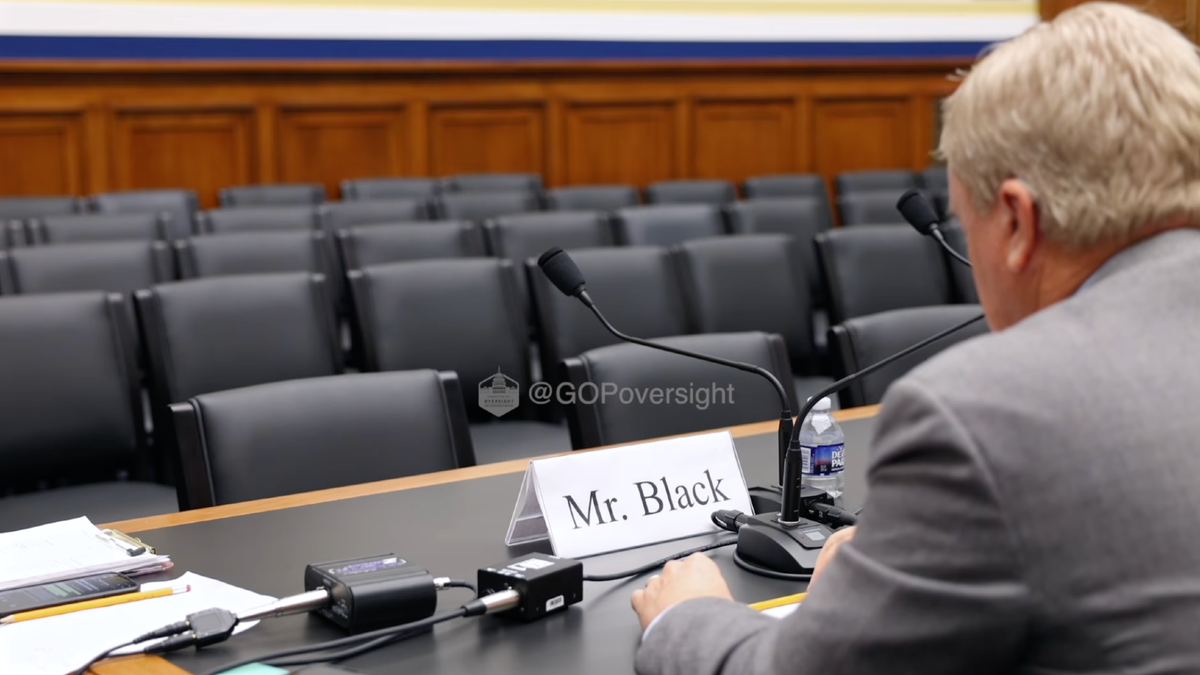
The U.S. House of Representatives voted in Washington on September 16 to hold Leon Black, billionaire art collector and former chairman of the Museum of Modern Art's board, in contempt of Congress for defying two subpoenas in its investigation of Jeffrey Epstein.
No member objected, so the resolution passed without a formal roll-call vote — a day after the House Committee on Oversight and Government Reform advanced it 41-0 on September 15.
The contempt citation refers Black to the U.S. Attorney for the District of Columbia, a formal recommendation that the Justice Department prosecute him. The committee's report asks that he be "proceeded against in the manner and form provided by law."
Rather than comply, Black sued the committee and its chairman, Rep. James Comer, R-Ky., in U.S. District Court for the District of Columbia on September 3, the morning his deposition was set to begin, to quash both subpoenas. The case is before Judge Colleen Kollar-Kotelly.
The subpoenas sought all nondisclosure agreements Black is party to, along with any involving Epstein or Maxwell. Some are settlements with women who accused him.
Urgent Matter reported earlier this year that a review of the Justice Department's Epstein files found investigative records describing sexual abuse allegations against Black by at least three women. One was 16 when she was allegedly assaulted at Epstein's Manhattan home.
The files include a text message one accuser sent Black asking for "that document that I was forced to sign under duress and wasn't able to read before signing."
One of the three suits, alleging Black raped a 16-year-old girl with developmental disabilities at Epstein's home in 2002, drew federal sanctions this year against the plaintiff for falsifying sonogram images in her journal and against her lawyers for lying to the court. The judge declined to dismiss the case outright.
This article is provided free with the support of paying subscribers. Not ready for a paid subscription? Sign up for a free account today.
No spam. Unsubscribe anytime.
Comer first wrote Black on March 3, about a month after the Justice Department released a tranche of Epstein files that named him. He asked Black to sit for a voluntary interview about the federal government's handling of the Epstein and Ghislaine Maxwell cases.
Black appeared in a Rayburn House Office Building hearing room on June 26 and began by denying any role in Epstein's crimes.
"I have never abused a woman. I have never been with an underage woman. I have never engaged in sex trafficking. I have never paid Epstein for access to women. I was never blackmailed by Epstein," Black said, the transcript shows.
Committee staff turned to nondisclosure agreements less than an hour in. Black answered questions about one woman before his lawyer stopped the rest.
"How many NDAs are you a party to?" a committee lawyer asked. Susan Estrich, one of Black's attorneys, told him not to answer, saying the terms barred him from confirming that one even existed.
Committee staff served Black with two subpoenas during the voluntary interview, one for a deposition and one for documents, and he walked out.
"This was nothing more than a planned political stunt," Black's counsel said on the record. He added that the committee "did not ask a single question about his payments to Epstein."
The document subpoena demanded "all non-disclosure agreements to which Leon David Black is a party," along with any to which Epstein or Maxwell was a party or in which either was "referenced or … involved," the subpoena shows.
Black produced one agreement on July 24 — a confidentiality agreement with Guzel Ganieva, a former model with whom he testified he had a six-year affair. In a letter to the committee, his lawyers called it "the only one within the scope of the Committee's goals."
Comer rejected that in an August 18 letter, demanding "full compliance" and warning the committee would "use all tools at its disposal, including contempt." Black sued two weeks later.
His complaint asks the court to declare both subpoenas invalid, arguing they "exceed OGR's delegated authority in seeking private information that bears no legitimate connection to OGR's legislative purpose" and would "expose women who value their privacy, who have no known or public connection to Epstein."
It also argues that House committees have no authority to enforce their subpoenas in federal court and calls the inquiry a "public fishing expedition."
Black's lawyers say the ethics complaint they filed against Comer with the Office of Congressional Conduct is confidential and its allegations are not public.
Comer defended the move at the September 15 committee meeting where the resolution was approved. "Subpoenas are not suggestions. They carry the force of law and require full compliance," he said.
Rep. Robert Garcia, D-Calif., the committee's ranking member, joined Republicans in the vote. "This is an important step towards justice, but there is just an enormous amount of work to be done," Garcia said.
Black's account of Epstein rests largely on a 2021 report by the law firm Dechert, commissioned by the board of Apollo Global Management, the private equity firm Black founded and led for 31 years. He filed the report as an exhibit to his lawsuit.
Dechert found that Black paid Epstein $158 million between 2012 and 2017 for tax and estate planning and other advisory services. It saw "no evidence that Black … was involved in any way with Epstein's criminal activities," the report shows.
The Senate Finance Committee has put the figure closer to $170 million and questioned whether Epstein's strategies helped Black avoid gift and estate taxes, Urgent Matter previously reported.
Much of that structuring ran through Black's art. Epstein files released by the Oversight Committee last year show Epstein weighed in on a Picasso purchase Black was making from the gallery Gagosian, Urgent Matter reported after reviewing more than 150 pages of emails.
"Gagosian. No written contract??!! Fishy to me," Epstein wrote to a Black adviser. "Who transfers 100 million dollars overseas without a contract?"
The emails show Black's art purchases were structured through intermediaries and trusts. Heather Gray, an attorney structuring Black's transactions, wrote of a tax-deferred swap involving an Alexander Calder work that "Leon did not want to use a gallery because he was concerned about confidentiality."
She added that Black was "extremely concerned about confidentiality with the purchase of the Cezannes."
Epstein modeled Black's cultural companies, the publisher Phaidon, which Black owns, and the digital marketplace Artspace as assets that could generate tax losses. In one message, he proposed his fee: "I will only work for the usual $40 million per year."
Black also loaned Epstein $30.5 million in early 2017. The Dechert report says the money was "made in connection with an art transaction involving Epstein." Epstein repaid $10 million, and the balance remained unpaid when he died in 2019.
Black's collection, estimated at as much as $5 billion, spans Munch, van Gogh, Cézanne and Picasso, and he has pledged works as loan collateral, Hyperallergic reported.
He now plans to put some of it on public view. William Cohan's upcoming book Money to Burn, out this month, reports that Black intends to convert the Woolworth Mansion, a French Gothic townhouse on East 80th Street he bought last November for $38 million and the largest private residence in Manhattan, into a foundation he described as "his version of the Neue Galerie."
Cohan writes that Black is setting up the foundation "for tax purposes."
It would be Black's second reinvention of a landmark New York art address. He bought the former home of Knoedler & Company, the gallery that shuttered in 2011 amid a fake-artwork scandal, for $50 million in 2014. It now holds part of his collection, Cohan writes.
Black joined MoMA's board in 1997 and chaired it beginning in 2018. He did not seek re-election as chairman in 2021 after an open letter signed by more than 150 artists called for his removal over the Epstein payments. Marie-Josée Kravis succeeded him, and he remains a trustee.
Black paid $62.5 million to the U.S. Virgin Islands in 2023 to settle Epstein-related claims, releasing him from liability under the agreement.
The fallout has reached other institutions Black funded. Dartmouth named its visual arts center for Black, a 1973 graduate who gave $48 million toward it with his wife, Debra. Rep. Ro Khanna, who sat in on Black's June 26 interview, said in March that students wanted the name removed.
"Leon Black is all over the Epstein files with very serious allegations," Khanna said then. "It's time to hold these men responsible."
In February, the British artist Tai Shani withdrew a monograph from Phaidon over the Epstein disclosures.
Urgent Matter is reader-supported. Please consider subscribing to support independent arts journalism.