Miami collector says Chrono24 let dealer sell Rolex it didn’t have
A dispute over a six-figure Rolex tests how online marketplaces shape value for rare objects.

A dispute over a six-figure Rolex tests how online marketplaces shape value for rare objects.
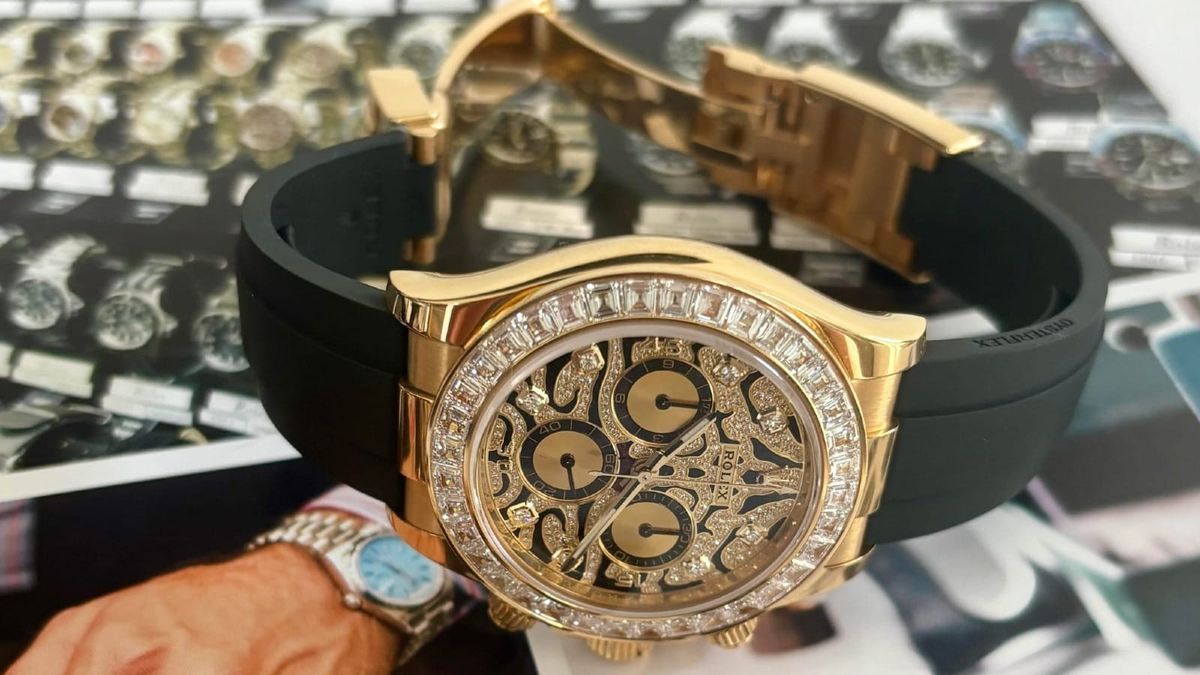
A Miami Beach man who said he paid $210,000 for a Rolex alleged the platform where he tried to resell it shut down his listing, then allowed another dealer to advertise the same model as available, accept a buyer’s payment and allegedly come to him asking to buy his watch at a loss to fill the order.
Matthew Barnes made the allegations in a June 4 pre-suit demand letter sent to Chrono24, a Germany-based online marketplace for luxury watches. He provided Urgent Matter with the demand letter, a supplemental pre-suit notice and screenshots of listings, platform messages and text exchanges that he said support his claims.
He also provided a draft lawsuit that has not yet been filed. Barnes said it is scheduled to be filed on June 15 in Miami-Dade County, Florida.
Chrono24 acknowledged receipt of Barnes’s correspondence in an email from a junior legal counsel at MPN Marketplace Networks GmbH, Chrono24’s holding company, according to a response Barnes provided to Urgent Matter. The response did not address the substance of Barnes’s allegations.
In a statement after publication, Chrono24 said it may decline or deactivate a listing when the stated price is “grossly disconnected from a watch’s real market value,” saying that policy protects buyers and the integrity of the marketplace.
The company said it does not comment on individual transactions or their commercial terms, but said a transaction fee on Chrono24 “only applies once a sale is successfully completed.”
Urgent Matter reached out to G&G Timepieces for comment Friday evening and has not yet received a response back.
This article is provided free with the support of paying subscribers. Please consider signing up for a paid subscription today.
No spam. Unsubscribe anytime.
The watch at issue is a Rolex Daytona “Eye of the Tiger,” reference 116588TBR, in yellow gold. Barnes said he bought the watch for $210,000 and later listed it for sale on Chrono24. He provided a screenshot of the listing, which showed 841 views in 48 hours.
After posting his listing, Barnes received a message from Chrono24 on February 26 that it had “noticed a price abnormality” and asked him to check the listing price again.
Barnes said he wrote back and told Chrono24 the price was intentional. He said he had deliberately listed the watch above competing examples because he suspected some lower-priced listings did not reflect watches that were actually available for immediate purchase.
“I did not want to value my watch based on listings that could potentially be inaccurate or misleading,” Barnes told Urgent Matter.
Barnes then received an email notifying him that his listing required attention.
“The sales price is very different from the value of the item,” Chrono24 told him in that email. “You can use our free appraisal tool to determine the current value of your watch and adjust the sales price accordingly.”
Chrono24 said it had temporarily deactivated the listing “to avoid any further misunderstandings.” It later allegedly told him the listing would not be reinstated.
At the same time, Barnes said, G&G Timepieces was advertising the same model on Chrono24 for $201,466. That listing remains active on the platform’s website, listed as “in stock.”
Chrono24 said an “available” listing means the watch is in stock and ready to ship, while “on request” indicates a sourcing service. “Misrepresenting availability violates our policies and is sanctioned,” the company said.
It declined to comment on individual dealers, but said buyer funds are held through its Trusted Checkout system until a transaction is properly completed.
Barnes alleged G&G did not have the watch. His demand letter described the listing as a “ghost listing.” It said Chrono24 accepted a buyer’s payment of $201,466 and collected a 5.5% commission of about $11,080.
The provided materials include a screenshot of a conversation between Barnes and a G&G representative named Alec. In that conversation, Alec included a screenshot of a conversation between G&G and the buyer in which the buyer asks when the watch will ship and noted that a payment had been made.
In the conversation between Barnes and Alec, the latter said, “I sold it for 185,” followed by, “Minus the discount minus 5.5% chrono fees.”
Another text exchange included in the materials said: “It’s closed. It’s on Chrono. Already paid. What’s a little more? 178?” Barnes told Urgent Matter that was an attempt to get him to sell his watch for $178,000, $32,000 less than he paid.
Barnes said his last communication with G&G occurred after the watch had been sold, when the dealer contacted him about potentially buying his watch at a discount to fulfill the order.
“During that communication, I was informed that they believed they could source another example from Hong Kong for approximately $175,000 if I was unwilling to accept a lower price,” Barnes said. “I did not respond further.”
Barnes later sent Chrono24 a supplemental notice pointing to a G&G social media post that said a Rolex Daytona “Eye of the Tiger” had been “sourced and sold.”
The supplemental notice said the listing advertised the watch as available and in stock at the time of sale. Barnes argued G&G’s later conduct indicates the dealer was still trying to obtain inventory after the buyer paid through Chrono24.
Barnes’s demand letter said the alleged conduct would support claims of tortious interference, deceptive and unfair trade practices, civil conspiracy and unjust enrichment.
The letter gave Chrono24 until June 12 to resolve the matter.
Barnes’s preferred option was for Chrono24 to buy his watch for $210,000, the amount he says he paid, with insured pickup in Miami and payment within five business days.
As an alternative, Barnes demanded $47,000, including $32,000 for the difference between his purchase price and the $178,000 offer he received, plus $15,000 for his costs and time.
A third option called for Chrono24 to identify the buyer who paid $201,466. Under that proposal, the buyer would purchase Barnes’s watch for $210,000, while Chrono24 would give Barnes its 5.5% commission of $11,080 plus another $10,000.
The fourth option, if the disputed sale had not been completed or shipped, called for Chrono24 to cancel the G&G listing, refund the buyer, reinstate Barnes’s listing without a price restriction, and pay Barnes $10,000.
The letter also asks Chrono24 to preserve internal communications about G&G Timepieces, transaction records, listing history for the “Eye of the Tiger” Daytona, internal appraisal-tool data applied to Barnes’s listing and communications between Chrono24 and G&G about sourcing, fulfillment or post-sale conduct.
The broader issue, Barnes argued, is whether Chrono24’s appraisal tool and listing rules are shaped by sales data from watches sellers do not actually possess.
In the draft complaint, Barnes alleges Chrono24’s appraisal tool may rely on transaction data generated by “ghost listings.” He said those listings can make a watch appear to be worth less than an actual owner would accept.
“By permitting fake listings at artificially low prices, Chrono24 depresses the reported market value of watches like mine,” the draft complaint said. “Chrono24 then uses those depressed values to deactivate legitimate sellers who refuse to sell at a loss.”
Similar concerns have long plagued the art world, where practices such as chandelier bidding, inflated reserves, and questionable comparables distort true market value. In art, design, rare books and other markets for expensive objects, a listing becomes a reference point for what buyers, sellers and platforms believe an object is worth.
Barnes said he is speaking publicly because he believes online marketplaces for expensive goods should be more transparent about what is actually available and how prices are evaluated.
“I support free markets, entrepreneurship, and capitalism,” Barnes said. “However, consumers are entitled to ask whether some of the world’s most influential companies and investors are exercising sufficient care, accountability, and oversight.”
Barnes said he has the resources to pursue the matter, but many consumers do not.
“In my view, this dispute is about more than a six-figure watch,” he said. “It is about whether consumers are entitled to expect transparency, accuracy, and accountability when making substantial purchases through some of the world’s largest online marketplaces.”
Barnes added: “I am not seeking special treatment. I am seeking answers.”
Updated at 1:13 a.m. on June 7, 2026: Chrono24 responded after publication, saying it may decline or deactivate listings when a stated price is “grossly disconnected from a watch’s real market value.” The company said an “available” listing means a watch is in stock and ready to ship, while “on request” indicates a sourcing service. Chrono24 declined to comment on the specific G&G transaction or its commercial terms, but said transaction fees apply only once a sale is successfully completed.
Stories like this take time, documents and a commitment to public transparency. Please support independent arts journalism by subscribing to Urgent Matter and supporting our work directly.