Copyright Office faces lawsuit over 'Suryast' A.I.-assisted artwork
Ankit Sahni says the agency wrongly refused to register Suryast, a work made from his own photograph using an A.I. painting app.

Ankit Sahni says the agency wrongly refused to register Suryast, a work made from his own photograph using an A.I. painting app.
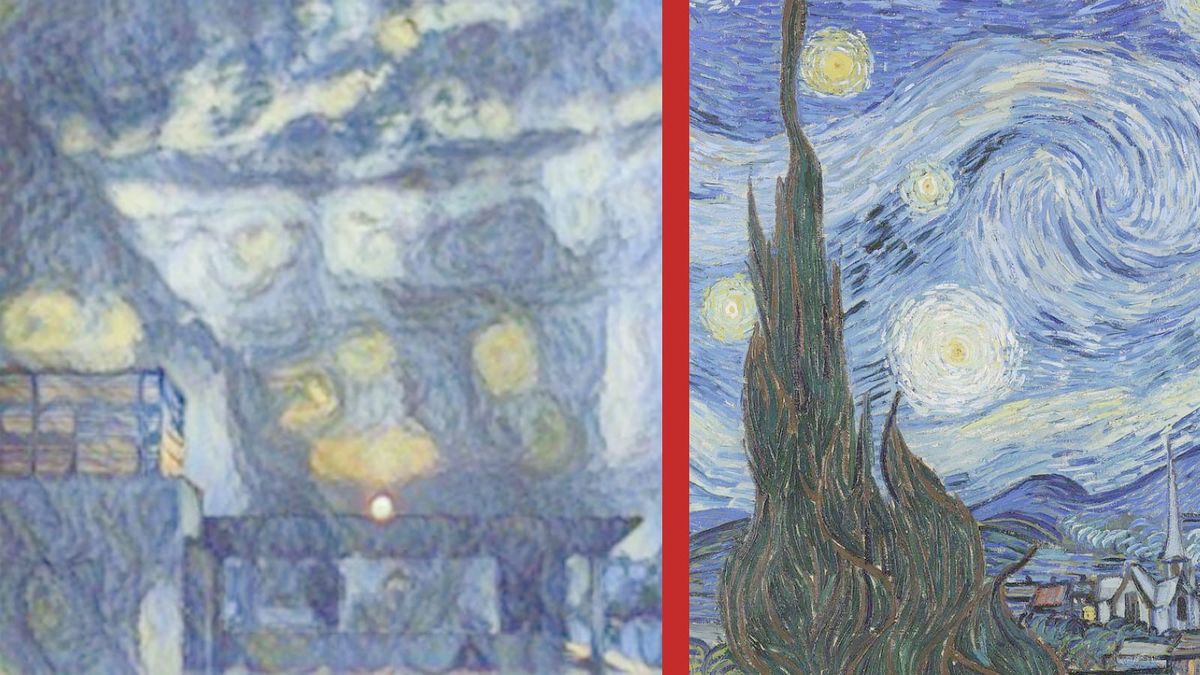
A California company has sued the U.S. Copyright Office after the agency refused to register Suryast, an A.I.-assisted artwork created by intellectual property lawyer Ankit Sahni.
The lawsuit was filed May 8 in U.S. District Court for the Central District of California by Suryast U.S. Enterprises, which the complaint said was assigned Sahni’s rights in the disputed work.
California Secretary of State records show the company was formed in California on April 16, with Ryan Abbott listed as agent for service of process and Arun Avva as organizer. The record does not list Sahni as a member or manager.
The complaint asks a federal judge to set aside the Copyright Office’s refusal and order the agency to register the work, also named Suryast, with Sahni as the author.
Paid subscribers can read the full court documents.
 Adam Schrader
The case follows the U.S. Supreme Court’s decision in March not to hear computer scientist Stephen Thaler’s case over A Recent Entrance to Paradise, an artwork Thaler said was created autonomously by an A.I. system he built. He listed the system as the artwork's author.
The Suryast case does not argue that an A.I. system should be treated as the author of a copyrighted work. It said Sahni should be treated as the human author of a work made with the help of an A.I. tool.
Sahni created the work from his own photograph of a sunset over a building. He owns Raghav, an A.I. painting app used to make the work, which was developed in a funded project for him by machine-learning engineer Raghav Gupta, Managing IP reported in 2021.
The Copyright Office record describes the app as a style-transfer tool. Sahni supplied his photograph as the base image, van Gogh’s The Starry Night as the style image, and a numerical setting controlling how strongly the style would be applied.
The same work had already received attention abroad. India’s copyright office registered Suryast in 2020 with Sahni and the software Raghav listed as co-authors, Managing IP reported, after rejecting an earlier application that listed the app as the sole author.
Sahni first submitted the work to the U.S. Copyright Office for registration in March 2022, naming himself as author and acknowledging that he used Raghav as an assistive software tool, according to the complaint.
The Copyright Office refused the application in June 2022, saying the work “lacks the human authorship necessary to support a copyright claim” and that because the work “was in part generated by a computer program,” the office was “unable to register” the claim.
Sahni sought reconsideration, arguing that he made the creative choices behind the work, including taking the photograph, choosing the style image and selecting how strongly the style would be applied. His lawyers also asked to amend the application to list only Sahni as the author and remove the app as an author of the two-dimensional artwork.
The Copyright Office refused again in April 2023. The office said the work was a “derivative work,” meaning a new work based on an earlier one, and that it did “not exhibit the requisite human creativity needed to support a claim to copyright in a derivative work.”
The office issued its final refusal in December 2023. According to the complaint, the office said the work was “not the product of human authorship” because “the expressive elements of pictorial authorship were not provided by Mr. Sahni.”
The agency’s position was that Sahni’s photograph could be protected on its own, but that the new visual elements in Suryast came from the app, not Sahni. The dispute now turns on whether Sahni’s choices before using the app were enough to make the final image a human-authored work.
The complaint said the Copyright Office’s rule in effect creates “a per se denial of registration to any work or portion of work that is created using A.I. tools.” The company argued the office ignored his creative control over the process and treated the use of A.I. as disqualifying.
The lawsuit was filed under the Administrative Procedure Act, which allows courts to review final decisions by federal agencies. The complaint said the refusal was not supported by the Copyright Act or other federal law and was “arbitrary, capricious, an abuse of discretion and not in accordance with the law.”
Unlike Thaler, the company argued that Sahni controlled the A.I. system, but the Copyright Office was not persuaded, Pillsbury’s Internet & Social Media Law Blog noted after the December 2023 refusal.
Holland & Knight’s IP/Decode Blog also noted that the Sahni decision left open future questions, including whether a different result might follow if an artist designed the A.I. model, selected its training material or used A.I. only in a minimal way.
Follow along with other lawsuits at Urgent Matter's art lawsuit tracker.