How generative A.I. tool Claude helped create Jon Sarkin’s catalog raisonné
A three-person team — two humans and Claude — digitized, transcribed, and enriched Jon Sarkin’s densely inscribed artworks.

A three-person team — two humans and Claude — digitized, transcribed, and enriched Jon Sarkin’s densely inscribed artworks.
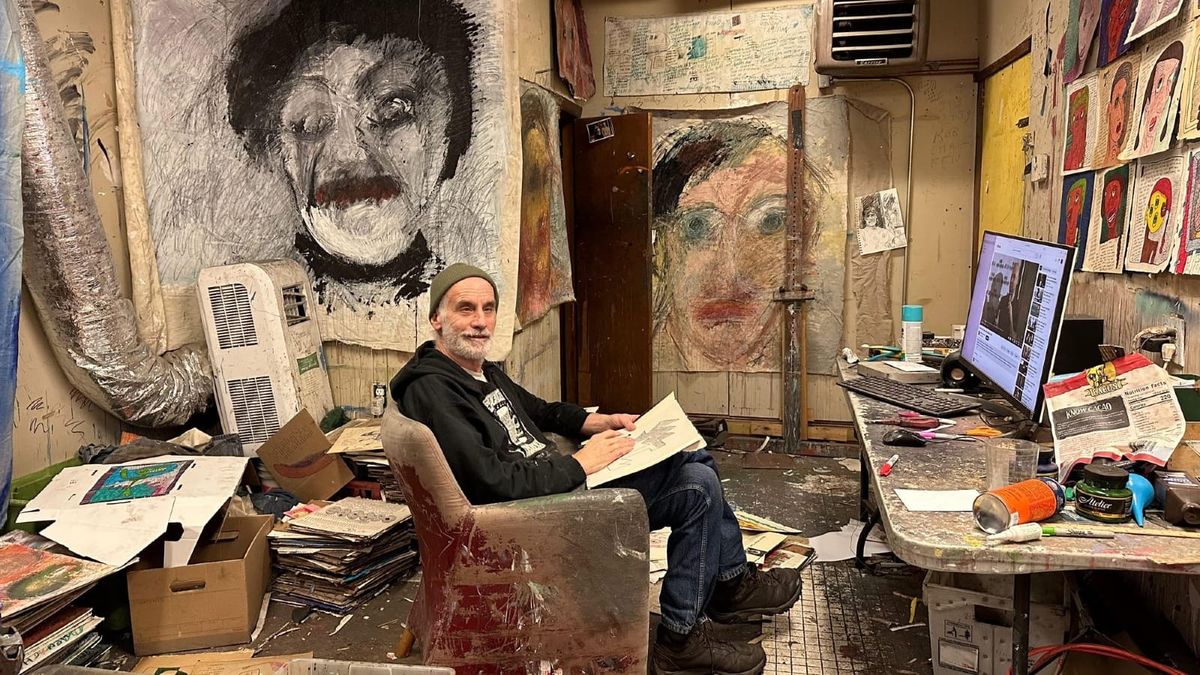
Fish City Studios, the estate of the late artist Jon Sarkin, has launched an online catalog raisonné of his work created with the help of Anthropic’s generative artificial intelligence tool Claude. It is believed to be among the first catalog raisonnés produced with assistance from a mainstream A.I. platform.
Sarkin, an outsider artist who died in 2024, was originally a chiropractor who turned to art after suffering a cerebellar stroke in 1989. His life was documented in a 2011 book by Pulitzer Prize finalist Amy Ellis Nutt, and his work is held in the permanent collections of the Centre Pompidou and the deCordova Sculpture Park and Museum.
Fish City Studios launched the catalog raisonné last month. It currently includes more than 5,300 artworks out of about 20,000 made during his career. Mark Henderson, a close friend of the artist and the estate’s business manager, said it was completed by just three team members: himself, Alessia Saputo, and Claude.
“While we find generative A.I. art kind of revolting, it was super useful to use Claude to make the website, to do the transcriptions of all the text, because Jon’s pieces are all really text-heavy,” Henderson said.
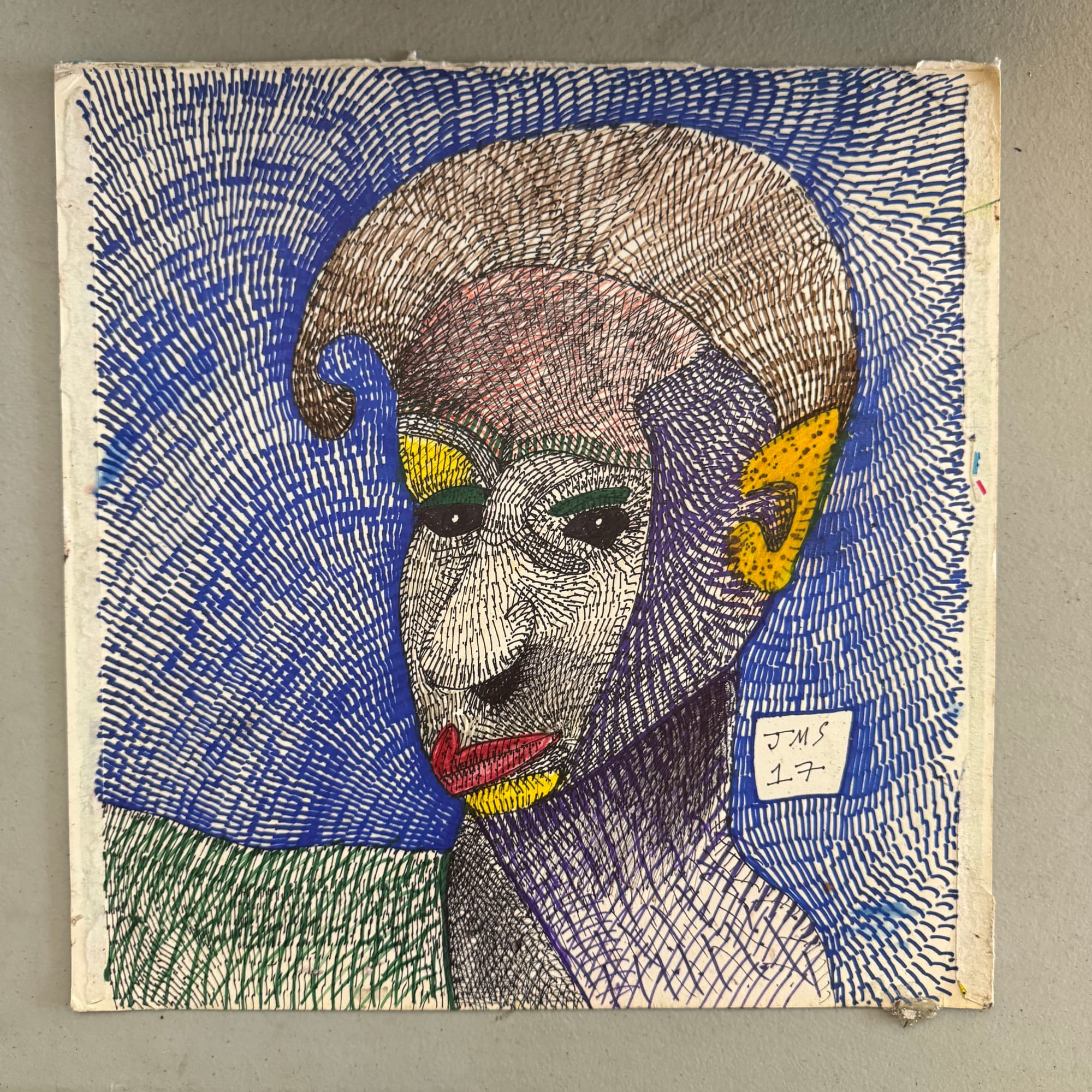
The catalog raisonné includes every word on every piece transcribed. After Saputo took photographs of each piece, the images were uploaded, named and run through a custom workflow Henderson built around Omeka S, an open-source platform used for institutional collections and digital archives.
Henderson said the process has two cycles. First, images of Sarkin’s works are fed into Claude to extract the handwritten text. Then that text is fed back into Claude to identify cultural references, names, motifs, and related material across the archive.
This means users can search by the references Sarkin repeatedly embedded in his dense, text-heavy compositions. Henderson said the database can show works connected to Bob Dylan even when Sarkin wrote “Mr. Tambourine Man” instead of Dylan’s name. Claude has found 42 references to John Lennon in Sarkin’s work.
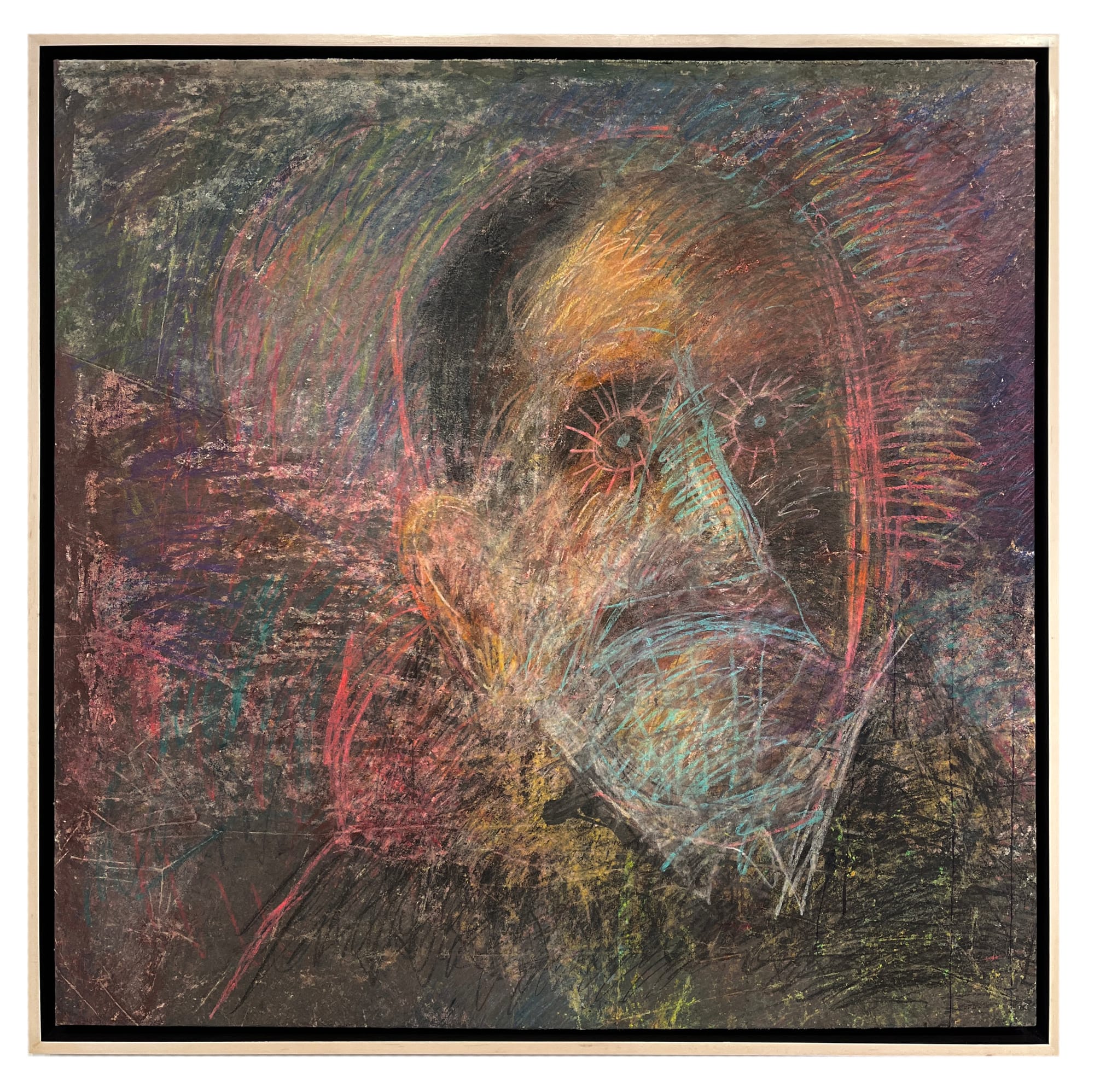
The site also uses visual similarity search, which operates independently of Claude’s text analysis. Henderson described it as “not A.I. but sort of A.I.-adjacent.” This feature uses vector search to find works that visually resemble each other, allowing users to navigate the archive by image as well as text.
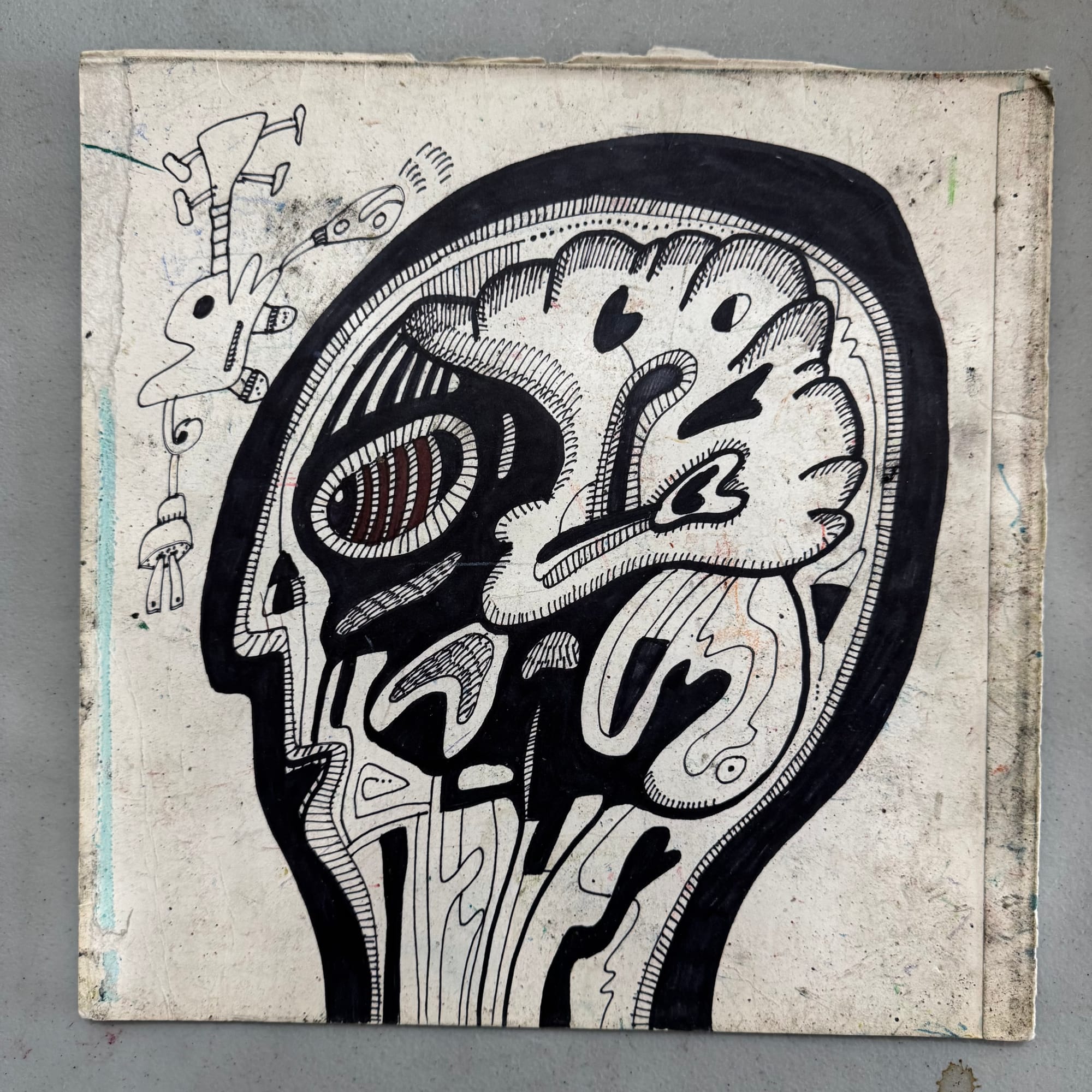
The catalog’s search tools can track recurring subjects and motifs, including pop culture references, buildings, fish, eyes, portraits of women and Sarkin’s repeated use of medical imagery related to his own brain.
Henderson said the team has been using the data to understand how often and when certain motifs appear in Sarkin’s career. It is beginning to show patterns that were difficult to assess when the art existed largely as a vast, disordered body of drawings, album sleeves, foam core works, and other objects.
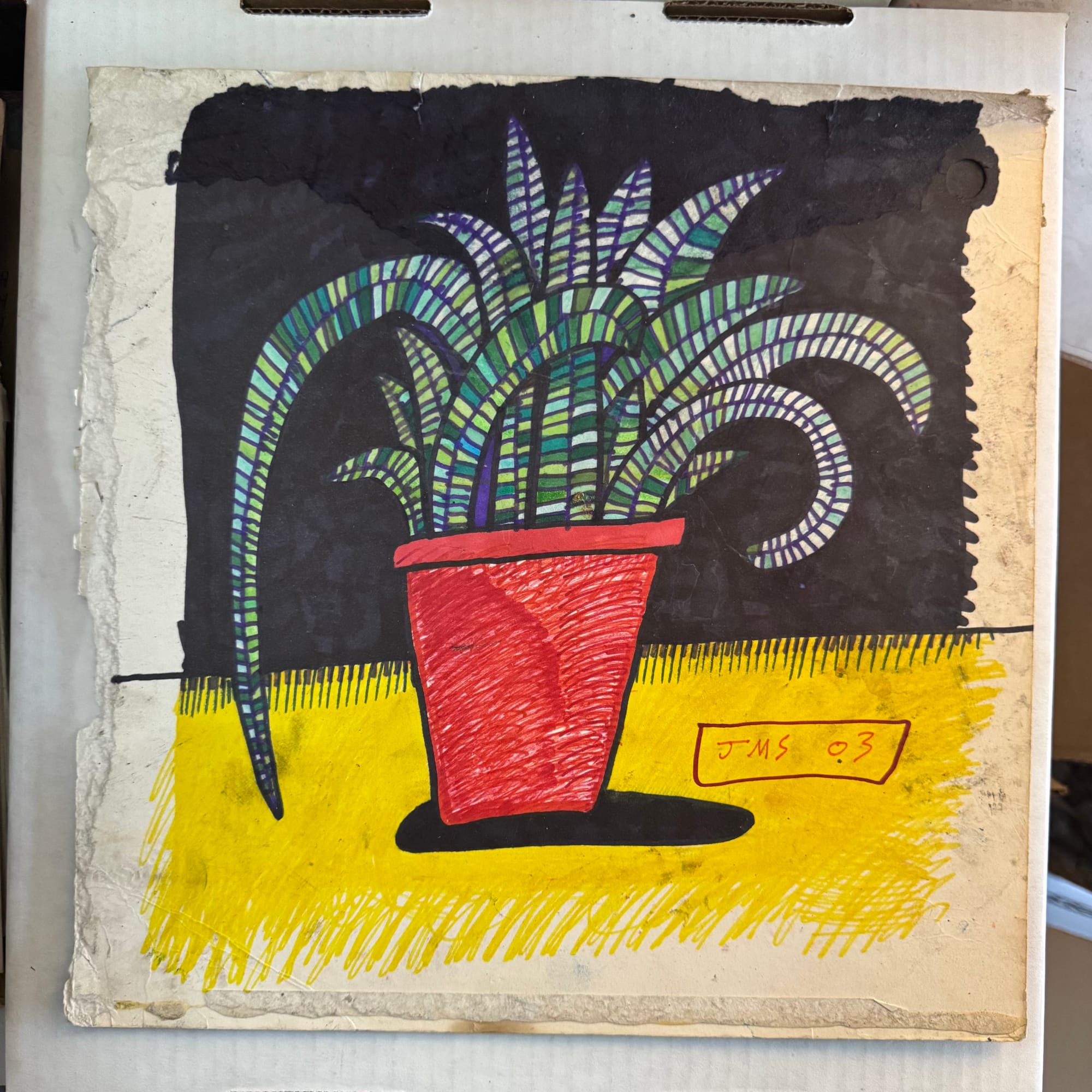
Henderson said early works show Sarkin wrestling with the influence of Andy Warhol and Robert Crumb, while later works became more intense and stream-of-consciousness before moving into heavily worked album-sleeve pieces.
Those works often return to Sarkin’s medical history — many include imagery based on MRI scans of Sarkin’s brain, along with text in which the artist questioned his own compulsions and process.
“He asks himself a lot of questions, talks about, like, ‘I don’t know why I do this,’ stuff like that, ‘is this a compulsion, is this a necessity’ stuff,” Saputo said.
Sarkin repeatedly emphasized that the writing in the works mattered, even as viewers were drawn first to the images' visual force, Henderson said.
“He would just do this kind of stream of consciousness writing, and then draw a simple subject on top of it, and he’d always stress, like, ‘No, the writing’s really important, it’s almost as important as the art,’” he said.
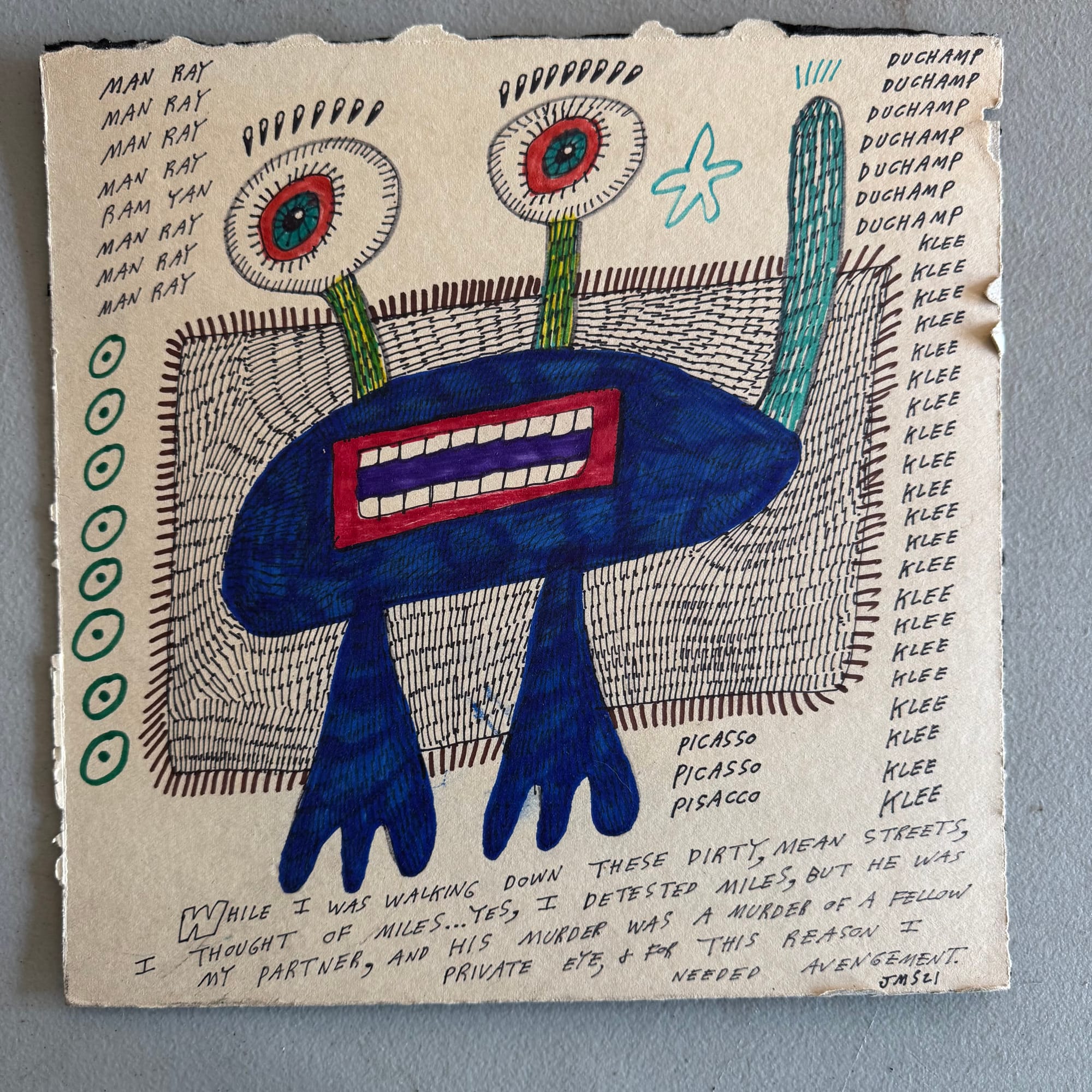
Henderson said Sarkin’s work has always been viewed as “un-catalogable” because he would draw something, then throw it on the floor and be done. The work became a closed collection after Sarkin’s death, forcing the estate to shift from the artist’s working environment to an archival mode.
“When we took over, the first thing was to get the art up off the floor and realize we have to treat this outsider artist’s collection as a white-glove thing now,” Henderson said.
The catalog is not complete. Henderson said the estate knows of roughly 15,000 to 20,000 works, with most still under its control. Others are held by institutions or private collectors. The estate created a submission tool for collectors who own Sarkin works, and the site had received 44 submissions about two weeks after launch, some with multiple works.
“So, we’re going through the process of reviewing those, verifying them, and then either accepting or rejecting the submissions as they come in,” Henderson said.
So far, Henderson said rejected submissions have been duplicates, not false positives or forgeries. Once accepted and converted into a catalog item, the system extracts text from the uploaded image and begins the same enrichment process used for estate-held works.
The site was built with custom modules Henderson created for Omeka S, including a rapid editor tool, collector submission tool and simplified upload system. He said Claude was also used in that development process.
“What I did is I also used Claude to sort of vibe code up a bunch of these custom modules that intercept when somebody uploads a piece,” Henderson said.
That automation was necessary because of the archive’s scale. Henderson said the team initially thought they might have about 2,000 works online by a self-imposed May 7 deadline for an exhibition at Sarkin’s alma mater, the Pingree School.
“Once we decided to use our cell phones to take pictures, use A.I. for enrichment, and go full steam ahead, that unlocked us,” Henderson said.
The project also includes a quality-control process, though Henderson said some A.I.-generated connections still need review. In the site’s admin panel, works can be flagged for missing height and width metadata and incomplete transcriptions.
Because generative A.I. tools are known to produce hallucinations, Henderson was asked whether the team had fact-checked Claude's input and connections. He said he has not double-checked every cultural connection Claude made but said spot checks have been encouraging.
“Reviewing randomized pieces of its output has been positive,” he said. “But that doesn’t preclude acute issues here and there.”
The project’s code has been posted to GitHub, making it available to people with the technical ability to reuse it. Henderson said it was built specifically for Sarkin’s estate and is not yet packaged as a plug-and-play tool for other artists’ estates.
“It means all the source code is available,” Henderson said. “So if somebody with the know-how wanted to grab it and reuse it, they could today.”
The catalog also has scholarly ambitions. Henderson said Colin Rhodes has written an introductory essay placing Sarkin in the context of outsider art, but the estate hopes the searchable data will eventually allow other researchers to analyze specific motifs, references and periods in Sarkin’s work.
“That’s sort of the idea behind all of this, is that we want to put this out there so that people will write their theses about Jon’s work, or they’ll be able to put together a paper or something like that,” Henderson said.
At the same time, the estate is wary of how A.I. could be used against Sarkin’s work. Henderson said Fish City Studios has taken steps to block scraping and prohibit using images for A.I. training or style transfer. The catalog’s terms of use forbid using images for machine-learning training, including style transfer, because the estate does not want people generating imitation Sarkin works from the archive.
“We don’t want people to come with their bots and scrape all the data from this, and then be able to say, like, ‘Make me a Jon Sarkin drawing of my cat,’” Henderson said.
Henderson said the estate is nonetheless interested in future user-facing A.I. tools, such as a chatbot that could help researchers query the archive for specific subjects, dates, motifs or visual patterns and return catalog entries.
“There’s an anti-answer to your question. This is stuff we don’t want people to use A.I. for because we’re aware of the ethics, but we want to maximize the utility of the search and the catalog’s usefulness to scholars and researchers,” he said. “So, we’re trying to walk this tightrope of A.I. use.”
Stories like this take time, documents and a commitment to public transparency. Please support independent arts journalism by subscribing to Urgent Matter and supporting our work directly.