UT Austin officials scrutinized anti-fascist student art show over compliance concerns
Records show officials discussed whether the show could “negatively impact the department."

Records show officials discussed whether the show could “negatively impact the department."
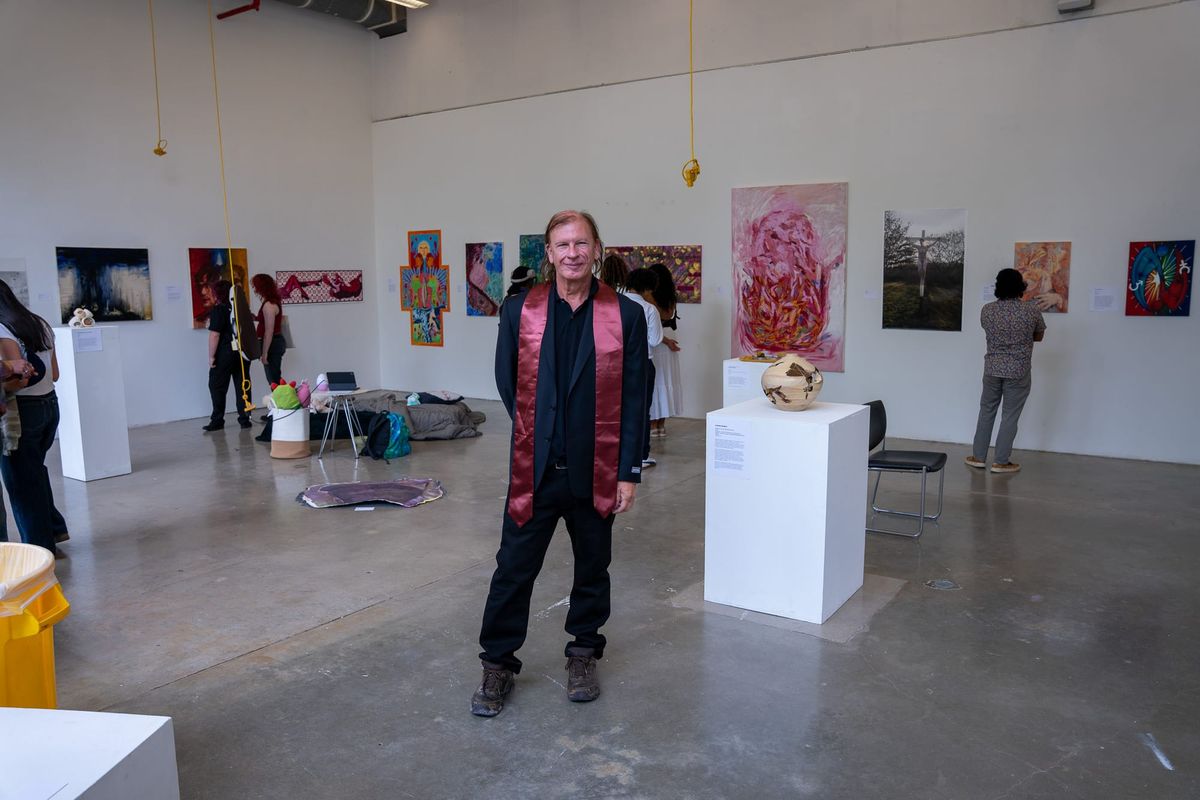
University of Texas at Austin officials privately reviewed an anti-fascist student art exhibition over concerns it could “negatively impact the department” or strike “a chord with the wrong party,” according to internal university records obtained by Urgent Matter.
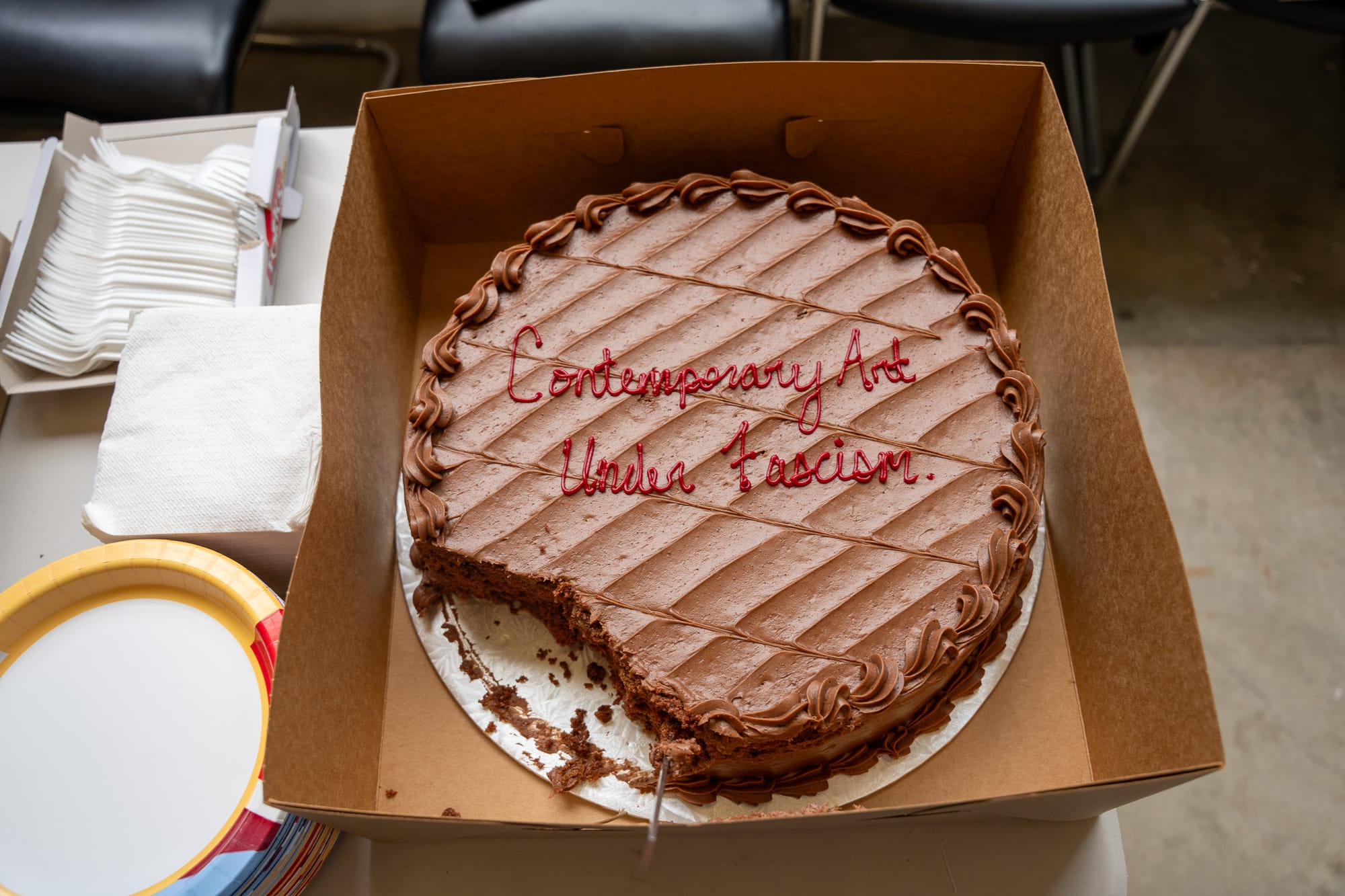
The records show administrators tracking a student-organized event they explicitly called an “anti-fascist exhibition.” The show, publicly titled “Contemporary Art Under Fascism,” was curated by undergraduate artist Scott Cobb and went on view April 17-18 in the university’s art building.
Cobb, a nontraditional student with a history of local political advocacy, has been involved in Austin civic campaigns. Last year, KUT reported that Cobb successfully nominated the Barton Springs bathhouse for naming after Joan Means Khabele, who helped desegregate the famed pool in 1960.
Paid subscribers can read the full documents.
 Adam Schrader
In an email to Urgent Matter, Cobb said the exhibition “did not happen as I wanted it to” because of rules placed on the show.
“They also would not let me allow anyone from other universities to participate,” Cobb said. “I had already received several submissions from other places, but I had to turn them down.”
Cobb said the rejected submissions included works by professors from Rice University and the University of Texas at Arlington. He also said he was not allowed to include work by recent UT Studio Art alumni.
In a written reflection on his website, Cobb said the Department of Art and Art History introduced new rules that “directly affected” the exhibition and “had not been in place for any previous exhibition in the UT Art Building.” The rules included restrictions on cash awards, outside participation, hiring an external installation company, and posting promotional materials without prior approval.
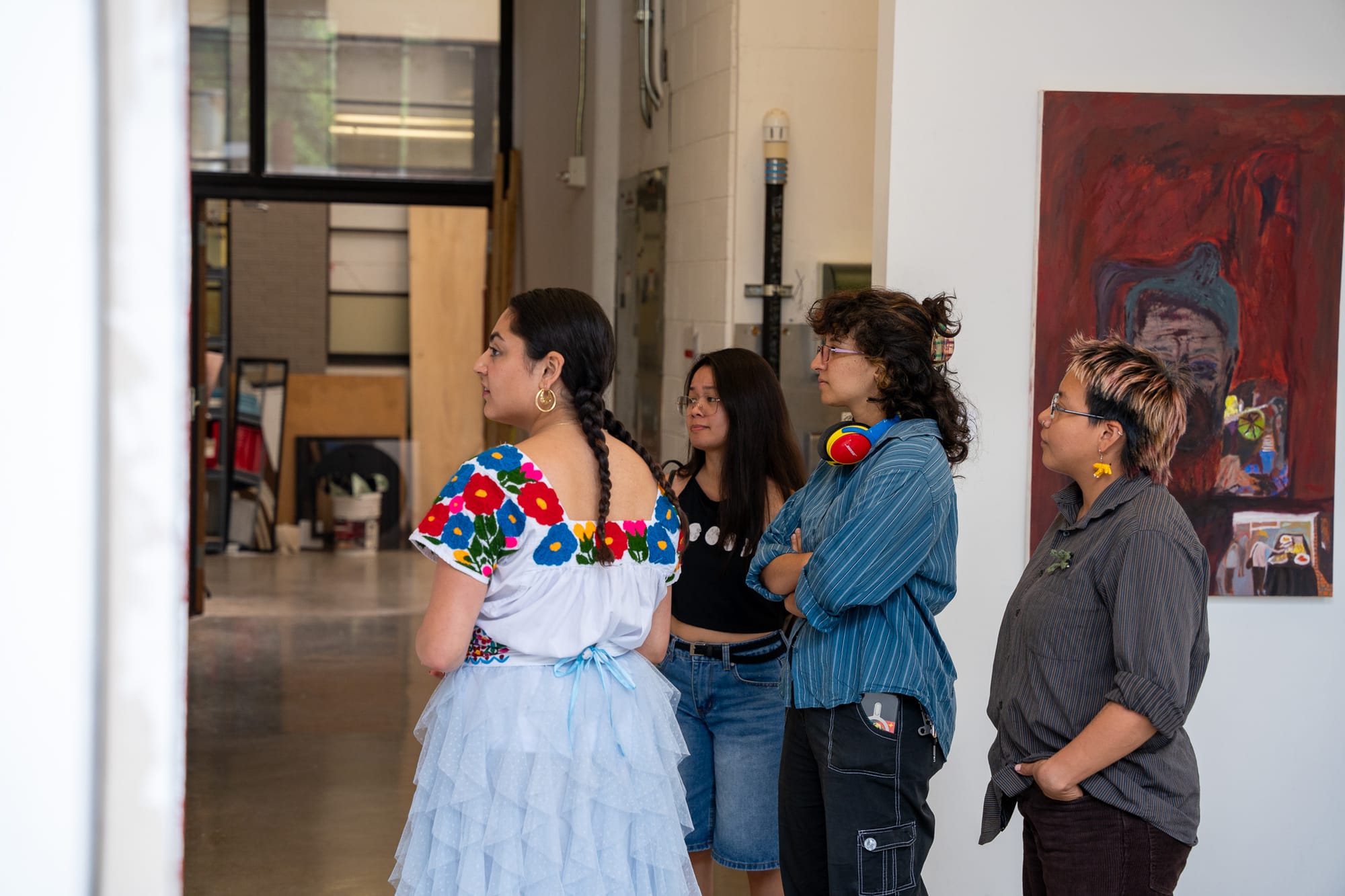
Cobb also wrote that one submission he had accepted was removed after his faculty adviser expressed concern about possible professional repercussions.
“I was not aware of the extent of internal discussion of the show, but I knew they put pressure on my faculty sponsor,” Cobb said. “It seemed their goal was to pressure me to move the show off campus.”
Administrators expressed concern about whether the show complied with university policies on political activity, use of facilities, and outside involvement in campus events. The review occurred amid heightened scrutiny of diversity programs, political expression, and institutional neutrality on Texas campuses.
“We just want to make sure this show will not negatively impact the department should any of the content strike a chord with the wrong party,” Theron Smith, building manager for UT’s Department of Art and Art History, said in a February email.
“We will be reviewing our campus guidance to make sure we are in compliance in our support of student expression when using our facilities from this SOP.”
Smith sent the email on February 19 after sculpture lab manager Emily Lee forwarded a student request to reserve the Big Crit Space, Small Crit Space, and possibly the “grad shed” for an April exhibition.
A promotional poster for the show on Cobb’s website invited UT students and faculty to submit work responding to “social conditions.” It listed Ricky Morales and Meredith Williams of Martha’s Contemporary as jury members.
The poster also stated: “There are no guidelines or requirements regarding the subject matter of the art. Artists respond in different ways to social conditions.”
The outside curators were among the issues discussed by administrators. UT’s speech and assembly rules distinguish between students, faculty and staff and “off-campus persons or organizations,” and require approvals in some cases when non-university participants are invited into dedicated campus spaces.
That framework helps explain why officials discussed not only the show’s politics but also who was sponsoring it, who was jurying it and whether the art building spaces could be used.
“I am glad we have Hannah as a faculty sponsor,” Smith said in an email. “I hope there will be little comment from us, but we may need your help communicating some expectations with the student curator.”
Hannah J. Spector, the faculty sponsor referenced in the emails, responded that Ricky and Meredith from Martha’s Contemporary — whom she described as friends — were jurying the show.
“I’ll talk to them about the concerns and go from there,” Spector said in an email. “I’ll see them this weekend and will report back.”
The discussion soon escalated beyond the facilities staff.
Susan Rather, chair of the Department of Art and Art History, forwarded the correspondence to Ramón H. Rivera-Servera, dean of the College of Fine Arts, describing the event as an “anti-fascist exhibition” already “widely advertised for April.”
“Although [the student] gives little information to Emily about the project, referring to it only as ‘my show,’ it’s clear that Hannah understood it was something larger,” Rather said in an email to Rivera-Servera.
“I find it quite odd that her response to Theron’s concern about content (he knew about by then from the posters) was to say she’d talk to the two curators, whom she identifies as her friends.”
Rather said Spector “should of course have spoken to me or to Eli and Jeff at least.”
“Ramón has asked that the two of us meet with him tomorrow after your class ends, which is to say at 5 pm in his office,” Rather wrote in a proposed message to Spector. “He wants to learn more about the anti-fascist exhibition that’s been widely advertised for April, for which you are apparently the faculty sponsor.”
A separate February 23 email from Timothy Creswick, director of faculty advancement in the College of Fine Arts, summarized university policies that he said “all seem to lean towards restricting use of space to only be for UT business.”
Creswick cited university policies concerning use of facilities, student organizations, speech and assembly, and authorized users of university spaces.
“From reading this, I think you could argue that departments do not have the authority to let non-UT Affiliates use their spaces at all,” Creswick said in an email. “Though, TPA has a carve out that lets them rent their spaces to third parties.”
The records were released after Urgent Matter filed a public records request seeking documents concerning the review, modification, cancellation, relocation or removal of art exhibitions, murals, performances or public displays in connection with political, legislative, policy or compliance concerns.
The university released three responsive communications without charge. Two focused on the anti-fascist exhibition, while a third concerned a separate Blanton Museum-related space-use issue. UT said the president’s office had no responsive records and that records in the provost’s office were either attorney-client privileged or dated after the request’s April 6 cutoff.
The request followed Urgent Matter’s March reporting on the University of North Texas, where internal text messages showed administrators worried about “barking from Austin” before the university canceled an exhibition by Brooklyn artist Victor Quiñonez, also known as Marka27, that included artworks critical of U.S. Immigration and Customs Enforcement.
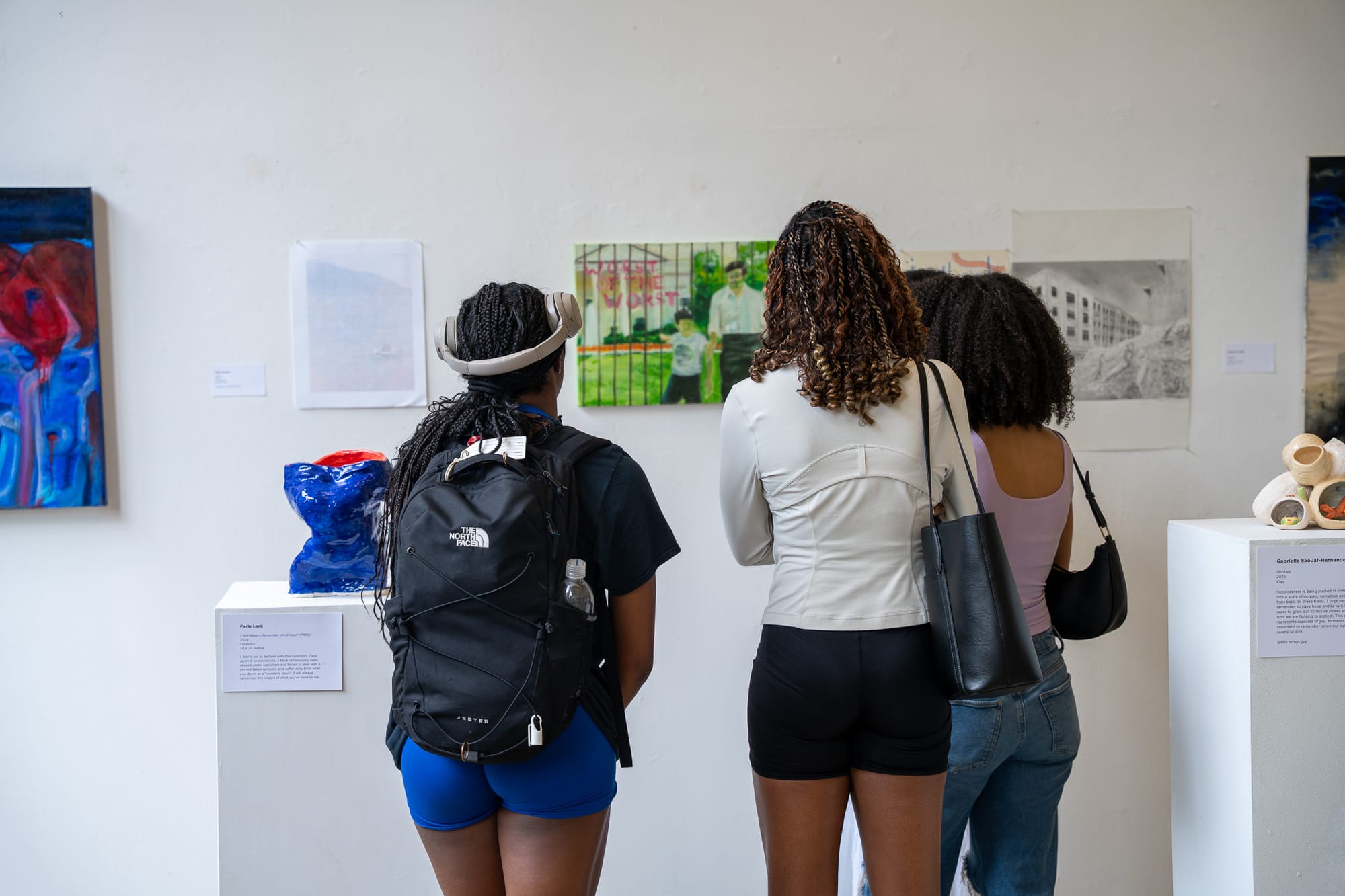
The exhibition itself publicly framed the issue as a test of whether universities would tolerate political artistic expression. It featured 42 works by 22 student and faculty artists, according to the Austin Chronicle, which previewed the show days before it opened.
“This art show is designed to be a place of dialogue,” Cobb told the Austin Chronicle.
Cobb directly connected the show to the recent cancellation of Quiñonez’s exhibition at UNT.
Adam Schrader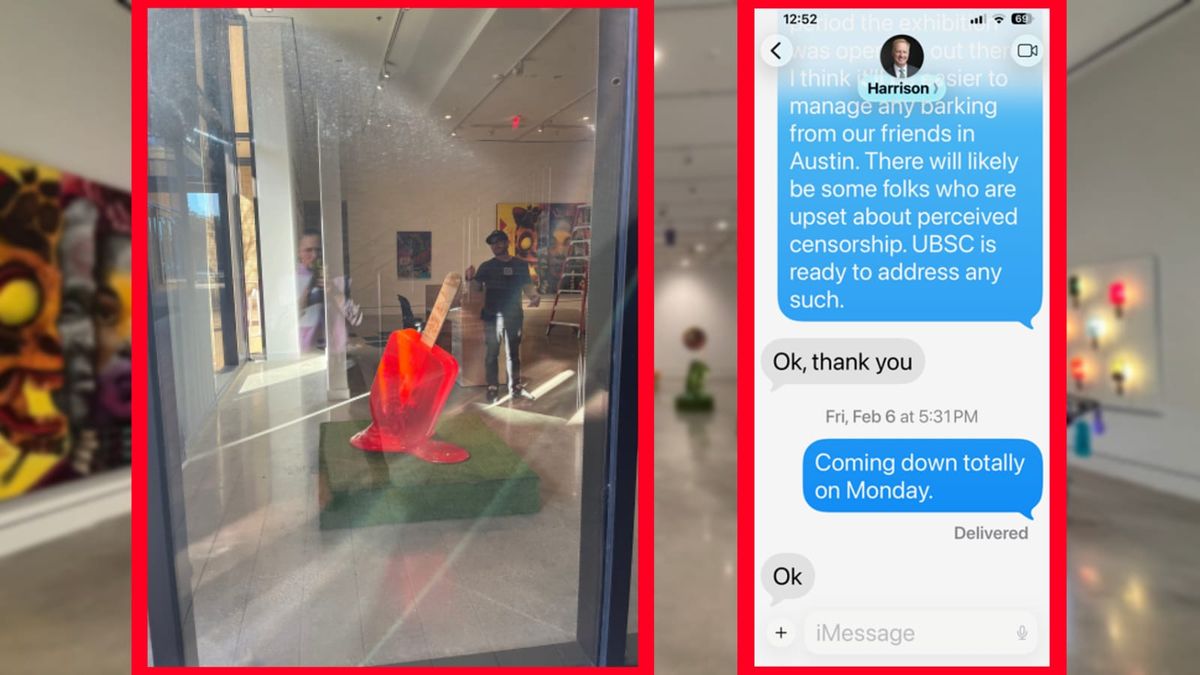
“I think a lot of people are afraid of being too vocal because they know that something could happen,” Cobb told the Austin Chronicle.
“This is a test,” Cobb said. “Do universities tolerate artistic expression? Do they clamp down on political speech? Or is this a safe place for students to come?”
Because the original request had an April 6 cutoff date, Urgent Matter filed a follow-up public records request after preparing this article. It seeks additional UT records after that cut-off, including those involving the provost’s office and legal affairs. The request remains pending.
Stories like this take time, documents and a commitment to public transparency. Please support independent arts journalism by subscribing to Urgent Matter and supporting our work directly.