New College says no records exist on art removals as official calls reports 'not news'
After seeking records tied to campus art controversies, New College said Urgent Matter was “trying to create a story that doesn’t exist.”

After seeking records tied to campus art controversies, New College said Urgent Matter was “trying to create a story that doesn’t exist.”
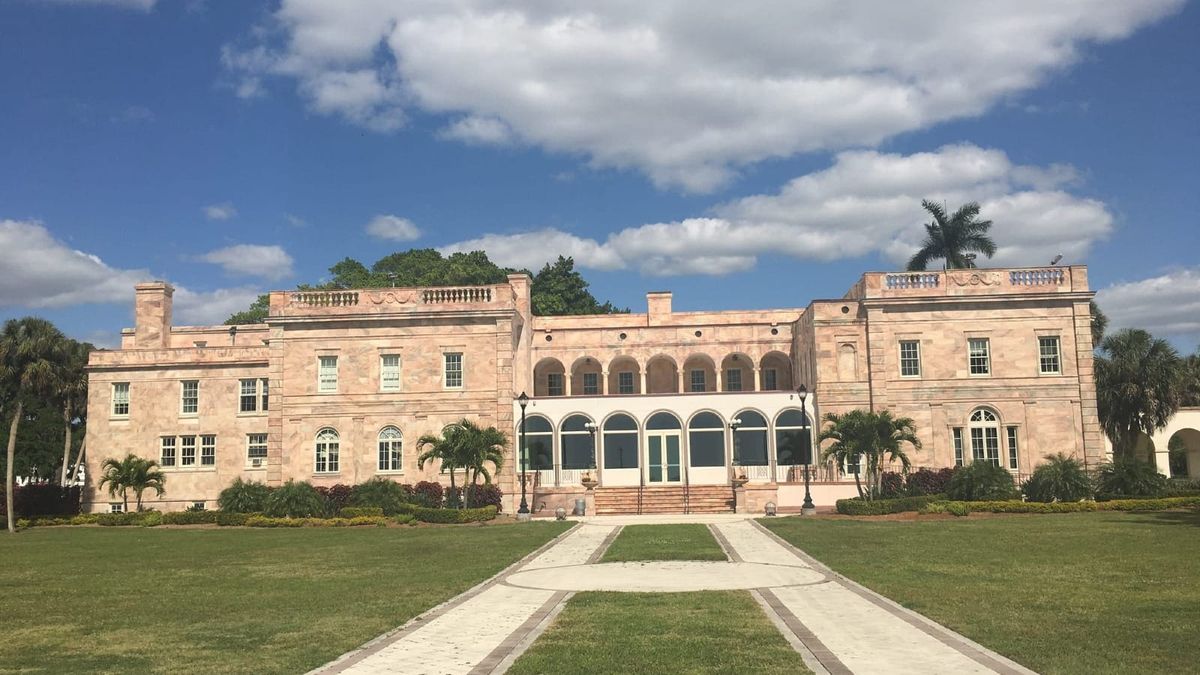
New College of Florida said it has no formal records documenting decisions about how campus artwork is reviewed or removed, despite student reports of artwork being taken down from campus spaces.
A public records request by Urgent Matter seeking directives, memoranda, and communications related to the oversight, modification, or removal of artwork since January 20, 2025, returned no responsive records, according to the college’s Office of General Counsel.
Urgent Matter submitted the request after controversies over campus art at New College, including a 2023 incident in which student murals were painted over as part of a so-called campus “beautification” effort, drawing criticism from students and alumni. Student art was reportedly removed again in November 2025.
The request sought to determine whether there were any additional and continuing issues or a formal administrative framework governing how artwork is reviewed, modified, or removed on campus.
Paid subscribers can read the records responsive to the request.
 Adam Schrader
Internal emails obtained through the records request show New College officials raising legal concerns about efforts to confer honorary recognition on professor Amy Reid after she was denied emerita status.
In an October 2025 exchange, Assistant General Counsel David Ballard wrote that granting honorary alumni status was “tantamount to awarding an honorary degree and they obviously can’t do that, no matter what the bylaws say.”
General Counsel David Brickhouse wrote that affiliated groups “don’t have authority to grant honorary alumni status on behalf of the college,” adding that “it wasn’t their authority to give.”
The emails were sent as the New College Alumni Association moved to recognize Reid following the denial. In a separate message included in the records, alumni association chair Stuart Clarry wrote, “We will likely award Honorary Alumni status to Prof. Reid. This is clearly the right thing to do.”
Reid, a professor of more than 30 years and former faculty representative on the Board of Trustees, has been one of the administration’s most prominent critics.
In an interview with Inside Higher Ed, Reid pointed to “the censoring of student speech and chalking on campus” after Gov. Ron DeSantis installed conservative trustees in 2023, and later listed “the painting over of student art on campus” among the actions that led her to conclude that the New College where she taught “no longer existed.”
Reid also said Corcoran’s denial of emerita status put him “on the record explicitly as punishing speech,” calling it part of “a pattern of censorship on the campus.”
Also among the responsive records was a March 2026 email circulating the University of Florida’s “Institutional Neutrality” policy to state university leaders, including New College President Richard Corcoran.
The documents reference a broader policy push tied to President Donald Trump’s “Compact for Academic Excellence in Higher Education,” a federal initiative outlining expectations for colleges and universities, including limits on institutional positions related to political and social issues.
The policy was approved by UF’s board in December and states that institutional leaders should avoid taking positions on political or social issues not directly tied to university operations.
It also draws a distinction between individual expression—which remains protected—and official university communications, which are restricted to defined “University Business” and barred from signaling institutional endorsement on polarizing issues. It did not specifically address issues related to student or faculty artwork on campus.
And the records search also returned a small number of unrelated internal communications spanning routine administrative and academic business.
These included emails discussing a Florida Department of State “America 250” grant in which New College was awarded $27,777 and faculty, including history professor Adam Rowe, were asked to take on roles in planning related programming and events.
Other materials included compliance-related correspondence involving the submission and revision of a naloxone report to state systems.
The absence of records contrasts with documented disruptions involving student work. Beyond the 2023 mural removals, a November 2025 student publication reported that “the New College administration removed student art and posters from bulletin boards in the Caples complex, a primary space for student art and communication on campus, and they have not been restored as of this article’s publication.”
New College Vice President of Communications Jamie Miller responded to Urgent Matter’s requests for comment, stating, “If there are no records, it seems you are trying to create a story that doesn't exist.”
When Urgent Matter pointed out that the college’s public records response indicated no records exist regarding decisions about artwork but that documented instances of artwork removal or disruption occurred on campus, Miller said he was “unfamiliar” with such instances during his tenure, which began in June.
“This is honestly the first conversation I’ve had with anyone about this topic. I am unfamiliar with ‘documented instances of artwork being removed’ during my tenure here. So, if your accusations are true, it is a pretty stale story that I wouldn’t categorize as news,” Miller said.
Urgent Matter then pointed out to Miller that his own office provided a statement to WSLR just last month regarding First They Came for My College, a documentary that features the 2023 destruction of the student murals as a core narrative element.
“New College of Florida is aware of a recently released sensationalized documentary that attempts to highlight a number of inflammatory claims about the college that are void of any facts and evidence to back up the filmmaker’s opinion,” Miller told Urgent Matter.
“Prior to the current administration, New College faced serious institutional challenges, including declining enrollment, a deteriorating and increasingly unlivable campus environment, and unprecedented instability. In many cases, these issues stemmed from the ideological environment that had taken hold at the institution.”
Urgent Matter’s investigation comes amid broader scrutiny of how Florida’s higher education policies—including recent laws and Board of Governors regulations on institutional neutrality, curriculum oversight, and use of public resources—may shape decisions about campus expression and exhibitions.
Those policies include measures such as Florida’s higher education reforms and Board of Governors Regulation 9.016, which governs the use of state resources and institutional responsibilities.
The college also reported that a keyword search of leadership communications produced a single responsive document unrelated to campus art: an email concerning a landscaping and maintenance agreement for a campus-adjacent roadway.
In that message, President Richard Corcoran wrote, “I assure you it will be the prettiest corner at the intersection and we will absorb all the costs,” and added that “it would be wonderful to have them arrive with the newly renovated corner” ahead of a Board of Governors visit.
The records include detailed planning documents for campus landscaping, but no comparable documentation for decisions affecting student artwork.
The records do not indicate how decisions regarding student or faculty artwork are documented—or whether they are recorded at all—and the college did not provide further detail on how such decisions are made or communicated.
A prior public records request by Urgent Matter to the University of North Texas produced extensive internal communications showing administrators discussing political pressure tied to a student exhibition, highlighting how documentation can vary significantly between institutions and cases.
Stories like this take time, documents and a commitment to public transparency. Please support independent arts journalism by subscribing to Urgent Matter and supporting our work directly.
