A museum that doesn’t exist opens in Tribeca
Adam Himebauch’s NYC MOCA tests what counts as an institution, turning a storefront window into a functioning exhibition space.

Adam Himebauch’s NYC MOCA tests what counts as an institution, turning a storefront window into a functioning exhibition space.
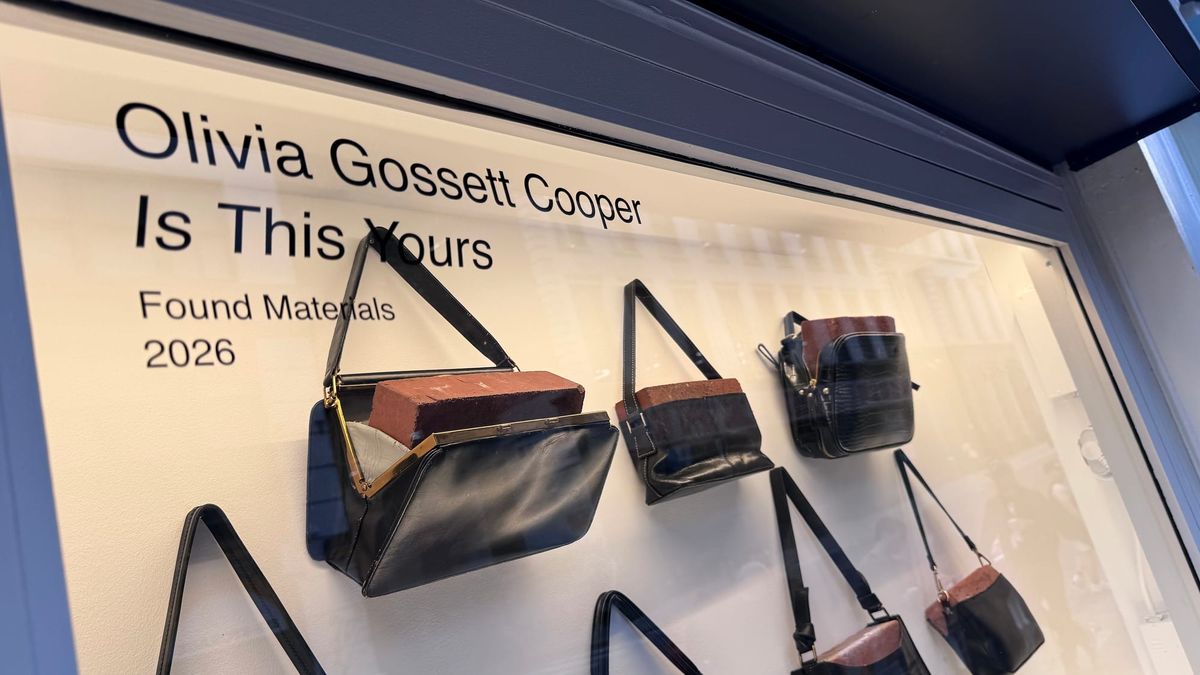
Have you ever been to the New York City Museum of Contemporary Art? Are you sure? It sounds familiar. Maybe you’ve seen something about it somewhere. Maybe on a hat or a T-shirt. Maybe on social media.
The New York City Museum of Contemporary Art does not exist, at least not in any formal sense. On Friday night in Tribeca, it opened its first show.
The project—created by painter Adam Himebauch—tests what counts as a museum, blurring digital presence, branding, and physical space. Himebauch is known for reality-bending performance stunts.
A crowd of people gathered outside the museum to drink gallery wine and take in an installation by Olivia Gossett Cooper, curated by Francesca Pessarelli. The opening was even attended by Natalia Dyer, best known for her role as Nancy Wheeler in the Netflix series Stranger Things.
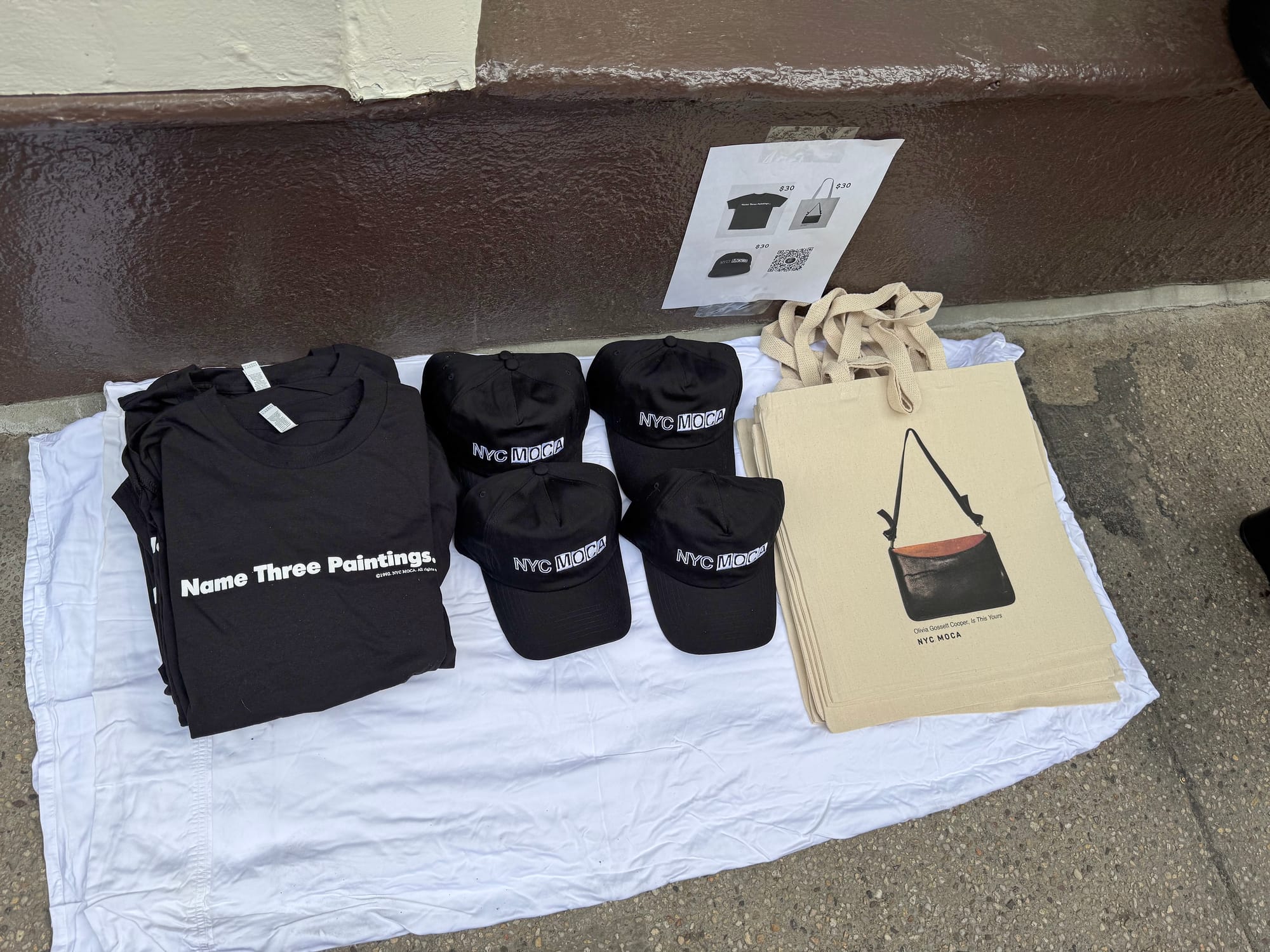
When Himebauch first messaged me about the project, I assumed NYC MOCA was a joke. “I didn’t know moca was real, I thought that was fake haha,” I told him. I had seen the museum’s online presence for a while. “Pardon our dust. NYC MOCA is building its new permanent home in Tribeca,” the museum’s website reads.
Mirage aside, NYC MOCA is a real museum with real potential as a model for public, low-cost exhibition space.
The museum does have an actual permanent location, marked its name on a street-facing window on the ground floor of 79 Walker Street. There is no door—just the window and a small display. Think the “Little Free Library” of the museum world.
“It started in 2022 as part of the digital performance, and it has existed mainly online since then via social media and a museum website,” Himebauch said Friday.
“My studio was right around the block for about seven years, and spending time in the neighborhood, I ended up meeting some guy in a dark alley who said, ‘Hey, are you Adam Himebauch’ and I'm like, ‘Yeah,’ very hesitantly and he's like, ‘I'm a huge fan.’”
That man was Tim Shopa, now the development director of the museum, who had connections with the building. He asked Himebauch if he wanted to put a painting in the window, which developed into NYC MOCA and a merchandise branding platform complete with hats and shirts bearing the museum’s name.
“So, I light this window, plant a flag in the ground, and let this idea permeate. 99.999% of people aren't in on the conceptual. They don't know it's a joke. They look at it, and they see NYC MOCA as a real thing. And it is real, in a sense,” he said.
“They're walking down Broadway, they'll see the Guggenheim crew neck, the MoMA hoodie. Now they'll see the NYC MOCA-branded merchandise as well. And of course they're going to believe it's a real museum. Which it is, just probably not at the extent that they perceive it as.”
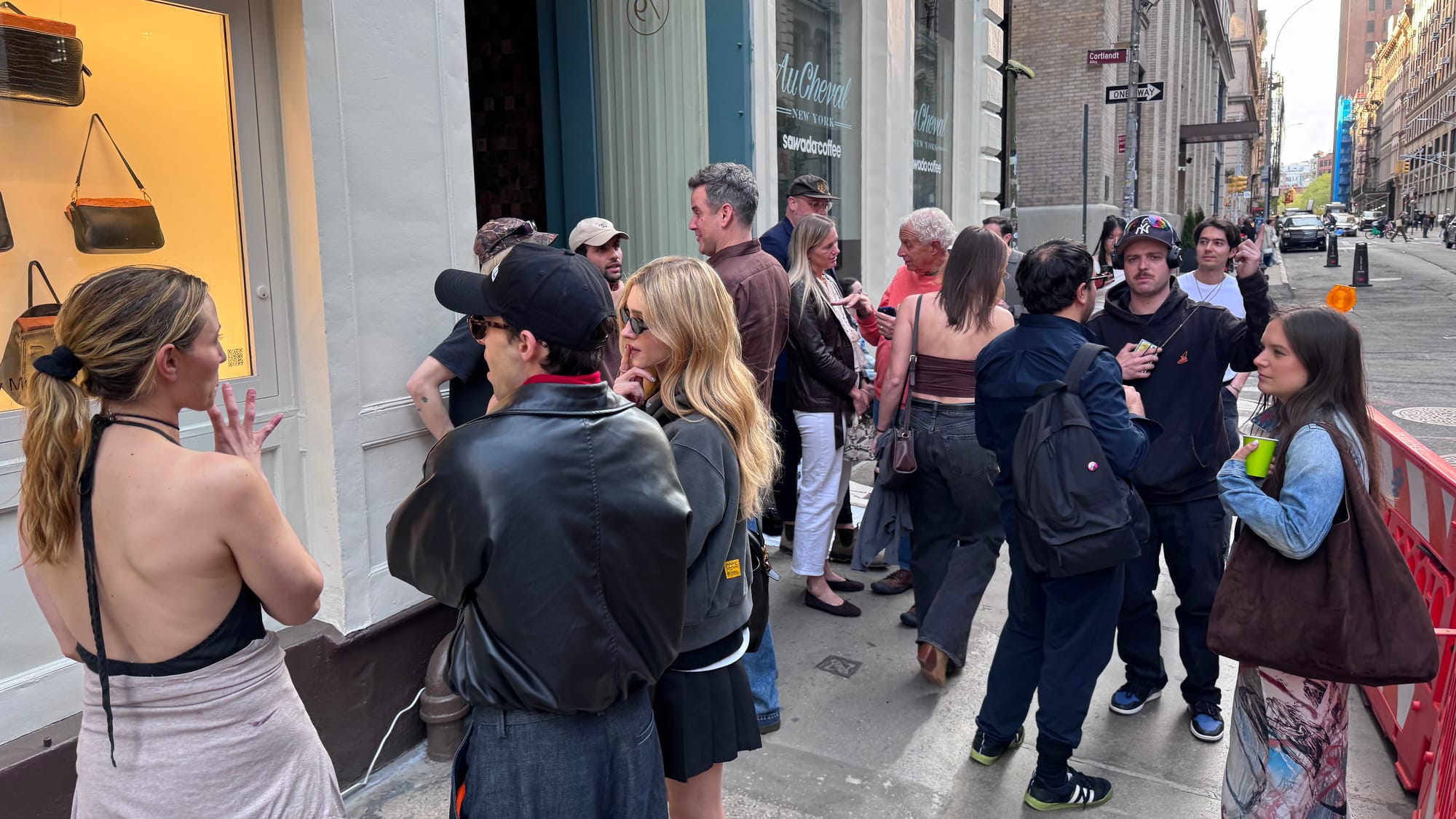
Himebauch, who recently left New York City to return home to the Midwest, said the museum will rotate exhibitions every five to six weeks, curated by Pessarelli and installed by a team of seven board members. It has not yet been incorporated as a nonprofit, Himebauch said.
“We're building the bike as we go,” he said. “But far too often, people, especially creatives, think they have to wait until something is perfect and ready to go or to launch. And I think you can kind of kick the door open and start rolling with things whenever.”
Himebauch said he hopes the museum becomes a champion for rising artists, allowing them to put having an institutional solo show on their CVs.
“Oh, shit, it was a brick, bro. Like, yo,” said 32-year-old Vito Maksymov, a guest at the museum, as he walked up to the window. “It's kind of hard. I love it. You know what I'm saying? It's kind of hard. Hey, that's why I love New York.”
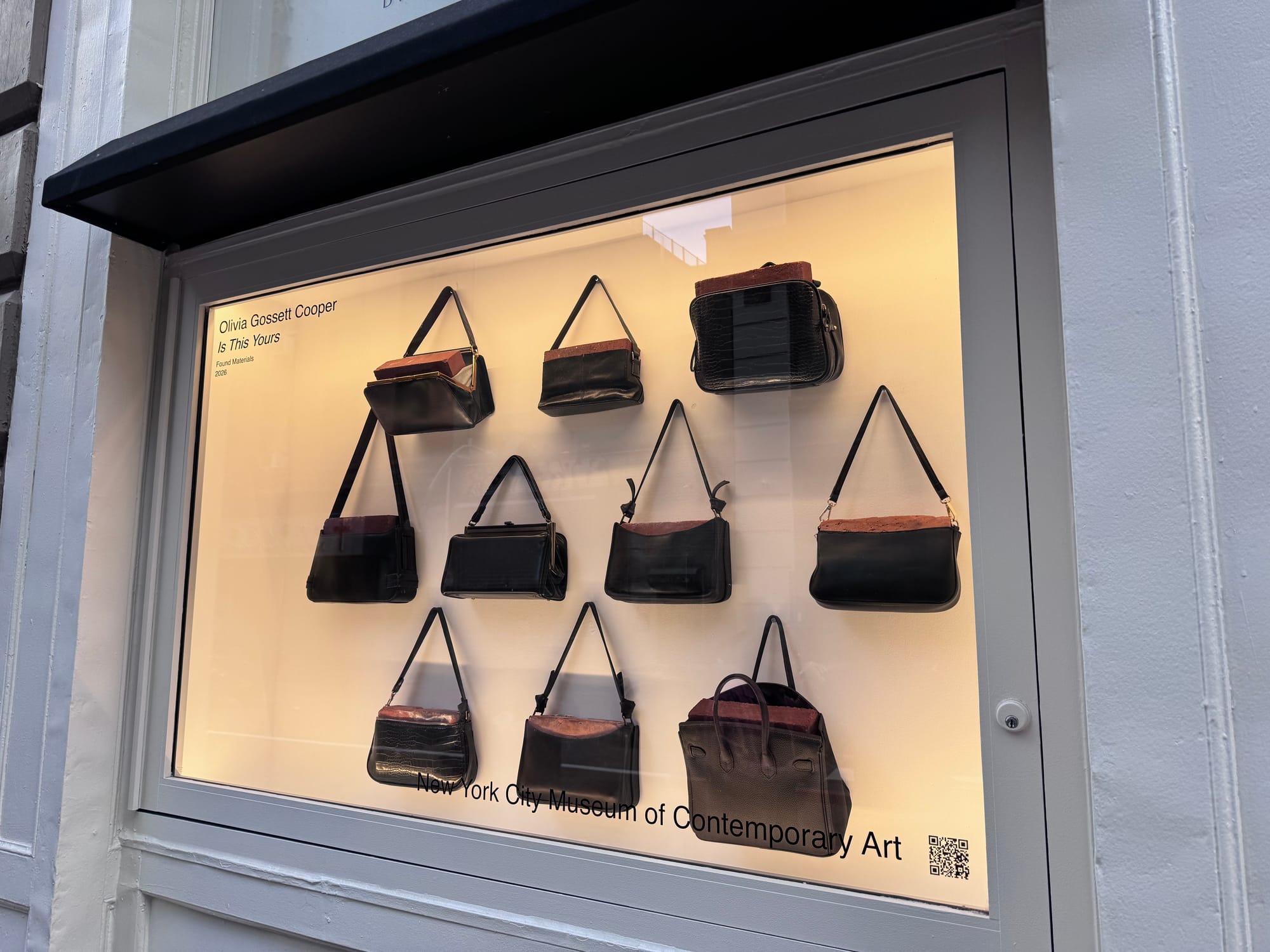
Himebauch said Cooper’s work, an installation of black leather handbags hanging in the window, each with a clay brick inside, made for the perfect inaugural exhibit of the museum.
“It's in conversation with the elements of the neighborhood. Consumerism, SoHo, the bag sellers both on and off Canal. There's an element of violence, like potential violence in the past, so it just feels like kind of a punk rock,” Himebauch said.
“Everyone walks past and knows what a painting is, and there's so many of those in Tribeca. But you walk past this, and you're like, what is this? And you see, oh, New York City Museum of Contemporary Art, and that's that.”
Cooper, discussing her work, said the installation started with one bag. When she first saw it, she said it “really just was like a capital P purse for me.” But the purse sat in her studio untouched for about a year, until one day she was walking home from the grocery store lugging two tote bags and passed by a dumpster full of bricks at a construction site.
Feeling the weight of life as a mother in New York City, she said she “identified” with the dumpster and asked if she could take two of them.
“The next day I went into my studio, and the brick and the bag kind of found each other,” she said. “It just blew my mind. It, like, clicked that the purse was so perfectly shaped and sized to hold the brick. They were almost made for each other.”
From there, the work expanded to multiple types of bags representing the different types of people that carry them, bought at second-hand stores and on eBay.
“Whether you're a fancy person, or whatever you are, man or woman, whatever, we all carry stuff around. So there's fancy bags, there's a bag held together with staples,” she said.
Cooper called the show “super fun, and a huge honor,” adding that NYC MOCA “has such a unique perspective of the arts.”
“I think it's one that will stick around because it resonates with so many people. So, I really feel like a part of history,” she said. “Like, being the first one in there, and I'm super honored to be a part of that.”
Cooper said that the idea of NYC MOCA is already starting to catch on elsewhere, like Toronto, where a gallery told her they were going to add a window too.
“It's kind of cool to come and see something that's an idea, IRL,” said Kenneth Bachor, another visitor at the museum. “And look, we're all getting together as humans, as people. I'm looking around, no one is on their phone right now. Everyone is talking around this window, around this concept, and I think that's cool.”
Stories like this take time, documents and a commitment to public transparency. Please support independent arts journalism by subscribing to Urgent Matter and supporting our work directly.