Giant popsicles and juice boxes: The refreshing kid-friendliness of The Other Art Fair
The Other Art Fair Brooklyn returns to the Navy Yard with about 115 independent artists in an artist-led model built on direct sales and access.
The Other Art Fair Brooklyn returns to the Navy Yard with about 115 independent artists in an artist-led model built on direct sales and access.
Jack vomited in the car as we were arriving to The Other Art Fair Brooklyn. He screamed while we looked for parking. I unbuckled him from his car seat, stripped him down to clean him up and put him into fresh clothes.
I knew there would be risks—the long drive, the late night, and their little legs. But I hoped the experience would be enriching for them. Maeve—who is turning this many later this month—especially. And the fact that the fair offered free admission for children settled some unease.
By the time we reached the Brooklyn Navy Yard, she was screaming that she was hungry. We made a quick pass through the booths before stopping at one of two food trucks outside the venue for some French fries. Only four picnic tables, though, and all seats taken by adults looking at their phones.
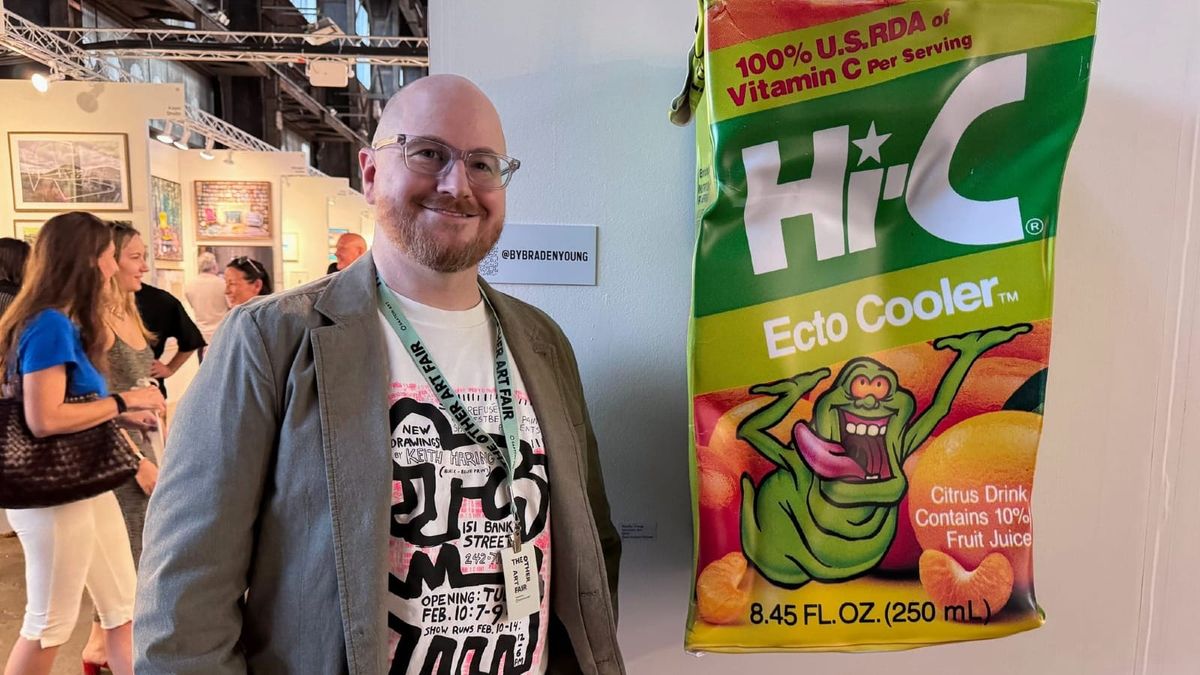
But The Other Art Fair quickly proved its kid-friendliness. Maeve spotted a giant sculpture of a 1980s Hi-C Ecto Cooler juice box, walked up to it, and immediately put her hands on it. I overapologized to the artist, Braden Young. He was happy to let Maeve touch it again.
“It's made of like a PVC polymer, so it's essentially just plastic. It's waterproof. It won't crack. It's not delicate, so you can throw this thing like a Frisbee,” said Young, an artist from Philadelphia. “But there is a sensory thing to it. And I think because we live in this digital flat world, there's an essence here where I want people to touch everything.”
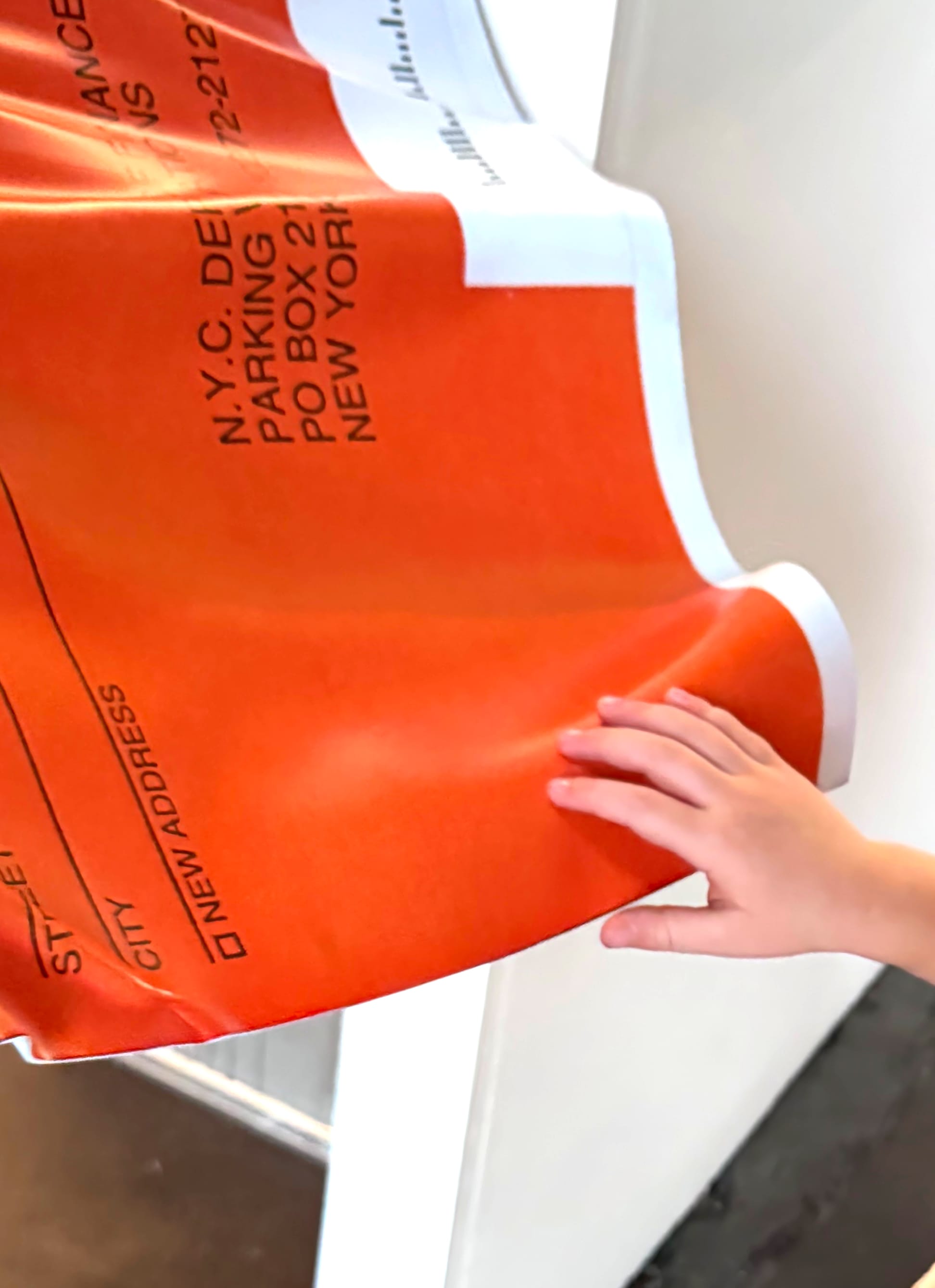
Young said that museumgoers are often afraid or forbidden from touching the art. “That's not fun, right?” he said. “I want you to feel this, take it off the wall if you want.”
All of Young’s work, from replicas of parking tickets and Warholian Brillo boxes, perfectly fit the “Nostalgia-Core” theme of this edition of The Other Art Fair, presented by Saatchi Art.
“I capture my upbringing in Philadelphia, the foods I ate. Tastykakes. Pork roll,” Young said. “I'm trying to capture the real thing that you have grabbed as a teen, as a child, as an adult, and know what that feels like.”
In a news release, fair organizers said this edition’s theme is driven by aesthetics from the dawn of the internet era. About 115 independent artists are participating in this edition, which runs daily through Sunday at the Navy Yard’s Agger Fish Building, where it returned after several years at other locations.
My interest in covering the fair is its mission to support emerging artists without gallery representation, who take home the majority of the money from their sales. I am an advocate for any artist-led initiatives, though one visitor told me she felt like she was trying to avoid eye contact with the artists like they were handing out flyers in Times Square.
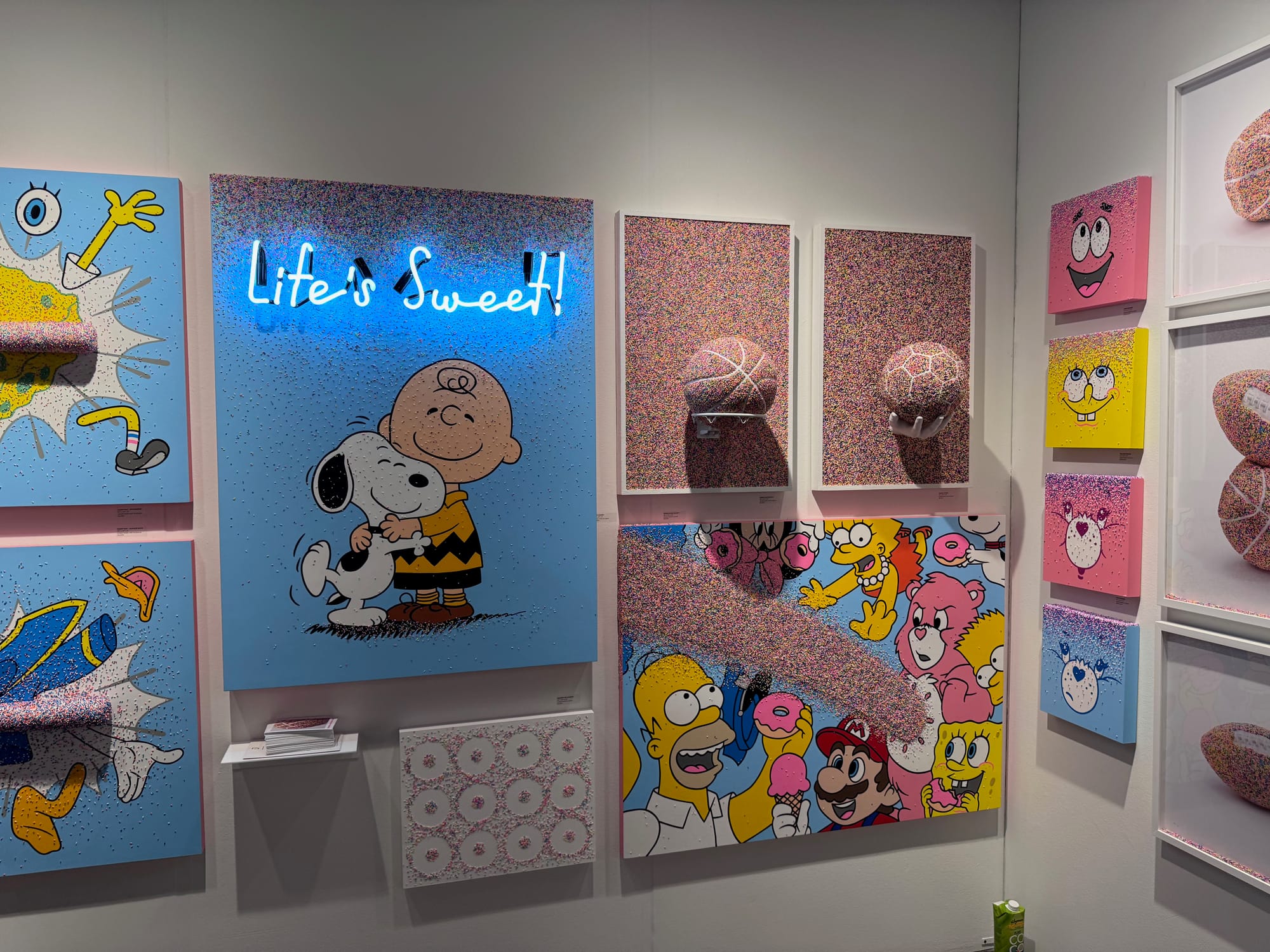
Nearby, Peppy Colours—a Toronto-based visual artist known for vibrant, pop-culture-infused art—showed paintings of famous characters from Charlie Brown and Snoopy to Spongebob covered in sprinkles. Sarah Fishbein showed female-powered mosaics inspired by comic books.
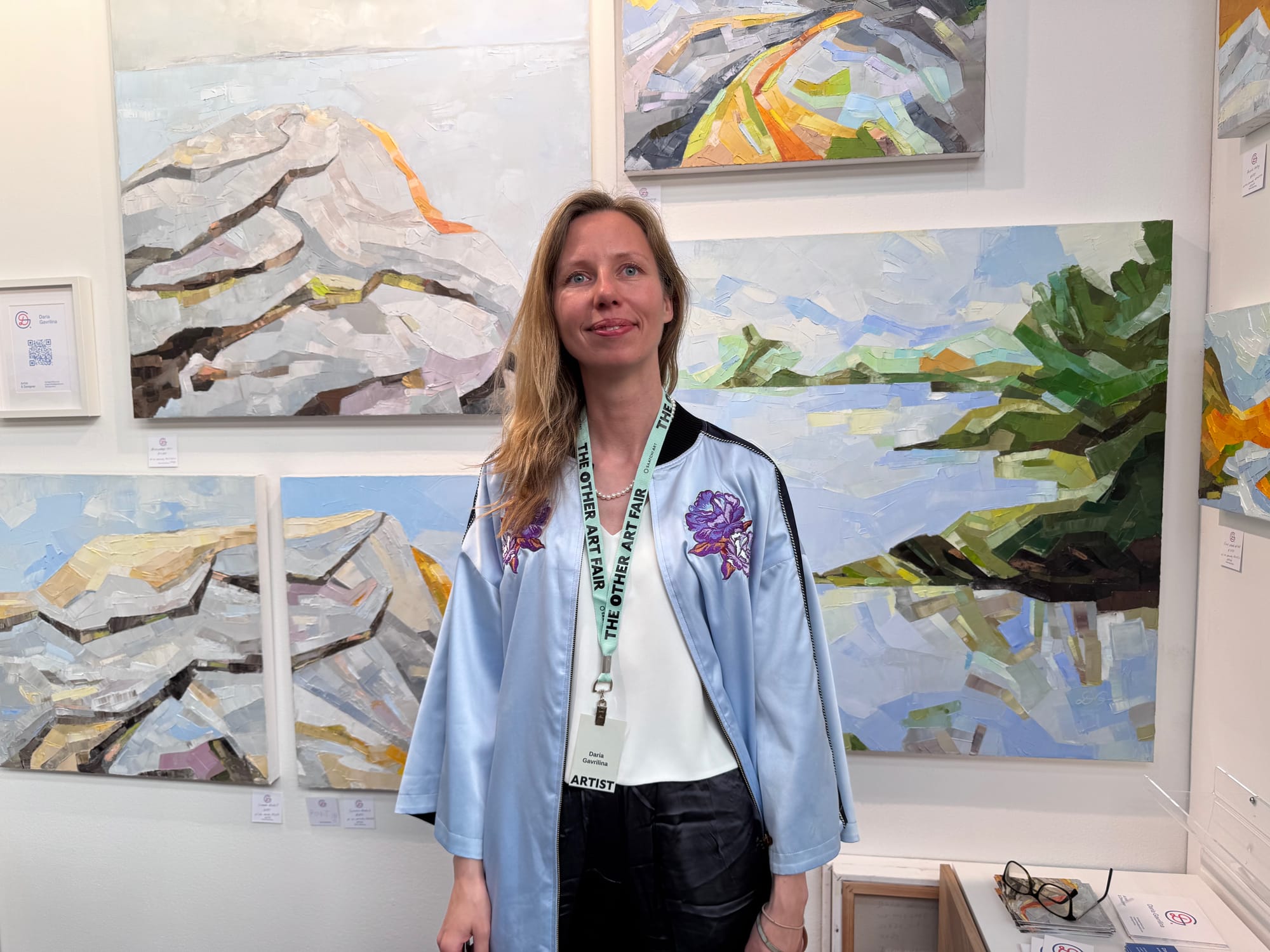
Artist Daria Gavrilina was supported in her booth by her five-year-old daughter. Maeve stared at her, as toddlers do when they meet someone new. Gavrilina paints landscapes with inspiration from her life in Toronto, Canada. It is her first time participating in the fair, and the first show of her work at such a scale.
“She's officially in the helper mode. She was really, really, the most amazing helper I could ever have,” Gavrilina said. When asked what she hopes her daughter gets from the experience, the artist said, “I hope she would learn that it's so important to just be yourself, and express and love what you do.”
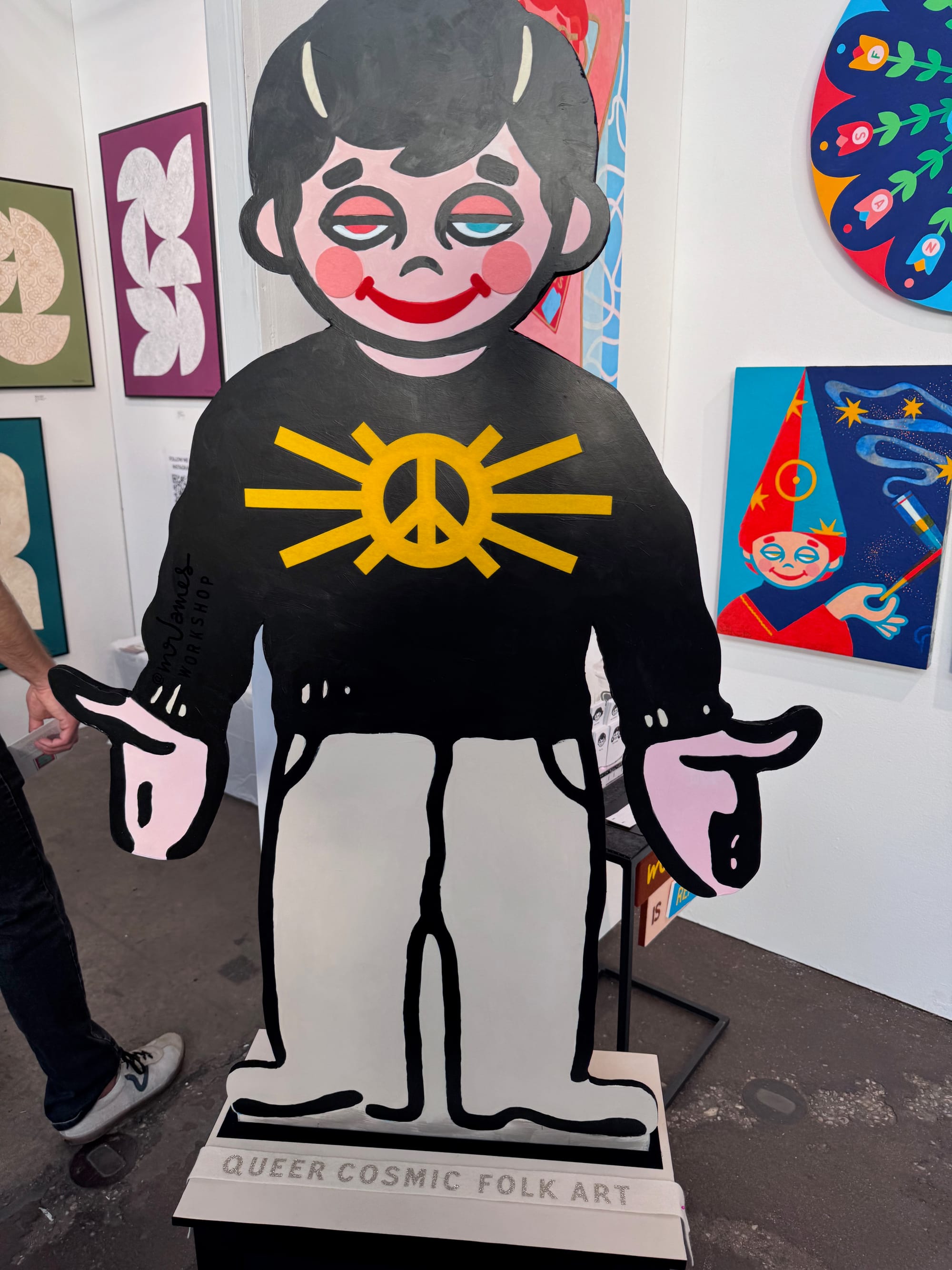
Another booth also caught the attention of my daughter. The artist Mr. James, a painter and graphic designer who has done work for companies including DKNY and Banana Republic, makes work rooted in a recurring childlike figure and highly saturated color palettes. It is his first time participating in The Other Art Fair.
The character—a small boy with rounded features, closed or heavy-lidded eyes, and a faint, ambiguous smile—appears innocent at times and mischievous at others, moving through dreamlike scenes and becoming different archetypes to convey the artist’s varying themes. Maeve liked his big smiling face.
Mr. James described the character as a “kind of a being” that he developed over 15 years. The artist, who recently relocated from Los Angeles to Salem, Massachusetts, always starts with painting the exact same face, which then alters as the work progresses. He called his style “this queer concept of folk art, as a celebration of heritage that is chosen.”
“I don't want it to feel like it's been printed. I want it to feel like a human touched it. And that's why I just allowed the lines to go where they want to,” he said, adding that “it's imperative that we stay close to our human connection with art making. I get scared of A.I., honestly, and I want to make sure that it maintains that made-by-hand feel.”
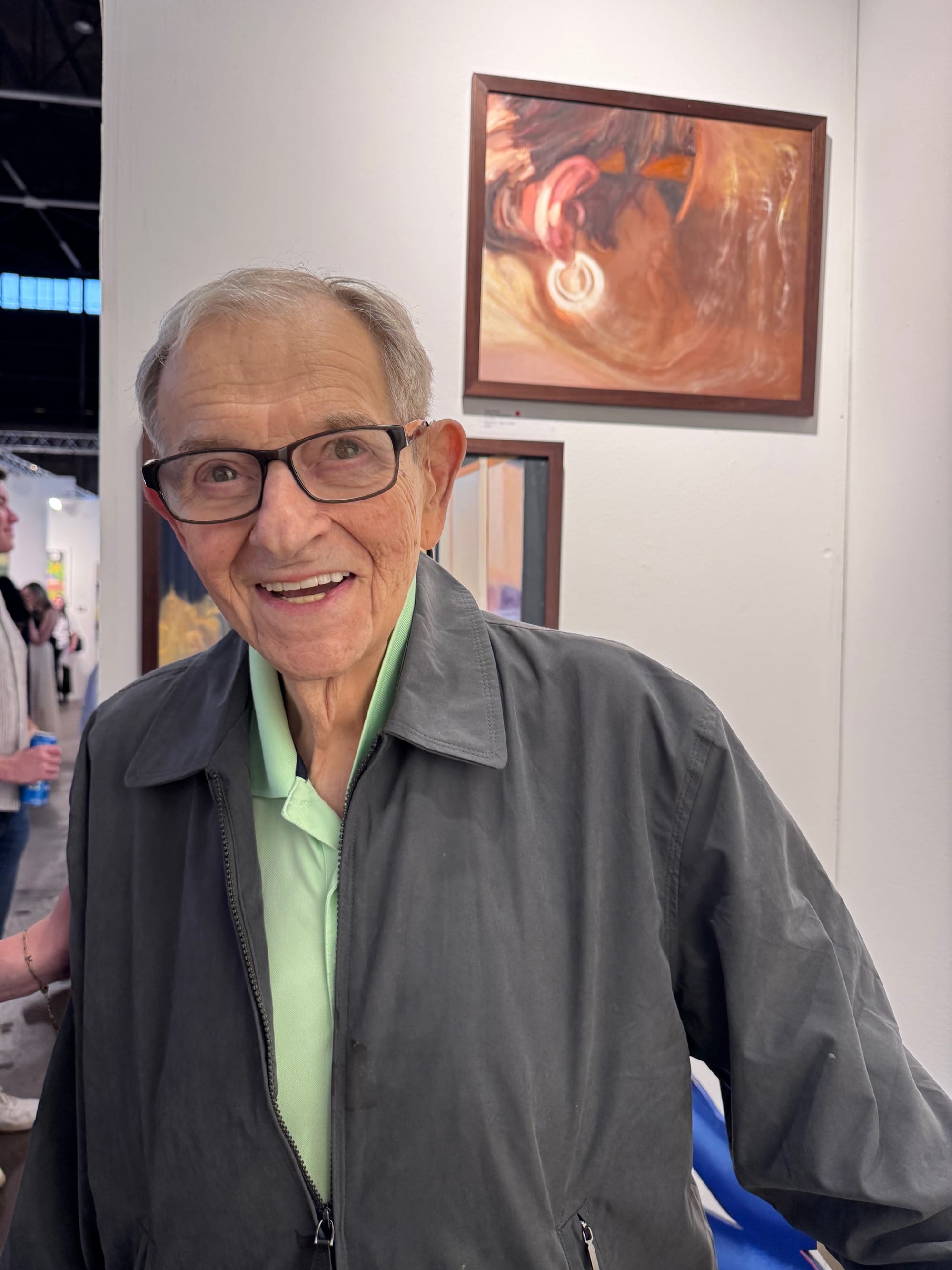
Among the first artworks to receive a red dot in the fair was 24-year-old artist Hannah Levin’s Grandma Ellen’s Earring, which was bought by a family member as a gift for her grandfather, Herb Cohen, ahead of his 93rd birthday. The painting depicts a side profile of her late grandmother wearing a large earring, now owned by the artist’s sister.
“She would always wear these really big earrings. Her jewelry was a very big part of her personality,” Levin said.
Levin was asked how she felt to have made an early sale in the fair. “I would have been happy if it had gone to a stranger, but I'm particularly happy that it's going to the person that I kind of had in mind when I was making it,” she said.
Besides the obvious pop-art influences in this edition, we also noticed a few other trends: few of the booths featured any art that felt overtly political; while some of the art was questionably basic like gift-shop art, nothing felt like it was A.I.-generated; and several booths included works that blended painting with mirrored surfaces.
Personally, one of my favorite artworks was You Ripple, I Sway by Sonia Redfern, which used patterns to enhance landscapes.
In the end, it felt like the dozens of children we saw at the fair had cleared out by 8 p.m., which is when we, too, left. For a few hours, though, the Navy Yard felt refreshingly full of small hands reaching out to touch art that was meant to be touched.
Stories like this take time, documents and a commitment to public transparency. Please support independent arts journalism by subscribing to Urgent Matter and supporting our work directly.