Giles Duley rethinks war photography in Frieze Week show
The show is on view through May 24 in a 77th-floor penthouse in the residential Sutton Tower.

The show is on view through May 24 in a 77th-floor penthouse in the residential Sutton Tower.
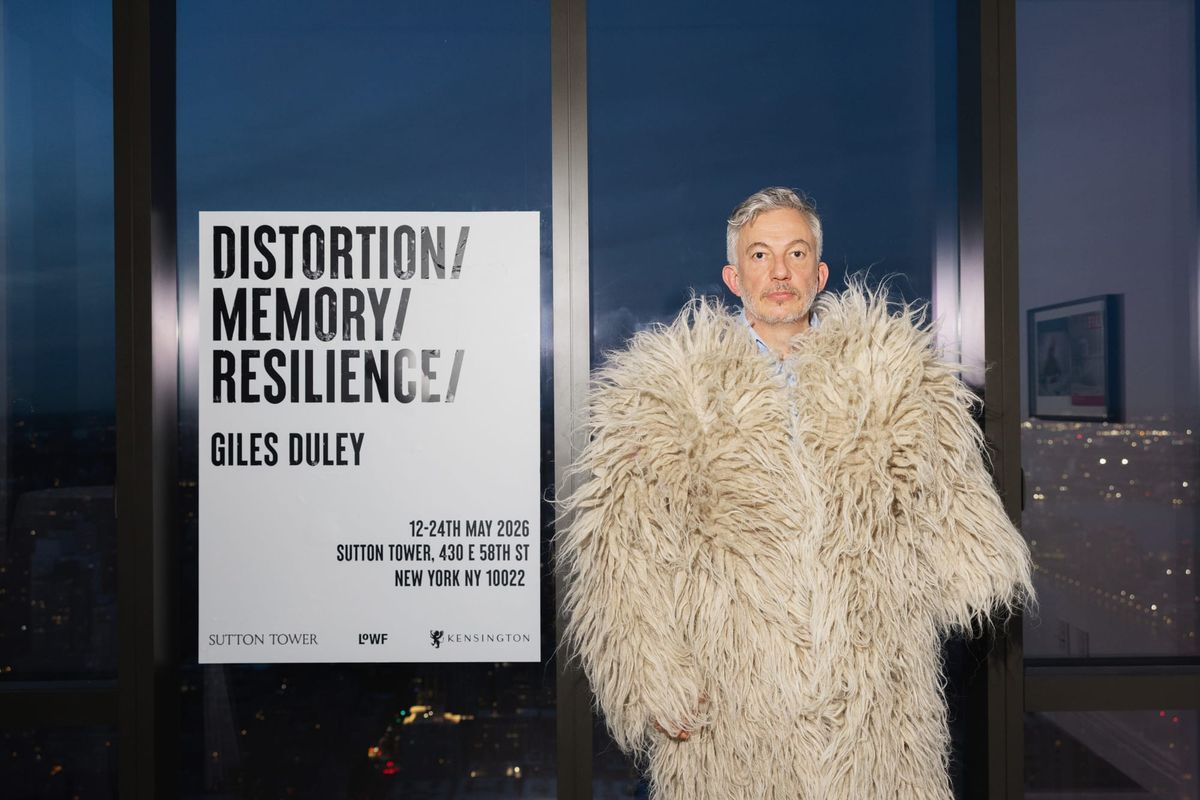
British photographer Giles Duley opened a Frieze Week exhibition in New York on Tuesday with a blunt reassessment of his profession, saying social media and photographers inside conflict zones have changed the role Western photographers once played in documenting war.
Duley, who has spent 25 years documenting war, said in an interview with Urgent Matter that the shift is clearest in Gaza, where Western journalists have been largely unable to enter, but images made by people inside have circulated widely.
“You cannot tell me you do not know what's happening in Gaza,” Duley told Urgent Matter. “I'm not talking about this on a political level. I'm just simply saying, visually, we know what's happening, photographically. So, do I need to be there to tell that story? No, I don't think I do.”
The comments came as Duley opened “Distortion / Memory / Resilience,” on view May 12–24 in a 77th-floor penthouse in the residential Sutton Tower, where his photographs are shown alongside children’s drawings, family snapshots and sound recordings.
Rather than present the work as a conventional war photography show, Duley uses the exhibition to test how conflict images can be seen differently now that photographs from war zones are common. The New York exhibition follows Duley’s London Frieze presentation, “Where Do We Go From Here?”
He said the exhibition reflects a change in his work since he began traveling to undercovered conflicts in Angola, the Central African Republic, and the Democratic Republic of the Congo, where few local photographers existed because they lacked access to equipment.
Duley said that change does not mean every story should be told only by photographers from the place where it happens. Photographers from conflict zones should have greater authority and opportunities, he said, while resisting the idea that any photographer is automatically right because they are local.
“It's a complex thing, not as simple as saying everything should be done by local, regional photographers,” Duley said. “I think we should have more diversity behind the camera. My saying is the more diversity behind the camera, the greater vision we all have.”
Duley said the industry can use local and regional photographers when their countries are in the news, then abandon them when attention moves elsewhere. “I saw a lot of Syrian photographers won loads of awards, the war moved on, nobody cared about them,” he said.
He said he is now mentoring two young Ukrainian photographers. “My role is no longer as a white European male to go around and show you what the world looks like,” Duley said.
Duley was injured in Afghanistan about 12 years ago after stepping on an improvised explosive device, losing both legs and one arm. In his opening remarks, he described spending 46 days in intensive care, able to communicate only by blinking.
When asked how his injuries impacted his ability to work, he said his way of working changed but did not limit him. It forced patience.
“I believe a lot of creativity comes out of restriction,” Duley said.
Because he cannot move as he once did, he said many of his photographs are now made at eye level with a directness he might not have chosen before in his career.
“Everything I do is going to be eye level,” Duley said. “It's going to be simple. That's cool because now I don't have to worry about that.”
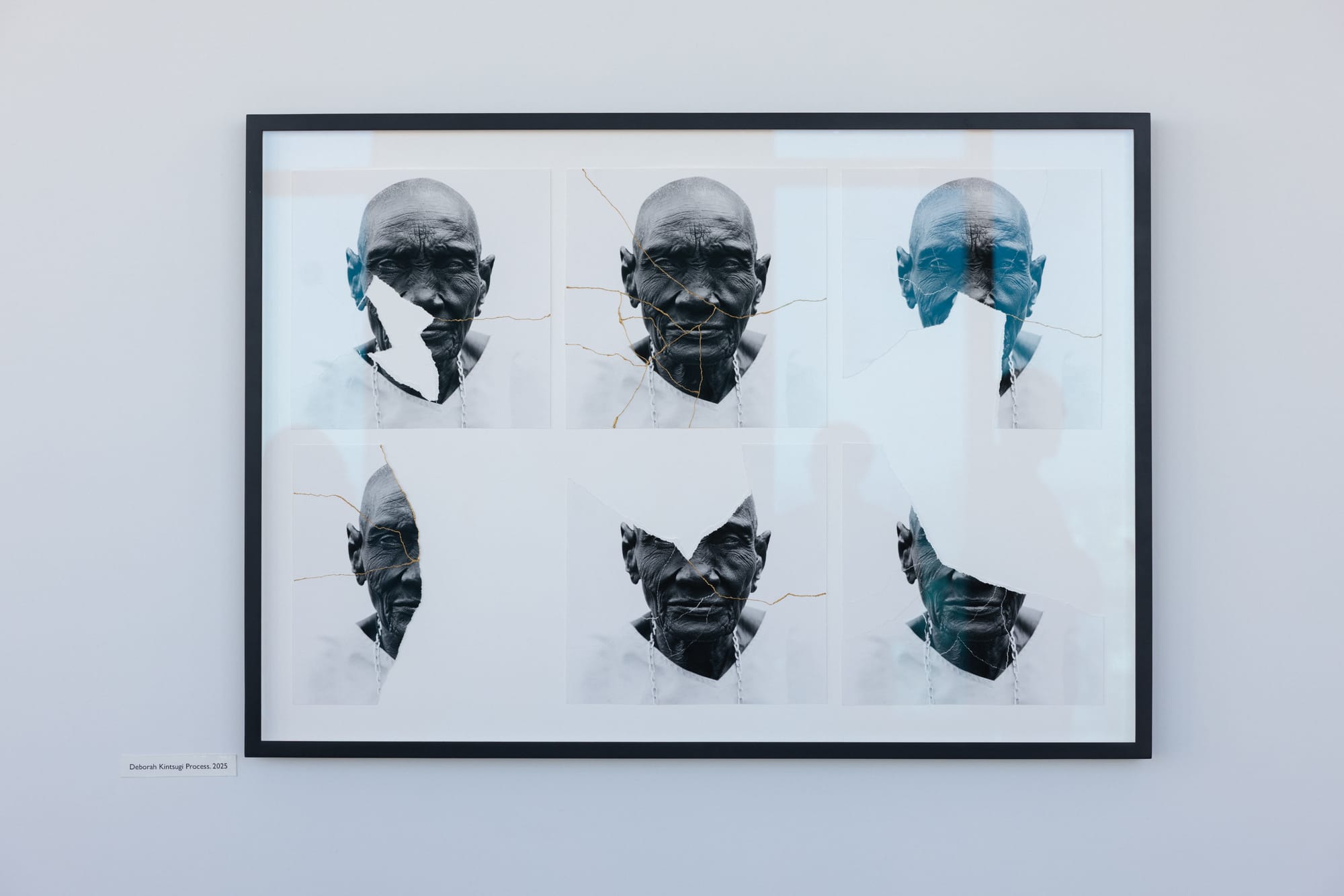
He pointed to a portrait of Deborah, a woman living in a refugee camp in South Sudan, as an example. “Would I have chosen to do her portrait on an old Hasselblad on a tripod straight up before my injury? No,” Duley said.
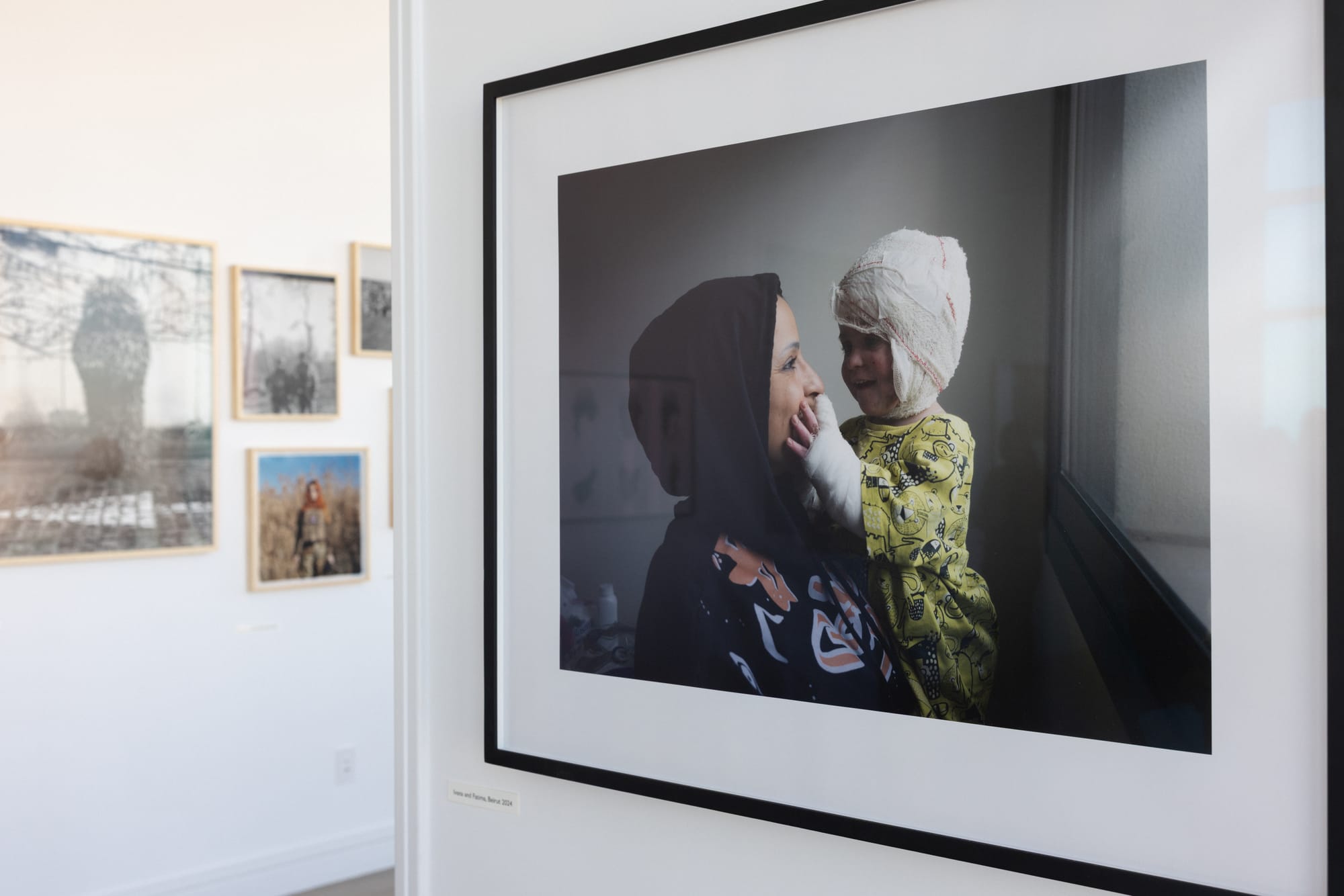
The show largely avoids the most familiar images of war. Though built around conflict, many works are portraits and domestic scenes rather than photographs of combat or destruction. Duley said that the choice was deliberate.
“I'm going to say something controversial,” Duley told Urgent Matter. “I don't believe you can make an anti-war photograph or an anti-war film using war.”
He said he grew up fascinated by war films and photographs, including works he later understood were meant to condemn war.
“I watched it as a kid going, that's fucking cool,” Duley said of “Apocalypse Now.” “When you see pictures of people firing guns, etc., I realized that we may intellectually, when we're older, see it as an anti-war statement. When you're young, it's kind of cool.”
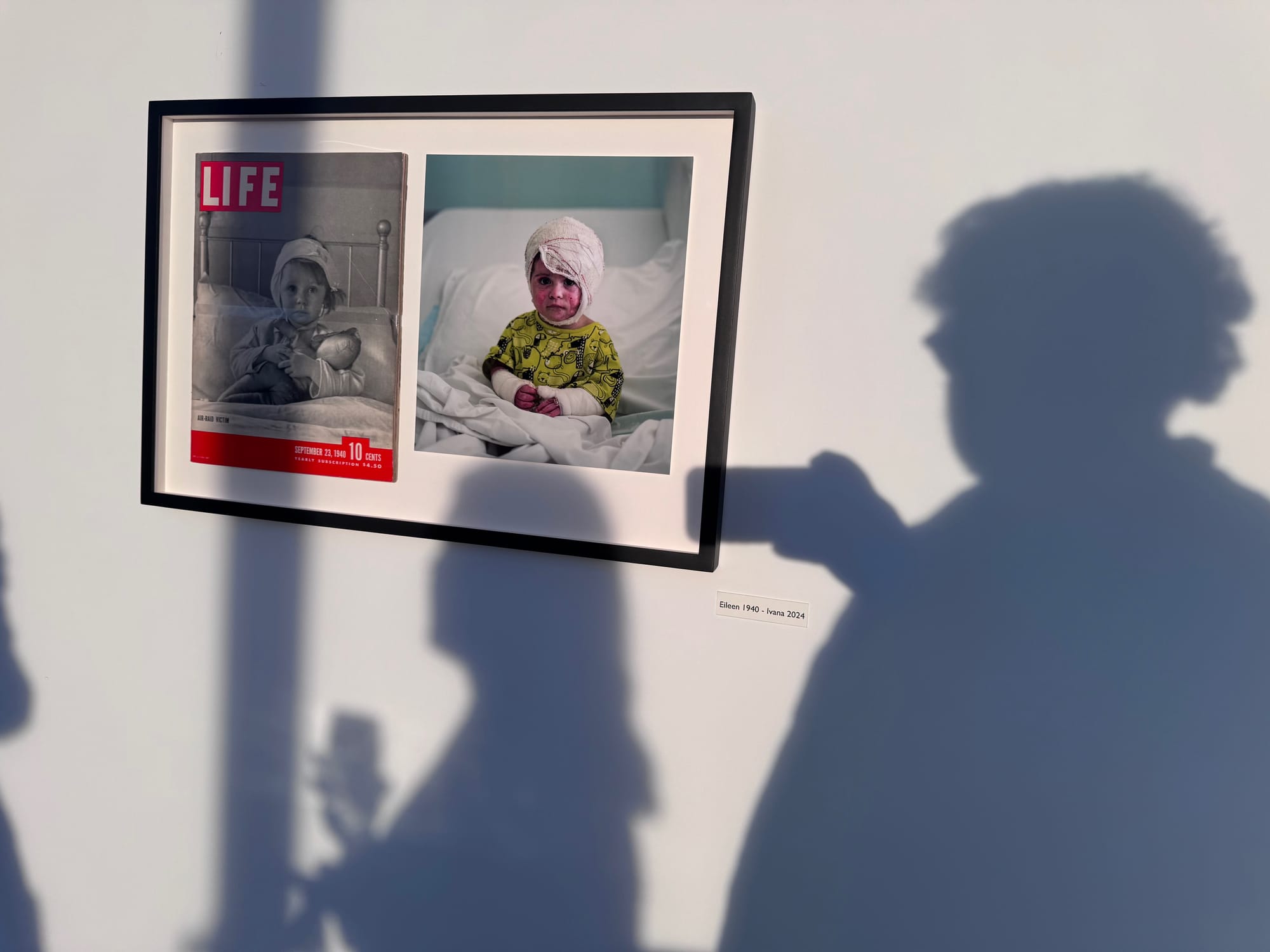
That experience, he said, made him want to move away from images that unintentionally glamorize combat.
“So, for me, stepping away from that, photographing families, photographing portraits, doing it in a different way, it just throws people off that scent,” Duley said.
The exhibition moves through a sequence of rooms, each using a different artistic language. In the first room, wartime photographs are collaged with military patches, borscht recipes, handwritten journal entries and other paraphernalia in mixed-media works.
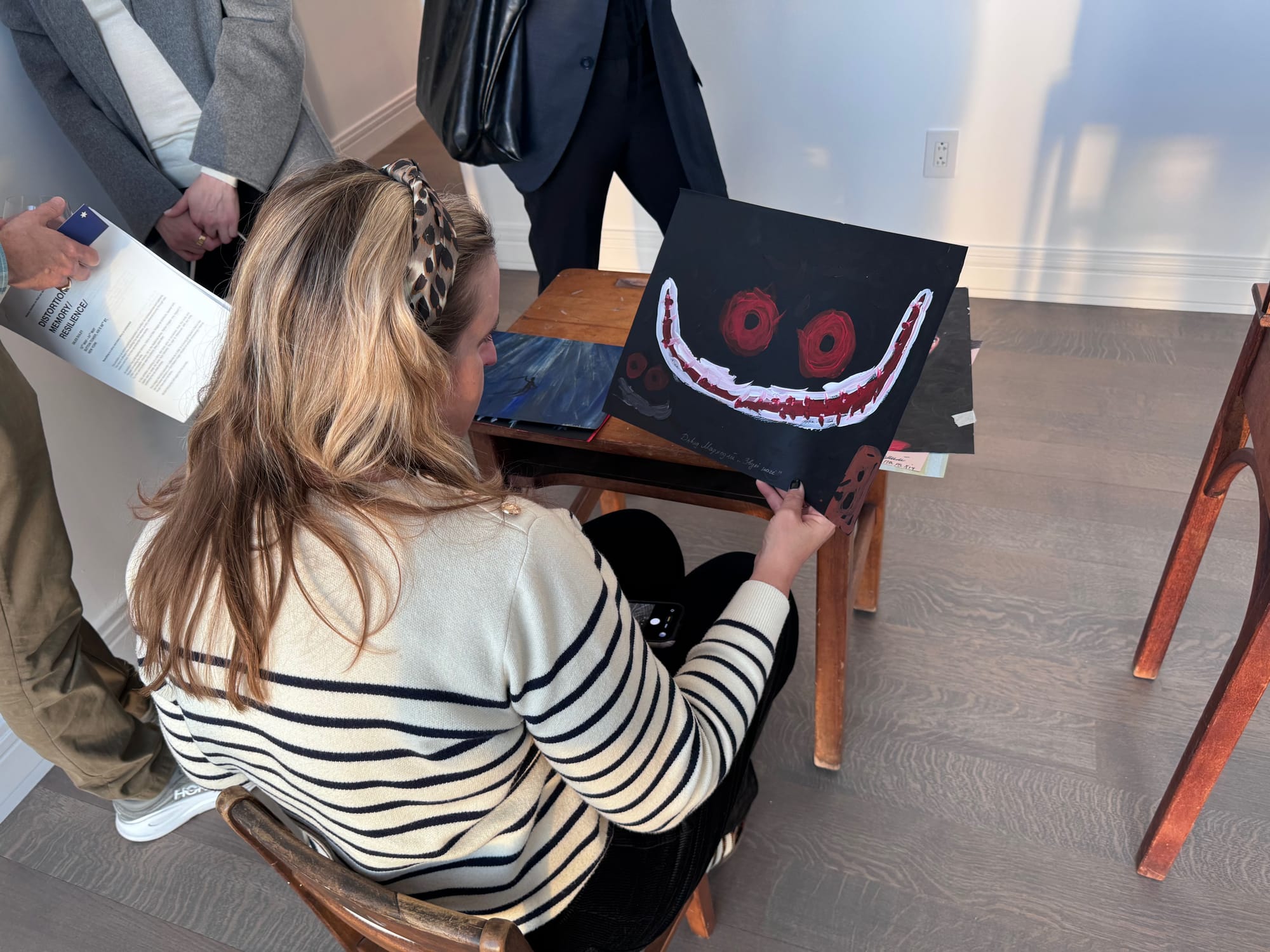
The room next to it, titled “Childhood,” is among the show’s hardest to sit with, especially for viewers with young children. In it are two children’s desks with artwork by Ukrainian schoolchildren. Visitors can sit and handle the artworks, in which children have drawn missiles falling on homes and injured family members.
“Everybody knows kids' paintings,” Duley said. “But as you sit and look through them, you realize something is wrong.”
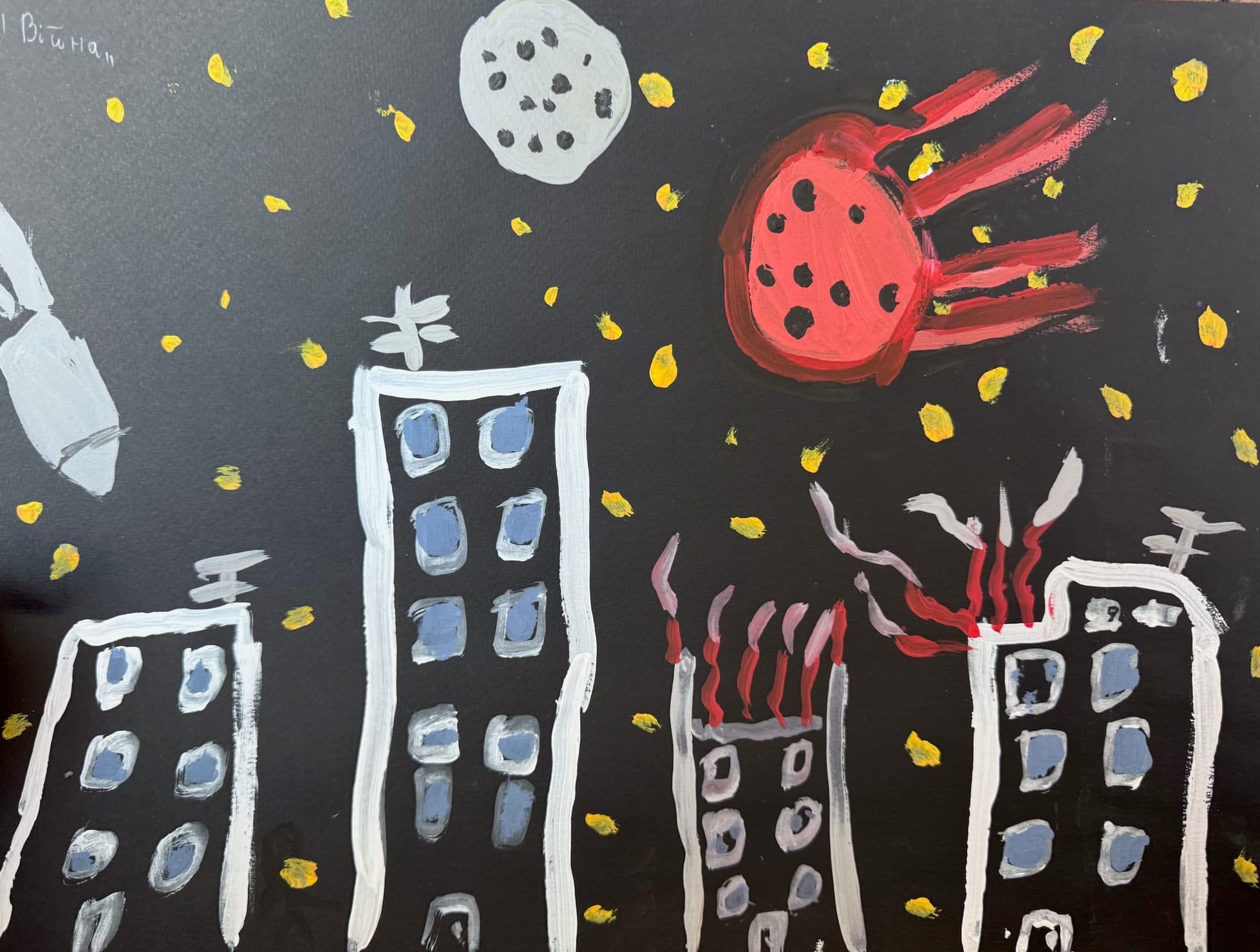
He said the drawings show children trying to express trauma they cannot explain verbally.
“All you see in these paintings is children who can't verbally express their pain, telling their story through art,” Duley said.
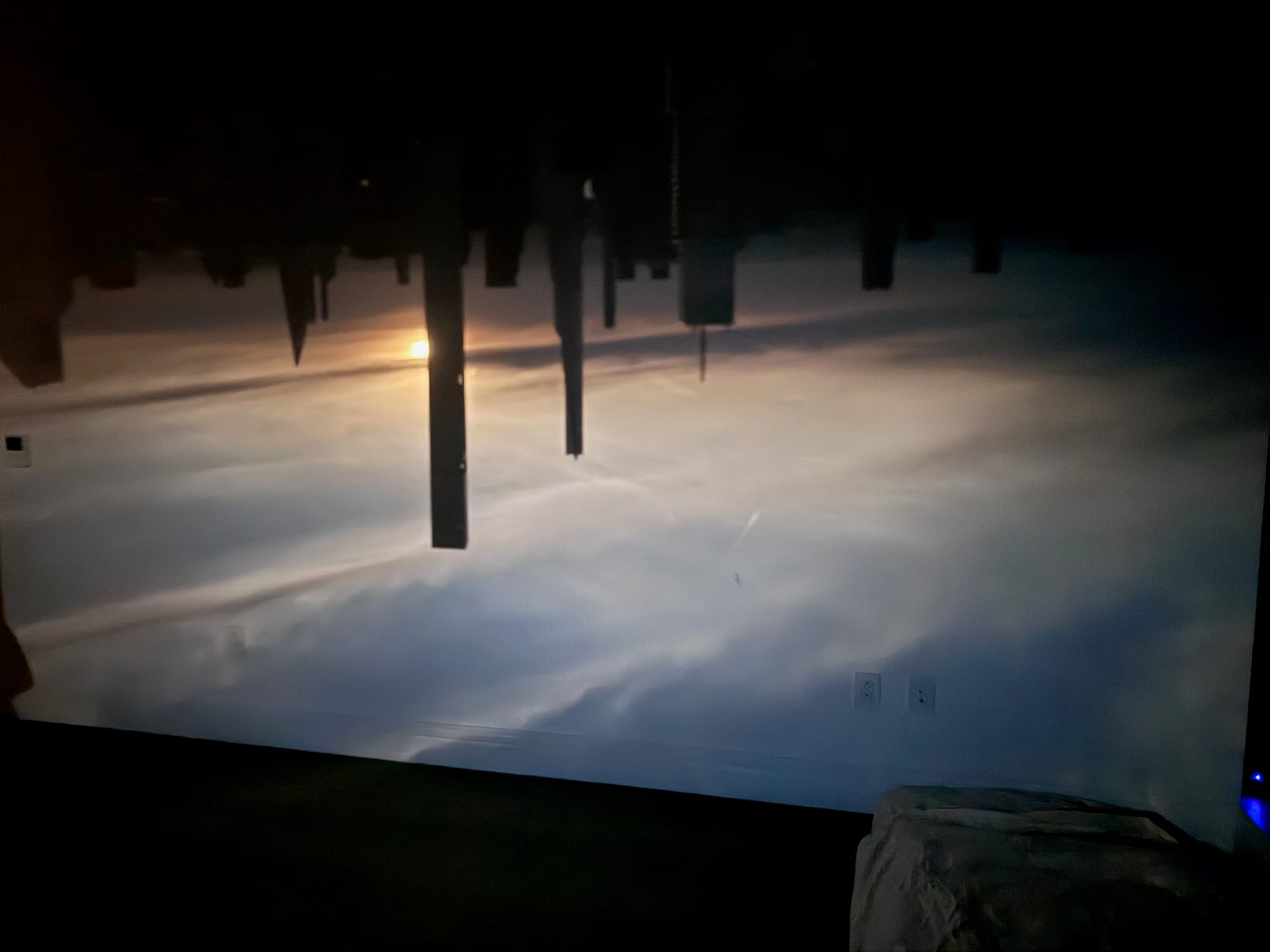
From there, visitors enter a blacked-out room turned into a camera obscura, a massive pinhole camera, where the New York skyline is flipped and appears like a projection on the room’s walls. On the floor is a mattress, while recordings from the early days of Russia’s full-scale invasion play over speakers, symbolizing how lives are upended in wartime.
“In a minute, everything you know is destroyed,” Duley said. “Everything that was familiar, everything you loved, has become distorted, inverted.”
The fourth room, titled “Memory,” features wartime photographs from Ukraine in the 1930s and 1940s collected by Duley placed in boxes with small prints of his own work. The room is laid out like a living room, with an old tube television tuned to static. Guests can sit and sort through images to make their own connections by pairing the new images with the old.
“By trying to slow people down, putting photographs in a box, making them open it and look through,” Duley told Urgent Matter. “You're making them engage in a different way.”
At the event, touching the old photographs felt almost improper until a Ukrainian woman nearby said not to worry because Ukraine had millions of them. She said her mother once threw out boxes of old family photos because she did not like the relatives.
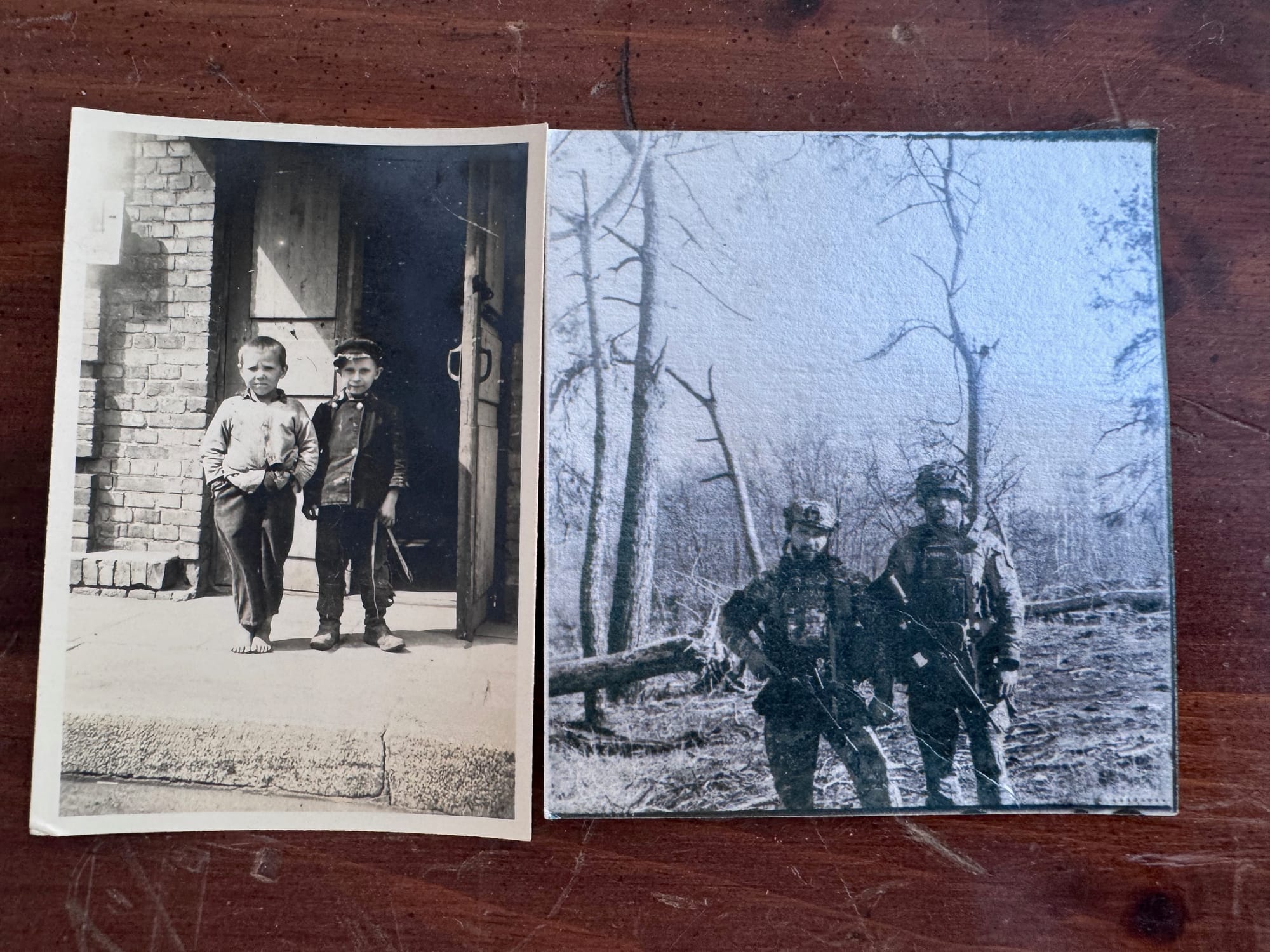
Duley said the room was partly inspired by a woman he met in Ukraine, with whom he cooked and ate before looking through her family photographs.
“I never photograph people if I haven't eaten with them first,” Duley said in his speech. “It's a great excuse to eat your way around the world.”
The show’s final room focuses on resilience, a word Duley said he uses carefully because it is often romanticized. Some photographs have been torn apart and rebuilt with gold, drawing from the Japanese repair practice of kintsugi.
One black-and-white photograph of the Artan Special Unit in Ukraine is particularly striking in its familiarity to anyone who has served or knows someone who has served in the military. It is a group portrait of soldiers, posed in uniform rather than in combat. Duley said the image came from a project built around old photographs and the way war images repeat across generations.
“That was part of this project, where I wanted to take photographs, old photographs,” Duley said. “And it sort of happened accidentally, and that's one of the most elite units in Ukraine, and they loved the idea.”
He said the photograph plays with the difference between war photography by an outside photographer and photographs made by the people fighting.
“There's war photography, which is me, a photojournalist, documentary photographer, taking pictures,” Duley said. “And there's photographs of war taken by the guys fighting it.”
Other details in the exhibition reward slow looking: the manicured fingernails of a female soldier near the trigger of her weapon in an image titled “Force Kharkiv 2026.”
The works in the exhibition are for sale, with proceeds supporting the Legacy of War Foundation, which Duley said has projects in Palestine, Luhansk, Rwanda and elsewhere.
Duley said the foundation’s work is tied to the same question behind the exhibition: what can be done when the scale of war feels overwhelming.
“I hate to say it, but most of it you can't change,” Duley said. “Most of it you have no control over. I would do anything to stop the wars around the world, but I can't.”
Stories like this take time, documents and a commitment to public transparency. Please support independent arts journalism by subscribing to Urgent Matter and supporting our work directly.