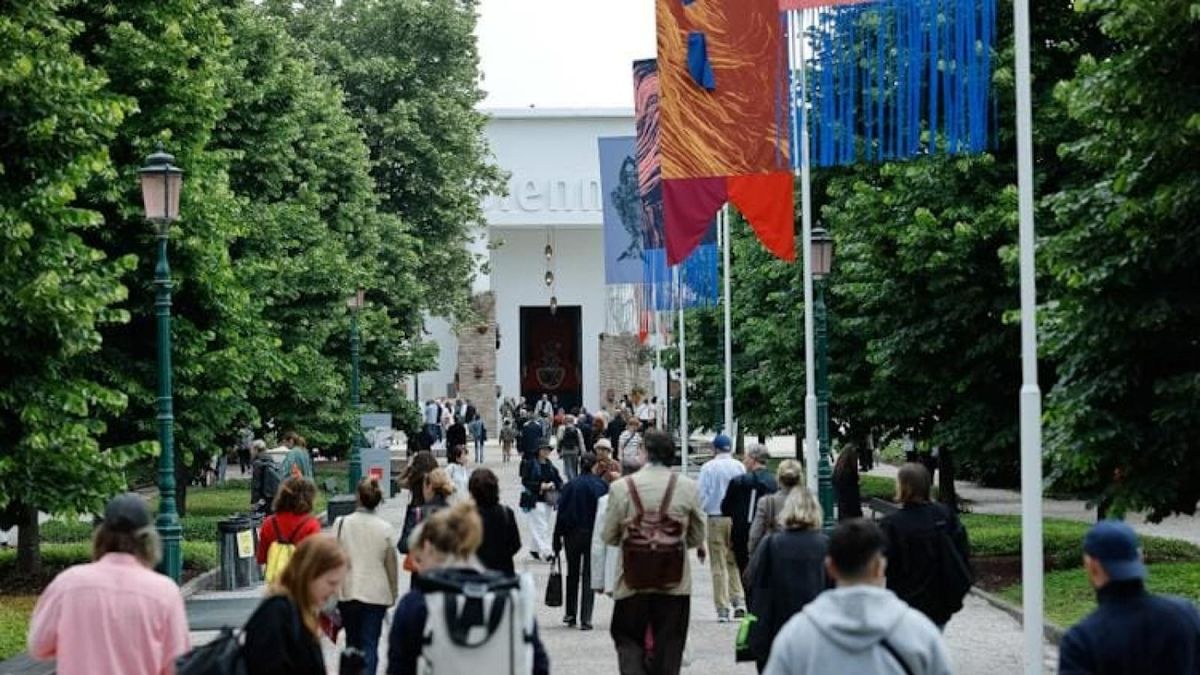
Visitors are seen attending the Venice Biennale. Photo courtesy of the Venice Biennale
More than 50 artists participating in the 2026 Venice Biennale have withdrawn from consideration for its newly created public-vote awards. The move, made in solidarity with the biennale’s resigned jury, marks the latest escalation in an edition already consumed by disputes over Israel, Russia and political neutrality.
The artists published a statement through e-flux, a contemporary art publishing and communications platform, revealing that they had withdrawn from consideration for the event’s newly created “Visitor Lion” awards. It was signed by 52 artists from In Minor Keys, the biennale’s main exhibition curated by the late Koyo Kouoh.
“We do so in solidarity with the resignation of the jury selected by Koyo Kouoh,” the artists said in the brief statement.
The signatories include internationally known artists such as Laurie Anderson, Alfredo Jaar, Otobong Nkanga, Walid Raad, Zoe Leonard and Tuan Andrew Nguyen, alongside participants from at least 19 national pavilions.
The move comes after the biennale abandoned its traditional Golden Lion jury awards process following the resignation of its entire five-member jury last month. Organizers instead announced “Visitor Lion” awards, to be decided through public voting and awarded at the close of the exhibition in November, rather than during the opening week.
Earlier this spring, the jury publicly stated it would not consider national pavilions representing countries accused of crimes against humanity before the International Criminal Court, a position that would have effectively excluded Israel and Russia from prize consideration.
The biennale has since faced sustained protests from artists, activists and cultural workers over the inclusion of both countries.
During preview week, pro-Palestinian demonstrators organized by the Art Not Genocide Alliance marched through the Arsenale demanding the closure of Israel’s pavilion and accusing the biennale of “artwashing.” Protesters temporarily disrupted access near the Israeli exhibition while chanting “Free Palestine.”
The group’s open letter calling for Israel’s exclusion from the biennale reportedly grew to include hundreds of signatories, including artists, curators and art workers associated with the exhibition.
At the same time, Russia’s return to the biennale after previous absences tied to its invasion of Ukraine has triggered additional backlash and protest actions, including demonstrations staged by members of Pussy Riot as well as funding and other threats from European government bodies.
The biennale’s leadership has sought to remain politically neutral, repeatedly arguing it cannot exclude states officially recognized by Italy and insisting it “rejects any form of exclusion or censorship of culture and art.”
Stories like this take time, documents and a commitment to public transparency. Please support independent arts journalism by subscribing to Urgent Matter and supporting our work directly.