Lace installation rooted in Ljubelj concentration camp performance lands in New York
Artist Eva Petrič's 'Bird of Hope for Peace' is on view at the Narthex Gallery of St. Peter’s Church

Artist Eva Petrič's 'Bird of Hope for Peace' is on view at the Narthex Gallery of St. Peter’s Church
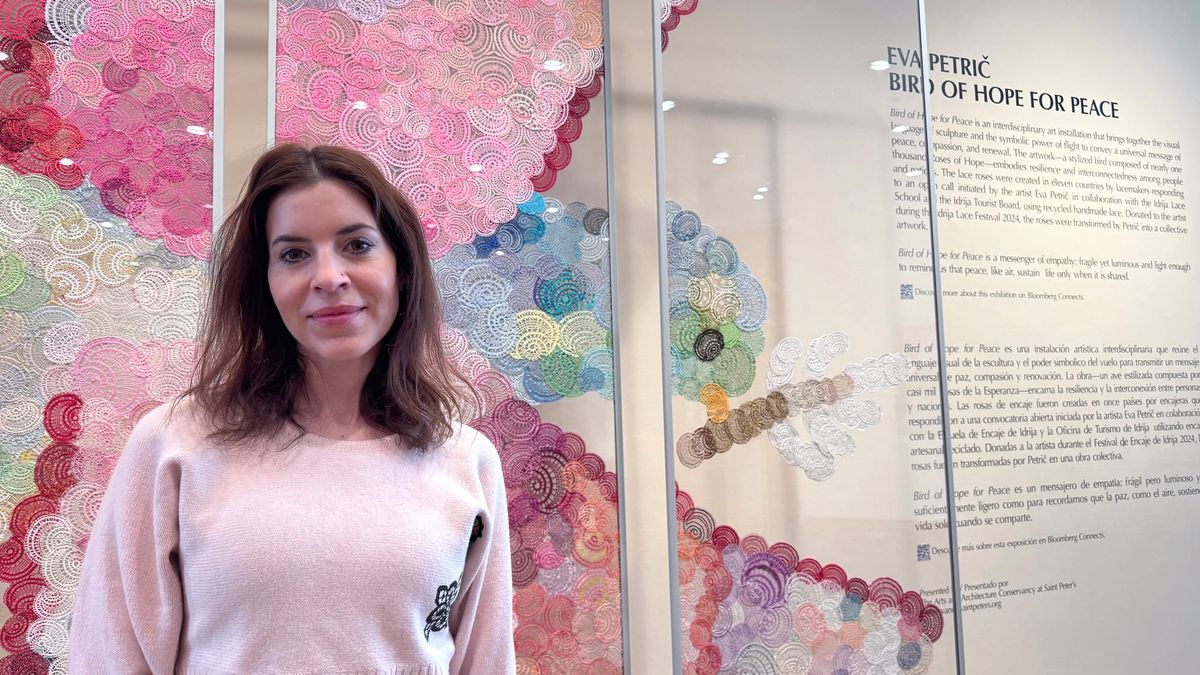
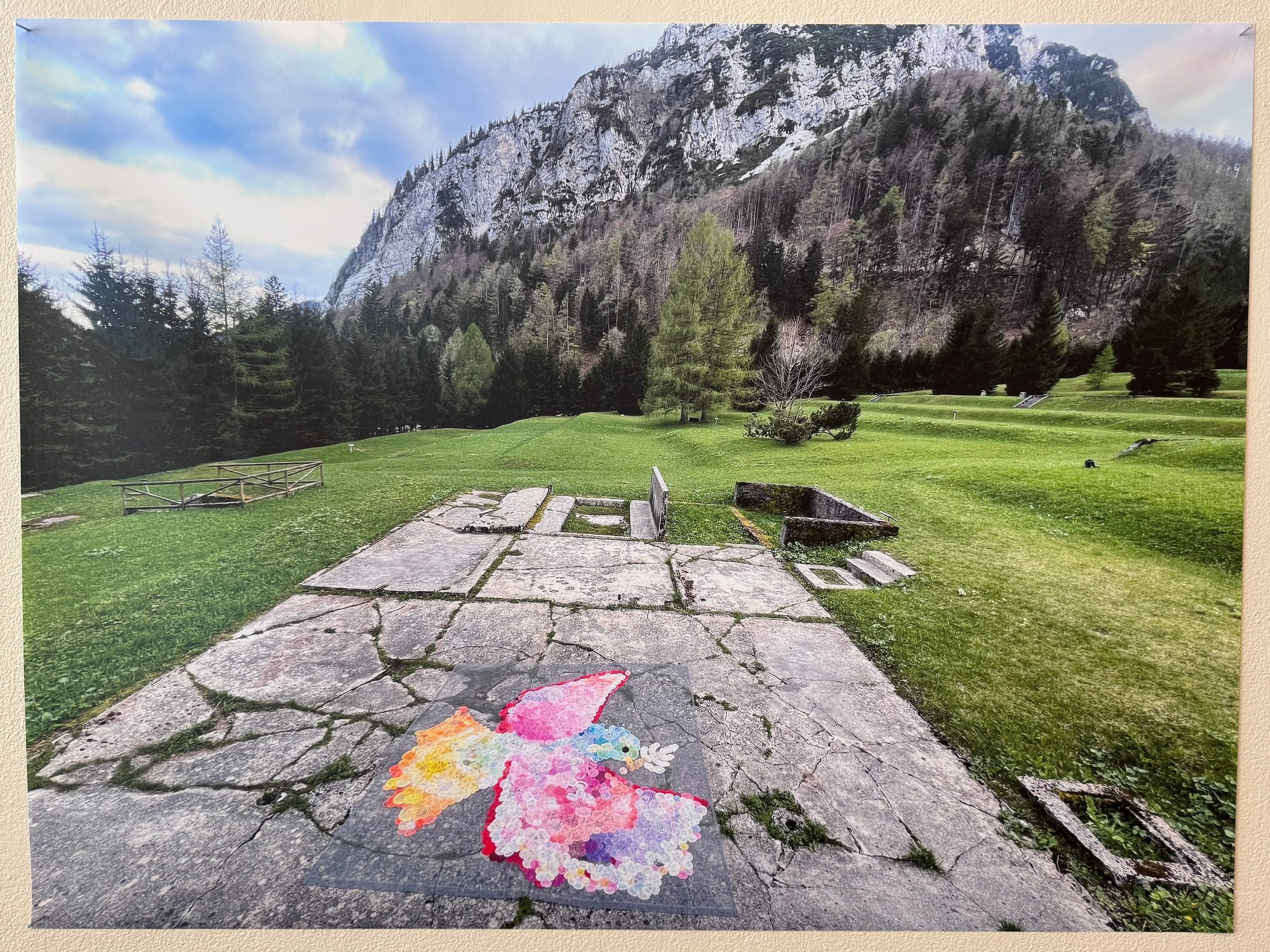
Through a performative action at the Ljubelj concentration camp, an outpost of Mauthausen, Slovenian artist Eva Petrič assembled nearly 1,000 handmade lace pieces into a sculptural dove. The work reflects on collective memory and empathy in the wake of the Holocaust.
The installation, Bird of Hope for Peace, is on view through July 31 at the Narthex Gallery of St. Peter’s Church, an Evangelical Lutheran parish in Midtown Manhattan. The exhibition includes photographs of the performance at Ljubelj and a 10-minute video documenting the work’s creation.
The lace pieces, called “Roses of Hope,” were made by lacemakers in 11 countries in collaboration with the Idrija Lace School and the Idrija Tourist Board and were donated to Petrič during the Idrija Lace Festival 2024. Petrič took the lace to Ljubelj to design and assemble into an artwork, landing on a stylized rendering of a dove holding an olive branch.
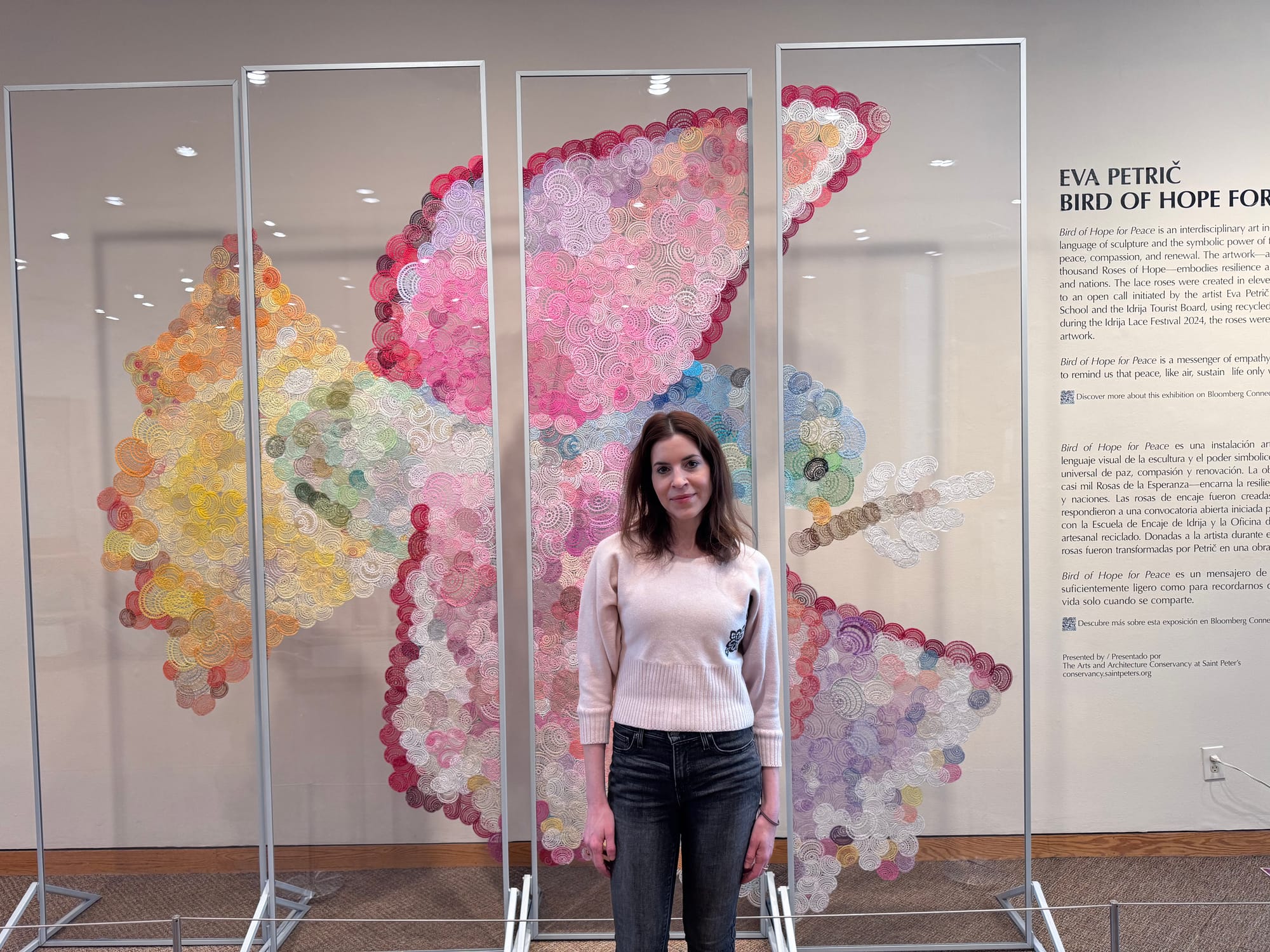
The dove with an olive branch appears in the Book of Genesis as a sign of renewal after the flood. It has been widely adopted as a symbol of peace, including in postwar Holocaust remembrance.
“I was asked to make the idea for the international open call for creating them and came up with the idea to make the Roses of Hope in 2023. In the next year, we received all the pieces, and they were exhibited in 2024,” Petrič told Urgent Matter.
Petrič then received the pieces last summer to use to make an artwork. She said that when she received them, each little piece had a tag on it so it could be coded—the name of the person who made it on one side, and the unique identifying number on the other.
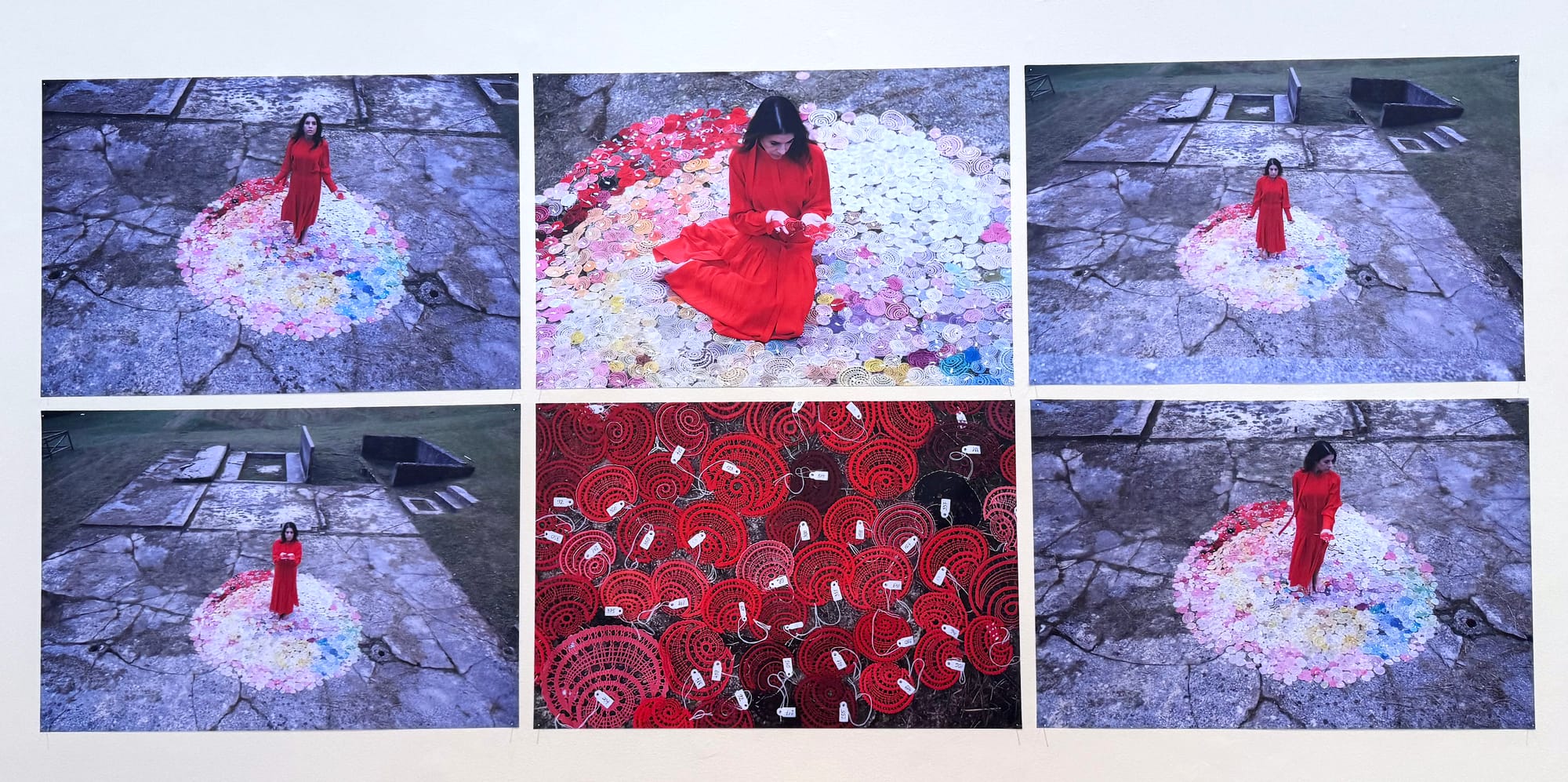
She said the numbered tags immediately reminded her of soldiers’ dog tags. She connected the tags to Ljubelj Pass, a mountain crossing in the Karawanks Alps between Slovenia and Austria, where a subcamp of Mauthausen operated during World War II. The artist described visiting the region as a child and being struck by its natural beauty.
“I took all the laces there and my first initial thought was to put them in a circle, because a circle is so symbolic, but in a way that was too easy for me,” she said.
Petrič, who said she often works in a performative way, was documenting her process and filming with a drone. At one point, while removing the lace pieces from the ground, she stopped because a storm was moving in and looked at the ground where she saw the rough shape of a bird.
“And that gave me the idea of a peace dove,” she said. “But peace dove is already such a cliché that we kind of don't even believe it anymore.”
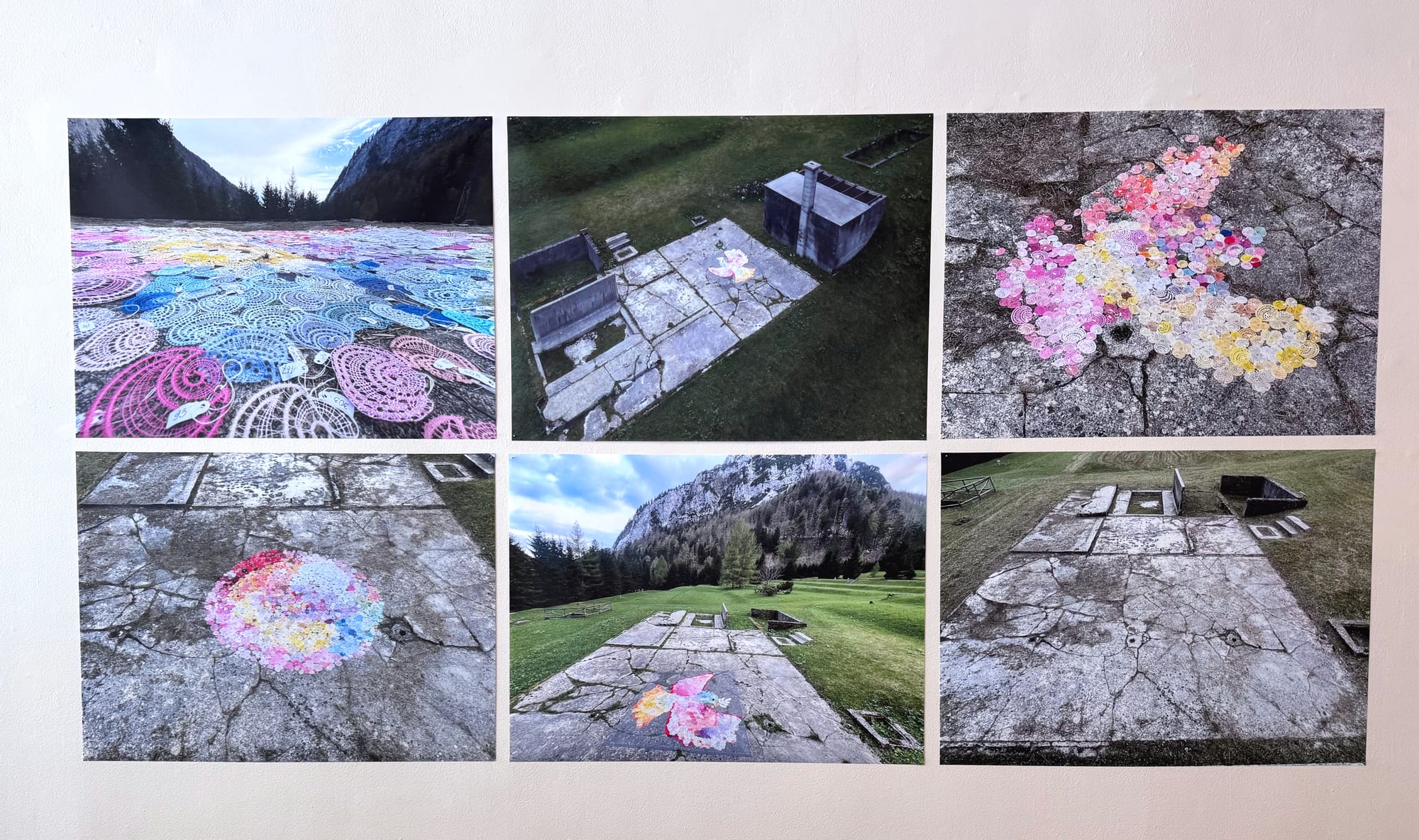
So, instead of making it a straight representation of peace, she decided that the bird would represent the idea of hope for peace.
“First you have to have even hope that peace is attainable,” she said. “We have to, unfortunately, I think, step backward today and be like, ‘Okay, do we even believe that it's possible to have peace still?’”
Petrič then finalized the work in her studio, as well as an accompanying video piece documenting its creation in which she layers in audio of her reading the names of the participants with music by a Japanese collaborator and archival images of bombing destruction.
When asked what having the photos and video adds for viewers of the work, Petrič said they allow people to see the materials and how she worked with them up close.
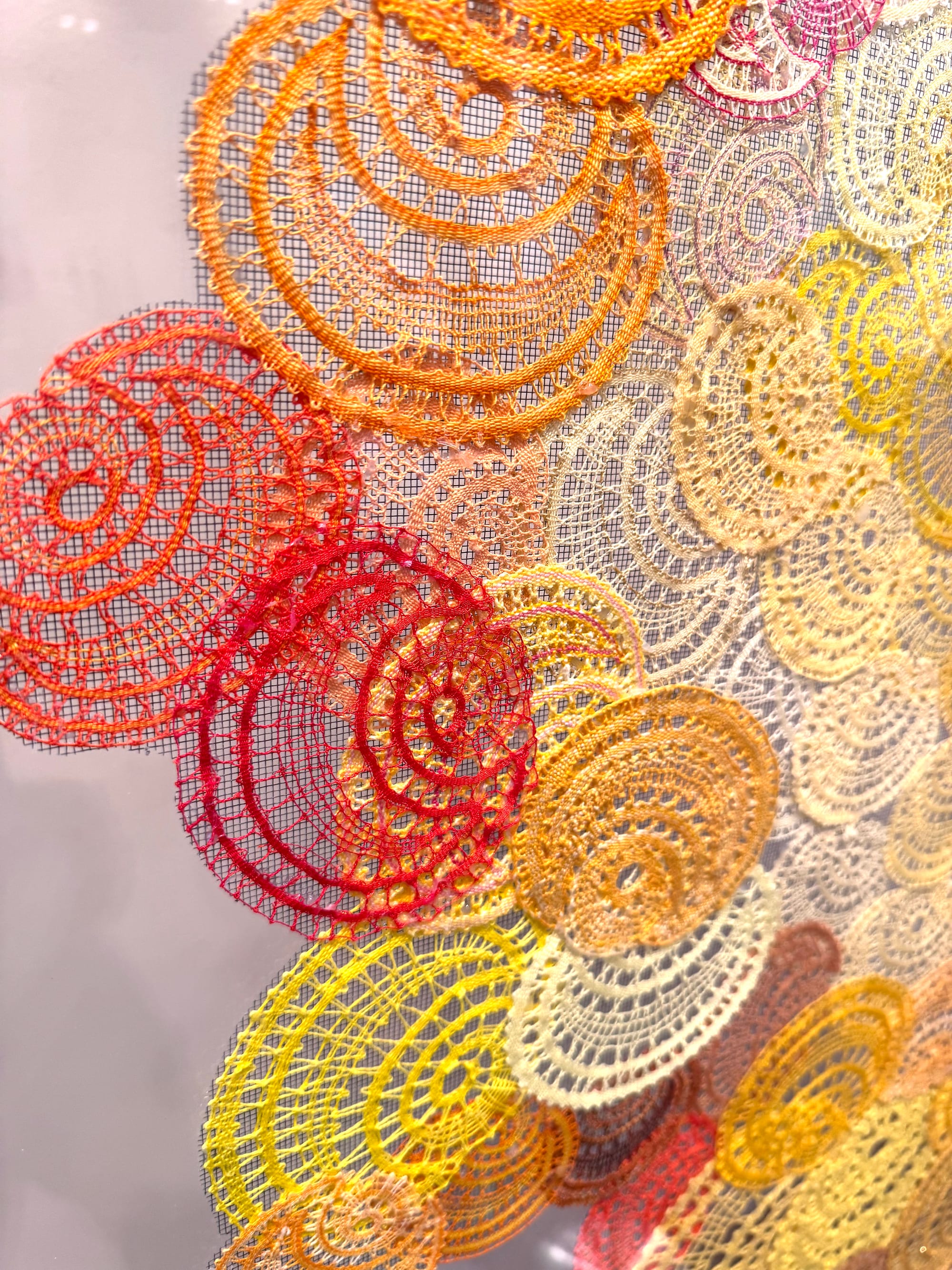
“With lace, it's important to be able to almost touch it. If it was up to me, I would enable people to even touch it,” she said.
Petrič previously had a 12-meter-tall lace work titled Collective Heart installed at Cathedral of the Holy Trinity in Dresden, Germany, which was heavily bombed in World War II by British and American bombing.
“Four days before I installed the work, the priest told me, unfortunately, there were 2,500 Nazis marching the streets,” she said. “He said it was horrific. It’s not so long ago what happened. When you look at what’s happening today, you have to ask—how much have we really progressed emotionally? Not very much.”
Petrič said she often works with old lace, not newly created lace, but it makes her “feel a bit nervous” that people trust her with their donations. She called working with lace “feminine work” because it’s made with “so much patience, so much knowledge, so much positive emotions.”
“A lot of these people have been saving the pieces at home because they're so precious, but then they see that their kids have absolutely no interest or connection to them, and they're like, ‘Okay, I'll give it to her because I know they're going to be in good hands and valued,’” she said.
But she also said she’s glad that the people who donate their lace to her don’t fully see her process—which involves laying out the prized lace on the floor to create a mosaic. She also often has to cut them. With Bird of Hope for Peace, she did not have to cut them because the pieces were all newly made with specific parameters for the size or thickness of thread.
Generally, though, she keeps the laces as they come. “I like it if they have a hole. I like it if they have a stain. They are supposed to reflect life and humans, not robots, which are beautiful in their imperfection. So, I keep them,” she said.
She recently dyed laces she received for the first time in a project for the show “Sakura” currently on view at the Romanian Cultural Institute in Manhattan. For that work, Petrič said the laces needed to be a uniform yellow color.
 Adam Schrader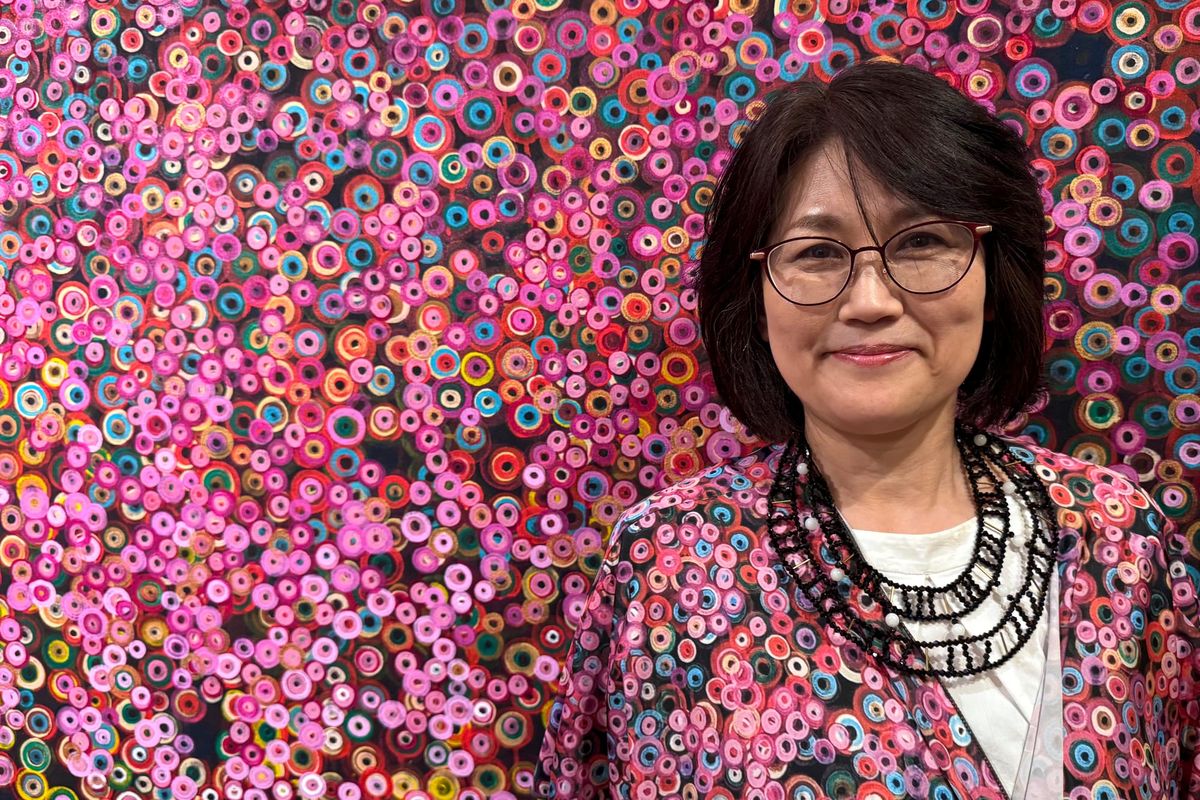
Jared R. Stahler, the senior pastor at St. Peter’s Church, called the Bird of Hope for Peace exhibition “extraordinarily compelling,” particularly for its collaborative creation.
“The work itself embodies truly the making of peace, which is not an effort of one individual. It's the effort of all of us. Art speaks in so many profound ways,” he said.
Stahler also reflected on the value of Petrič’s actions in creating it at the site of the Ljubelj concentration camp, with it now being able to go on view in New York in a transformed way.
“To speak of the Holocaust and the death camps that killed so many people is to remember the real horrors that we can perpetrate on one another. And still through all of that must always be a call to hope and a call to light,” he said.
Stahler noted that St. Peter's has a close relationship with Central Synagogue, a large Reform congregation in Midtown, with which it holds events—including a recent remembrance of the Holocaust.
“We're constantly thinking about what this means as the generation of survivors are dying and how is that memory held by people, by community, by this shared community between Central Synagogue and St. Peter's,” he said.
“This is a way. We can hold this memory in liturgy. We can hold it in writing. We can hold it in prayer. We can also hold it in art. And it's a great gift that it's here at St. Peter's, particularly in this moment in time.”
Stories like this take time, documents and a commitment to public transparency. Please support independent arts journalism by subscribing to Urgent Matter and supporting our work directly.