Cherry blossoms inspire multinational exhibition at Romanian Cultural Institute
A Manhattan exhibition gathers international artists around cherry blossoms, tracing a symbol that has spread far beyond Japan.

A Manhattan exhibition gathers international artists around cherry blossoms, tracing a symbol that has spread far beyond Japan.
Sakura, the beloved cherry blossoms that mark the start of spring in Washington, D.C. and New York City, are receiving a multi-national love letter at the Romanian Cultural Institute in Manhattan.
The exhibition, “Sakura: A Season of Becoming,” was organized as an intercultural dialogue between Romania, Japan and the United States and is on view at the institute’s Brâncuși Gallery through May 15.
Dozens of people turned out Friday night for the opening, complete with sake, Romanian wine and music created by American artist Daniel Fishkin using instruments made from cherry wood.
Luisa Tuntuc, the deputy director of the Romanian Cultural Institute, co-curated the show with Japanese curator Kyoko Sato.
 Adam Schrader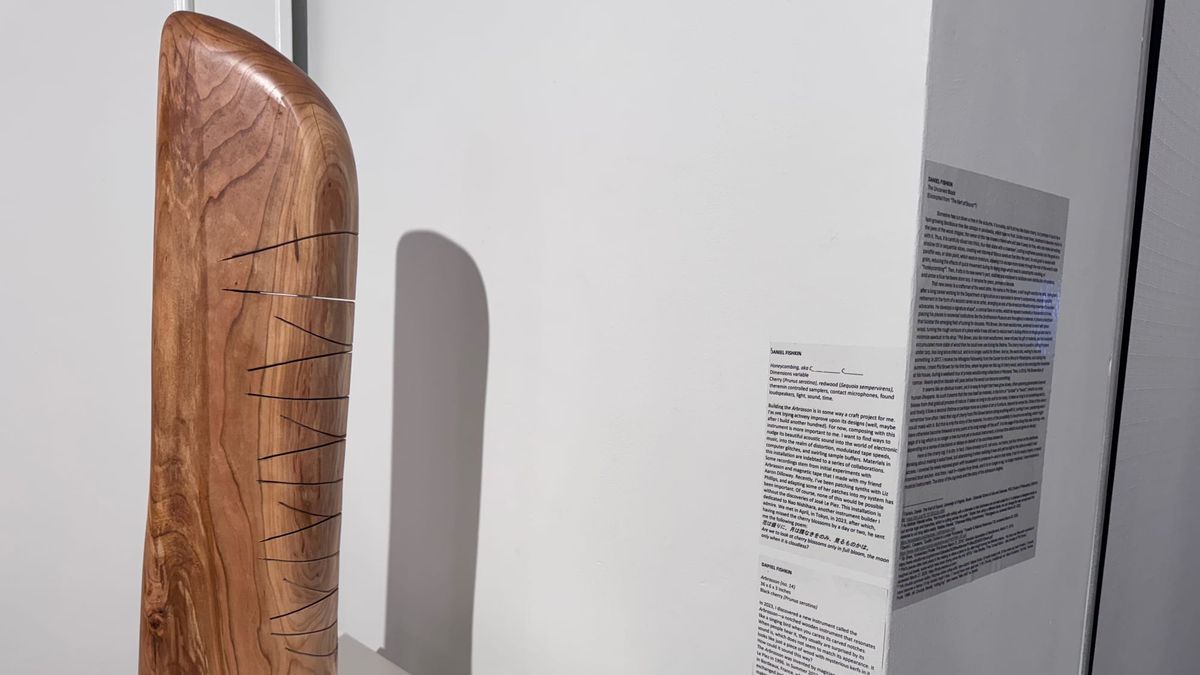
“Each spring, this natural phenomenon of cherry blossoming is getting people in parks, outside. Crowds of people actually are gathering outside to see this beautiful and ephemeral moment, and you cannot stay indifferent to that,” Tuntuc said in a speech. “It's such a beautiful and emotional feeling.”
Tuntuc likened experiencing the cherry blossoming season to “a sacred ritual” that has become a part of world heritage.
“The symbol of cherry blossoming, it's not only part of the Japanese culture anymore. It's part of the United States. It's part of Romania,” she said. “In Bucharest, our capital, we have the biggest Japanese garden in Europe, which has 85 cherry trees, and we are very proud of that.”
Tuntuc said the curators brought together 11 artists from Romania, Japan, the United States, Slovenia and Ireland for the show, all of whom gave brief speeches about their work at the event.
The significance of the cherry blossom dates back more than a millennium to the Heian period, a pivot point for Japanese identity and aesthetics, Sato explained. Today, it stands alongside the chrysanthemum as a national symbol of Japan."
As a native, wild-growing species, the trees were widely adopted in early literature, including the Kokin Wakashū and The Tale of Genji, Sato said, helping establish the blossoms as a lasting cultural symbol.
A work by artist Nicole Cohen on view in the exhibit.
In 1912, cherry blossoms became a symbol of international cultural exchange in Japan, which started to give the trees to foreign cities like Washington and New York as diplomatic gestures.
“That tradition still continues,” Sato said. “As a friendship, we continue to give out our cherry blossom as a symbol of cultural exchange.”
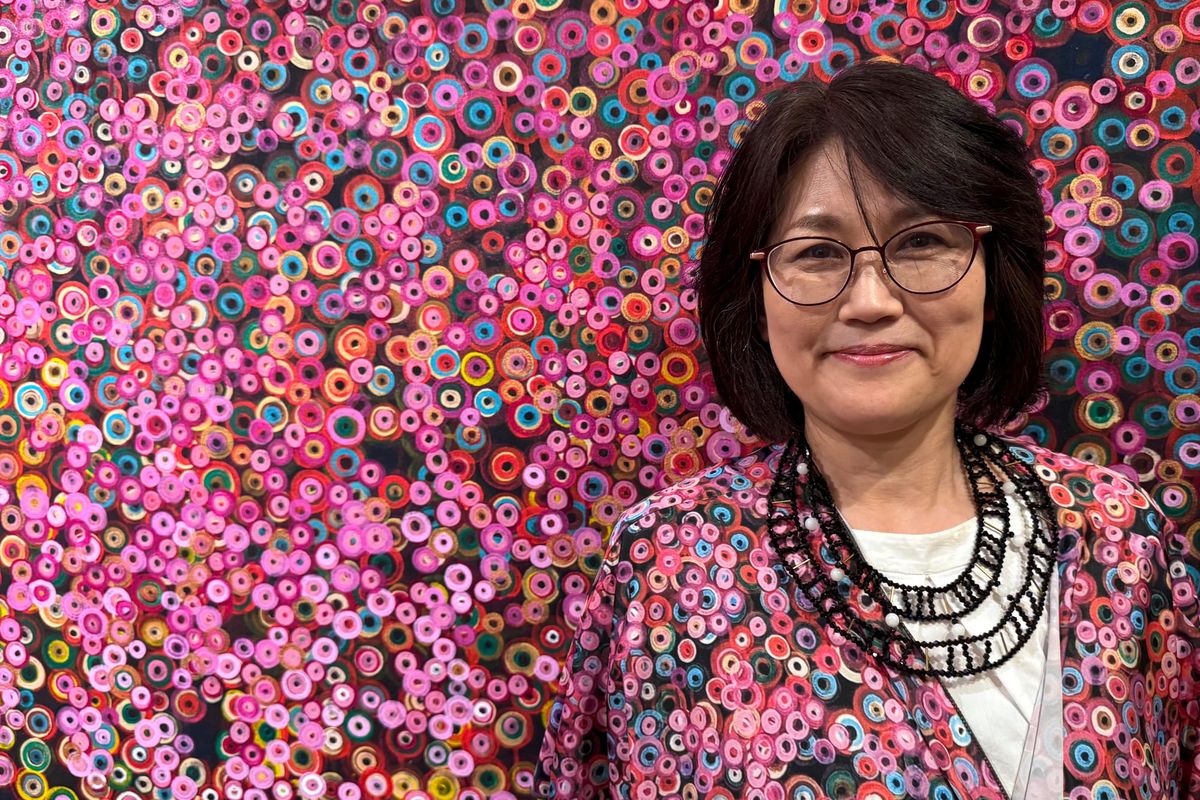
Japanese artist Sophia Chizuco showed a large 60-by-60-inch painting, titled Blooming, of hand-drawn concentric circles indicative of cherry blossoms. She also wore a kimono-style top bearing her painting as its pattern, which was a big hit at the opening.
"My favorite flower is the cherry blossom. Its hakanasa-fragility and fleeting beauty-comes from its thin, delicate petals and short blooming period,” Chizuco wrote in her wall text. “In Blooming, I express the blossoms' brief life-often lasting only about one week-through luminous, radiant color.”
Chizuco said she is also drawn to the concept of hanaikada, which is a phenomenon when the petals fall into a river and gather together—drifting along as little "flower rafts.”
“Sakura, for me, is really about impermanence and the fragility and the transience of life,” said Nicole Cohen, an American artist whose 2023 video loop Pink Dust greeted guests as they first walked into the building.
Another of her works featured short clips of animated cherry blossoms in different environmental conditions. Cohen, whose background is in painting, said her video art “has that transient quality like the sakura.”
Before ascending the stairs, guests were also presented with a large site-specific sculptural work hand-laced by Slovenian artist Eva Petrič titled Blooming Thorns.
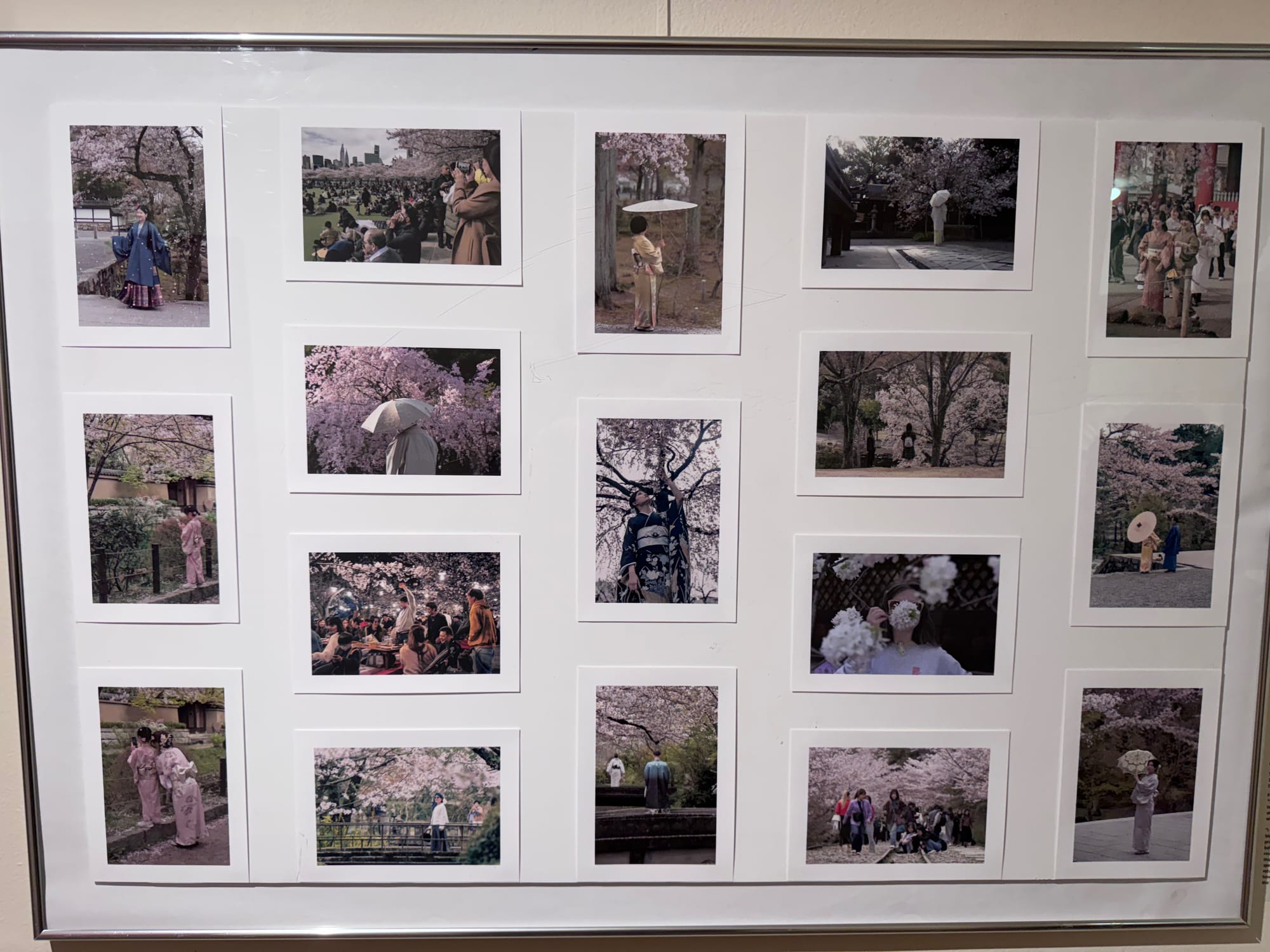
Inside the gallery, the dialogue continued through various media. Romanian-born Georgette Sinclair presented pastel landscapes of Roosevelt Island’s blooms, while Irish photographer Paul O’Malley offered The Instagram Grid, a collection capturing the quietude of daily life in Japan.
“There are two stages of bloom. The first stage is the white bloom, which is gone already, but right now we have the second stage of the pink cherry trees,” Sinclair said.
“My work is rooted in the moment of renewal, noticing change, honoring resilience. We can actually relate to that as a people. And finding beauty in beginnings that do not last, but matter at the same time.”
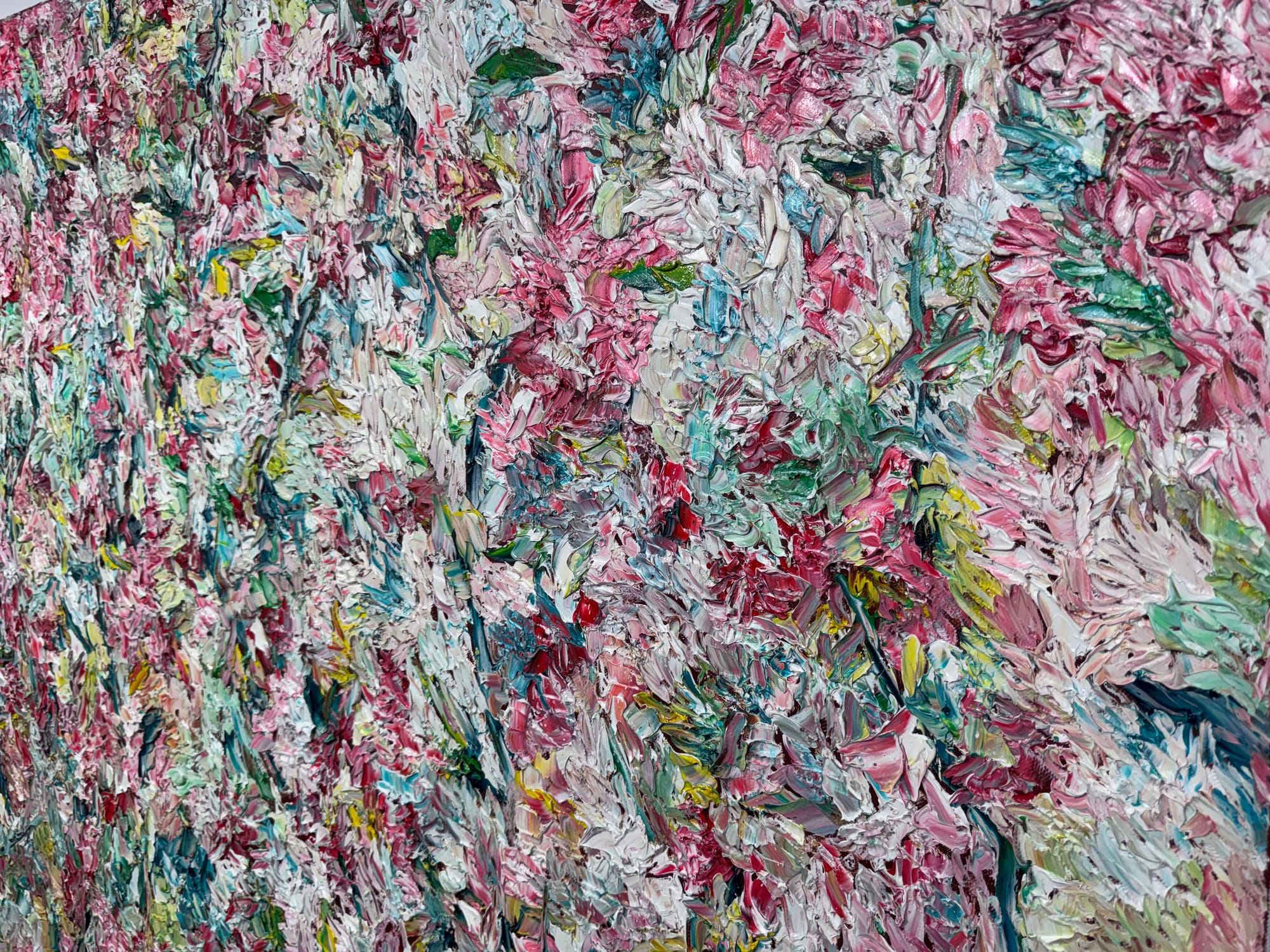
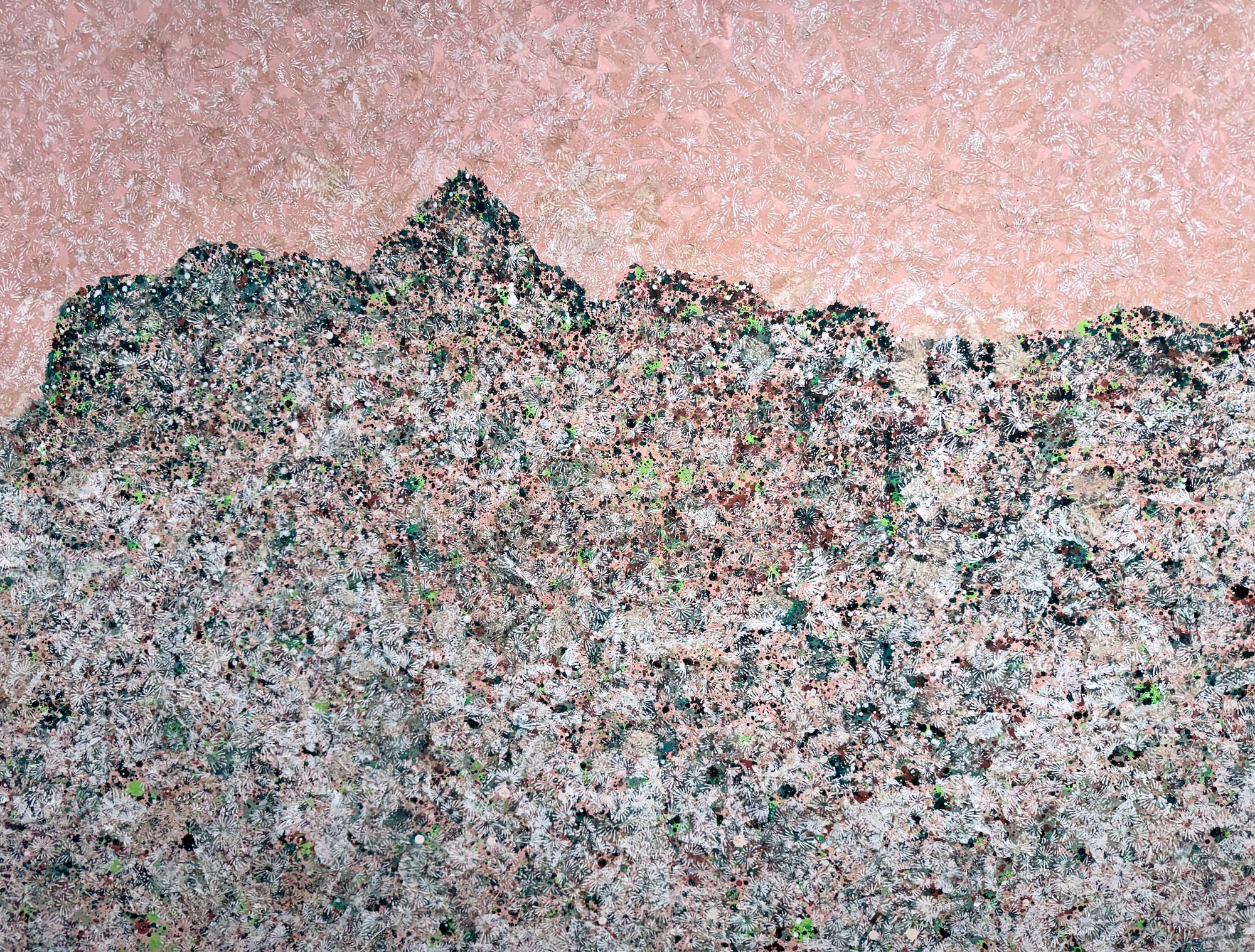
Sorin Scurtulescu, a Romanian artist whose work inspired the show, called cherry blossoms “instant happiness” and “the best therapy for our contemporary souls” in his speech. His oil on linen painting, titled Sakura, presented tessellating fields of textured pink, red and white paint applied with a spatula.
“My research and return to flower paintings was inspired by the post-pandemic period,” Scurtulescu said. “After lockdown, I reconsidered nature and flowers’ importance. The difficulty of painting flowers today in our cold, digital, A.I. age attracted me too.”
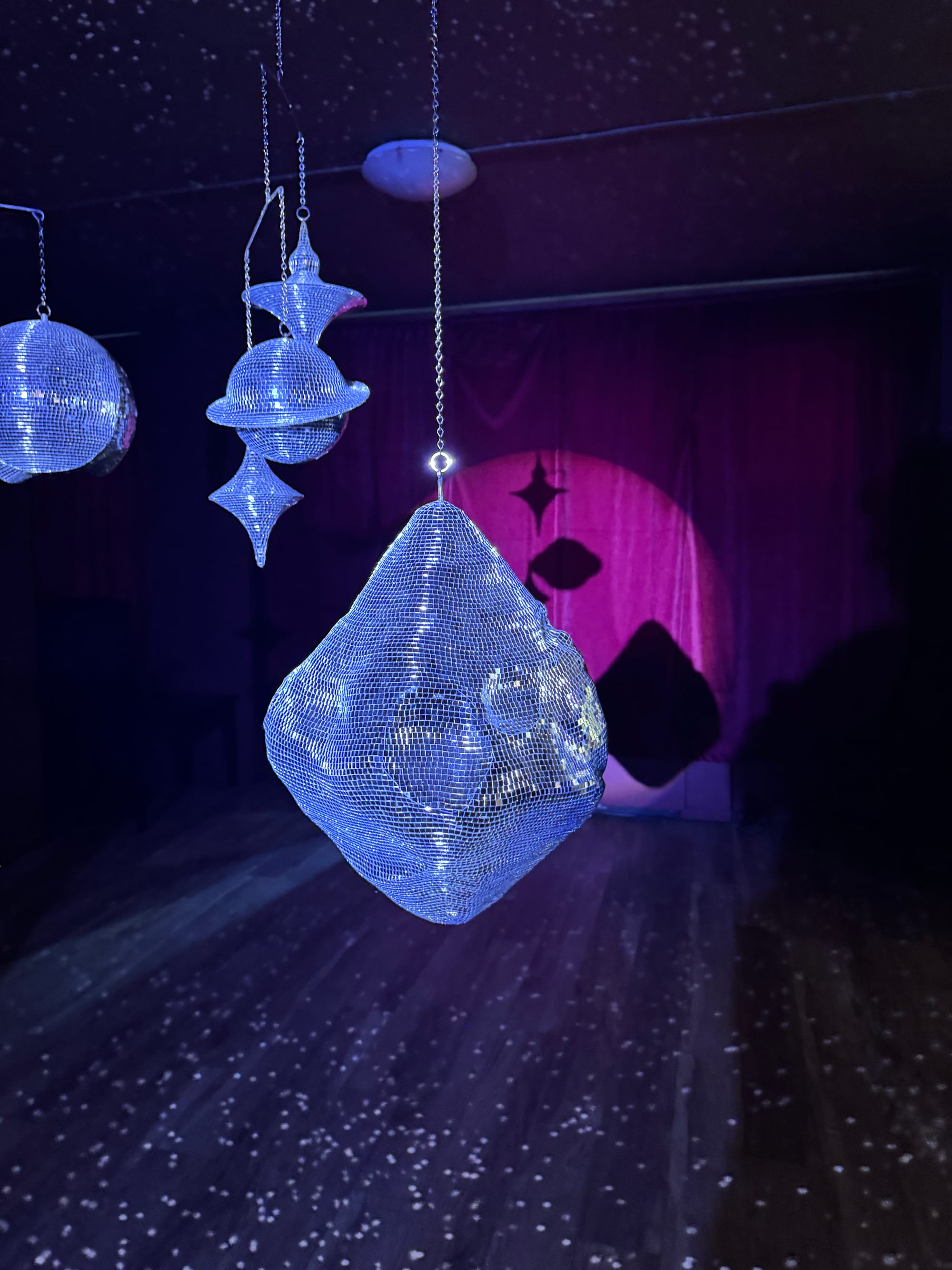
And the artist Japanese artist Kiichiro Adachi created a mesmerizing mobile with mirrored surfaces, like a disco ball, that reflected patterns of light onto the walls and ground of the venue—giving an aura of the falling of cherry blossoms.
Other artists included in the exhibit were Junko Yoda and Mariko Fujimoto of Japan and Maia Ștefana Oprea of Romania.
“What I think is so important nowadays in our instant-gratification type of society is that the Sakura teaches us to wait,” Petrič said. “And that happiness is also connected with patience and belief.”
Stories like this take time, documents and a commitment to public transparency. Please support independent arts journalism by subscribing to Urgent Matter and supporting our work directly.