Leonora Carrington sculpture show opens amid renewed scrutiny of late bronzes
The exhibition arrives as debate over Carrington’s late bronzes continues to divide her heirs and the market.

The exhibition arrives as debate over Carrington’s late bronzes continues to divide her heirs and the market.
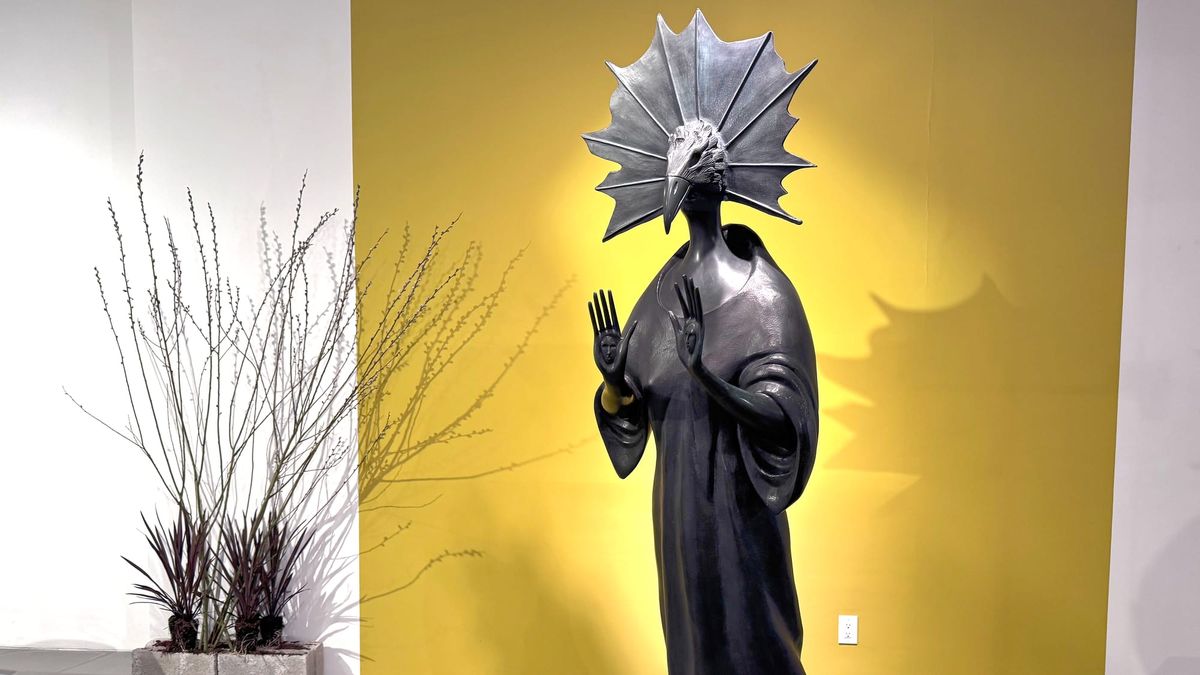
A New York gallery is presenting late bronze sculptures attributed to Leonora Carrington, placing the British-born Mexican Surrealist’s lesser-known sculptural work before New York viewers as questions over authorship, editioning and control of her legacy continue to shadow the market around the works.
The show, titled “Shape of Dreams,” opens Thursday at L’Space Gallery in Chelsea and runs through July 25. It was curated with Consigna Gallery in Mexico City and includes bronze sculptures dated to 2010 and attributed by the gallery to Carrington.
Speaking with Urgent Matter, gallerist Lili Almog briefly alluded to the dispute. L’Space also noted that the show includes three works by Pablo Weisz Carrington, one of the artist's sons, and said it is presented with support from the Leonora Carrington Council, of which Pablo is the founding patron.
“She had two sons, and the two sons kind of split whatever they inherited, whatever she left. She was very productive. And she left a lot of work,” Almog said. “And so, the council is actually running her estate.”
Carrington, who was born in Britain and later became a major figure in Mexican art, has seen a surge of market and institutional attention in recent years. In 2024, The Art Newspaper reported that her 1945 painting Les Distractions de Dagobert sold at Sotheby’s New York for $28.5 million.
That broader rise in attention has coincided with the promotion of the late bronzes attributed to Carrington.
But there have been concerns about the sculptures because they are all dated to when Carrington was in her 90s and unable to paint due to arthritis. Scholars and market figures previously expressed caution in remarks to The Art Newspaper.
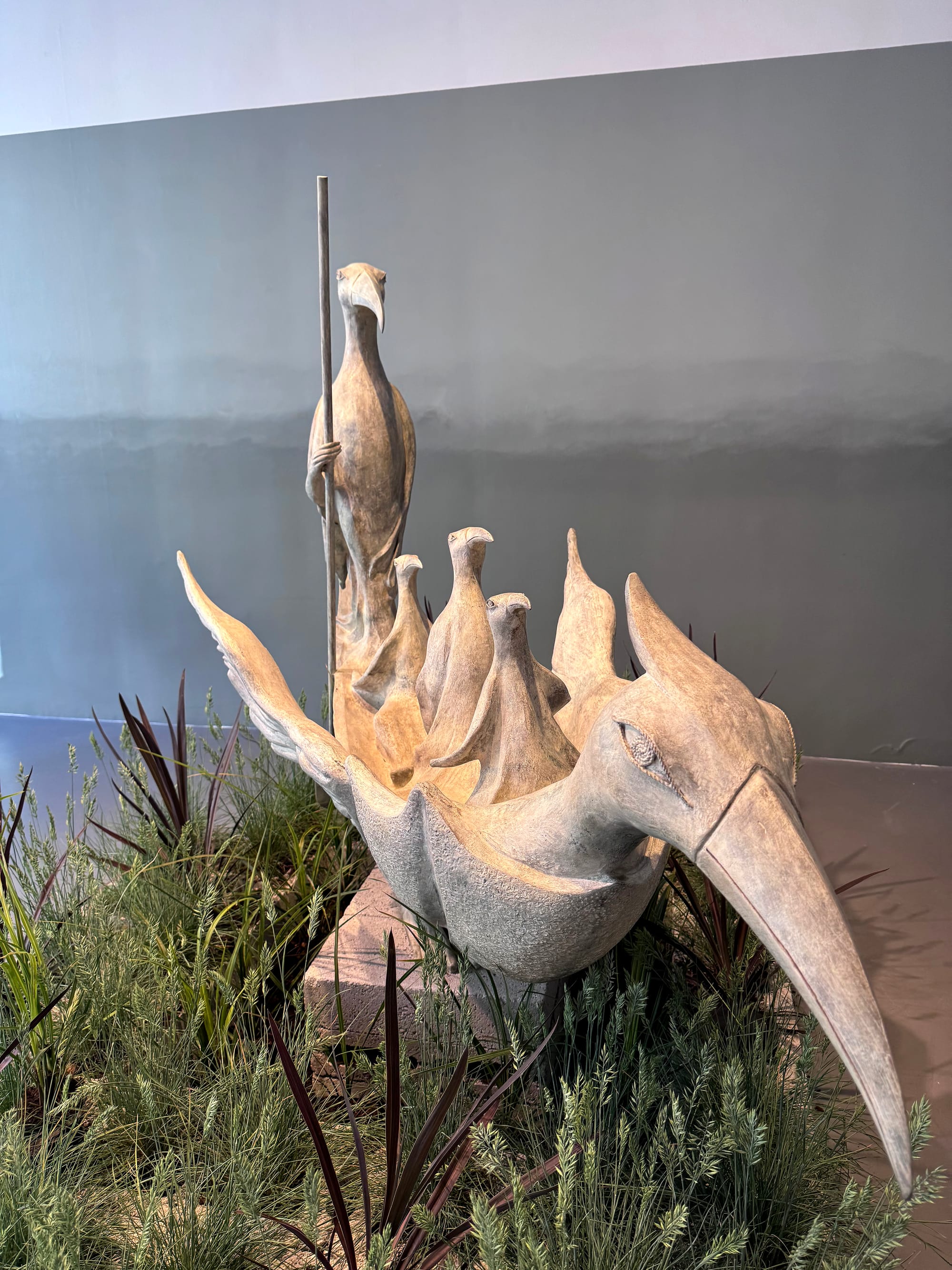
Gabriel Weisz Carrington, her older son, criticized what he called “bronze monstrosities” in his 2021 memoir The Invisible Painting, writing that they lacked the “elegance and artistic balance” of the few sculptures he considered authentic Carrington works. Gabriel leads another organization dedicated to her work, the Fundación Leonora Carrington.
Fermín Llamazares, co-founder and president of the Leonora Carrington Council, rejected Gabriel’s criticism as “false allegations,” telling The Art Newspaper that photographs and video footage show her working on the pieces.
Isaac Masri, a friend of Carrington’s who promoted her public art projects, argued that only certain Velasco foundry editions with certificates from his publishing house signed and numbered by him and the artist should be considered her authentic work.
Masri said her later bronzes were made from small models under “pressure” from Pablo and that the editions were not controlled. The wall text in L’Space did not indicate whether the sculptures were part of editions, the foundry involved or any certification.
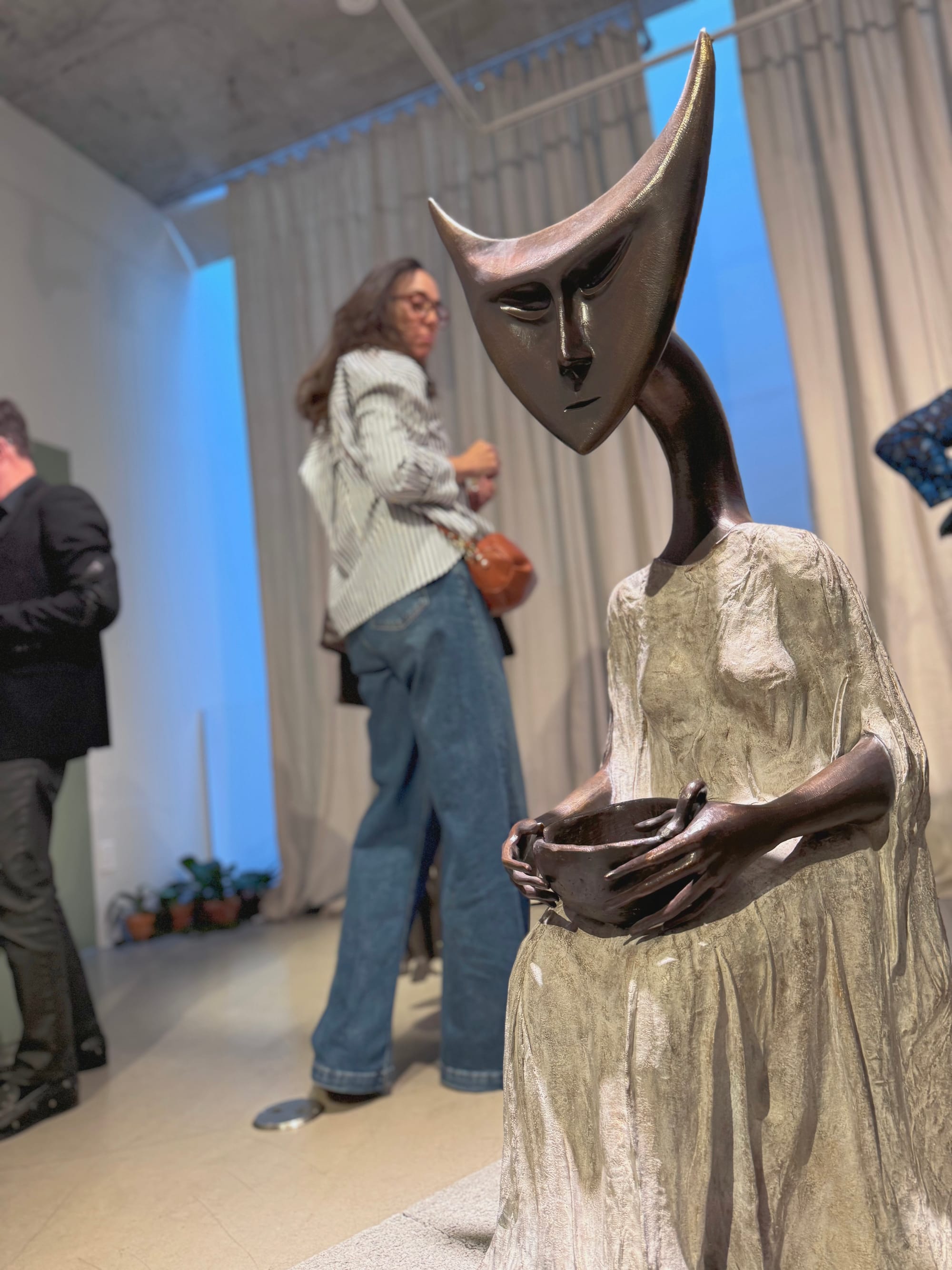
At L’Space, Almog has created a beautiful and thoughtful showcase of the bronzes, presenting them with the “flavor of Mexico,” as she described it. Many of the sculptures sit on cinderblocks, separating them from the concrete floor, and are surrounded by plants—which she initially wanted to source from along the West Side Highway to give a “wild” feel.
The color fields behind the paintings were inspired by Carrington’s own palette and were carefully selected by Almog, who took a book with reproductions of her work to the paint store to closely match them. As for their placement, the sculptures were paired with the specific color with which they worked best after trial and error.
“And those are meant to be outdoors because they're bronze, so especially the monumental ones, they're supposed to be outdoors,” she said. “I wanted to give it the feel of the outdoors of the concrete, but yet a hint of green and almost like a lost garden.”
Almog said that, since the artworks are meant for outdoor display, she wants to give institutions the first chance to acquire them.
Visitor Savina Kotorov, the director of operations at Qnary, an executive reputation management firm, said her favorite work depicts a character with its arms stretched out, palms forward. The palms have faces in them. That sculpture was placed in front of the mustard-colored wall.
“It is a combination of mythical creature, something otherworldly, and at the same time, female power,” she said. “It's in transformation, flowing from a human to animal form.”
Kotorov, who was familiar with Carrington’s paintings, said she believes the sculptures are “more powerful” than her paintings—particularly her larger sculptures.
“I felt like when I entered here, I was in Alice in Wonderland,” said Rado Kotorov, who accompanied her to the gallery. “Each one of them throws you into a different world.”
Meanwhile, a bartender was particularly interested in the 2010 sculpture Woman with Fox, which features a character from her 2011 lithograph Nine, Nine, Nine. He said he found meaning of it after reading the wall text and the idea of constant change or metamorphosis of identity.
The show also included an interactive Tarot Reading Booth where visitors encounter Carrington's voice, reconstructed through artificial intelligence, delivering intimate readings from the deck she designed. After selecting a card at random, the visitor then pairs it with a phone number to call.
Guests sit inside the booth, dial the number, and pick up just one phone representing either their past, present or future. The voice on the other side of the line then gives the visitor a message. For example, if the Hermit card is drawn and the future phone is selected, the visitor would get the following message:
“You slowly advance towards the cave. Your pain will show you the way to find the wise old man that you still do not see. Will he be an ancestor? Will be the beard of your new age? Be enlightened, and you will know.”
In her life, Carrington was a prolific writer and Almog revealed that there are plans to release her diaries, though she said that is not expected to be anytime soon. A Hollywood director has bought the rights for them as well, she said without providing further details.
The fight over the bronzes may continue among heirs, scholars, dealers and collectors, as they parse authorship and control of Carrington’s legacy. But the dispute can start to feel like a market argument dressed up as an aesthetic one.
Artists have long relied on assistants, fabricators, foundries, publishers and family members to turn ideas into objects. Bronze sculpture, particularly, is often a translation, turning an artist’s maquettes into a massive metal form.
Whatever the precise degree of Carrington’s hand in the works, the show makes a persuasive case that they belong to her visual world.
Stories like this take time, documents and a commitment to public transparency. Please support independent arts journalism by subscribing to Urgent Matter and supporting our work directly.