Brent Sikkema murder trial opens as disputed chart details alleged plot

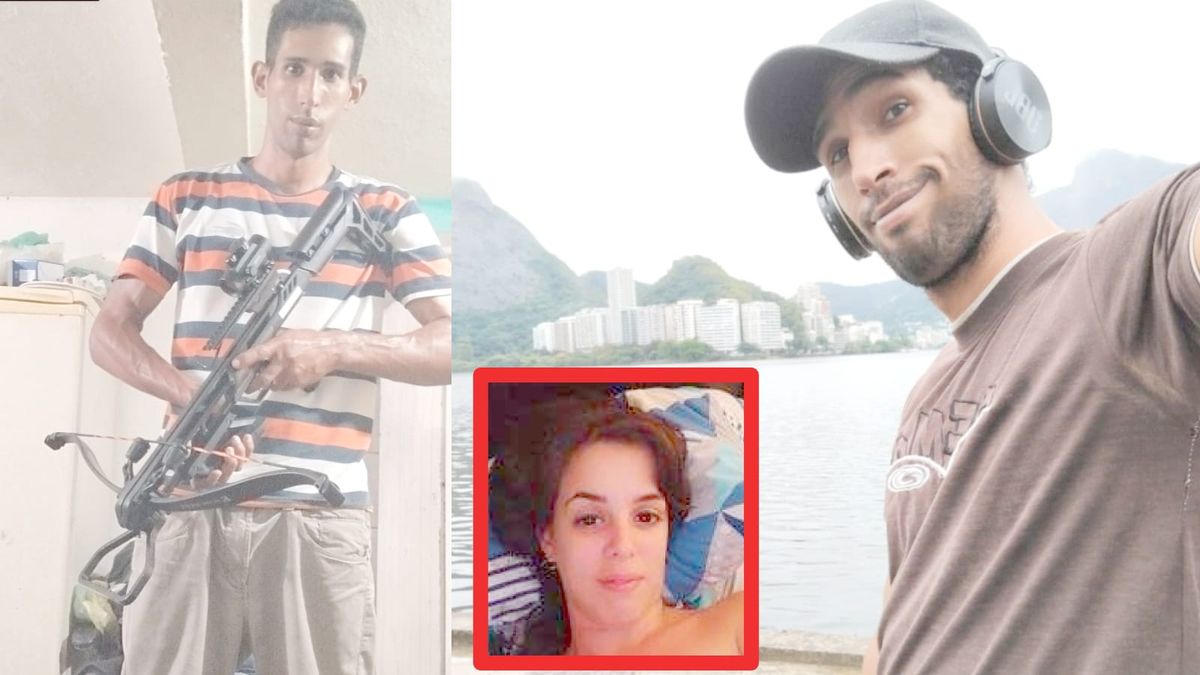
The murder-for-hire trial of Daniel Sikkema opened in Manhattan federal court this week while a newly disputed government timeline filed to the court laid out months of messages, money transfers, searches and travel records prosecutors said point to an alleged plot.
“In the year 2024, Brent Sikkema was brutally murdered,” Assistant U.S. Attorney Nicholas Pavlis told jurors during opening statements Tuesday. “A hitman snuck into his home in Brazil, took a knife and stabbed Brent over and over again.”
Prosecutors showed jurors photos of Brent’s body, which had been stabbed at least 18 times.
“[Prevez] immediately made a phone call,” Pavlis said. “Who did he call? He called that man, Daniel Sikkema, that man who hired and paid him to kill Brent.”
Daniel Sikkema, 55, has pleaded not guilty. His lawyer, Florian Miedel, told jurors that prosecutors do not have a witness who will testify from personal knowledge that Daniel hired Alejandro Triana Prevez to kill Brent.
“No one is going to come into this courtroom and say Daniel did it,” Miedel told the court. “No one is going to come into this courtroom and say, ‘I have personal knowledge that Daniel hired Alejandro to do it.’”
While the trial is expected to last several weeks, Daniel’s lawyers filed a motion Wednesday challenging whether jurors should be allowed to take a prosecution timeline into deliberations.
The disputed chart compiles messages, audio files, ATM withdrawals, Western Union records, photos, browser history, maps searches and other material into a chronological account of the government’s case.
Defense lawyers argued the chart is not a neutral summary of voluminous evidence but “a government summation in chart form.”
The chart begins in March 2023, nearly a year before Brent’s murder, with a WhatsApp message Daniel allegedly sent to a man named David.
“Here with my struggle and my never-ending problem. It won't be over until this man passes away,” Daniel said, according to the chart. “But anyway, here we go. We're continuing with the process. Now he's trying to hide everything he can, so he doesn't have to give me what I'm entitled to.”
His lawyers argued in their motion that the government excerpt leaves out additional context from the same message, in which Daniel referred to investigating Brent, hiring an expert and evaluating art in the divorce.
The Sikkemas were in the middle of a bitter divorce at the time of Brent’s murder, and the government’s timeline shows Daniel repeatedly complaining about the proposed terms.
“As for Brent, well, still nothing, you know? . . . I'm not going to accept it. Because he only wants to give me, like, 1,000,000 dollars as if that were like... and the properties in Cuba, but the penthouse isn't mine. And... and the house on Fire Island isn't mine either,” Daniel said in another March 2023 message. “I have to wait for him to die.”
By July 2023, prosecutors say Daniel was still talking about Brent’s death as a possible end to the divorce fight.
“I’m still fighting with this old bastard who won't die,” Daniel said in a message to a redacted recipient. “But anyway, I'll tell you, until he dies or until someone kills him or until... or... or until I get divorced, that's how it's going to be.”
That same month, Alejandro Triana Prevez, the Cuban man accused of carrying out the killing, received a $400 Western Union payment from a woman named Maria Gomez, according to the government timeline.
Days later, Prevez’s Google Cloud account showed two Maps searches for the address where Brent would later be killed in the Jardim Botânico neighborhood of Rio de Janeiro.
The timeline also includes photos from Prevez’s phone, including one taken near the Rodrigo de Freitas Lagoon in Rio’s South Zone on August 27, 2023.
“Thank you very much, Ale, for everything you’re doing. There will be a day when life rewards us for all this,” Daniel said in a message to Prevez.
As Urgent Matter previously reported, a woman questioned in Spain before the trial described receiving thousands of dollars and communicating with Prevez. Additional details of those payments are included in the government’s timeline.
“Hi Ele. I need to transfer 300 MLC to a girl in Havana to do a favor. … I'll send you the details later,” Daniel said in an August 30, 2023, message to a person identified as “Cuba Ele,” according to the chart.
The woman referenced in that message is Dailyn Hidalgo Hernández, who testified from Spain in a court-authorized deposition before trial. Hernández said she received two payments totaling $5,300 from a man named Daniel, according to Urgent Matter’s earlier report.
Later that day, Hernández, whom Prevez called Goldi, messaged him that a woman had contacted her on behalf of Daniel about a $300 payment.
“A lady called me[.] On behalf of Daniel Garcia[.] Could it be? About 300 USD[.],” Hernández wrote to Prevez, according to the government timeline.
“Of course, because I gave it to Daniel and it's already been paid for,” Prevez responded.
Prevez and Hernández messaged frequently, with prosecutors saying the WhatsApp records ran to 4,872 pages. He also promised to buy her a house in Spain. The alleged killer wanted “something beyond a friendship,” she said in her deposition, despite her being married to another man.
By December 2023, Prevez told Hernández he had already booked a ticket to Rio to “do the job of our lives.”
“Serious question. Are you really prepared for what awaits you next year???” Prevez said to Hernández, according to the chart. “I’m asking again in case you have any doubts because once I set foot in Rio de Janeiro on Saturday, there’s no turning back.”
Two days later, Prevez told Hernández he was going to Rio “to work” and would be back on December 11, according to the chart.
On the same day he was scheduled to leave Rio, Daniel allegedly recorded more audio messages about the divorce.
“The only thing I have to wait for is for him to pass away, of course. Let's see if God hears me and performs a miracle,” Daniel said in one December 11 message, according to the timeline.
“Well, he can take all the time he wants. Let's see if... instead of getting divorced, I end up a widower, which would suit me much better,” Daniel said in another message.
Search records from Prevez’s Google Cloud account show that he searched for “deadly and easy to get poisons” that same day, according to the government timeline.
Later in December, Prevez searched for where to buy white phosphorus, gun shops in São Paulo and weapons accessories, according to the chart. His YouTube history also included videos on homemade guns, nail slingshots, sniper rifles and cheap handguns in Brazil.
In January 2024, prosecutors say, the alleged plan accelerated. On January 5, Prevez told Hernández he was going to Rio the following week “to pray” and said he had been given “another chance,” according to the chart.
On January 11, just days before Brent was found dead, Prevez told Hernández he had to go to Rio that weekend.
“This weekend I have to go to Rio,” Prevez wrote. “I don't know if the trip will take a weekend or a week, but I hope it won't be too long.”
“When I finish the job, which I hope will be quick, you should receive the $9,000,” he added, according to the chart.
Prevez and Daniel had a video call that lasted 3 minutes and 45 seconds on January 13. Early the next morning, the day Brent was killed, surveillance footage showed a man exiting a car and trying to enter the house, then later walking out of it. Minutes later, Prevez made two missed WhatsApp calls to a contact identified as Raimundo Dominguez.
Later that day, Prevez messaged Hernández about the $9,000 planned payment and told her he would return home the next day. “Everything went really well,” he added, according to the chart.
The next morning, Prevez’s Google Cloud account showed four searches for “murders in Rio de Janeiro.”
Brent was found dead on January 15, 2024, inside his apartment in Rio.
That afternoon, Daniel exchanged calls with Simone Nunes, Brent’s Brazilian lawyer, according to the government timeline. Nunes had discovered Brent’s body after he stopped responding to messages.
Hours later, Daniel sent Hernández’s phone number to Cuba Ele, who then asked Daniel whether she had to give him “5,000 pesos.” Daniel responded that he had.
Minutes later, Hernández messaged Prevez asking whether he had told someone to text her. “If it's Daniel answer yes,” Prevez replied.
“He says he'll talk to his cousin tomorrow to make arrangements,” Hernández told Prevez. “He was coming next week, but something came up and now he's coming in February. His cousin will give me 5,000 and he'll give me 3,000 in February. Total: 8,000.”
As for the payments made to Hernández by Daniel on Prevez’s behalf, Daniel later told others that he owed Prevez money for work at a property in Cuba but had never paid him, according to the government timeline. He said Prevez instructed him to make those payments to Hernández on his behalf.
After Brent’s death, Daniel discussed the estate and what would happen to Brent’s art and properties in Brazil.
The records show Daniel discussing learning that he had been disinherited while stating that he still expected to receive more than he would have received in the divorce. In messages with Nunes, he also discussed plans for Brent’s art and Brazilian properties.
“We will try to sell all the artwork that is in Rio,” Daniel told Nunes, according to the chart. “With that money, we will open an account at a Brazilian bank. This account will serve as the repository for the rental income when we lease the properties.”
Defense lawyers are asking U.S. District Judge Edgardo Ramos to keep the government’s timeline from being admitted as evidence, arguing that it selectively excerpts messages, adds commentary and improperly organizes the prosecution’s theory in a format jurors could take with them into deliberations.
The government’s case, they argued, is built on circumstantial evidence without a witness who can testify that Daniel agreed with Prevez to kill Brent.
Stories like this take time, documents and a commitment to public transparency. Please support independent arts journalism by subscribing to Urgent Matter and supporting our work directly.