Wolf Kahn Foundation announces centennial shows to elevate artist's standing
One grant funded conservation of a painting at the Ogden Museum of Southern Art, damaged by Hurricane Katrina.

One grant funded conservation of a painting at the Ogden Museum of Southern Art, damaged by Hurricane Katrina.
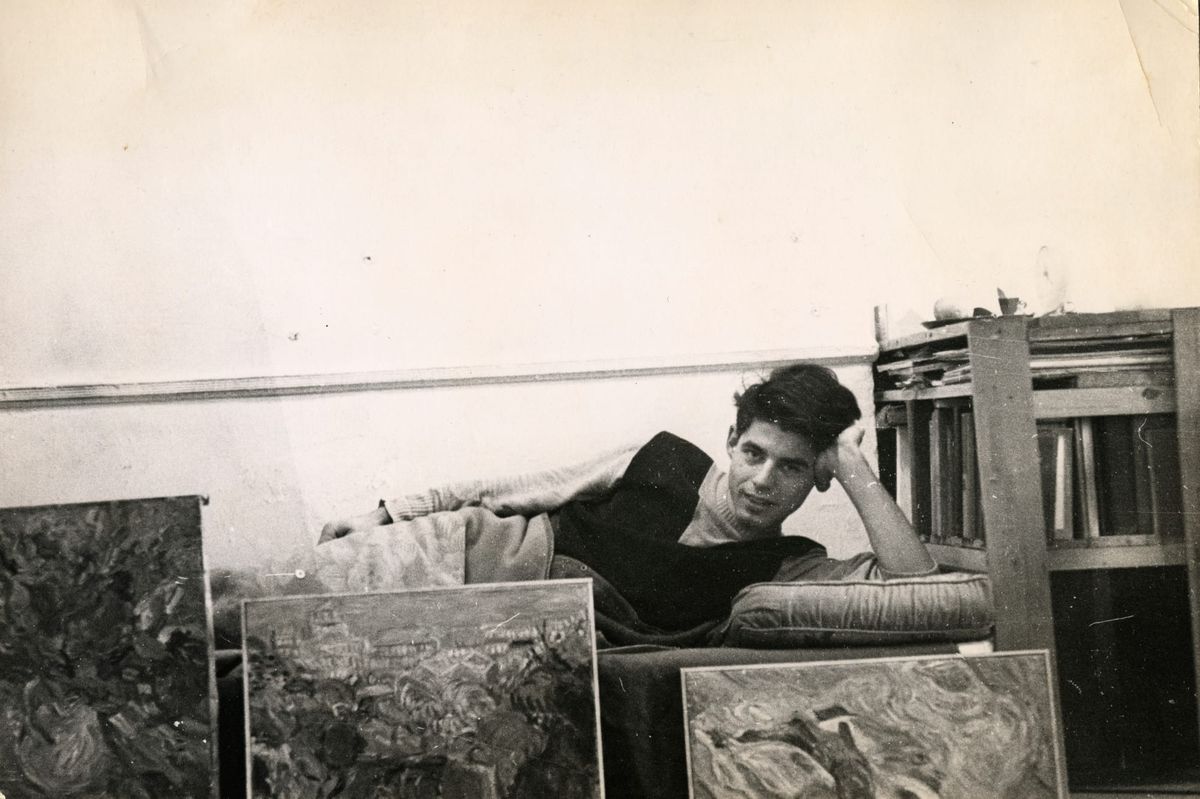
The Wolf Kahn Foundation on Tuesday announced seven solo museum exhibitions, $400,000 in new grants and the painter's first European retrospective for his 2027 centennial.
The foundation's chair, Mara Williams, told Urgent Matter that art historians and critics younger than she is "probably don't know who Wolf is, because he's not a part of the contemporary canon."
"I think if I had stayed in New York, I would have largely overlooked Wolf Kahn, had I not gone to Brattleboro in 1989," Williams said Tuesday in an interview at a media preview of the foundation's new headquarters in Manhattan. She spent three decades at the Brattleboro Museum & Art Center and is now its curator emerita.
Asked whether the centennial is a make-or-break moment for Kahn's legacy, Williams said it "can only be a make moment." She called the year "a restatement of the case for Wolf Kahn."
Kahn was born in Stuttgart, Germany, in 1927, studied with Hans Hofmann and spent decades painting barns, fields and trees between New York and a farm in West Brattleboro, Vermont. He died in New York on March 15, 2020, three months after his wife, painter Emily Mason.
Under the program, called Wolf Kahn 100, more than 50 museums will also show Kahn paintings and pastels from their own holdings in 2027, the foundation said.
The solo shows are at the American Academy of Arts and Letters in New York; the Shelburne Museum, the University of Vermont's Fleming Museum of Art and the Brattleboro Museum & Art Center in Vermont; the Provincetown Art Association and Museum and the Martha's Vineyard Museum in Massachusetts; and the Jewish Museum Frankfurt.
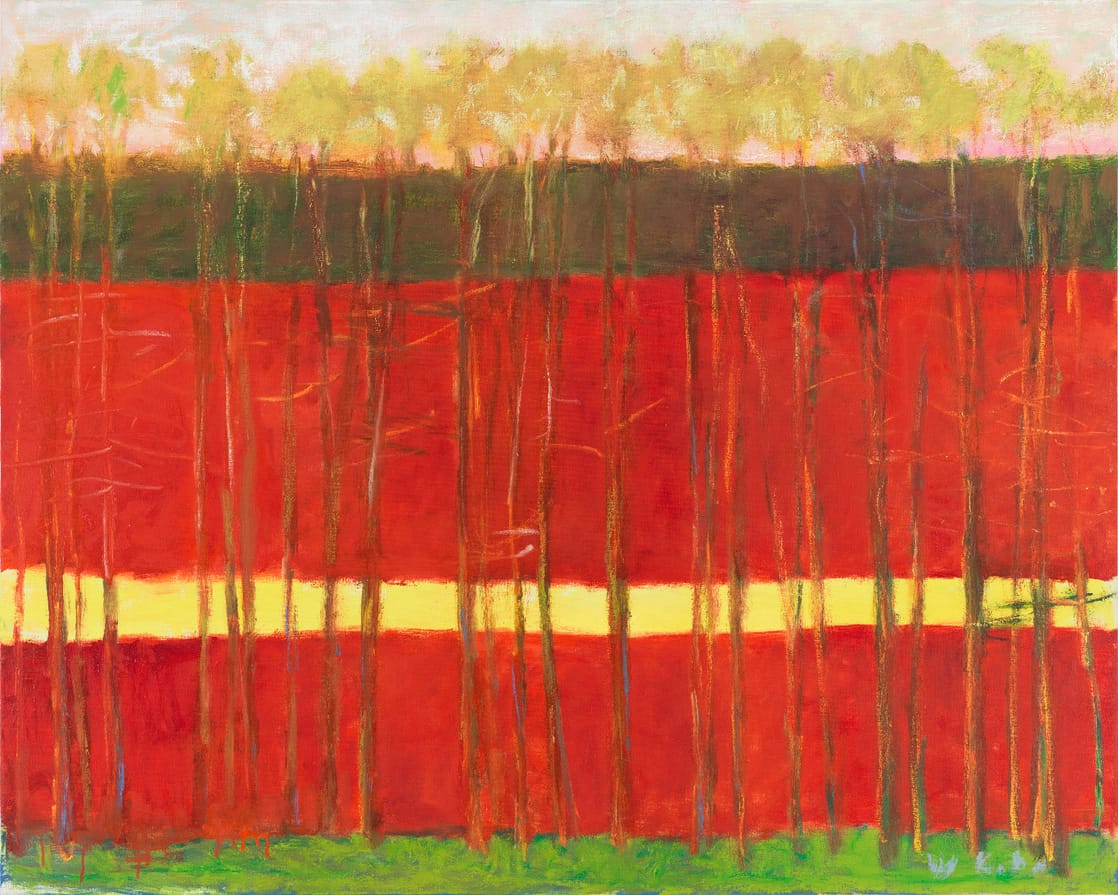
The Fleming's show, "Wolf Kahn: Conversations in Color," is already open and runs through May 22, 2027, according to the museum's website.
Ellen McCulloch-Lovell, the foundation's president, said the foundation will make "three larger grants than we usually do" for the centennial and expects to announce them in early 2027. The $400,000 will go to contemporary art organizations in addition to the foundation's annual grants.
Participating museums can also receive WK 100 grants for framing, conservation, or programming. One grant funded conservation of a Kahn painting at the Ogden Museum of Southern Art in New Orleans, damaged by Hurricane Katrina, said Linda Stewart, the foundation's collection manager.
Robin Clark, the foundation's consulting curator, said the program has "54 partners right now" and that she is "quite certain that this number will go up."
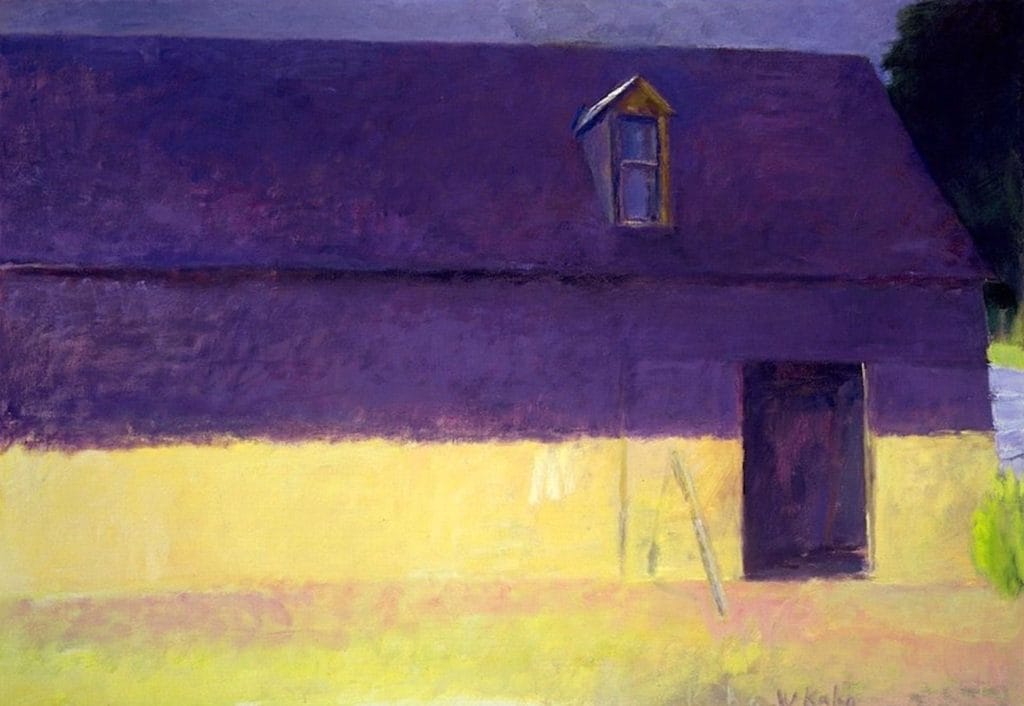
McCulloch-Lovell said she learned last week that the Rahr West Art Museum in Manitowoc, Wisconsin, is planning a "Wolf Kahn in Context" exhibition from its collection and regional loans. She added that more shows may emerge during the year.
Rachel Stern, co-curator of "Wolf Kahn: Homecoming" at the Jewish Museum Frankfurt and founding director of New York's Fritz Ascher Society, said the show will bring together 27 early drawings and 45 paintings. It will open in June 2027, and include loans from the Hirshhorn Museum and Sculpture Garden and the Whitney Museum of American Art.
It is the first show to examine the letters Kahn wrote to his grandparents as a boy, Stern said, from wish lists for presents to accounts of life under the Nazis: the excitement of the parades, lost friends, growing exclusion and violence by street mobs and the authorities.
In July 1939, at 11, Kahn left on one of the last Kindertransports to England, Stern said. His father, stepmother and siblings had already emigrated to the United States, and he joined them in 1940.
A U.S. Holocaust Memorial Museum catalog entry for a 2012 oral history with Kahn says he had been living with his paternal grandmother in Frankfurt and that his father had conducted the Stuttgart Philharmonic.
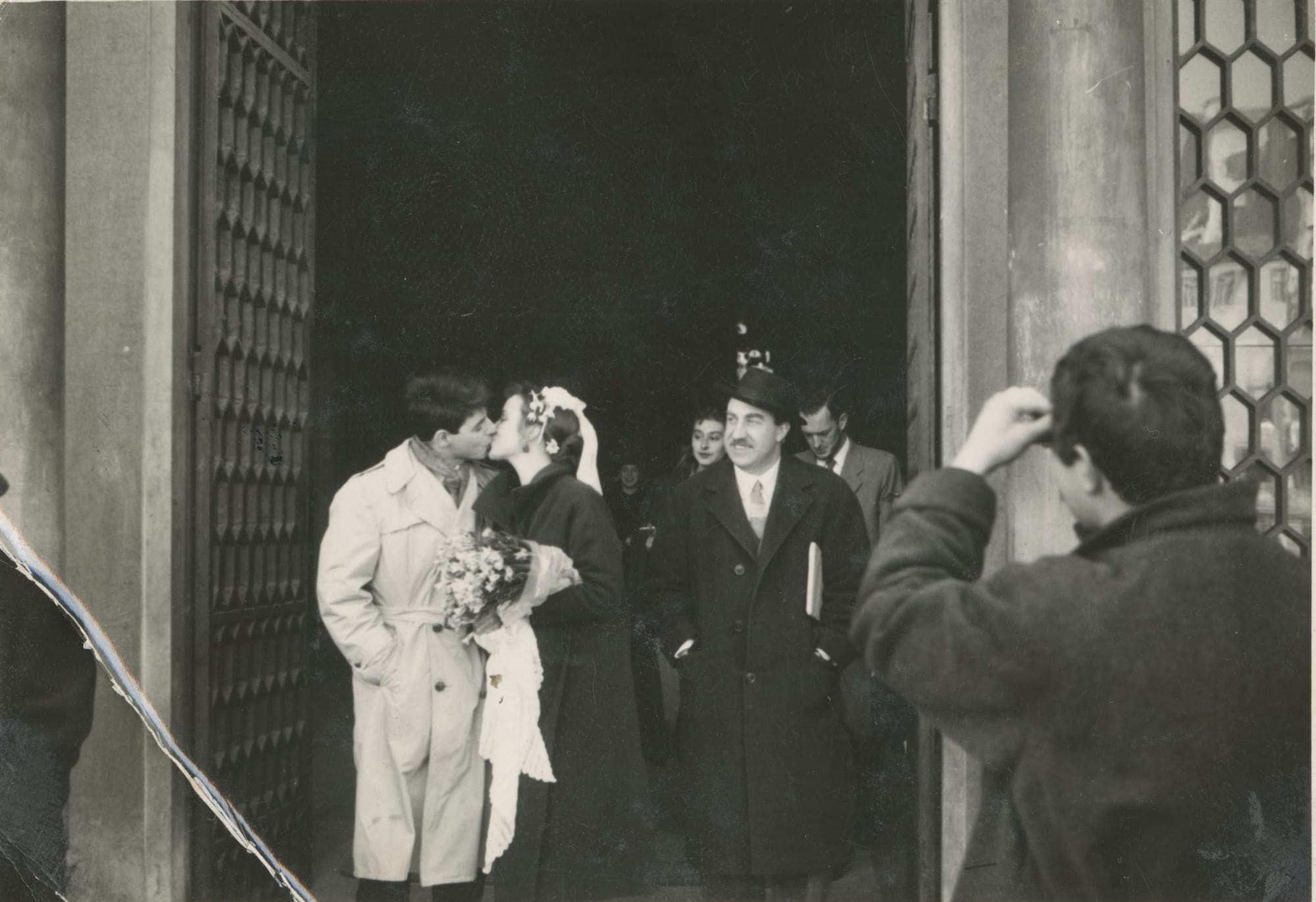
"After Wolf's paternal grandmother got him out on a Kindertransport, he never saw her again," McCulloch-Lovell said. Stern said his grandparents died in the Holocaust.
"More than 80 years later, this work returns to Germany, not as a simple homecoming, but as the return of an artist whose earliest experiences were shaped by German culture," Stern said.
"Luminous and Liminal: Wolf Kahn at 100" opens at the Brattleboro Museum & Art Center in early October 2027, around Kahn's birthday. The show will include more than 120 paintings, pastels and drawings, some from Kahn's personal holdings and never before on public view.
Clark, the show's curator, said Kahn and Mason helped found the museum, which opened in 1972 in the town's old Union Station. With a new train station across the tracks, she said "everyone who wants to see the show from New York can just board at Penn Station."
Clark said the first and last work visitors will see will be Orange Barely Blue, from 2019. Cases will hold letters Kahn and Mason exchanged after she moved to Venice and before he joined her.
"The letters are lovely," Clark said.
Williams is curating the Martha's Vineyard Museum show as a volunteer. She said she has spent summers on the island for 30 years, and museum staff told her, "You know Wolf better than we do, and why don't you just do the show for us?"
Her show traces Kahn's barn paintings to the island, where he began them in 1958, and includes archive drawings she "had never seen before," Williams said.
Cecily Kahn, who was a little girl at the time, told Williams her father painted the barns from outside "because the barns were covered in poison ivy," Williams said.
Williams said finding the early drawings excited her. "I never saw him with a pencil in his hand," she said.
The American Academy of Arts and Letters, which inducted Kahn in 1984, opens its show April 8, 2027, pairing its own Kahns with foundation loans, Stewart said.
The Provincetown Art Association and Museum show, curated by director Christine McCarthy, opens June 1, 2027, with 1950s paintings of the dunes, portraits of colleagues including Fairfield Porter and rarely seen drawings of the dune shacks near Race Point, Stewart said.
The Shelburne Museum show, curated by Carolyn Bauer, opens May 8, 2027, with 42 works built around Kahn's trees and woods. The museum expects more than 40,000 visitors over the summer and fall, Stewart said.
Both of the foundation's dealers are planning centennial shows, the release says: Miles McEnery Gallery in New York, for paintings and pastels, and Neptune Gallery in Washington, for prints.
The foundation's archives sit in its offices at 134 W. 26th St. Vincent Kelley, the chief archivist, said the plan includes "opening this space up to researchers, to journalists, art historians, to students."
For now, the foundation's archives page says the collection is "closed to the public for in-person research," with appointments only in special circumstances and an online archive in development.
Kelley said the archives hold about 50 linear feet of Kahn's personal papers, with about 100 more feet of studio and business records off-site. Items pulled for the preview included Kahn's childhood identification card from Nazi Germany.
Williams said some viewers ask why Kahn's late paintings are so aggressively marked. "He had macular degeneration the last 20 years of his life. He fought to maintain his eyesight, and he fought to paint to the last day of his life," she said.
The release dates the decline of his eyesight to 2019 and quotes Kahn saying he "liked to get to the danger point" with color.
Asked what a viewer in Kansas would find in the work, Williams said, "Luscious color." She said "there are no landscapes in the world that look like a Wolf Kahn landscape."
Asked why the foundation is championing a white male painter while others work to recover overlooked women artists, Williams pointed to the women around Kahn.
"Wolf Kahn was the biggest fan, both his mother-in-law and his wife, and his friend Lois Dodd and his friend Grace Hartigan," she said. "And Lee Krasner used to babysit his kids and he owned a Lee Krasner."
"Wolf celebrated talent wherever he found it," Williams said. "That the field, my field, didn't celebrate talent wherever they found it. Shame on my field."
The couple's shared philanthropy was split into two foundations after their deaths, as planned, Williams said. The other, the Emily Mason and Alice Trumbull Mason Foundation, shares a building and archives with the Wolf Kahn Foundation, she said.
Mason's centennial falls in 2032. "Brattleboro was already committed to the show for her in '32," Williams said.
Asked whether two centennials for a married couple was double dipping, Williams said, "No, because they have significantly different heritages and significantly different bodies of work."
"Color was the thing between the two of them," she said. "That was their language together."
Urgent Matter is reader-supported. Please consider subscribing to support independent arts journalism.