MTA says the First Amendment bars it from pulling Museum of Sex bus ads
Orthodox Jewish leaders said they are forbidden from willingly looking at ads and images that attract them to sex.

Orthodox Jewish leaders said they are forbidden from willingly looking at ads and images that attract them to sex.
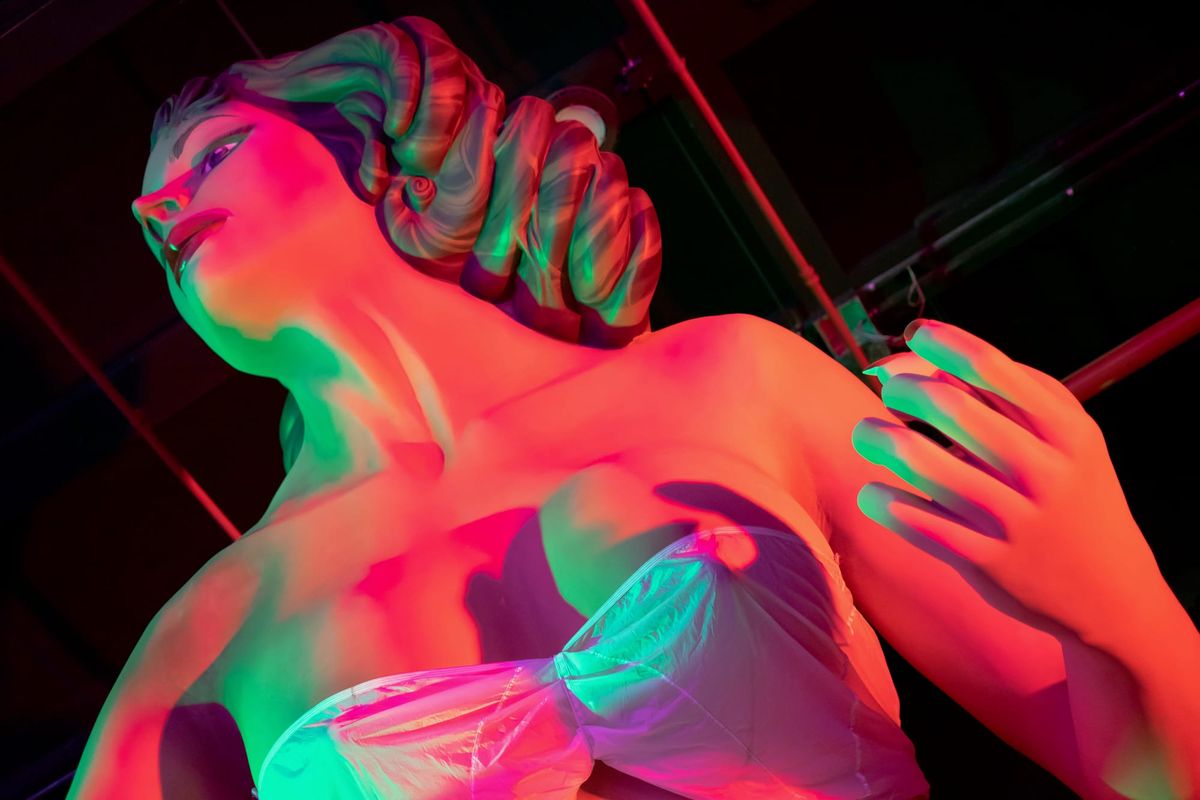
Orthodox Jewish leaders and a transit union officer asked the Metropolitan Transportation Authority last month to remove Museum of Sex advertisements from the fronts of city buses. The authority's chief executive told them the agency has no legal power to do so.
The requests came during the public comment session of the MTA board's June 24 meeting in lower Manhattan. The board meeting was first reported by The City Reporter.
“We have First Amendment obligations that prevent us from becoming the censor of all the ads,” MTA Chair and Chief Executive Janno said at a news conference after the meeting.
Rabbi Abraham Zimmerman, who told the board he represents the Central Rabbinical Congress, thanked the authority for its service to the city before turning to the campaign.
"We have one grave concern that hurts and pains us terribly," Zimmerman said. "That's the ads that you have on the front and the side of the buses."
Zimmerman said Orthodox Jews are forbidden to willingly look at ads and images that attract them to sex. He asked the board to weigh the offense against the revenue.
“Please respect the religious beliefs of others and don't force these ads upon us,” Zimmerman said.
Rita Friedman told the board she arrived in the United States in 1951 at age 4, after two and a half years in displaced persons camps, with parents who had survived the Holocaust.
"I am repulsed at the blatant suppression of these rights by the provocative ads on public transportation, primarily on bus routes," Friedman said. She asked the board to end what she called a travesty.
Bernard Fryshman, who said he once chaired the commission on legislation of Agudath Israel of America, argued the board could have rejected the campaign as harmful to children. He added that the agency's own rules do not cover where these ads appear.
"I would like to remind the honorable members of the MTA board that policies relating to the display of ads apply to the interior of MTA buses, trains, and stations," Fryshman said. "Children can be sheltered from ads on your property. They can't be sheltered from the city streets."
The speakers were joined by Alexander Kemp, administrative vice president of Transport Workers Union Local 100, who used the close of a comment on bus operator safety to back them.
"I agree with the gentleman about the sex on the bus," Kemp said. "It needs to be taken off. It's extremely offensive to children."
Lieber said in a news conference after the meeting that he was sympathetic and that the agency reviews campaigns through an advertising committee but cannot refuse ads on the basis of propriety.
He added that riders and operators have faced abuse over the ads, describing passengers who boarded and made nasty remarks to others on the bus, including drivers.
The authority asked the museum to add its address so riders would not mistake the bus itself for the attraction. Lieber added he would be happy if the museum stopped advertising.
Advertising is sold under the agency's rules by Outfront Media, Lieber said. The MTA's advertising policy bars ads for escort services, strip clubs and sexually oriented products, but permits general brand advertising for companies that sell such products, so long as the ad does not depict or refer to the product or evoke sexual activity.
The ads include the museum's name and its Fifth Avenue and West 27th Street address.
Lieber said he did not know how much the museum spends with the authority. The MTA took in an estimated $183 million in advertising revenue last year, according to figures the state comptroller's office provided to The City Reporter, up from under $80 million in 2020.
The authority reversed its ban on alcohol advertising last year.
 Adam Schrader
The museum, which opened in 2002 and operates as a for-profit limited liability company, has run its logo on the fronts of more than 3,000 buses since around January, in four color combinations, founder and executive director Daniel Gluck told Marketing Brew in April.
The MTA moved a similar campaign off the fronts of buses in 2018, weeks into a four-week buy, after operators represented by TWU Local 100 reported that passengers were harassing them over the signs. The museum called the move censorship at the time and said it hoped to avoid a First Amendment fight.
Urgent Matter previously reported that the Museum of Sex denied claims of harassment, retaliation and wrongful termination in a lawsuit brought by a former retail manager at its Fifth Avenue location.
Urgent Matter is reader-supported. Please consider subscribing to support independent arts journalism.