Museum of Sex brings show on sex, life and death to Miami
Curator Tam Gryn said her cancer inspired the show and that the museum has had to prove to Florida officials that it is a museum.

Curator Tam Gryn said her cancer inspired the show and that the museum has had to prove to Florida officials that it is a museum.
The Museum of Sex will open an exhibition on sex, life and death at its Miami location next month. The curator said the show grew out of her own experience with cancer.
The show, “The Life Force,” centers on Sigmund Freud’s pairing of Eros and Thanatos, the life instinct and the death drive. It opens November 15 at the Museum of Sex Miami with 45 portraits from the collection of Mexico City’s Amparo & Manuel Foundation.
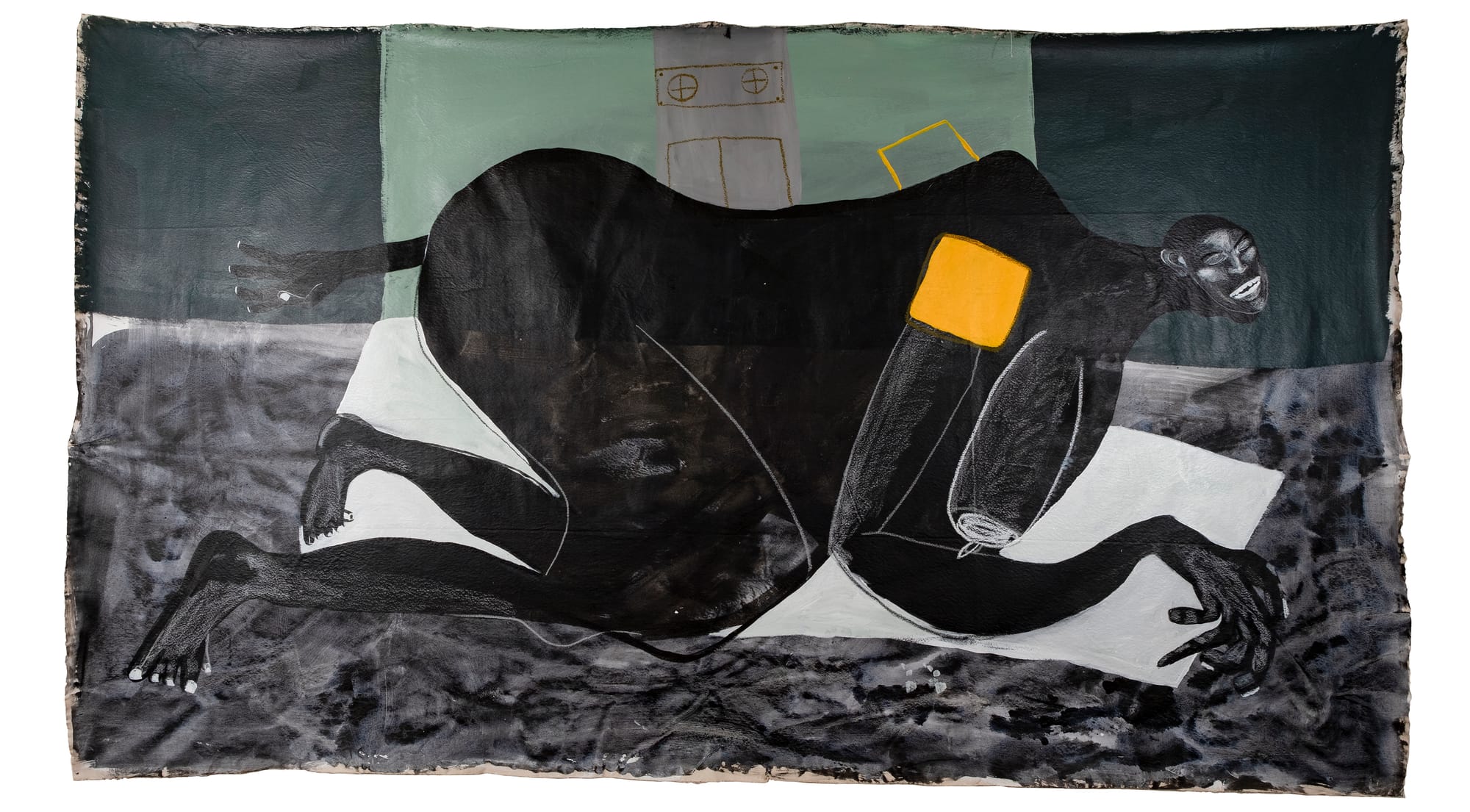
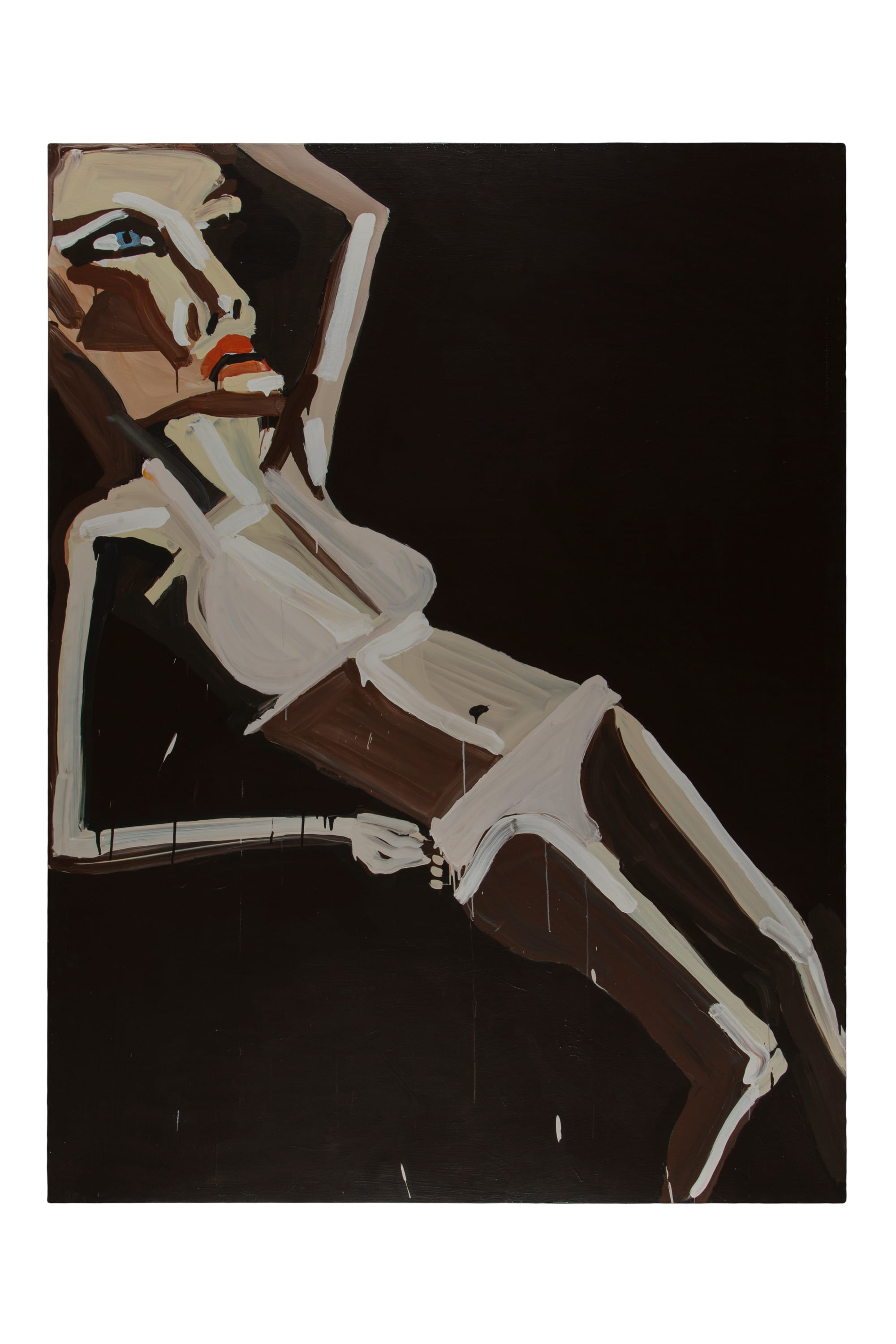
Artists in the show include Amoako Boafo, Tracey Emin, Bert Stern and Oh de Laval. It previously ran at the museum’s New York location on Fifth Avenue from April 23 to October 18.
“Honestly, I felt inspired to write about this, going through my own personal experience of having cancer and understanding how Eros was a force,” curator Tam Gryn told Urgent Matter in an interview Tuesday. She said she is doing well now.
She called the show’s premise “a bold claim” for the Museum of Sex to say “sex is a way to fight death and decay.”
Gryn said the museum has faced questions from Florida officials about its status as a museum.
“We’ve had some encounters with the state of Florida where we had to work hard to prove that we’re a museum and an institution,” she said.
Gryn did not name the state agencies involved or say when the inquiries took place.
Museum founder Daniel Gluck told Artnet News in December 2023, before the Miami location opened, that he was “not really worried about it” when asked about the risks of opening in Florida.
“There are much more wilder things happening in Florida than what we’re doing,” Gluck said at the time, in an interview with Urgent Matter founder Adam Schrader, then a reporter at Artnet.
Gryn said the museum also draws pushback from the public and from religious groups.
“We usually have resistance from different places, both from the public and very maybe extremely religious organizations that decide to like protest at our doors to, you know, governmental questioning of what it is that we’re doing and the topics that we’re discussing and how that fits into the agenda,” she said.
She said she does not expect “The Life Force” to draw protests.
“I don’t think that in the spectrum of our exhibitions, this is a controversial one by any means,” Gryn said.
She said the museum did shows on “topics like transsexuality years and years ago before it was a topic that was even more controversial.”
“And we will continue to do the shows that we consider relevant as a private institution,” Gryn said.
Gryn described Eros as “the force of love, the force of connection, like the pull towards life” and Thanatos as “chaos, destruction, illness, decay.”
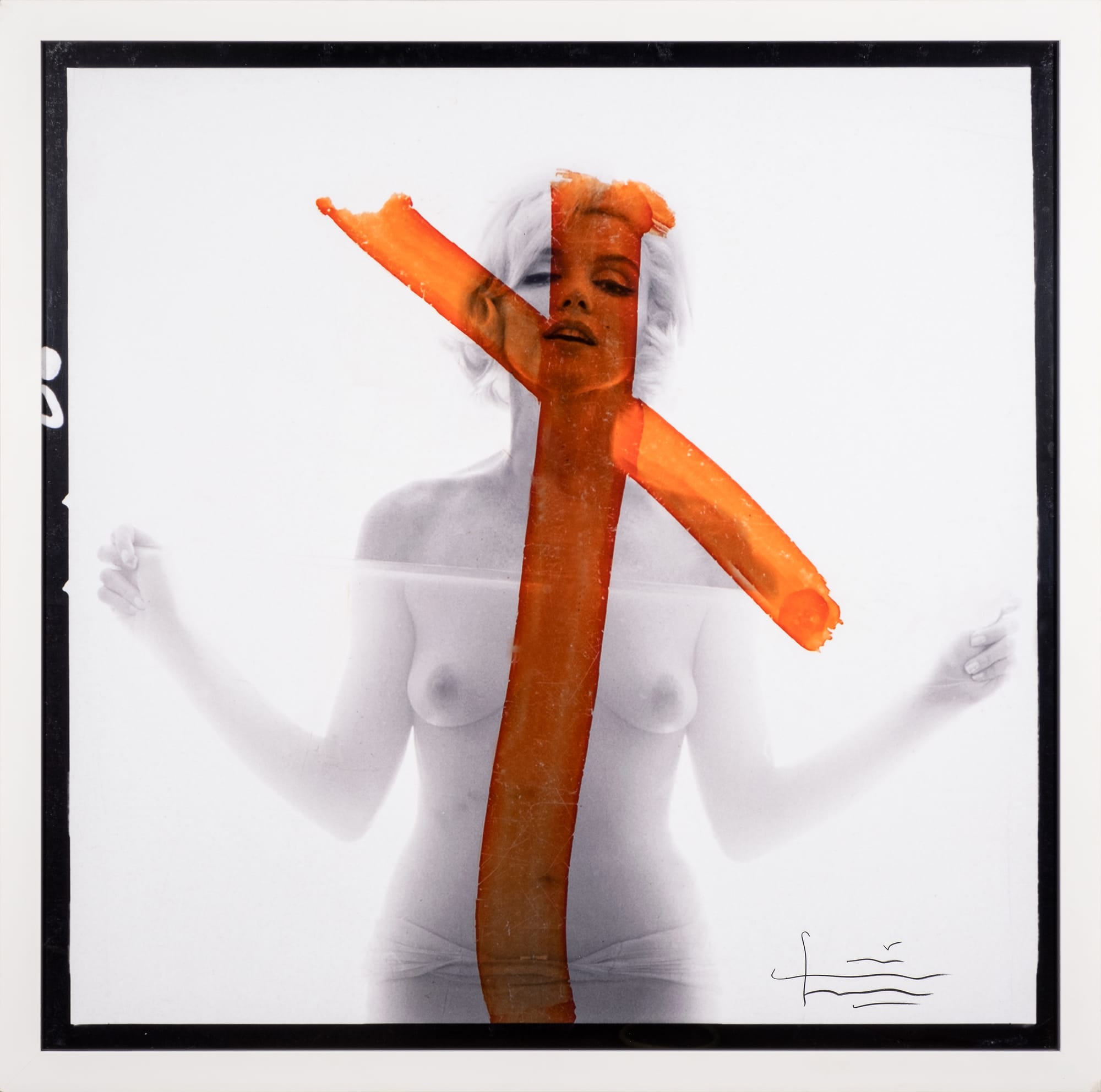
Among the works are photographs Stern took of Marilyn Monroe for Vogue in 1962, a session known as “The Last Sitting,” the foundation’s website shows. Gryn said they come from Monroe’s final photo shoot before her death.
Some of the prints show the red X’s Monroe drew over shots she did not want Stern to use, Gryn said.
Asked about displaying images Monroe herself rejected, Gryn said Stern reworked some of the photographs after Monroe died. As Stern interpreted them, she said, the images tell “her real story or her behind-the-scenes story.” Next to the photos hangs a cartoonish painting of Monroe with an American flag.
The show installs every portrait on top of broken mirrors so visitors can see themselves reflected next to the artworks.
“I’ve been to endless exhibitions in my life. You see paintings hung on a wall,” Gryn said. “But to see this level of artwork on top of broken mirrors really gives you that feeling of the fragility of life.”
Museum staff wrote audio scripts that play as visitors walk through, meant to sound like other people’s thoughts, Gryn said. The scripts cover erotic fantasies, real-life encounters, disease and depression, with voices layered over one another.
“It’s not a minimalistic experience. It’s a very strong experience,” she said. “So that’s why I love this show so much.”
The show only includes human portraits, and most of the works are tamer than what the museum usually shows.
“They’re more on the softer side,” she said. “A lot of them have nudity, but not necessarily interpreted in a sexual way, but more in a psychological and exposed and vulnerable way.”
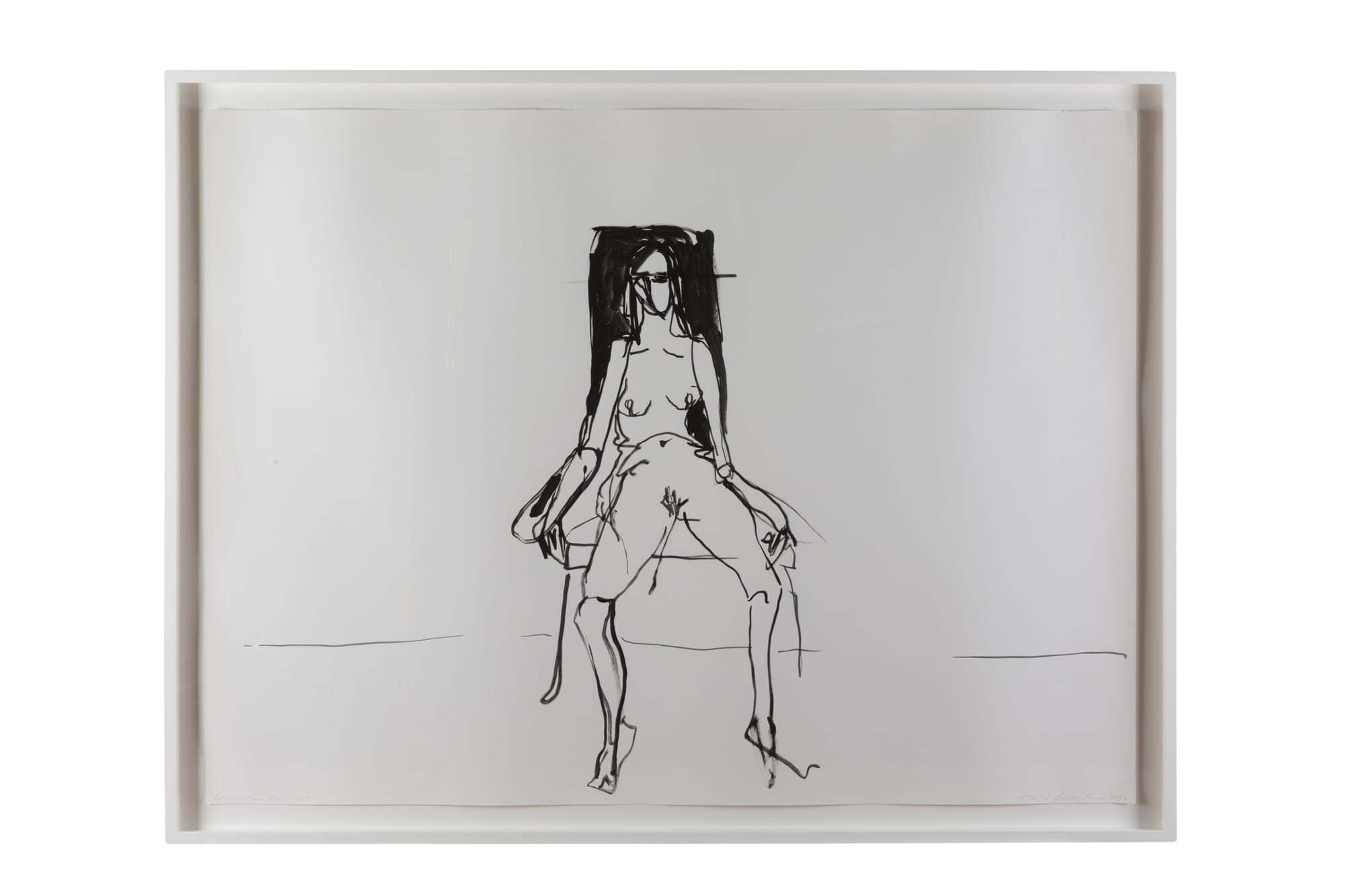
Among the works Gryn singled out is Emin’s Lonely Chair drawing II (2012), a gouache of the artist nude on a chair with her legs open. Gryn called Emin “one of the most private and public artists in contemporary history.”
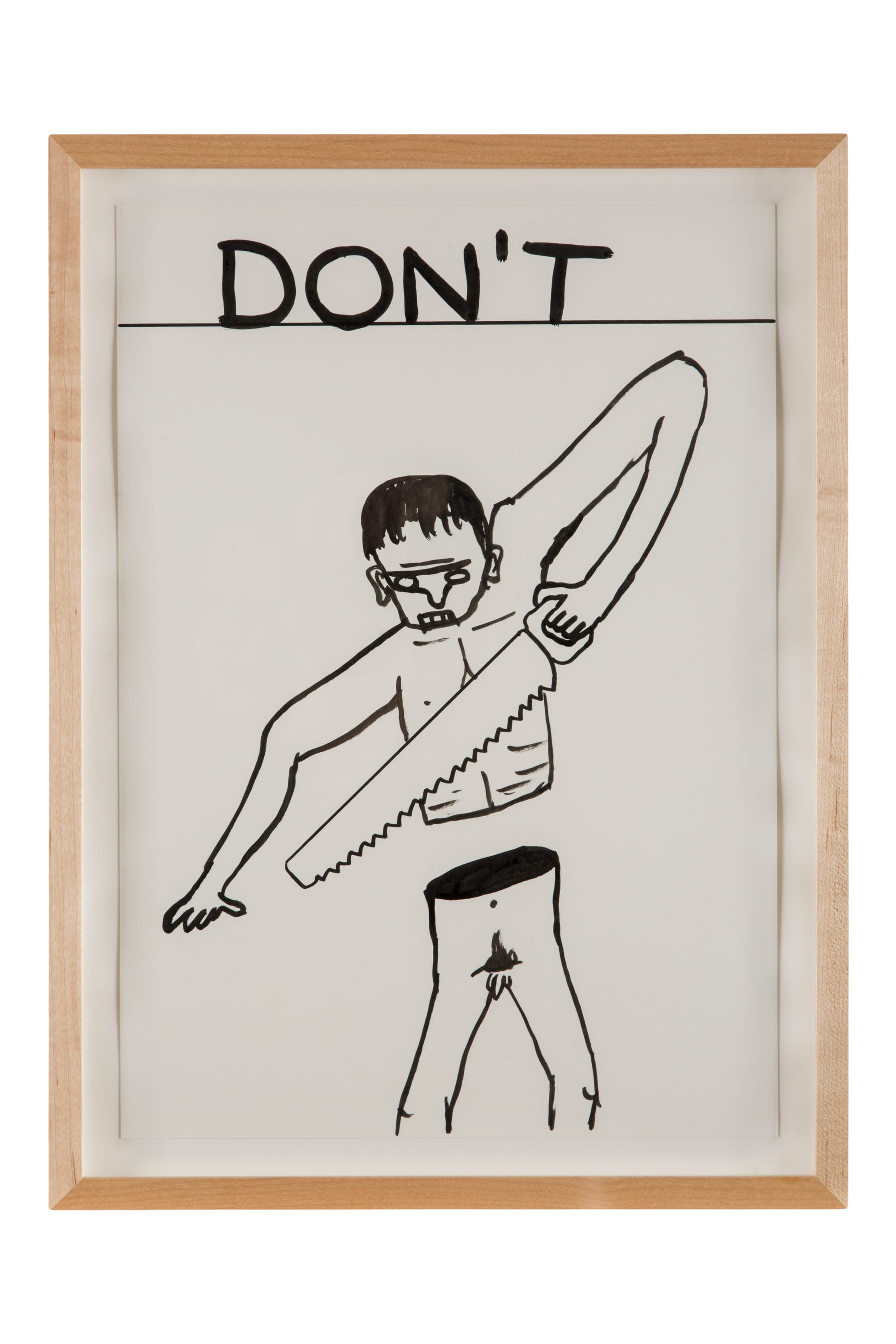
She also pointed to David Shrigley’s Untitled (Don’t) (2013), an ink drawing of a man slicing himself in half with a giant knife under the word “Don’t.”
“So it’s almost like a comic, but it’s very dark and very Thanatos,” Gryn said.
She also highlighted Sarah Lucas’ TITIVILITIUM (2021), a metal chair wrapped in a figure made of tights, wire and wool, and a portrait by Boafo, whom she called “an African painter who is also like in the art history books.”
The Miami show has the same works in the same order as New York, Gryn said. The New York building spread the show over two floors, while the Miami warehouse holds it in two connected rooms on one floor.
“The difference is the people who come and how they interpret it,” Gryn said. But she said the show does not feel more like New York or Miami “because the show is like very inherently human.”

Gryn said it is the first time the Museum of Sex has worked with a Latin American art collection. She noted there is “a very strong Latin American presence” in both New York and Miami.
“Since we opened our location in Miami two years ago, we do intentionally plan to have a very strong art show during Art Basel Miami,” Gryn said.
The show now closing in Miami, “Utopia: Three Centuries of Sexuality in American Cults and Communes,” is a history show.
Asked whether a serious art show signals a move away from Super Funland, the museum’s carnival-style installation of sex-themed games, Gryn said no.
“The Museum of Sex goes very high and also goes very approachable,” she said. “We get people who come only for Super Funland and encounter an academic experience and people who come for an artistic experience and then get to like have fun and relax.”
Gryn said the museum operates as a private institution so it can take on subjects grant funders might object to.
“We have to be able to talk about subjects that might be controversial or that certain people behind the grants might not want or agree with us to talk about,” she said.
The museum plans more partnerships with private collections, Gryn said. The next show in New York will draw from Beth Rudin DeWoody’s collection, whose works appeared at the Miami location in “Hard Art: Unruly Selections from the Beth Rudin DeWoody Collection.” DeWoody is known for having one of the biggest erotic collections in the world.
Urgent Matter is reader-supported. Please consider subscribing to support independent arts journalism.