NASA recommended sending over 95% of Goddard's library to GSA before 60-day review
A recommendation to divest over 95% of the collection predates an assessment an official later swore was done with no corners cut.

A recommendation to divest over 95% of the collection predates an assessment an official later swore was done with no corners cut.
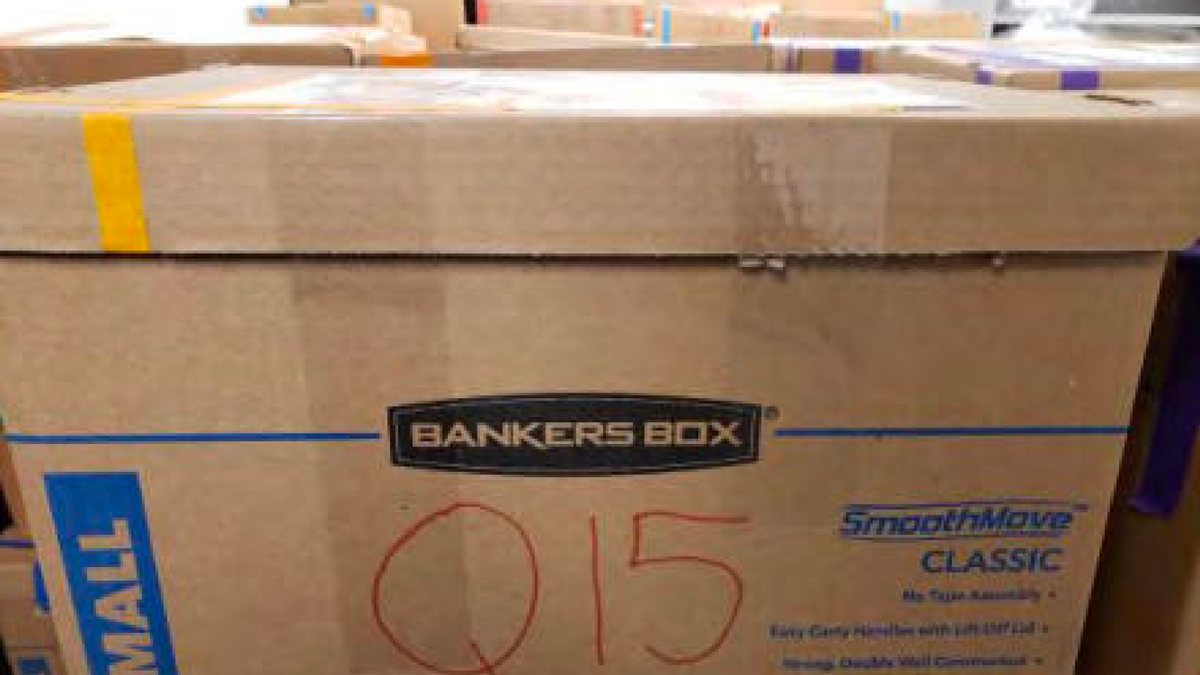
NASA officials recommended sending over 95% of the Goddard Space Flight Center library's book stacks to the General Services Administration weeks before the agency began the 60-day review it told employees, the public and a federal court would determine the collection's fate, internal records show.
The records, obtained by Urgent Matter through a Freedom of Information Act request, show the review was built around a predetermined ceiling—selection quotas totaling roughly 15% of the collection—that were written into the assessment's methodology before a single shelf was evaluated. Everything outside that quota was designated for transfer to the GSA "for disposal."
The 638-page release, the second installment of records produced in response to Urgent Matter's request, shows the agency began packing books for disposal four days before the assessment concluded. It shipped the first truckloads to the GSA in mid-February and added resources to accelerate the schedule, all while publicly describing a deliberate evaluation of every item.
An internal Goddard status deck dated November 2025 lists "divestment/relocation options ordered by recommended priority" for the library.
 Adam Schrader
The first option, labeled "Majority Divestment," calls on the agency to "Submit >95% of the Goddard Bookstack physical catalog (51K items) to GSA for dispositioning," keeping only rare and historically significant material "for display" in the stairwell and common areas of a neighboring building.
The slide counts that display material at 243 reference volumes, 89 oversized books, 88 journals and six maps.
The option of relocating the full collection elsewhere at Goddard appears last on the slide, marked "Not Recommended."
Paid subscribers can read the full documents.
 Adam Schrader
The recommendation predates the assessment that NASA Administrator Jared Isaacman would later invoke to defend the closure. Responding on X to a New York Times report in January, Isaacman wrote that "NASA follows a deliberate process to evaluate materials" and said items would be digitized, transferred or preserved.
“At no point is NASA ‘tossing out’ important scientific or historical materials, and that framing has led to several other misleading headlines,” Isaacman wrote.
The agency separately told the Times that unretained items would go through the GSA's standard disposition process, which can end in transfer to other agencies, donation, public sale, recycling or destruction.
Records show the library's fate had been part of NASA's consolidation planning for months. Urgent Matter previously reported that internal slides placed Building 21, which housed the library, on a move-out schedule in September 2025 with the goal of emptying the building for divestment.
By November, internal briefings had reclassified Building 21 from divestment to reuse, keeping the structure while designating the library's collection for transfer to the GSA.
Consolidation schedules in the new release show a task labeled "Develop Plan for Library" beginning October 20, 2025. Sciences and Exploration Directorate officials met with library personnel the week of November 17, records show, and notifications about the consolidation's "coupled Library impacts" went to Goddard and NASA communications officials on November 21 and November 24.
The assessment plan, dated January 2026, shows planning sessions ran December 1 through 5—covering selection criteria, logistics and "GSA disposal requirements"—before NASA paused library services on December 9 for a 60-day review. The plan's schedule called for the agency to "begin phased disposition of non-critical items to GSA" on December 8.
The methodology section assigns "quotas to LC Classification (LCC) subclasses" amounting to about "15% of collection." The plan concludes that "it is estimated that ~15% of the collection is retainable based on the aforementioned criteria." In other words, the share of the collection to be kept was fixed as a target at the outset, and the assessment arrived at roughly that same figure.
NASA announced the library's permanent closure on January 2, less than halfway through the review period. The Goddard union said library staff had been permitted to save the rarest 10% to 15% of the collection. The records confirm that figure in NASA's planning documents and show it was set before the review began.
The stakes of that quota are laid out in the records with a precision absent from prior reporting.
The plan counts roughly 127,000 items across the library's two floors: about 90,000 books, 32,000 journal volumes spanning some 600 titles, and 5,000 reference books, technical reports, oversized volumes, atlases and media. Plaintiffs suing over the closure have estimated the collection at 100,000 volumes.
Of the roughly 600 journal titles, the plan called for keeping about 10 runs. Library staff were allotted 250 "staff picks" among the books and 10 journal titles, applied "after other criteria."
Weekly consolidation briefings in the release tracked the disposal in real time. Excess packing began January 26, records show, four days before the assessment concluded on January 30. Briefing slides dated February 13 and February 18 state that the "First shipments of Library books ready to go to GSA.”
A logistics diagram maps the route, with books packed in the library, taken down by elevator to a former laboratory space, palletized and loaded through a roll-up door onto trucks bound "directly to GSA for disposition process."
Sources told The Greenbelt News Review they saw trucks hauling hundreds of boxes from the library over the weekend of February 14 and 15. The internal records corroborate those accounts from inside the agency.
One briefing notes that NASA added resources "to pull library excess schedule in," moving the projected completion date from March 30 to March 11.
A retired planetary scientist, a current Goddard researcher and the Goddard Engineers, Scientists and Technicians Association sued NASA, Isaacman and Goddard's director in the U.S. District Court for the District of Columbia on February 19, alleging the disposal violated the Federal Records Act.
The government assured the court in late February that materials would stay in place while it considered emergency relief, though federal records were permitted to continue shipping to NASA's Glenn Research Center in Ohio, the Greenbelt News Review previously reported.
On April 29, Judge Christopher Cooper denied the plaintiffs' request for a preliminary injunction, ruling they had not shown irreparable harm and that most claims of improper records destruction are not reviewable in court under the Federal Records Act, court records show. The case remains pending.
In a separate suit brought by the union's parent organization against the Trump administration, a judge on July 1 denied the Goddard local's bid to intervene to seek an injunction protecting the library facility, Law360 reported.
The court file sets up a direct collision with the newly released records. Gary Willis, the NASA Enterprise Libraries program manager, defended the review in a sworn declaration, telling the court that "no corners [were] cut" during the 60-day assessment and describing criteria based on rarity, usage, duplication and alignment with agency missions, according to the court's opinion.
Records show Willis was notified of the consolidation's library impacts on November 24, after the internal recommendation to divest more than 95 percent of the book stacks had been drafted and weeks before the assessment his declaration describes began. Willis is one of three officials whose emails Urgent Matter's FOIA request seeks and NASA said that the final response is still pending.
NASA also told the court where the collection stands: approximately 2,520 boxes of materials prepared for shipment to Glenn for retention and approximately 3,396 boxes bound for the GSA, according to the opinion. The records released to Urgent Matter do not reconcile box counts with item counts.
A 2012 settlement agreement between NASA and the Goddard union required the agency to keep the library open. After President Donald Trump's August 2025 executive order stripped the union's recognition, Goddard leadership concluded the settlement "did not restrain the management choices" available to the agency, a NASA official told the court in a declaration cited in the opinion.
Urgent Matter's request specifically sought records assessing NASA's compliance obligations under the settlement, but the 638-page release contains no such responsive records.
NASA told the court it has made no concrete decisions about Building 21's future use and is still in a planning process. The consolidation briefings schedule a task labeled "Building 21 Prep for Reuse" from late January through early March.
The records also include a notice ordering Goddard employees to return all checked-out library materials during a five-day window in March. The notice warns that lost items require a property survey form under NASA regulations, "which includes replacement cost considerations" — a warning issued as the agency prepared to transfer the bulk of the collection to the GSA.
The release documents a systemwide contraction that extends well beyond Greenbelt. Records show that 12 pallets from the shuttered NASA Headquarters library were shipped to Goddard, while another 12 pallets from headquarters and 66 pallets from the Marshall Space Flight Center were sent to a warehouse in Laurel, Maryland.
A briefing lists the agency's remaining physical libraries as Johnson Space Center — medical materials only — the Goddard Institute for Space Studies, Goddard and Glenn. When NASA vacated the institute's New York building in 2025, books and journals from its collection were left in a dumpster, the neighborhood outlet West Side Rag reported at the time.
An Urgent Matter review of inventory lists in the release found the library offered roughly 1,500 technical-report titles to NASA's Scientific and Technical Information Program; a companion list titled "Retained by STI Program" records 559 documents packed into 10 boxes, with some offered titles marked "not found."
NASA released 503 pages in full and 131 in part, withholding portions under FOIA exemptions covering draft deliberative material, third-party medical information and — for the second consecutive release — two law-enforcement provisions the agency invoked to redact building floorplans.
Urgent Matter is reader-supported. Please consider subscribing to support independent arts journalism.