NASA slated Goddard library building for disposal before review
Internal slides placed the library's building on a move-out schedule starting September 29, three months before the library closed.

Internal slides placed the library's building on a move-out schedule starting September 29, three months before the library closed.
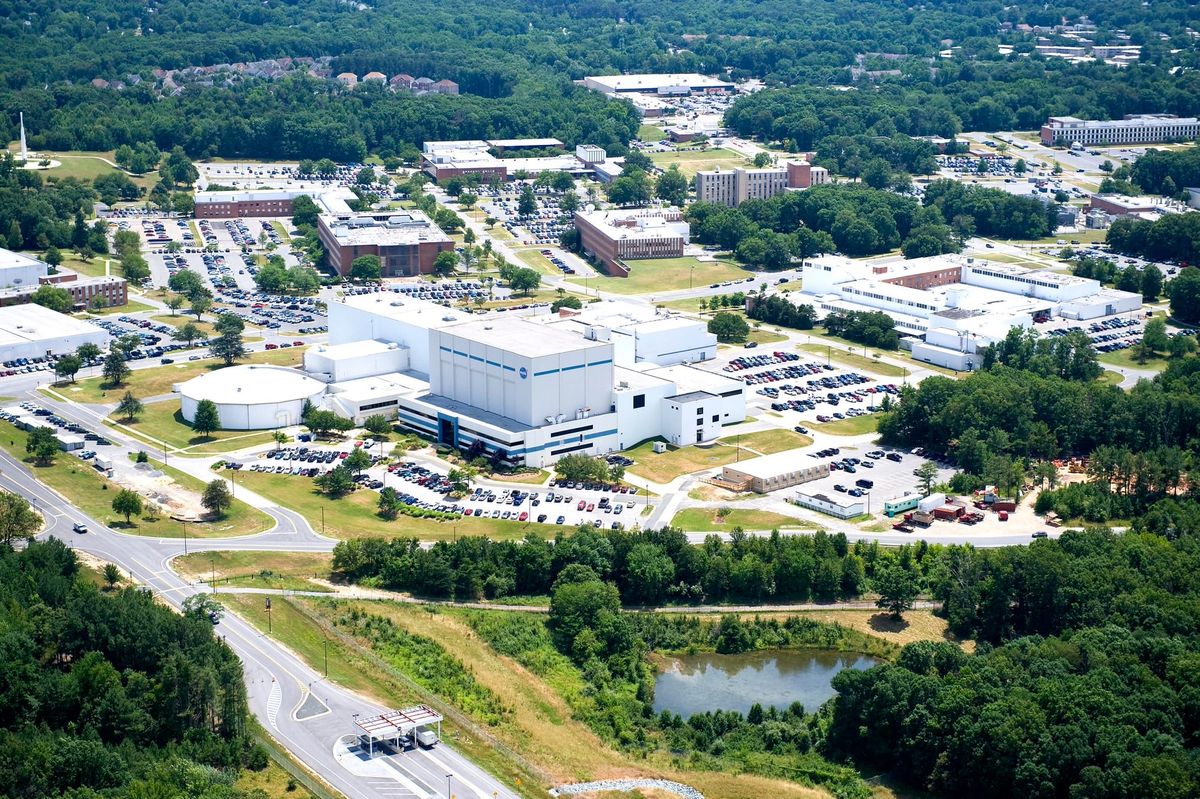
Internal NASA planning documents listed the building housing Goddard Space Flight Center's research library as a facility to be "emptied for divestment" in September 2025, months before the agency announced it was reviewing the library's collection and three months before the library closed.
The documents, 45 pages of internal Management Operations briefing slides, were released Thursday to Urgent Matter under the Freedom of Information Act. They show that NASA's campus consolidation, the footprint reduction that included the agency's largest research library, had targeted the library's building for disposal earlier and in greater operational detail than was previously known.
The slides identify Building 21 as a divestment target. A September 11 schedule places the building on a move-out timeline from September 29, 2025, to March 23, 2026. A concept slide lists the goal "Empty B21 for divestment" and shows 17 occupants from one unit scheduled to relocate to Building 34. The building also appears on a list of "Contracts Affecting Consolidation."
The slides never use the word "library." Goddard's research library was housed in Building 21, according to local reporting and statements from the campus union. And the records only concern the building itself. They do not address what NASA intended to do with the library's holdings.
Paid subscribers can read the full documents.
 Adam Schrader
Building 21 was also home to the Heliophysics Science Division. The Goddard Engineers, Scientists and Technicians Association — the campus union — said in a November 2025 brief that it housed a multi-million-dollar server supporting heliophysics research at risk “due to the fragility of some of the older computing systems and lack of preparation time.”
“The 13 buildings are to be emptied out by March 2026, a deadline that can only result in harm or destruction to NASA's strategic capabilities, impacting both current and future NASA missions,” the union said.
“The unplanned and hasty nature of the action is poised to result in the loss of millions of dollars in taxpayer-funded laboratory facilities, including sophisticated and high-value equipment that will be difficult, if not impossible, to replace.”
NASA paused in-person library services on December 9 for what it called a 60-day review, and announced the library's closure on January 2, the Greenbelt News-Review reported.
The divestment schedule predates that review. The slides show the library's building on a disposal track in early September, weeks before the collection review was announced.
NASA Administrator Jared Isaacman has said the closure stemmed from a facilities consolidation tied to a campus master plan approved in 2022 under the previous administration.
The union and local press said the 2022 master plan called for renovating Building 21, not eliminating it, and made no reference to closing the library. The slides do not explain why the building's status appears as “divestment.”
“GSFC leadership has justified these building closures as a cost-saving effort in response to years of deferred and inadequate maintenance,” the union said in November.
“Current Congressional funding scenarios for Fiscal Year 2026 point to flat funding for NASA Safety, Security, and Mission Services (SSMS), which includes building infrastructure funding. The need for additional GSFC facilities funding and building renovations are issues that GSFC, NASA and Congress must address. However, these building closures are themselves extremely costly and wasteful.”
The records surfaced other previously unreported details about the consolidation.
The slides also show that NASA was still working through the union as late as September 2025. Before moving employees out of a building, NASA gave the union a list of those being relocated, then waited about five days for the union to sign off before the move went ahead.
Those notices ran on strict deadlines, with one batch set to expire September 15. The briefings explicitly flagged "union arbitration" as a primary risk to the consolidation's timeline.
NASA stripped the union of recognition in August 2025 under an executive order that excluded the agency from union representation, a move GESTA is contesting in court. The slides do not name the union.
The space agency withheld portions of three pages, citing Exemptions 7(E) and 7(F) of the FOIA. Both exemptions cover records "compiled for law enforcement purposes." Exemption 7(F) protects records whose release "could reasonably be expected to endanger the life or physical safety of any individual," and NASA said it invoked the provision to protect "informants or other individuals."
The agency applied the two provisions to occupancy diagrams of Building 32's second floor, withholding "critical physical property infrastructure details including locations and floorplans."
NASA's response letter does not explain how the facilities slides qualified as law enforcement records.
As the consolidation proceeded, the slides show, NASA fast-tracked security construction on the fifth floor of Building 8 for the Office of General Counsel, with a scope that called for panic hardware, card-reader installation, and automatic door openers.
The slides revealed that NASA ordered 16,608 boxes and 400 rolls of packing tape for the moves. The overall completion target slipped during the period covered by the slides, from September 30 to October 10, with a schedule slide projecting all buildings would be available by March 23.
The response NASA provided to Urgent Matter’s records request is partial. NASA said it answered only the Management Operations portion of the request and anticipates a final response addressing the rest.
Still outstanding are searches of the email and messaging accounts of three officials tasked with the consolidation — Marlo Maddox, Patrick Lynch and Gary Willis.
Also outstanding are searches for any records from the Logistics Management Division responsible for property disposition, records held by NASA's Chief Archivist, and any legal or compliance records assessing the agency's obligations under a 2012 settlement requiring it to maintain the library.
The Logistics Management Division records, which NASA has not yet released, are the office records that would document the disposition of the library's holdings.
Urgent Matter is reader-supported. Please consider subscribing to support independent arts journalism.