Experiential Orchestra asks audiences to share how war has touched their lives
The concert, Music in a Time of War, is one of four programs in the orchestra's 2026-2027 New York season.

The concert, Music in a Time of War, is one of four programs in the orchestra's 2026-2027 New York season.
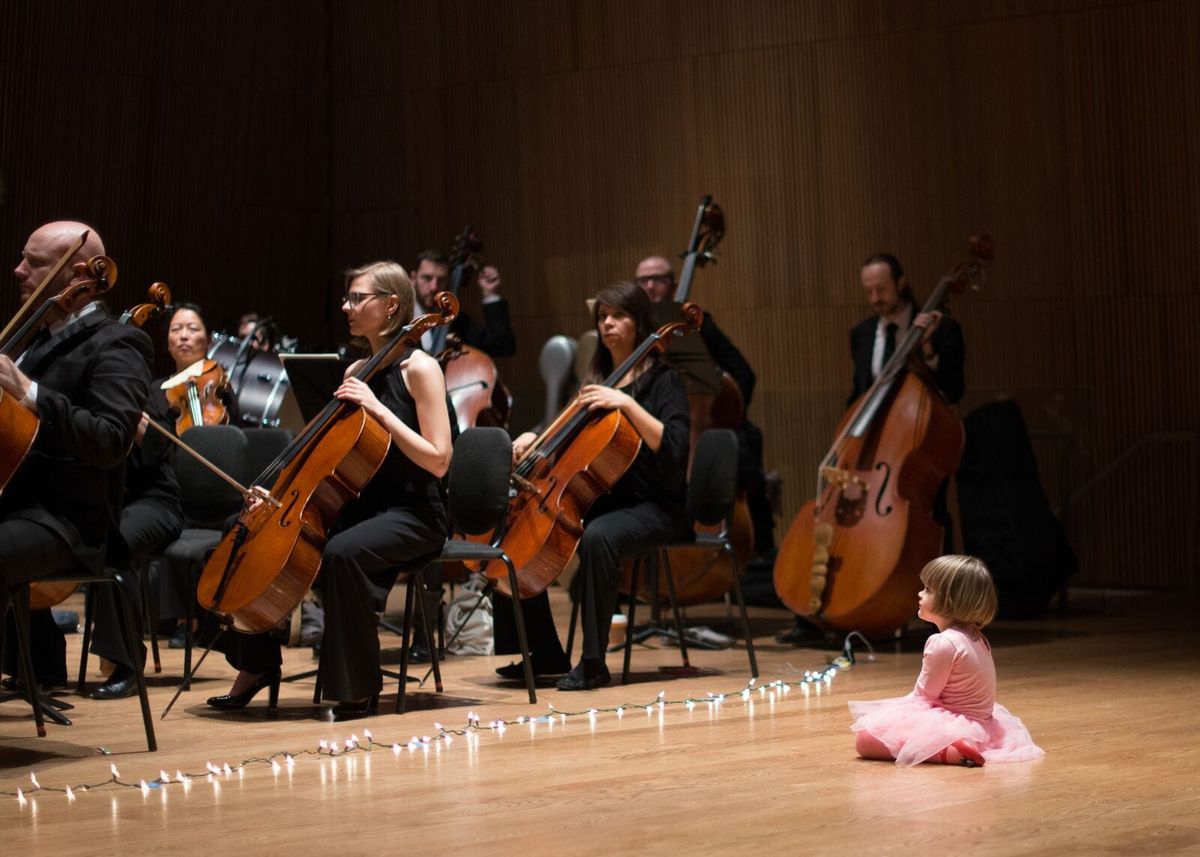
The Grammy Award-winning Experiential Orchestra will devote a February concert to music written in wartime and invite audience members to write down how war has touched their lives.
The concert, Music in a Time of War, is one of four programs in the orchestra's 2026-2027 New York season, titled "Beauty in the Face of Adversity," which runs from October 2026 through June 2027, the orchestra announced.
It opens October 23 with the music of Anna Clyne at the DiMenna Center for Classical Music in Manhattan. The war-themed program follows on February 20, 2027, at Roulette Intermedium in Brooklyn. The season presents the choral music of Arvo Pärt on May 22, 2027, at the New York Society for Ethical Culture in Manhattan. It closes outdoors in Inwood Hill Park in the spring.
"The stress of living in this world where you read about the horrors of war daily has a significant impact on our lives,” said music director James Blachly, who founded the ensemble in 2009. "The concert will be an invitation for meaningful reflection and some healing."
Blachly spoke with Urgent Matter about the season and about an approach that places listeners inside or alongside the players rather than across a stage from them.
“The visual element of classical music, and orchestral music in particular, is often either overlooked or under-explored,” Blachly said.
Every concert is curated specifically for the venue — a site-specific installation, to borrow art-world terms. He described his preparation in visual terms, spending 20 to 30 minutes before a single work in a museum and drawing on that to sequence music.
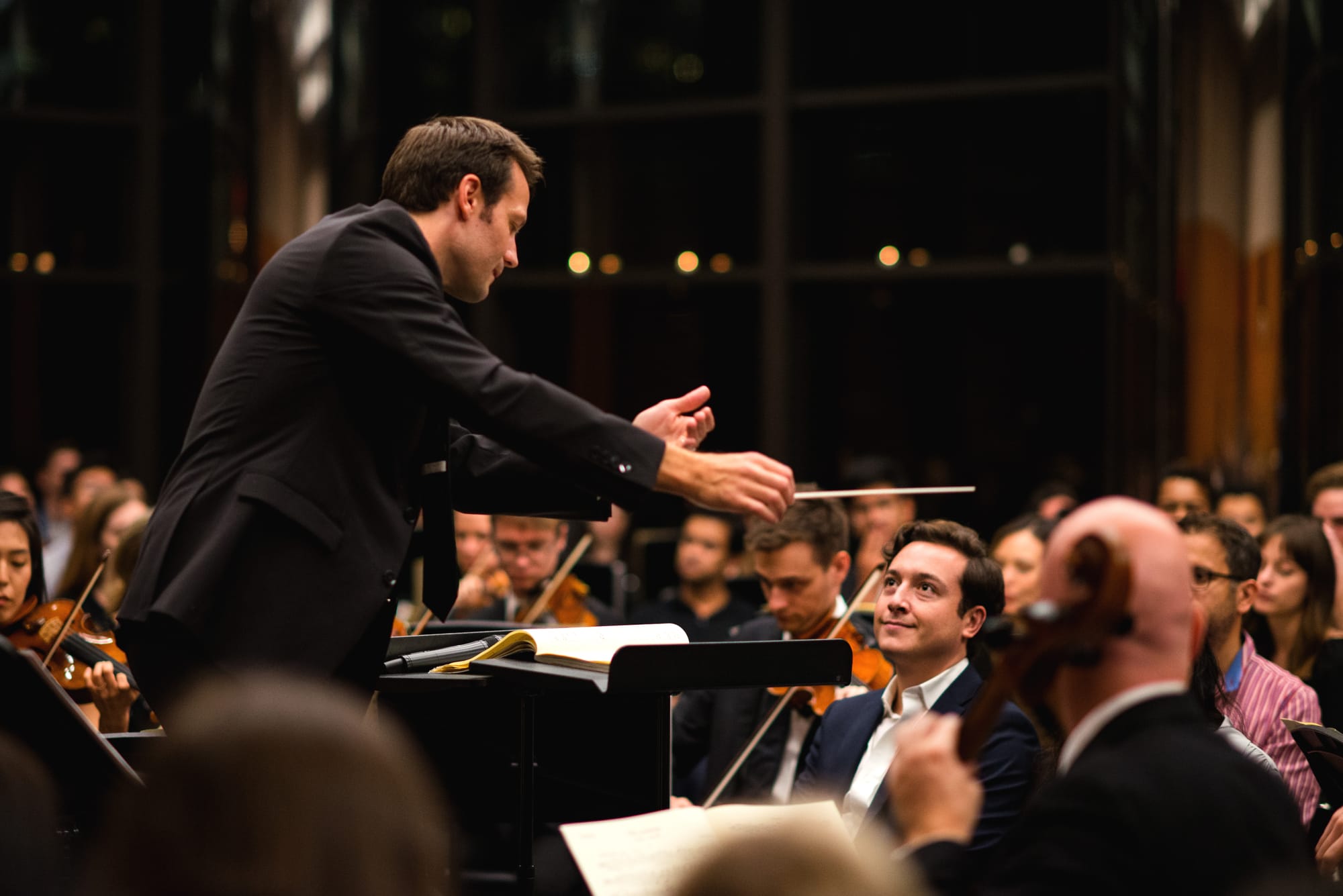
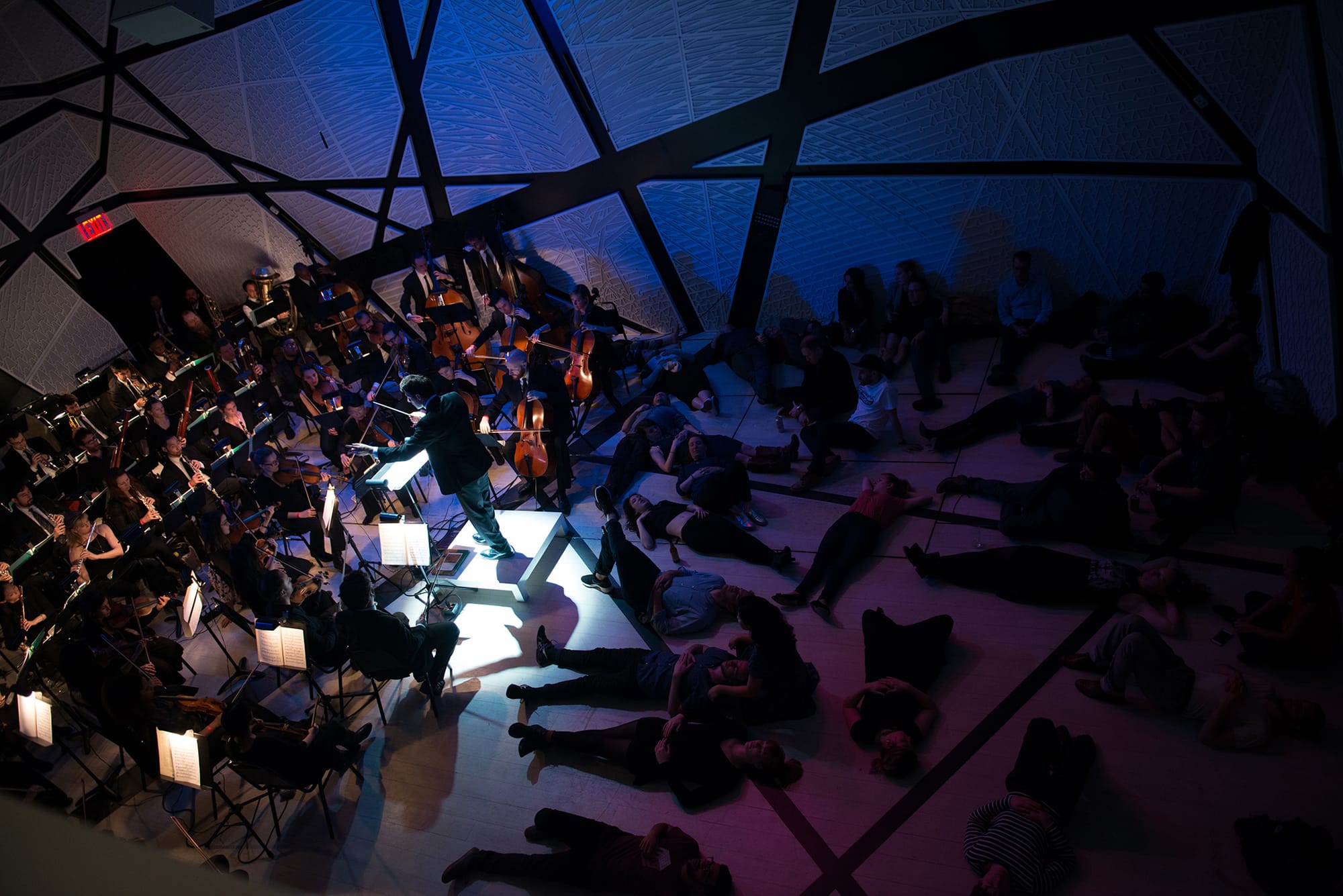
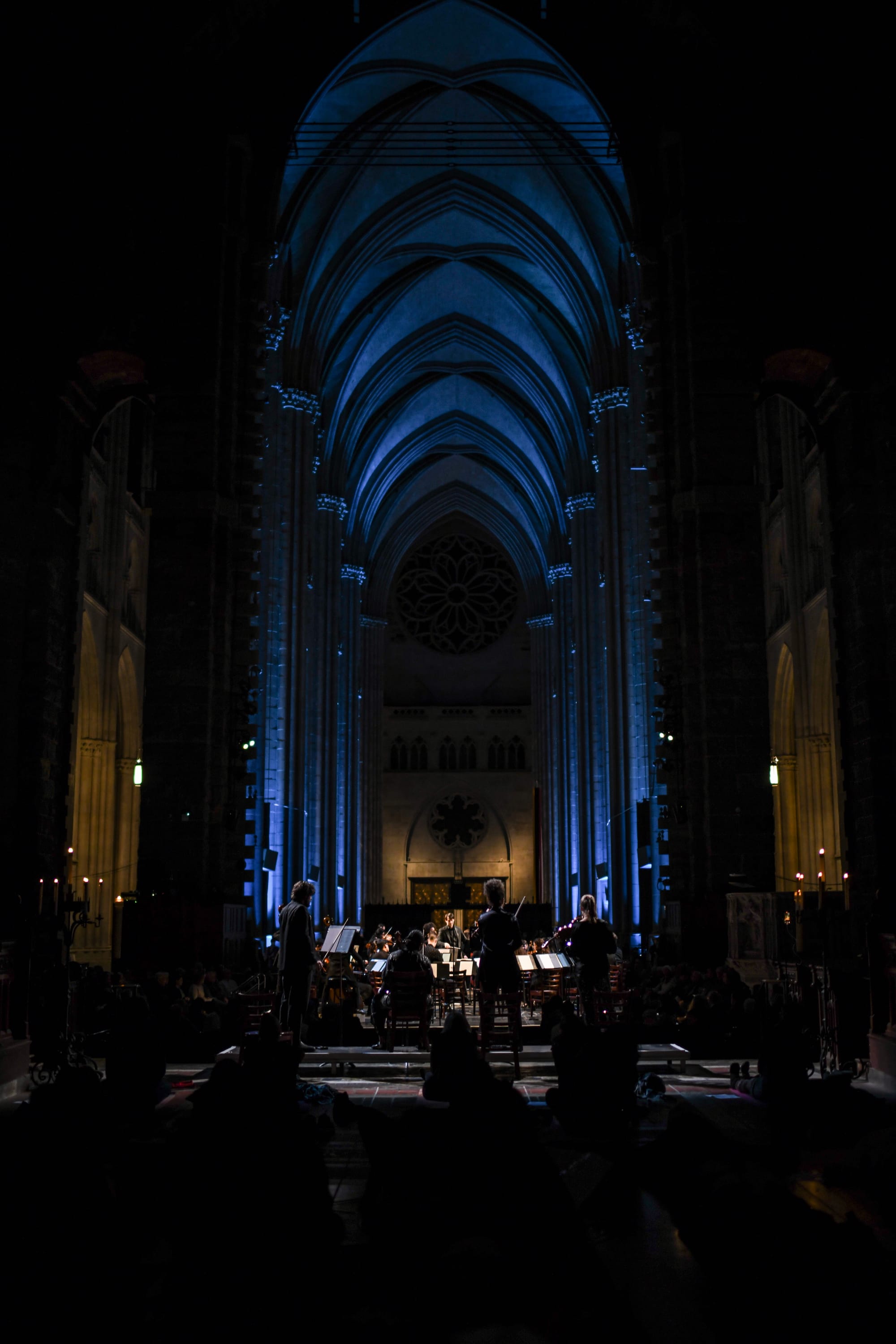
The Experiential Orchestra has performed at the Metropolitan Museum of Art's Temple of Dendur, Lincoln Center, the Library of Congress and the Cathedral Church of St. John the Divine—where it presented Arvo Pärt's Passio in January 2024 with listeners reclining on yoga mats to gaze up at the cathedral’s ceiling.
Blachly said he had been planning Music in a Time of War for a while.
"All of the pieces reflect on war in different ways," Blachly said. The four works were written by composers during a war, its immediate aftermath or in the lead-up to war.
He said the concert is meant to place present-day conflicts in a longer line, offering "a sense of continuity" with earlier generations and "a room for reflection" for listeners.
The program takes no political position, Blachly said. Performing music from earlier generations leaves room for audience members to bring their own experiences of war "from many different perspectives."
"We are inviting audience members, if they wish, to share a sentence or two about how war has impacted their lives," Blachly said.
Some written notes will be passed privately to individual musicians. Blachly said he will read a few aloud from the podium. Participation is optional, and audience members can attend without taking part.
The concert opens with Herbert Howells's Elegy for viola, string quartet and string orchestra, performed by violist Paul Neubauer.
"This is one of the most beautiful pieces I know that reflects on the First World War, and it's virtually unknown. I think there's something powerful in that," Blachly said. "We have developed a reputation for celebrating works that deserve to be heard more."
Blachly, who described World War I as a source of much of the conflict that followed, said the piece premiered in 1917. It was written to the memory of Howells's close friend Francis Purcell Warren, who was killed at the Battle of the Somme around July 3, 1916, and whose body was never found.
Howells had a medical condition that kept him from serving, Blachly said. Warren volunteered at the first opportunity.
Blachly called Neubauer "arguably the greatest violist in the world" and said the work opens the evening with a long unaccompanied viola passage, the image of a single person mourning a friend.
The first half continues with Coleridge-Taylor Perkinson's Grass, a 1973 work performed by pianist Stewart Goodyear.
Blachly called Perkinson one of the greatest American-born musicians ever. The piece takes its title and recurring motif — "I am the grass" — from Carl Sandburg's 1918 poem, Blachly said.
The poem, Blachly said, imagines a train passenger looking out at the battlefields of Ypres and Verdun and asking, "What place is this? Where are we now?" Perkinson, then of military age, wrote the music during the Vietnam War.
“The second piece takes the First World War and brings it more into the present day,” Blachly said. "It really takes the first piece and brings it forward."
After intermission, the orchestra plays Samuel Barber's Adagio for Strings, which Blachly called among the most famous pieces by an American composer. It was written in 1938 in the buildup to World War II.
"The tension in the air was palpable, and everybody knew something was coming,” Blachly said. He aims to put the work back into its original context, equating the feelings of the 1930s to the modern day.
The concert closes with Ralph Vaughan Williams's The Lark Ascending, performed by violinist Michelle Barzel Ross.
The piece, based on a poem by George Meredith, was written before World War I, but Blachly said Vaughan Williams — who volunteered as a stretcher carrier despite being past military age — returned to it afterward and reorchestrated it.
"He couldn't compose music in the aftermath of the First World War," Blachly said, describing the devastation as "too great" and adding, "he wasn't able to pick up his pen." The reorchestrated work, he said, lifts the trauma of the trenches into the image of "a lark rising up into the sky."
 Adam Schrader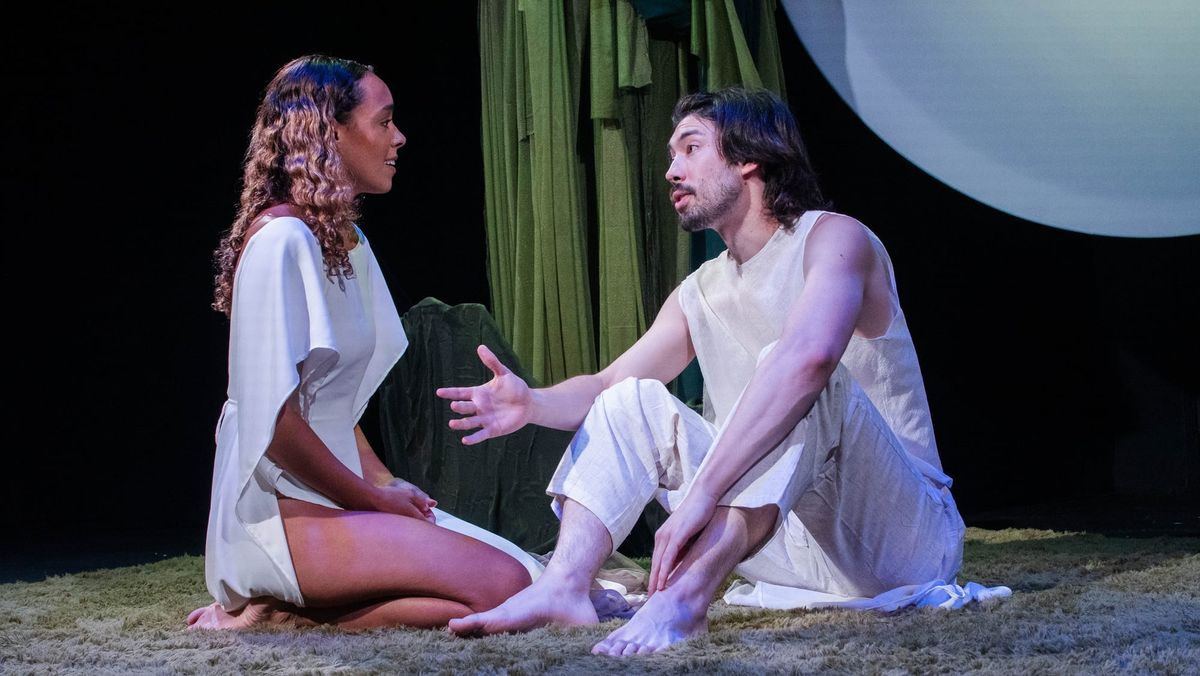
Blachly linked Williams to Walt Whitman, who served as a stretcher carrier in the American Civil War and whose Leaves of Grass, he said, the composer carried with him constantly.
Blachly said his theory is that both Williams and Maurice Ravel, with whom Williams studied in France, were moved to volunteer by Whitman's example. "My thesis, my theory is that both of them were inspired by Walt Whitman," he said.
He also pointed to Vaughan Williams's brother-in-law, Jack, who Blachly said returned from the Boer War with severe post-traumatic stress, was eventually institutionalized and died by suicide — an experience Blachly said gave the composer a close view of war's toll.
Blachly founded the Experiential Orchestra to change how audiences encounter live music. He said it began "as a vehicle for expansive imagination of what a concert could be."
The first concerts, in a Midtown Manhattan loft, drew on the intimate rooms where early symphonies were first heard, Blachly said.
"We had an orchestra of 50, an audience of 100, and 12 cases of Barolo wine," he said. There was a party before and after and Beethoven and Brahms in between.
The orchestra "really made our name with the Rite of Spring dance party," Blachly said, describing performances of Stravinsky's ballet at which the audience danced.
He recalled crowd-surfing, mosh pits and, fitting the ballet's pagan-sacrifice story, mock "ritual sacrifices." He said attendees told him there had been "a lot of making out."
A Nutcracker dance-along followed, drawing dancers from toddlers to octogenarians, he said.
At Roulette, the February concert's venue, the orchestra once staged "Double Reed Madness," surrounding the audience with 36 oboes and bassoons playing Lully and Rameau, Blachly said.
He said the orchestra also invites listeners to lie beneath the timpani or the double basses to feel the sound move through them.
“The double basses shake the floor when they play, and so if you're lying down on the floor under them or next to them, you feel the vibrations throughout your body,” Blachly said.
The board's future chair, Benjamin Weber, joined the organization after a similar experience.
"He sat right in front of the trombones, so they were playing, blasting their sound right into his head,” Blachly said. “He loved it and became our board chair."
Hearing-impaired audience members attend and experience sound physically, he said, and past programs have offered yoga mats, walking-meditation space at the back of the hall for families with strollers, and room for wheelchairs and other mobility devices.
“Our vision, our dream, is to have the concert experience be as welcome and open as possible,” he said.
Blachly said the orchestra does not force any of it on anyone. "The participation, and the proximity is all chosen by the audience, so we don't impose a certain experience on people," he said.
The orchestra has "never had behavior issues," aside from the occasional request that a listener shift a few inches so a player can move a bow.
He said the emotional exchange can run both ways. At a Pärt concert last season in a chapel seating 120, Blachly said, a violist told him that a person in the front row sat with "the tears just streaming down their face," close enough for the player to see.
Proximity changes what audiences see as well as hear, Blachly said. “By being close, you do see the musicians almost as dancers, because it's so elegant, the way that musicians play,” he said.
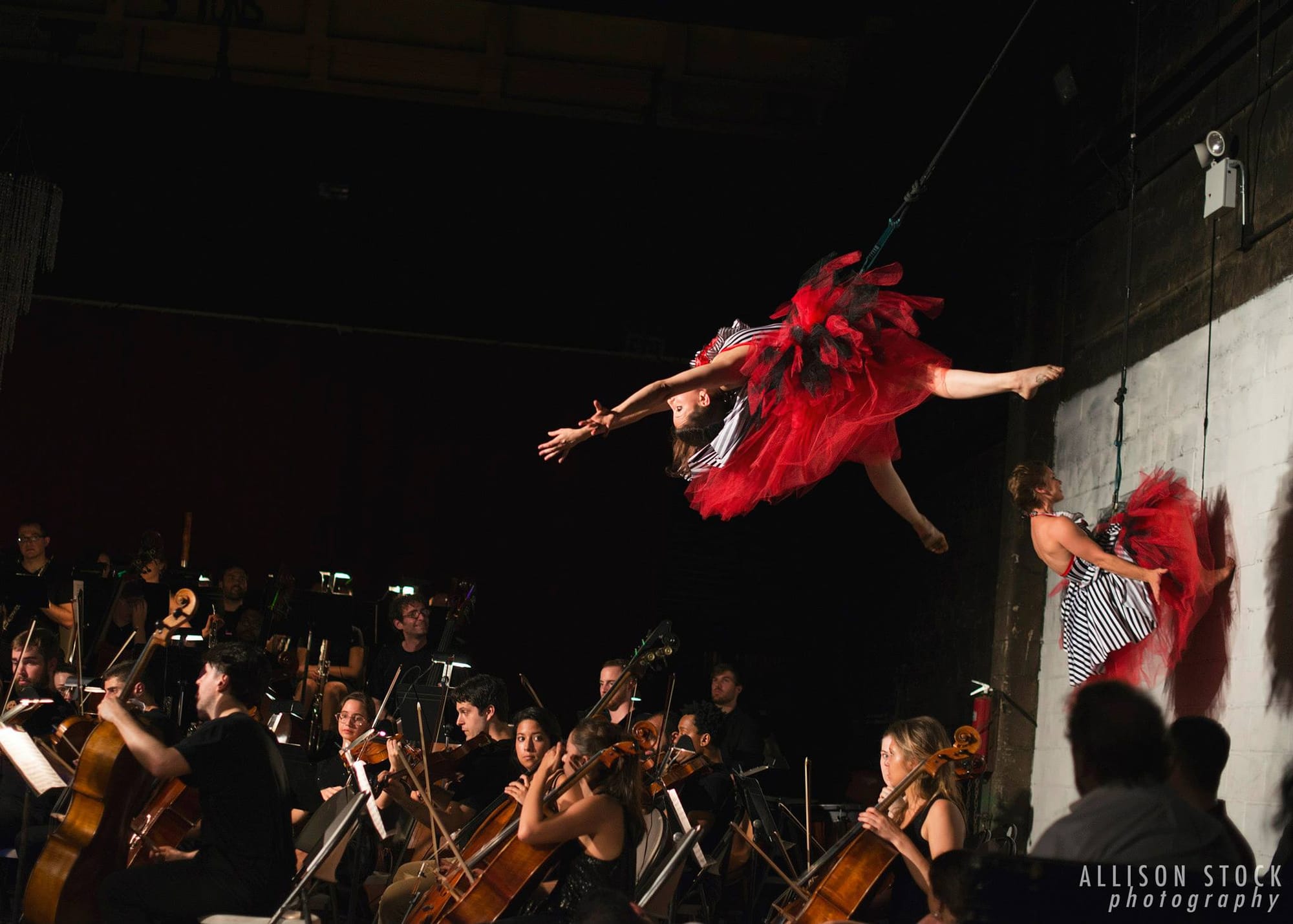
For several years the orchestra performed Symphonie fantastique and Petrushka with a Bushwick circus school, with aerial dancers swinging over the players, fire spinners and performers on stilts, he said.
Blachly said the orchestra has projected artworks during performances and commissioned artists to respond to music, including a concert at the Katzen Arts Center at American University in Washington, D.C., where two composers wrote pieces in reply to a painter's work.
"There are concerts that are designed that kind of impose a certain way of listening on people,” Blachly said. “And I dislike that."
Urgent Matter is reader-supported. Please consider subscribing to support independent arts journalism.