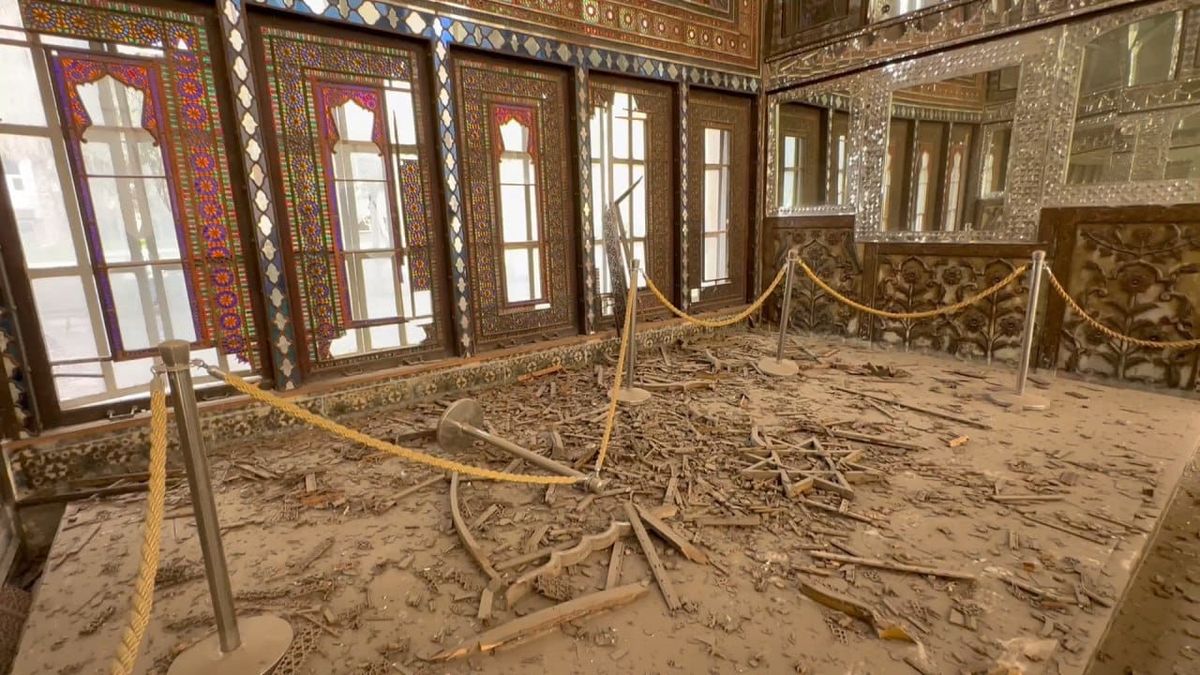
Russia has offered to send specialists to help rebuild Iranian cultural sites damaged during this year's U.S.-Israeli air campaign, an Iranian cultural heritage official said last month.

The offer came before the war reignited this week. The U.S. military said it struck about 90 targets across Iran on Thursday, a second consecutive night of strikes ordered by President Donald Trump.

At a NATO summit in Turkey, Trump said the countries' mid-June ceasefire memorandum was "over." Iran's Health Ministry said the two days of renewed U.S. strikes had killed at least 14 people and wounded 78, putting the heritage sites damaged in the war's opening weeks back at risk.

Hojjatollah Ayoubi, who heads the Center for International Affairs and Diplomacy at Iran's Ministry of Cultural Heritage, Tourism and Handicrafts, said Russian officials signaled their readiness to participate in restoring the country's historic monuments and were prepared to dispatch restorers quickly.

He spoke on the sidelines of the 6th International Tourism Forum in Russia, the country's state news agency, IRNA, reported June 14.

"We saw a firm determination among Russian officials to properly introduce Iran's culture, art, history, and cultural heritage through various programs," Ayoubi said.

Ayoubi said he and Russia's deputy minister of economic development signed an action plan for Tehran-Moscow tourism cooperation from 2026 through 2028 during the trip.

The account of Russia's offer came from the Iranian side, and Urgent Matter could not independently confirm the scope of any Russian commitment.

The overture follows months of reported damage to Iranian heritage. Farhad Azizi, director general of world heritage sites at the ministry, said at least 56 museums, monuments and cultural sites across several provinces suffered significant damage in the war, IRNA reported.

Urgent Matter has tracked that tally since March, when Iranian authorities first reported 56 sites, led by 19 in Tehran and 12 in Kurdistan province.

In Tehran, Azizi said sites struck in direct attacks included Golestan Palace, the Arg of Tehran, the Tehran Grand Bazaar, the Marble Palace, the Shahrbani Mansion, the former Senate building, the Sepahsalar Mosque and the Farahabad Palace-Museum.

Urgent Matter previously documented blast-wave damage to several of those, including Golestan Palace — the capital's only UNESCO World Heritage site — and the Sa'dabad Complex in northern Tehran.

In Isfahan province, Azizi said the targets included the Naqsh-e Jahan Square complex, a World Heritage site; the Chehel Sotoun Palace; the Abbasi Grand Mosque; and parts of the city's historic core. Urgent Matter reported in March that blast waves damaged the Imam Mosque and Ali Qapu Palace on Naqsh-e Jahan Square, along with the nearby Chehel Sotoun Palace.

Russia had already aligned itself with Iran over the strikes. In a March 12 briefing, Foreign Ministry spokeswoman Maria Zakharova called the campaign an unprovoked U.S.-Israeli aggression, said UNESCO-listed sites in Isfahan and monuments in Tehran had been damaged, and reported that a missile strike in Isfahan had damaged the Russian Consulate General there.

Zakharova also said President Vladimir Putin instructed Russia's Emergencies Ministry to arrange deliveries of medicine to Iran, a separate humanitarian pledge made three months before the restoration offer.

The restoration overture comes after Iran's culture minister, Reza Salehi Amiri, said in March that the country had no plans to move its historical objects abroad for safekeeping during the war.

Holdings at the Sa'dabad Complex were placed in secure storage before the fighting began, the government said at the time, though the Scotland-based research group Forensic Iran urged caution about those claims.

Iran has increasingly tied its cultural heritage to national prestige and regional standing. In February, weeks before the war, it convened its first national conference on art policymaking, part of a broader contest with Gulf neighbors over museums, tourism and UNESCO recognition.

Urgent Matter is reader-supported. Please consider subscribing to support independent arts journalism.

Share this article
The link has been copied!