Poster House builds Native design collection for ‘Designed to Be Red’
Curator Brian Johnson says Poster House had to collect work by Native designers before he would organize the show.

Curator Brian Johnson says Poster House had to collect work by Native designers before he would organize the show.
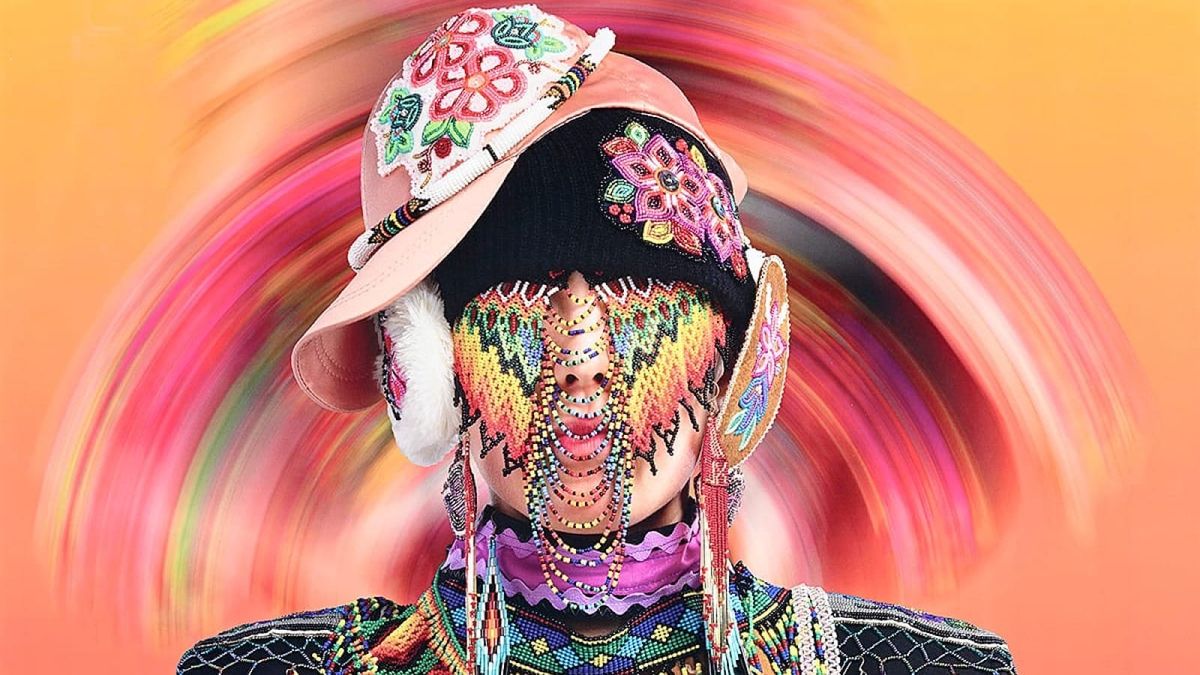
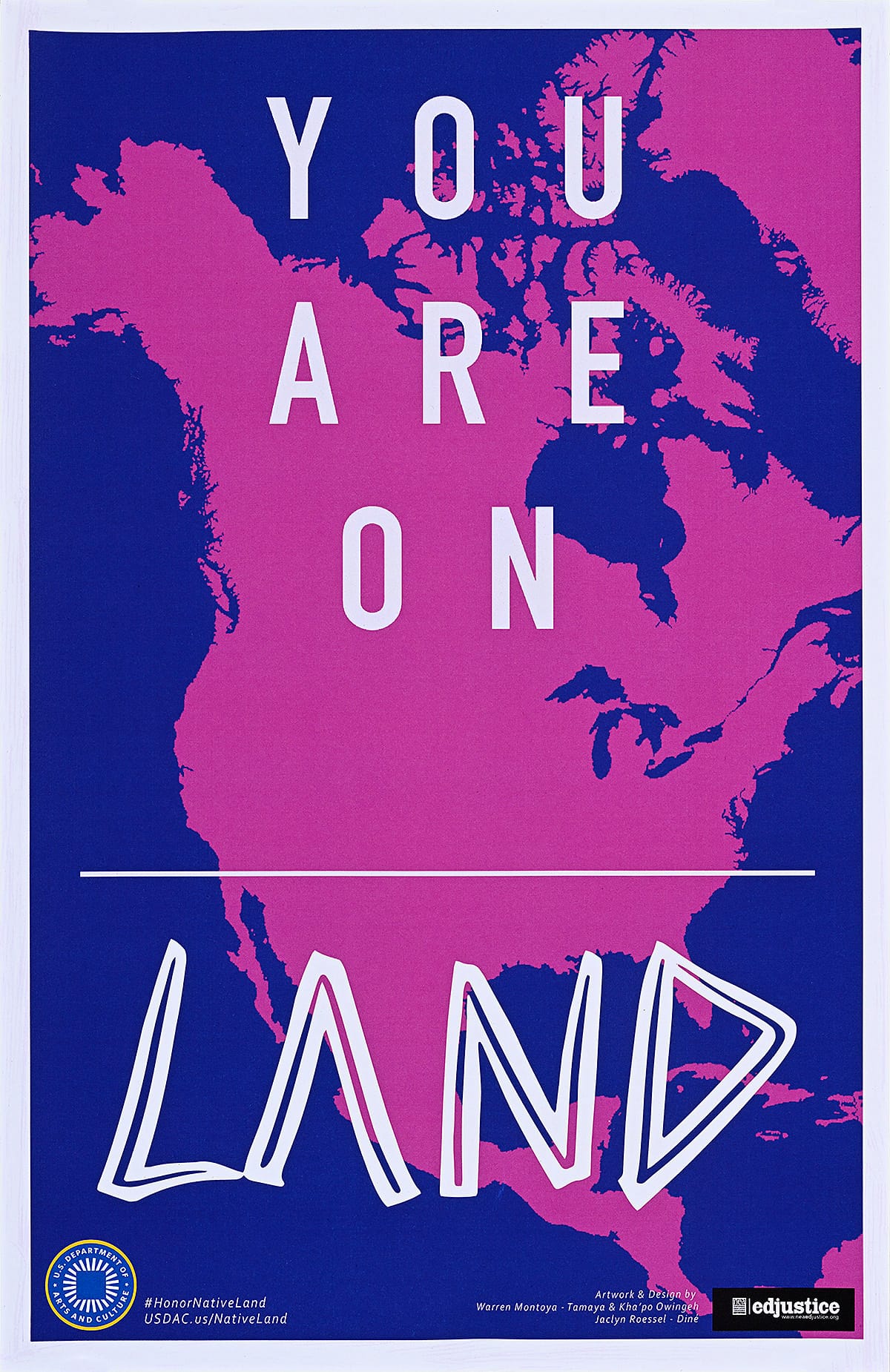
Brian Johnson had one condition before curating a show of Native American design at Poster House: the museum had to begin collecting work by Native designers.
“When I first looked at the collection, the posters about Native people were well printed and often beautiful, and they were us as the product, never the maker,” Johnson, a member of the Monacan Indian Nation, told Urgent Matter in emailed answers to questions.
Poster House agreed, and the works it acquired for the show are now in its permanent collection, Johnson said.
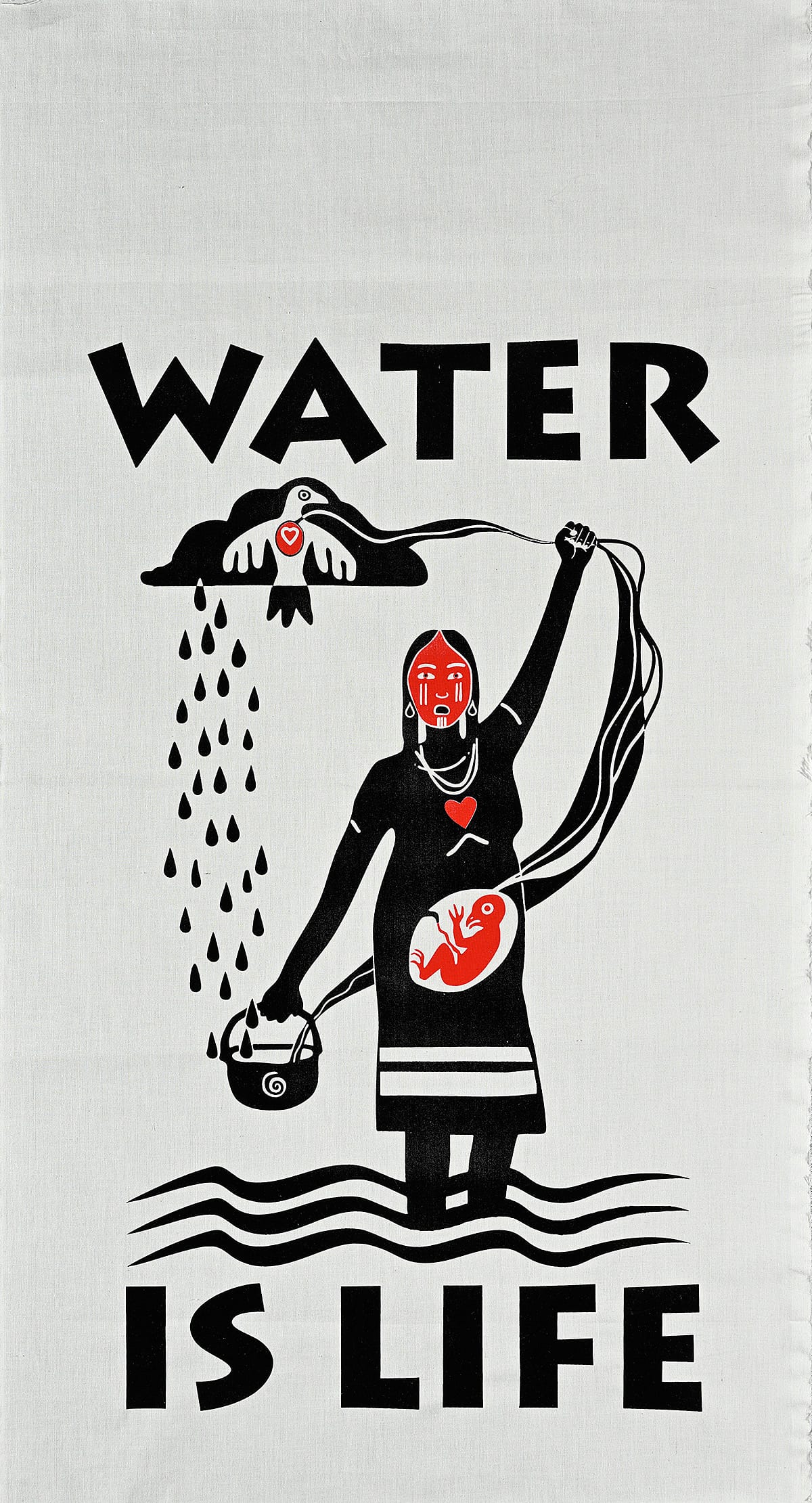
The show, “Designed to Be Red: Native American & Indigenous Poster Works,” opened at Poster House in Chelsea on September 25 and runs through February 21, 2027. Johnson said it includes 104 works representing over 60 tribes and nations, created over nearly two centuries.
“It isn’t meant to represent all of them or be comprehensive,” he said. “There are 574 federally recognized Tribes and Nations, along with unrecognized ones and those that were erased, forcibly disbanded, or eradicated.”
The Bureau of Indian Affairs now lists 575 federally recognized tribes.
“The past tense is a weapon, deployed to consign us to museum dioramas,” Johnson said.
“Red is a word imposed on us,” Johnson said of the show’s title. “A racial category manufactured by colonial administrators, one that flattened hundreds of Nations into a single color.”
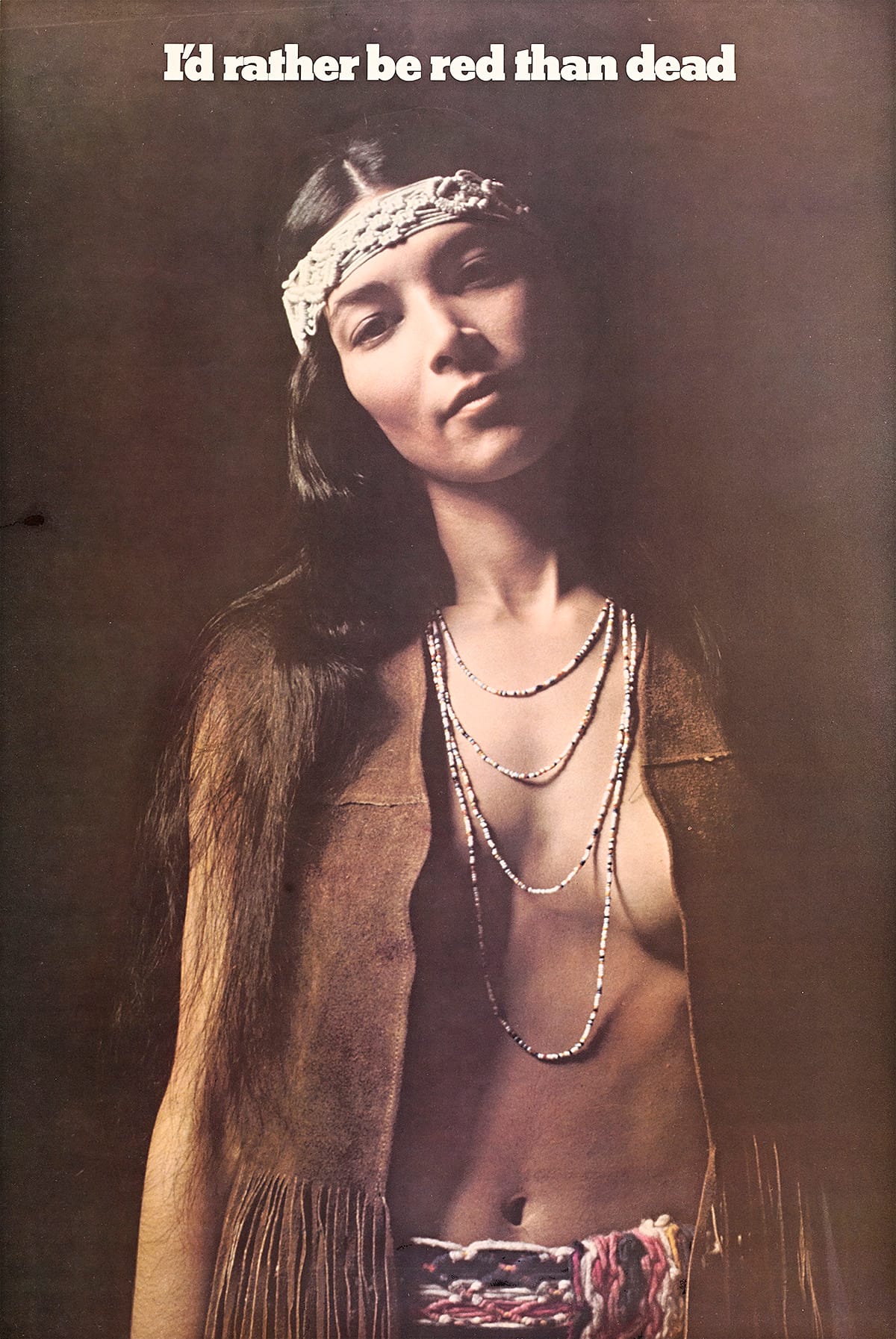
He said he “took the word back just like the Red Power movement did.” The title is also a pun on “read,” he said, and it references God Is Red, the book by Vine Deloria Jr. of the Standing Rock Sioux.
Johnson said a visitor with only 10 minutes should start with Shrine of Hypocrisy, “the first poster I knew I wanted.” It was published in 1975 by Akwesasne Notes, a newspaper he called “key to Red Power and the American Indian Movement.”
The poster puts Tȟatȟáŋka Íyotake, or Sitting Bull, above the presidents on Mount Rushmore. Johnson said it was timed to the Bicentennial as “a rebuttal to much of the rhetoric being pushed about the Founders and the myth of America.”
“Past and present on one sheet of paper supporting Native solidarity and sovereignty,” he said. “That’s the whole show in one work.”
His favorite piece is a 1970 animal hide hand-lettered with the Proclamation for the Indian Occupation of Alcatraz, the Indians of All Tribes’ case for taking over the island. “It is both sarcastic and honestly declaratory,” Johnson said.
Where a museum label would usually say “Designer Unknown” or “Anonymous,” Johnson’s labels say “Designer Once Known.” He said he borrowed the practice from Native art writing.
“‘Unknown’ is a shrug. It’s anthropological,” he said.
“The people who made that object or that work were known—they were loved,” Johnson said. “The name didn’t fall off the object. It just wasn’t valued.”
No single designer is credited on Respect Our Vision…Menominee Sovereignty, a 1976 poster now in Poster House’s permanent collection. Its photograph shows soldiers lined up behind a Native woman with a flag around her and comes from the 34-day occupation of the Alexian Brothers’ Novitiate, an empty Catholic monastery in Gresham, Wisconsin, Johnson said.
The Menominee Warrior Society seized the building on New Year’s Day 1975 and demanded all 64 rooms be turned into a hospital or school for the Menominee. Congress had voted in 1954 to end the Menominee’s status as a sovereign tribe. After that took effect in 1961, Johnson said, poverty soared and the area lost its only hospital. The tribe won back federal recognition in December 1973.
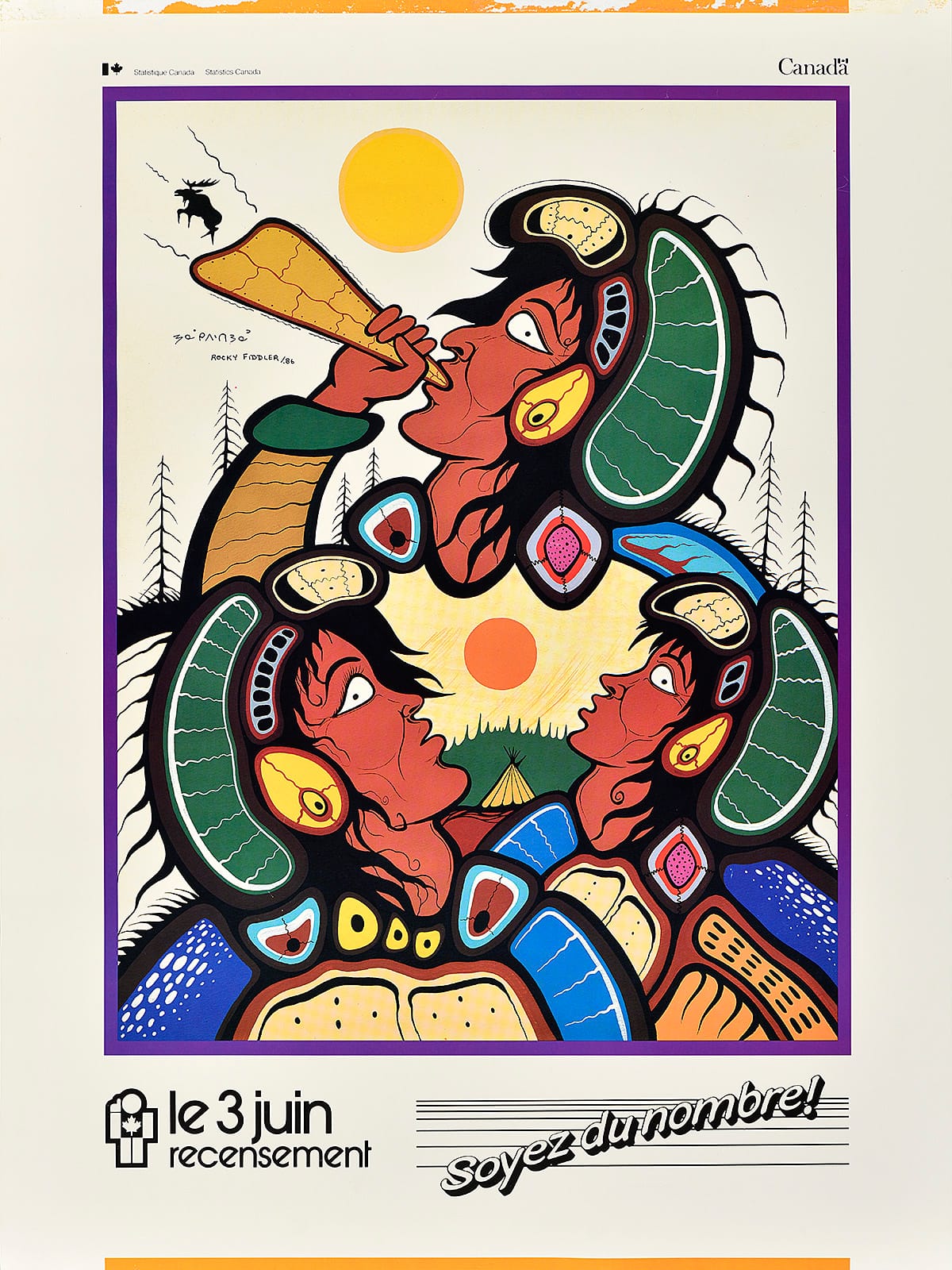
The earliest Native-designed paper poster in the show is a 1942 war bonds sheet. Three students at the United States Indian School in Santa Fe drew illustrations used on it, Johnson said. The Treasury Department, which commissioned it, sent copies to schools and post offices nationwide to be cut apart and displayed, he said.
It hangs in a section called “It’s Complicated.” Asked why, Johnson said, “Because Native-made doesn’t mean uncomplicated.”
He said the sheet is tied to the boarding school system “that stripped Native kids of their culture.” It shows barefoot Native children who look poor, still giving their money to the war effort.
“It feels extractive and othering from a contemporary standpoint,” he said. “I’m also reading it from the present, and that lens isn’t always fair.”
Posters featuring portraits by Winold Reiss hang in the same section.
Johnson said Reiss paid the Blackfeet people who posed for him, hired a translator and learned their stories. The Blackfeet gave Reiss the name Ksisskstukiipo’ka, or Beaver Child, and scattered his ashes in Montana after he died, he said.
Starting in 1927, the Great Northern Railway paid for the portraits and put them on posters, calendars, and playing cards to advertise its route, Johnson said. “The sitters got an hourly fee. The railway got decades of marketing and profit.”
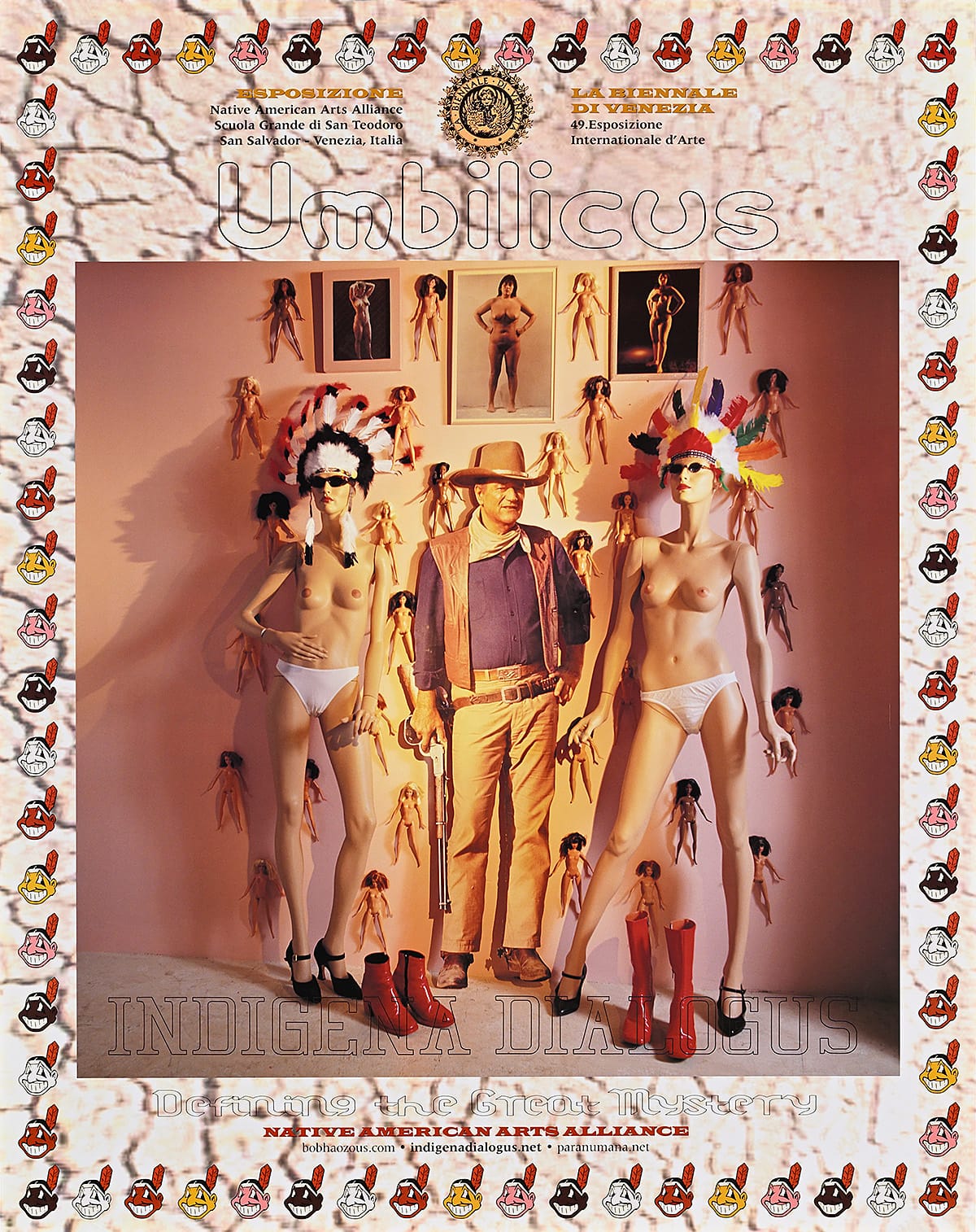
Most of the show’s racist imagery is in a section called “Extractive Marketing,” Johnson said, naming “‘noble savages,’ ‘Injuns’ talking in broken English, hypersexualized princesses, a football team named with a slur.”
The show deals with violence in posters about Missing and Murdered Indigenous Women and People, he said, and in an ad for French motor oil from the years when Osage people were being killed for their oil rights.
Poster House rated the show PG-13 “for some racist and violent imagery and language,” the museum’s website shows.
He said he designed the show for “the most harmed person who might walk in,” a lesson he credited to design anthropologist Dori Tunstall.
“I pictured a 14-year-old Native girl who has been through something. What does she meet first? Joy,” Johnson said.
Johnson said he put “Extractive Marketing” at the back of the gallery, by itself. “The last thing I wanted was to bring Natives into a museum and hand them more oppression,” he said.
To decide which makers to credit as Native, Johnson said he started with whether makers in the United States are citizens of a tribe recognized by the federal government or a state, a standard in the Indian Arts and Crafts Act. The labels say “citizen where it’s citizenship, descent where it’s descent,” he said.
“It is a colonial yardstick, and I know it,” he said. “My own Nation wasn’t on the federal list until 2018. We were Monacan the whole time.”
The National Endowment for the Arts gave the show $40,000, Johnson said.
Asked if the Trump administration’s 2025 changes to NEA grants affected the project, Johnson said they did not. The show opened on schedule with the NEA credited on its title wall, the money was neither held up nor cut, and “no tour venue has raised the political climate with us,” he said.
The NEA award came with compliance terms that Johnson called “the same assurance every grantee signs now.”
“I don’t feel like I was limited in my writing or curation because of stipulations. And here is why: I am showing facts,” Johnson said.
“I would be lying if I didn’t say I was worried,” he said.
Johnson said talks are underway on a national tour with the American Federation of Arts, and “there is already real interest,” but no venues or dates are set.
He said he wants the show to go “where the Natives are.” Each stop would add work by people from that place, he said, “so anyone can walk in and feel, ‘I sit in relation to this.’”
Johnson also wrote the companion book, Designed to Be Red: Native American & Indigenous Graphic Works. He called the book “the beginning of a counter-history.”
“I’m one Native, from Virginia, with one set of relationships,” Johnson said. “This is a drop in the sea of what Native poster and design can be. I need help to find more.”
Urgent Matter is reader-supported. Please consider subscribing to support independent arts journalism.