French photographer scans faces in the dark for X_RAY portraits
For his first solo exhibition, the 26-year-old French photographer rented a gallery in Paris' Marais district and paid for the show himself.

For his first solo exhibition, the 26-year-old French photographer rented a gallery in Paris' Marais district and paid for the show himself.
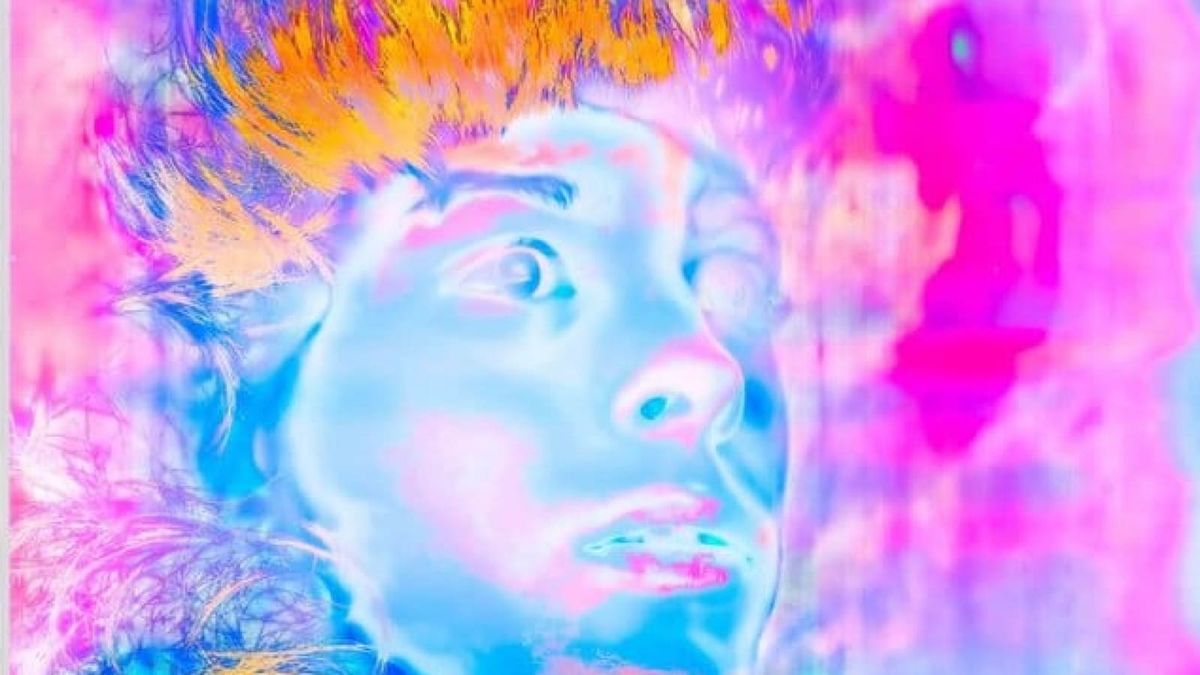
Victor Rouvre makes his portraits by having people press their faces against the glass of an office document scanner in a dark room.
For his first solo exhibition, the 26-year-old French photographer rented a gallery in Paris' Marais district, paid for the show himself and installed the same scanner in the basement for visitors to scan their own faces.
"I wanted the exhibition to be something people could experience, rather than simply something they looked at," Rouvre told Urgent Matter in an email interview.
The show, built around his series X_RAY, ran September 27 and 28, 2025, at Galerie Joseph—a network of rentable spaces in the Marais.
Rouvre said he sold a few works over the two days. Each X_RAY image exists as a single print, in sizes ranging from 50 by 70 centimeters to panoramic works of roughly 280 by 70 centimeters.
In the basement, Rouvre built a room he called the Sanctum. Visitors picked a treatment on an interface, watched a short video on how to position themselves and placed their faces on the scanner. A printer produced the processed portrait on site.
"The result was obviously much simpler than the original works, which require much more time and transformation, but it allowed people to understand part of the process by actually experiencing it themselves," he said.
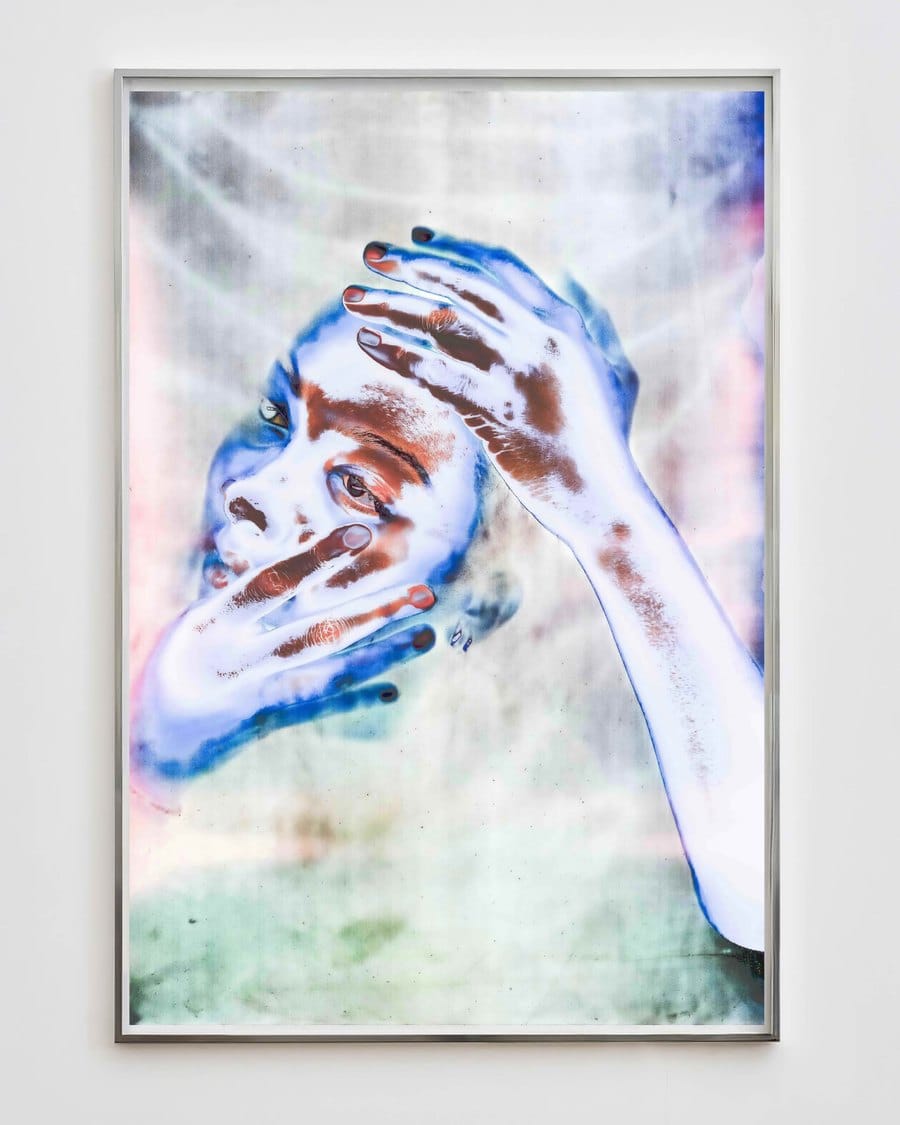
Rouvre makes the X_RAY scans on an Epson DS-50000, an A3 flatbed scanner Epson sells for large-format documents. He said he has not modified the machine.
Sessions take place in total darkness so outside light doesn't interfere with the image.
Rouvre takes several scans per session, changing the sitter's pose and face angle each time.
"The scanning beam moves progressively, and the person does not always know exactly when it will reach them or how long they will need to stay still," he said.
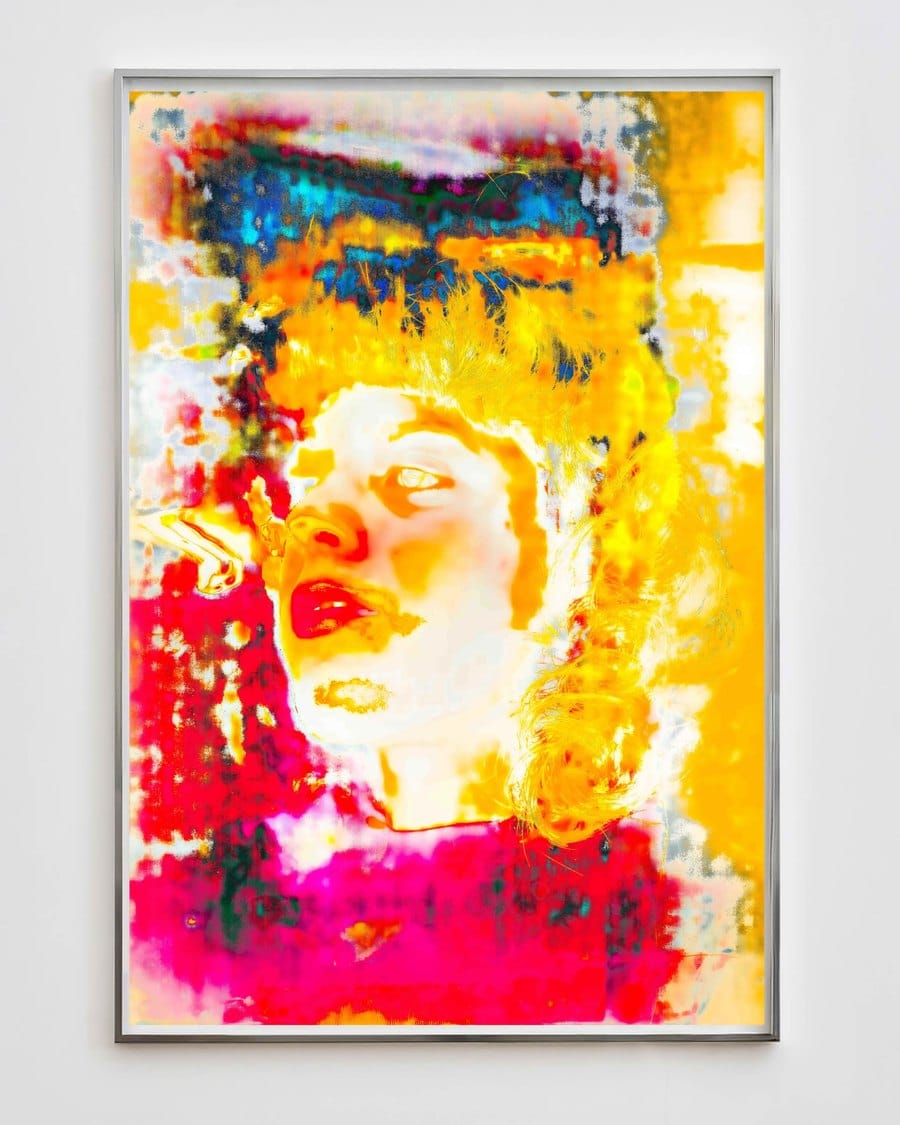
He said first attempts tend to be tentative, but sitters loosen up once they understand how the machine works.
"They start trying different positions, using their hands, sometimes making faces or suggesting poses that I might not have thought of myself," Rouvre said.
The people in the series are mostly friends and acquaintances, plus a few volunteers. Rouvre said there was no formal casting, though he sought certain skin, hair and facial features because they react differently to the scanner and his later color work.
When a sitter moves mid-scan and the skin loses detail, Rouvre usually starts over. He keeps some accidents like jewelry or a strand of hair touching the glass.
"So I do not keep an accident simply because it is an accident. What matters is whether it produces something that feels visually right," he said.
Most distortion happens afterward on the computer. Rouvre layers the scans with textures he also makes on the scanner and reworks the color in stages until the portrait drifts away from the person's original appearance.
"Color is central to this process. For me, it is not simply an effect added at the end. It is one of the main tools I use to transform the image," he said.
Rouvre ties the series to Carl Jung's idea of the Shadow, which he said he was reading about when he made his first scans. The exhibition had a section on Jung's archetypes where visitors could choose one and take home a printed sheet describing it.
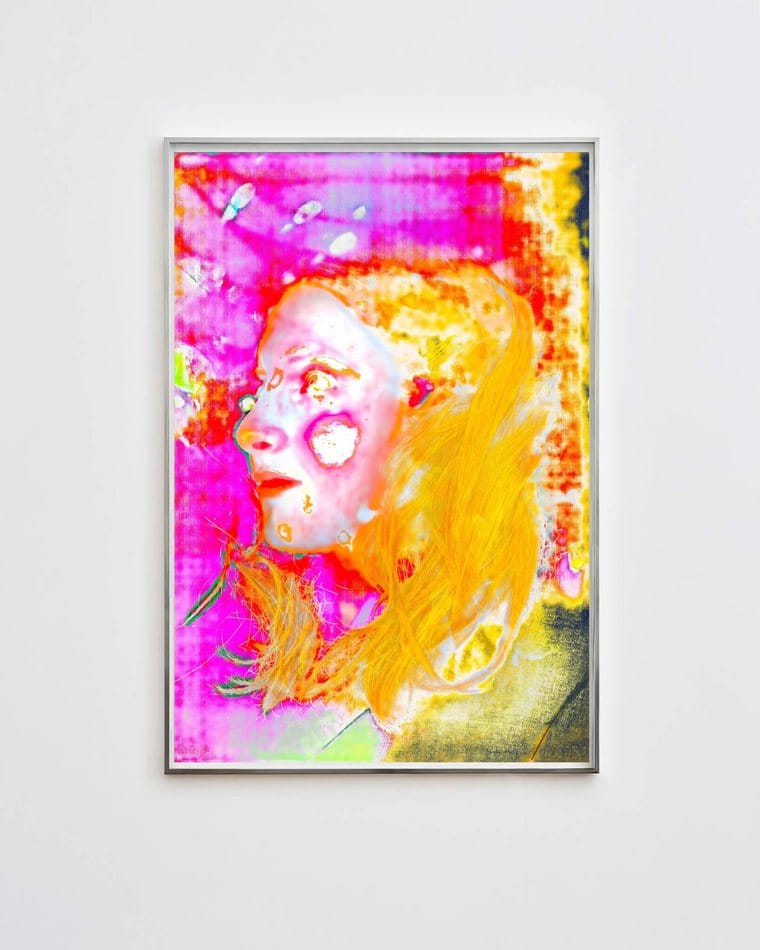
"Of course, I am not saying that my images can reveal someone psychologically. It is more about trying to give a visual form to the idea of something within a person that is not immediately visible," he said.
Rouvre grew up in a small town in Loir-et-Cher. He started taking pictures with a camera his mother gave him and never studied photography beyond a short introduction to analog.
He studied art direction and designed the show's layout and printed materials himself, using tracing paper throughout.
Rouvre said he began making art with the scanner three or four years ago when he started X_RAY. Before that, it was just for documents. He named Man Ray's Rayographs as an early interest.
"What interested me was the idea of producing a photographic image without using a traditional camera," Rouvre said.
Rouvre contacted Urgent Matter after reading its coverage of Gao Yutao, the Shanghai-based artist whose scanner photographs were shown in "Afterlight" at THE BLANC in New York earlier this year.
Rouvre is now trying to turn AURAE, a series he made about a year and a half ago from images shot in front of screens and artificial light, into a photobook. He said he has made a first dummy.
"My main goal this year is to make the book happen, either independently or, ideally, with a publisher who would be interested in developing the project further with me," he said.
Urgent Matter is reader-supported. Please consider subscribing to support independent arts journalism.