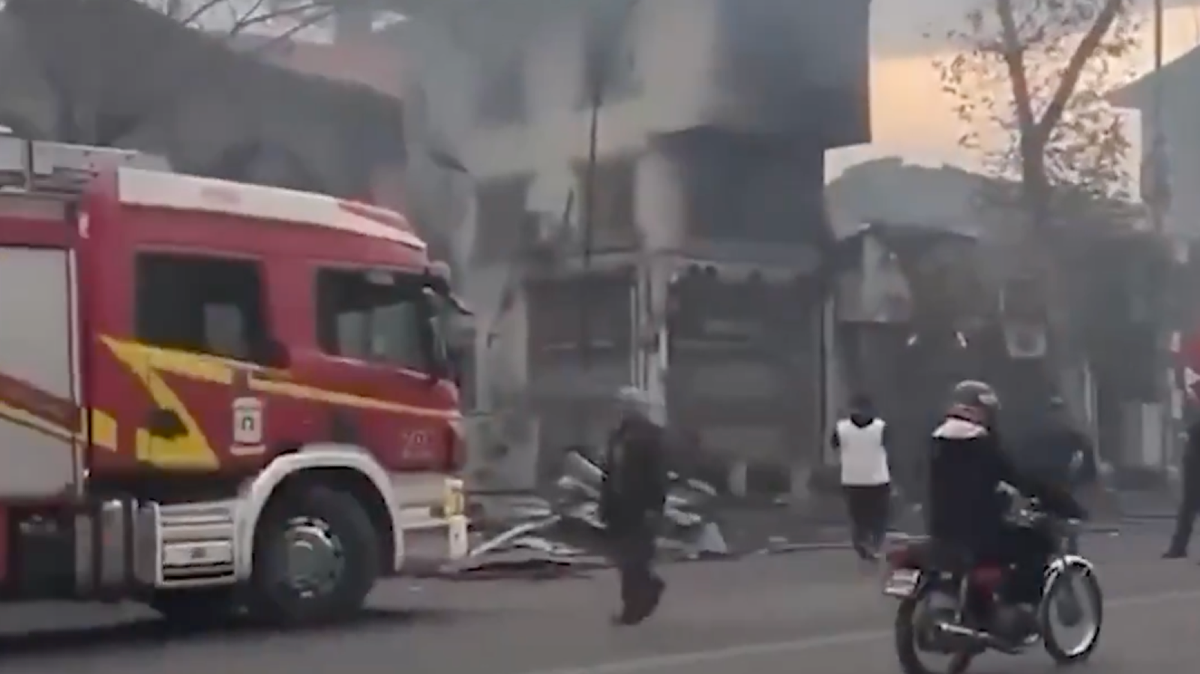
The Forensic Archive of Iran, a Scotland-based independent documentation project, has launched a public call for testimony, documents and artistic responses tied to the Rasht Grand Bazaar fire in January, as the Iran war further complicates efforts to verify cultural damage and preserve public records in the country.
The call refers to the Rasht Grand Bazaar fire on January 8-9, which witnesses and human rights groups have described as part of a deadly crackdown on protesters during Iran’s nationwide unrest.
The press materials reviewed by Urgent Matter use the term massacre, which has also been used by human rights groups and international media in describing the events.
The origin of the fire remains disputed, with witnesses alleging to the diaspora news publication Iran International that security forces trapped people in the burning bazaar and shot those trying to flee.
Iranian state media and officials, meanwhile, have alleged that the bazaar and one of its mosques were burned down by “foreign-backed rioters.”
Although the Rasht events preceded the Iran war, the conflict has heightened the urgency for independent researchers to document the events at Rasht.
Urgent Matter previously reported that internet restrictions and limits on commercial satellite imagery have made it harder for journalists and researchers to independently verify damage to Iranian cultural sites, leaving public records dependent on witness accounts, official statements and fragmented visual evidence.
The Forensic Archive of Iran has announced a second issue of its Forensic Archive Dossier, which focuses on events at Rasht Grand Bazaar, one of northern Iran’s major civic and heritage sites.
The dossier invites witnesses, shopkeepers, Rasht residents, journalists, researchers, artists, heritage workers, lawyers and members of the Iranian diaspora to submit material connected to the event.
The group is seeking written, audio or recorded testimony; photographs; videos; screenshots; maps; witness notes; media reports; official statements; architectural or urban documentation; before-and-after images; and material related to damaged shops, structures, archives, goods or objects.
It is also accepting research essays, legal or human rights analysis, reflective writing, diary entries, letters, community memories, poetry, fiction, video works and other artistic responses. Submissions may be in Farsi or English.
The call frames the bazaar as more than a commercial site, describing it as a “living urban archive” tied to cultural memory and identity, including food culture, craft, architecture and everyday social life. The project said its destruction should also be documented as a “human, cultural, and social wound.”
Romina Frohar, founder and project lead of the Forensic Archive of Iran, said the dossier is meant to preserve testimony and public memory under conditions in which records can disappear quickly.
Frohar said the project asks “who is being blamed, who is being silenced, who is being erased, and who still remembers.”
Though internet access was recently restored in Iran after a months-long blackout, the Forensic Archive said it hopes to receive material from people and communities affected by the events in Rasht before any further restrictions or disruptions could make contributions more difficult.
Anonymous and pseudonymous submissions are welcome, and sensitive material may be redacted, anonymized or withheld if publication could create risk. No previous academic, artistic or professional background is required to participate.
The project is led by Frohar, with Shabnam Balouch as heritage and curatorial adviser and Gretel Mejía as human rights adviser.
Stories like this take time, documents and a commitment to public transparency. Please support independent arts journalism by subscribing to Urgent Matter and supporting our work directly.