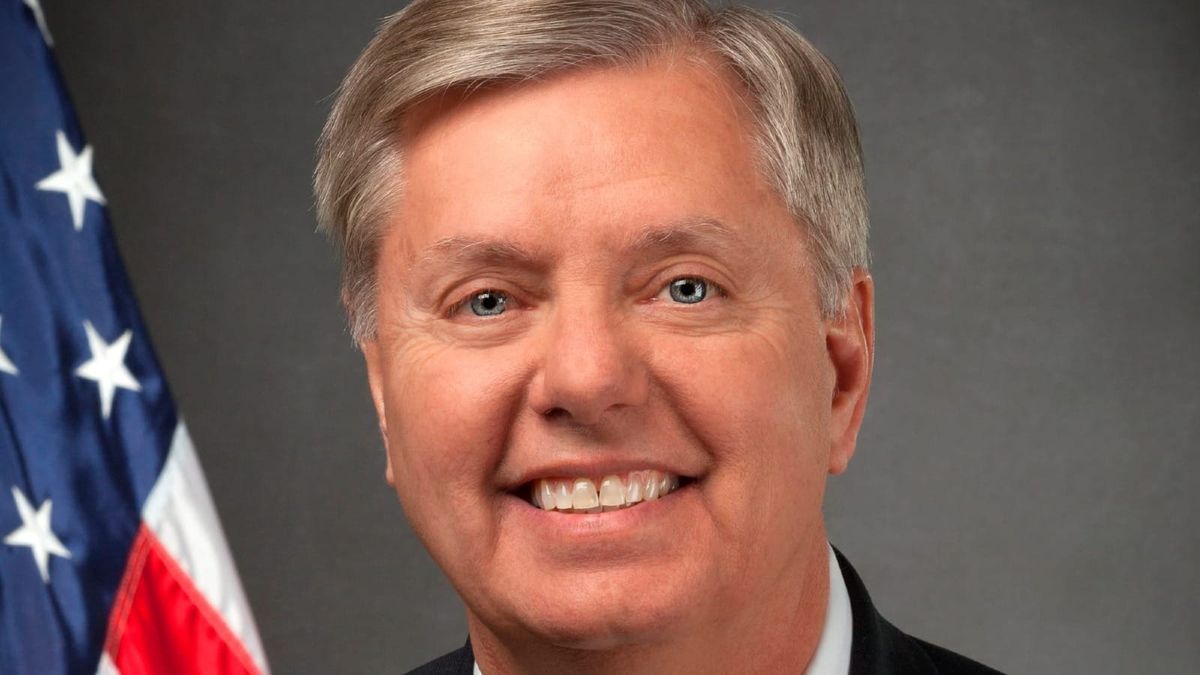
Lindsey Graham, the South Carolina Republican whose votes against federal arts funding ranged from the National Endowment for the Arts fights of the 1990s to the 2025 law ending public broadcasting subsidies, died Saturday, his office said. He was 71.
His office attributed the death to a "brief and sudden illness." Graham was in Kyiv on Friday, the day before he died, and was running for reelection this year.
Graham served in the U.S. House from 1995 to 2003 and in the Senate from 2003 until his death. He chaired the Senate Judiciary Committee from 2019 to 2021 and led the Senate Budget Committee at the time of his death.
On July 21, 1998, Graham voted against a House amendment restoring $98 million for the National Endowment for the Arts after a procedural point of order had stripped the agency's funding from the fiscal 1999 Interior appropriations bill. The amendment passed 253-173 over his opposition.
The vote came during a sustained congressional campaign against the endowment. Congress cut the agency's budget roughly 40%, from $162 million to $99 million, after Republicans took the House in the 1994 elections that first sent Graham to Washington.
In 2010, the Americans for the Arts Action Fund gave Graham a failing grade on its congressional arts report card, making him one of 28 senators to fail. The group's criteria included support for arts jobs, museums and public art, and cosponsorship of arts legislation.
In March 2020, as Congress negotiated the $2 trillion pandemic relief package, Graham attacked its arts provisions, which included $75 million each for the NEA and the National Endowment for the Humanities and $25 million for the Kennedy Center.
"Do we need to be giving PBS more money now when people are dying?" Graham said, adding that $25 million for the Kennedy Center was a lot of money to the average American.
In July 2025, Graham voted for the Rescissions Act, which clawed back $1.1 billion Congress had already appropriated to the Corporation for Public Broadcasting. The Senate passed the package 51-48. Susan Collins of Maine and Lisa Murkowski of Alaska were the only Republicans to vote no.
The corporation distributed federal money to NPR, PBS and more than 1,500 local radio and television stations. On August 1, 2025, it announced it would shut down in January 2026, ending nearly six decades of federal support for public broadcasting.
NPR chief executive Katherine Maher called the vote "an unwarranted dismantling of beloved local civic institutions" in a statement after passage.
Graham's record on Confederate iconography shifted under pressure. Two days after a gunman killed nine people at Emanuel African Methodist Episcopal Church in Charleston in June 2015, Graham defended the Confederate battle flag flying on the South Carolina statehouse grounds, telling CNN "this is part of who we are."
Within days he reversed, joining Governor Nikki Haley's call to remove the flag from the capitol grounds.
"Put it in a museum," Graham told NBC's Meet the Press, describing the flag as an obstacle to his state's future. In the same interview, he declined to endorse removing Robert E. Lee's name from schools and roads.
In November 2019, Graham blocked a Senate resolution formally recognizing the Armenian genocide. He voted for the resolution the following month, when it passed the Senate unanimously.
The League of Conservation Voters, whose congressional scorecard includes votes on protections for national monuments, world heritage sites and culturally significant landscapes, gave Graham a 14% lifetime score. His 2025 score was 3%.
Graham broke with the Trump administration on one heritage question. In January 2020, after President Donald Trump threatened to strike 52 Iranian sites, some of which he described as important to Iranian culture, Graham said he told the president such targets were off limits.
"Cultural sites, religious sites are not lawful targets," Graham said.
Graham never married and had no children. He helped raise his younger sister, Darline Graham Nordone, after their parents died 15 months apart when he was in his early twenties.
Urgent Matter is reader-supported. Please consider subscribing to support independent arts journalism.