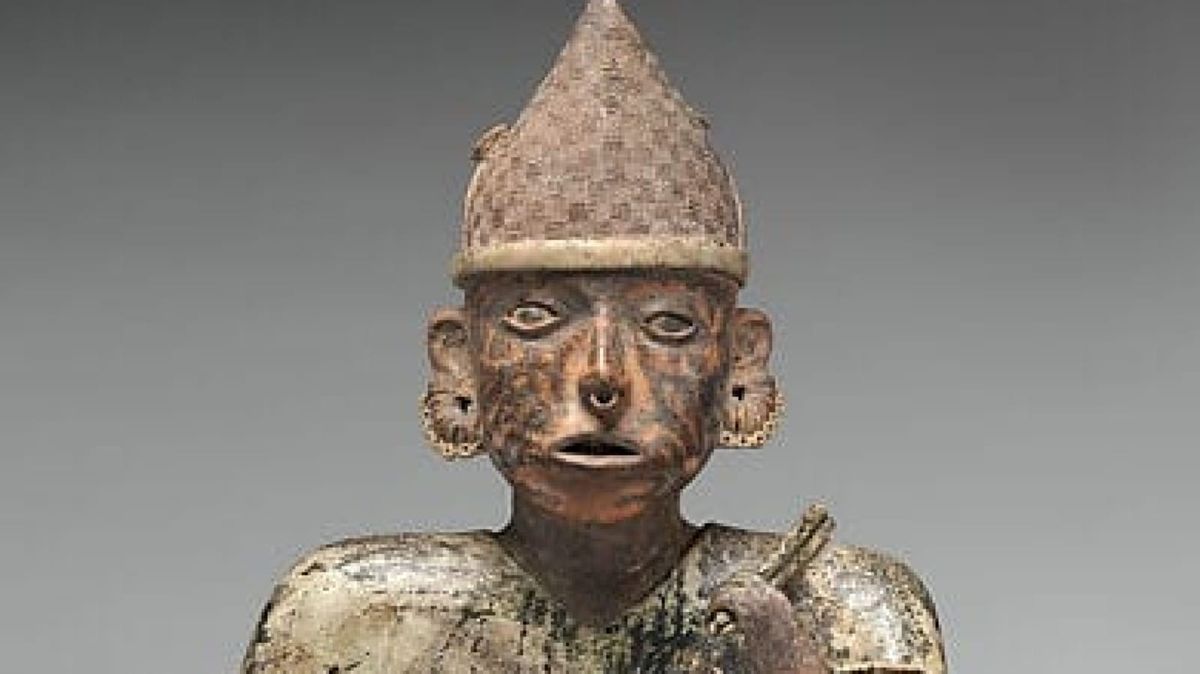
Manhattan District Attorney Alvin Bragg returned a Nayarit sculpture his office seized from the Metropolitan Museum of Art to Mexico this week, while two related figures the museum’s catalog says may have come from the same tomb remain on display in Gallery 360.

The Standing Male Figure was one of three antiquities the office repatriated at a July 15 ceremony with Consul General Marcos Bucio Mújica. The three are valued together at more than $160,000.

They were recovered through several criminal investigations into antiquities trafficking networks, prosecutors said. One of those inquiries led to the 2025 conviction of trafficker Eugene Alexander.

It was the office’s sixth return to Mexico, bringing the running total to 52 antiquities worth more than $13 million.

“I am pleased that we have now been able to return more than 50 antiquities back to Mexico. We believe that the trafficking networks we have identified are responsible for other pieces looted throughout Mexico, and our work continues,” Bragg said in a statement.

The Standing Male Figure is a shaft-tomb sculpture in ceramic and slip dated to about 100 to 400 C.E. It stands 30 7/8 inches tall and depicts a man in a conical hat and long tunic, with shell-decorated cord bracelets on his upper arms.

The New York dealer Merrin Gallery sold the figure, which Joanne and Andrall Pearson held from 2003 until they donated it to the Met in 2018, museum records show. The museum’s catalog entry says the work was restituted in February 2026 and is no longer in the collection.

The Pearsons donated two Nayarit female figures to the Met the same year. The museum’s entries for all three say shared features and craftsmanship suggest one artist made them and that they may have been deposited in the same shaft tomb in the Nayarit village where they originated.

Both women are listed as on view at the Met Fifth Avenue, museum records show. The couple acquired each in 2002 from Ancient Art of the New World, a New York dealer, a year before they acquired the male figure from Merrin.

The Met traces one of the women, object number 2018.443.2, to the Los Angeles collector Billy Pearson and then through Stendahl Galleries and Lacy Gallery in Los Angeles. It traces the other, 2018.443.3, to Ellsworth La Boyteaux of Orinda, California, before 1968, then to a Sotheby’s sale on November 19, 1990, and to a subsequent owner, records show.

Urgent Matter has reached out to the Met for additional information, including whether the museum has reviewed the provenance of the two figures still in its collection.

Merrin also handled the second object returned this week. The Xochipala Bowl, a stone vessel dating to roughly 1200 to 900 B.C. and made in the Xochipala style of ancient Mesoamerica, surfaced at the gallery before the office seized it in December 2025.

The third object, an Aztec obsidian micro-blade core dated to between roughly 1000 and 1500 A.D., was used to make the sharp obsidian blades central to Aztec toolmaking. It first appeared with Alexander and was seized in 2025.

The Government of Mexico “extends its deepest gratitude” to Bragg and his Antiquities Trafficking Unit, Bucio Mújica said, calling the returns part of a partnership that has helped reconstruct “the cultural identity of our nation.”

Read more about repatriation at Urgent Matter’s repatriation tracker, and please sign up for a paid subscription if you value this reporting.

Share this article
The link has been copied!