Frank Lloyd Wright skyscraper’s former owner sues Artnet, other media for defamation
Cynthia Blanchard and Dallas dealer 20cDesign accuse media of reporting allegedly unsettled easement dispute as proven wrongdoing.

Cynthia Blanchard and Dallas dealer 20cDesign accuse media of reporting allegedly unsettled easement dispute as proven wrongdoing.
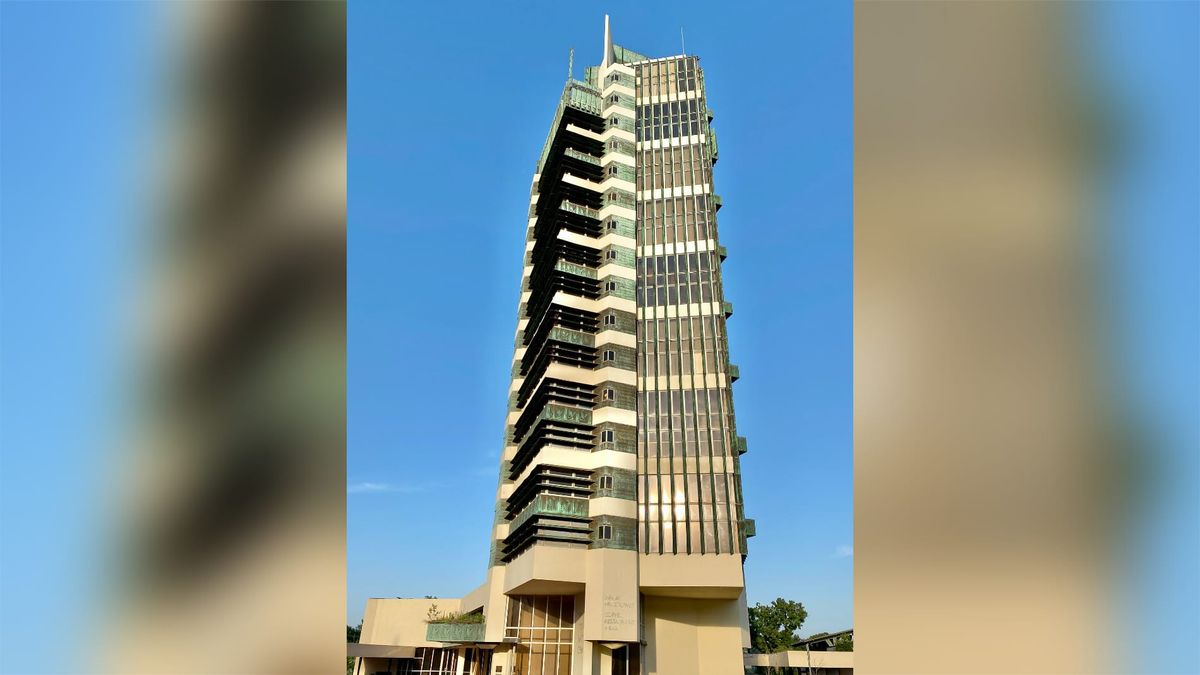
The former owner of Frank Lloyd Wright’s only skyscraper and the Dallas dealer who bought 11 of its original furnishings are suing a group of media companies and others over coverage of the 2024 sale, accusing several outlets of falsely portraying the transactions as unlawful.
Cynthia Diane Blanchard and 20cDesign filed the suit May 5 in the U.S. District Court for the Southern District of New York, then amended it three months later.
The amended complaint, filed August 13, names the Frank Lloyd Wright Building Conservancy and its executive director, Barbara Gordon, along with the media companies and journalists whose coverage Blanchard and 20cDesign challenge.
The dispute centers on a preservation easement the conservancy said covers the furnishings inside Price Tower, the 19-story Bartlesville, Oklahoma, building Wright completed in 1956. The complaint said no court has ever found that the easement applied to the furnishings.
The complaint said the conservancy’s permission was not required to sell them and that the 2024 sale did not violate any law. However, it said the news outlets described the sale as wrongdoing anyway.
The lawsuit outlined the specific language in the articles that Blanchard and 20cDesign considered defamatory.
Architectural Digest reported that “the easement legally prohibits removing these items from the site, and the conservancy sought legal recourse to remedy this.” Artnet reported that 20cDesign acquired the pieces “in a sale that breached the conservancy’s preservation easement,” under a headline stating the artifacts had been “Saved by Conservancy.”
Paid subscribers can read the court documents.
 Adam Schrader
The Smithsonian Magazine said the furnishings “had been protected under a preservation easement but had been sold anyway, without the organization’s permission.”
The Tulsa World, owned by Lee Enterprises, described the pieces in a photo caption as items “previous owners attempted to sell in violation of a preservation easement to a Dallas firm,” the lawsuit said.
And several Gannett articles in the Bartlesville Examiner-Enterprise carried the summary line “Court records show protected items were sold despite preservation easement,” called the artifacts “missing,” and reported that the bankruptcy trustee “rejects” Blanchard’s claims and that her “$550K loan claim” was “disguised equity.”
Before filing the lawsuit, Blanchard sent cease-and-desist letters to the news outlets. Their responses were included as exhibits when the complaint was first filed.
Gannett did not give ground. In a January 2025 letter sent while Blanchard was still handling the matter without an attorney, Gannett associate general counsel Thomas Curley told her the paper “respectfully but firmly disagrees” with her objections to its reporting.
“We have no desire to be involved in a legal dispute with you or your companies and we do not think that would serve any worthwhile purpose for either party,” Curley wrote. But the reporting was protected, he said: “no one has a right to insist upon only news coverage with which she may agree.”
Curley invoked the fair-report privilege, the legal protection that shields news organizations that accurately report allegations drawn from lawsuits and official complaints, even when those allegations are disputed. He argued the paper was entitled to cover the litigation and the complaints filed against Blanchard regardless of whether she thought them unfair.
On Blanchard’s objection to coverage tying her to a cryptocurrency case, Curley was blunt. “[Y]ou accuse the publication of reporting baseless allegations concerning a cryptocurrency scheme, but you fail to acknowledge the Securities and Exchange Commission action against your husband,” he wrote, adding that “we are willing to credit that you think the SEC has erred, but that does not mean the Bartlesville Examiner-Enterprise cannot legally report upon this subject.”
Curley also wrote that Blanchard herself acknowledged she is “a public figure within the meaning of defamation law,” a status that would force her to prove the paper published knowing falsehoods. Her complaint takes the opposite view, calling her “a private figure” who “did not thrust herself into any public controversy in order to influence its outcome.”
He closed by warning that the paper had “multiple defenses” and “the resources to defend itself vigorously,” while urging Blanchard to start talking to reporters. The paper, he wrote, “believes it serves no purpose for you to complain that its coverage lacks your perspective on these issues but be unwilling to provide it.”
Condé Nast senior counsel Terence Keegan wrote in a June 2025 response to Blanchard that the company disagreed with her but had quietly edited Architectural Digest’s piece.
"Purely as an accommodation to you, AD in its editorial discretion has updated the Price Tower article to remove the sentences your letter had highlighted," Keegan wrote, ading that he “trust[ed] this fully resolves your concerns.”
It did not. In a June 26 reply, Blanchard wrote that “the silent edits made to the article” did not “adequately address the scope of the harm caused by the original publication,” because “no correction, retraction, or public clarification was issued.” The material, she wrote, “continues to circulate widely through cached versions, screenshots, social media commentary, and third-party references.”
“Respectfully, this matter is not closed,” she wrote, telling Keegan she was retaining counsel. Condé Nast is the only defendant the complaint does not accuse of defamation. It was sued only for interfering with the plaintiffs’ business.
Blanchard controlled Copper Tree and its subsidiary Green Copper Holdings, which took over Price Tower from the nonprofit Price Tower Arts Center in March 2023. The next spring, short on operating money, those companies sold 11 Wright-designed pieces to 20cDesign in a series of documented bulk transactions.
Both companies filed for Chapter 7 bankruptcy in January 2025. On May 1, 2025, the bankruptcy court approved selling Price Tower and its assets “free and clear of all liens, claims, interests, and encumbrances” — an order the complaint says cleared the sale over the conservancy’s objections. The building went to McFarlin Building for $1.4 million.
The lawsuit repeatedly returned to one payment. On June 25, 2025, the conservancy bought the 11 artifacts back from 20cDesign for $185,000. An organization that believed the pieces were its own property, unlawfully taken, would not pay $185,000 to buy them from the party it accused of wrongdoing, the complaint argued.
The conservancy’s own account casts the deal differently. Its August 7, 2025, press release called the purchase the product of “persistent advocacy and lengthy negotiations” and quoted Gordon saying it “allowed us to secure our easement-protected items without the uncertainty and high cost of pursuing further legal action.”
The complaint noted the conservancy raised no objection to earlier sales of Wright artifacts through Heritage Auctions in 2019.
The complaint reserved its sharpest allegations for Dwell. It said the magazine published a quotation attributed to Blanchard — that the plan was to flip the tower so “everybody would get their money back and a whole lot more” — that she claims she never said.
That article also wrote that “the Blanchards had started stripping the building of some of its artifacts, hocking them on 1stDibs” and quoted a preservation advocate likening the pieces to “trafficked goods,” according to the complaint.
The suit brings nine claims, including defamation, tortious interference, false light and slander of title. It seeks money damages and a court declaration that the 2024 sales were lawful and that 20cDesign held clear title, and it asks the court to order the outlets to remove or correct any statements found to be false.
Follow along with other art-world legal disputes at Urgent Matter’s lawsuit tracker.