Exhibit planned with Elaine Mokhtefi, Jewish American who aided Algeria's independence fight, opens in Algiers
An Algiers show of war photos opened after Elaine Mokhtefi's death, as ICP panelists shared new details of her life.

An Algiers show of war photos opened after Elaine Mokhtefi's death, as ICP panelists shared new details of her life.
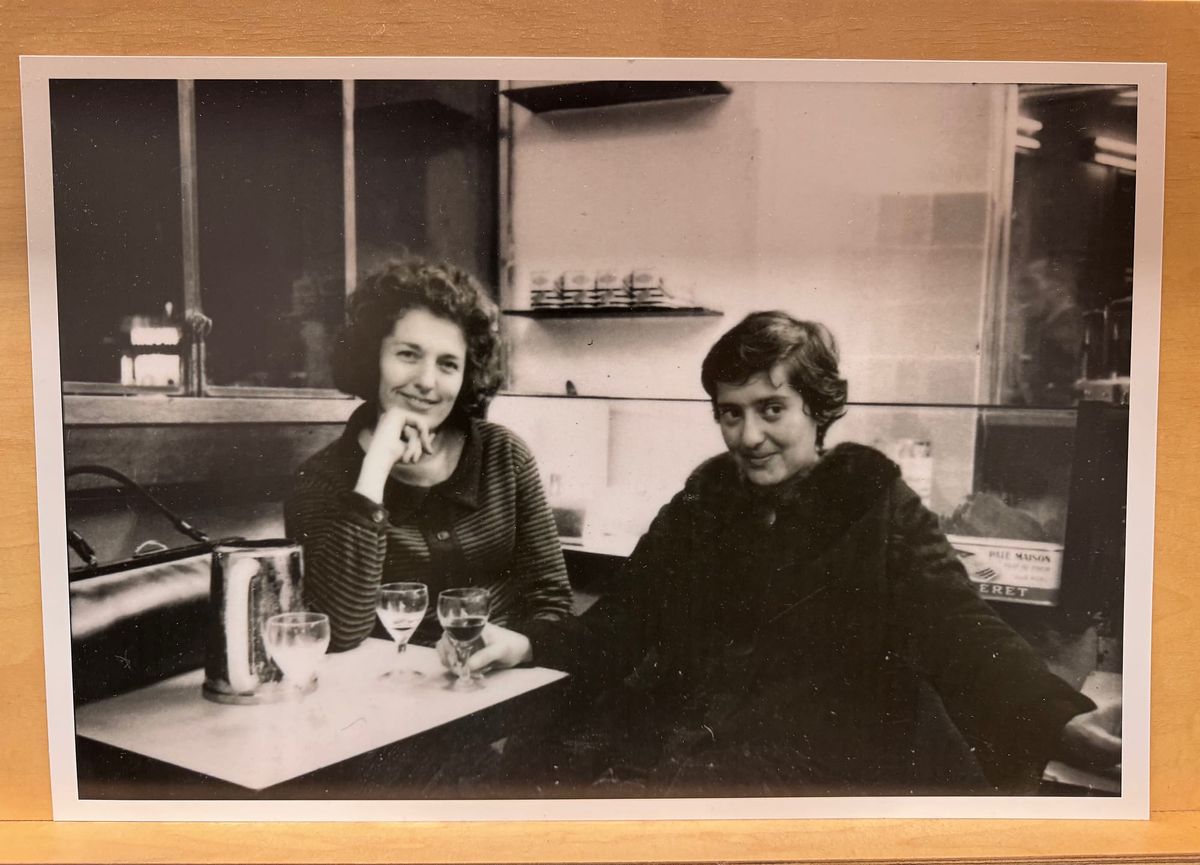
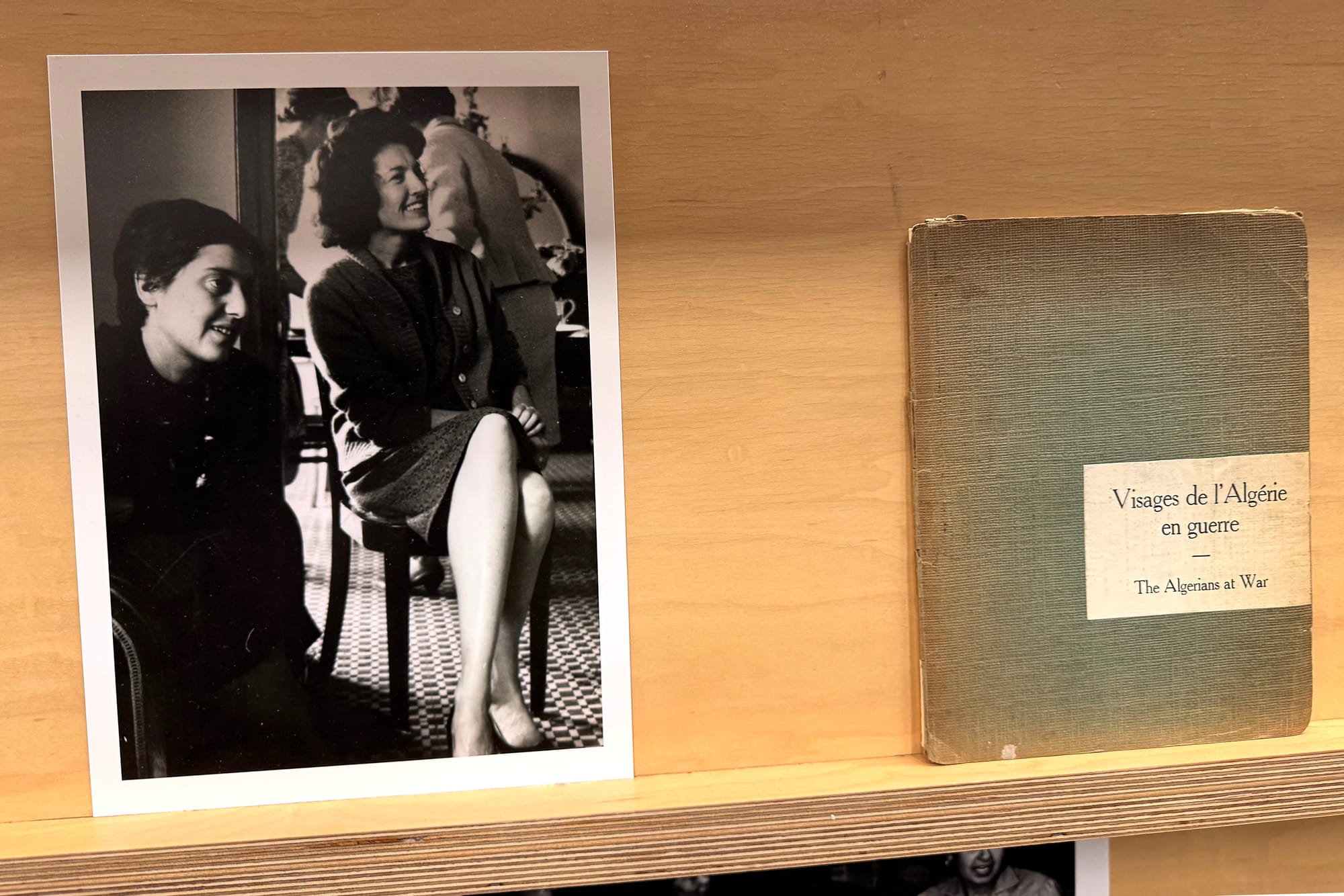
An exhibition of photographs taken by two American women during Algeria's war of independence went on display Thursday in Algiers, about 10 weeks after Elaine Mokhtefi's death.
Mokhtefi, a Jewish woman born Elaine Klein in Hempstead on Long Island, planned to help install it. She died September 11 at 97.
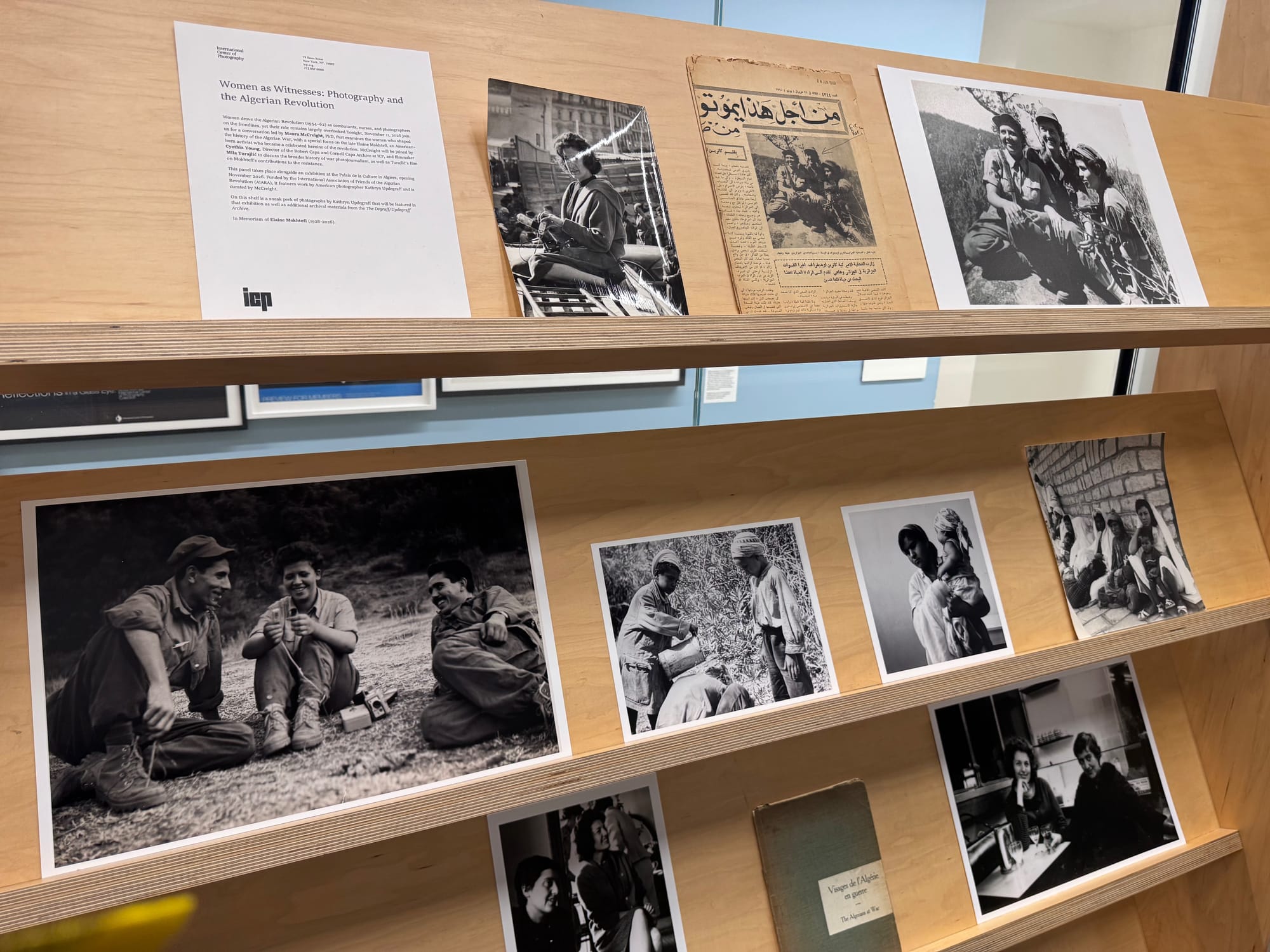
Art historian Maura McCreight curated the show, "Women as Witnesses: American Photography and the Algerian Revolution," from the work of Kathryn Updegraff and Dickey Chapelle.
"When Elaine passed, the Algerian government still wanted me to come to install the show," McCreight told Urgent Matter.
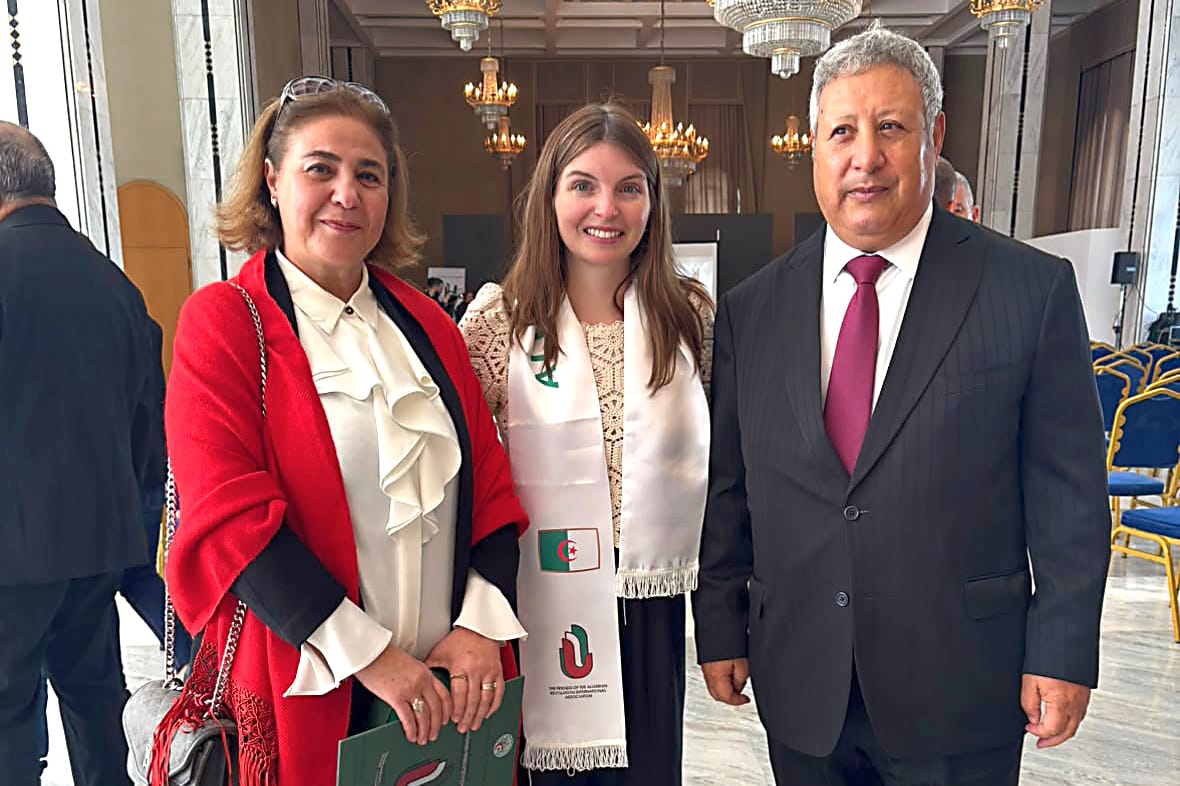
The photographs went up at the Moufdi Zakaria Palace of Culture for a symposium honoring Mokhtefi, organized by the International Association of Friends of the Algerian Revolution.
A banner at the event showed it was held under the patronage of Abdelmalek Tacherift, Algeria's minister of mujahideen and rights holders, the cabinet post for veterans of the independence war and their families.
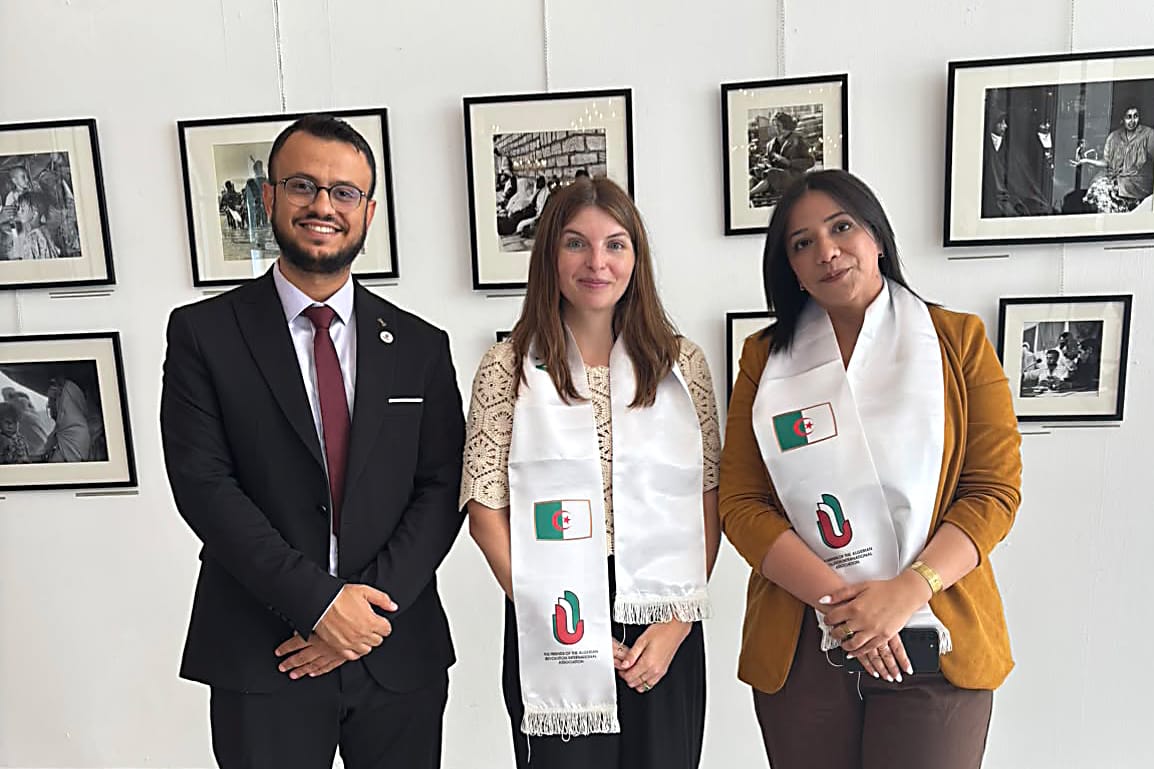
McCreight shared a photo on social media from the hall, featuring framed black-and-white prints hung in rows on white panels. "Yes, Laura Loomer, those are labels in Arabic being added to the exhibition an American curated in Algiers," McCreight joked in the caption.
Eight days earlier, McCreight presented the research behind the show at a panel at the International Center of Photography. She was joined by Cynthia Young, director of ICP's Robert Capa and Cornell Capa Archive, and Serbian filmmaker Mila Turajlić, who is finishing a documentary about Mokhtefi.
Mokhtefi had also originally been slated to do the ICP event herself, McCreight said.
Several news outlets attended, McCreight said, including Algérie Presse Service, Algeria's state news agency. Mokhtefi worked at the agency for several years and later taught courses for journalists in Algeria.
McCreight said she visited archives in over 20 countries researching Updegraff and Chapelle, APS reported.
Tacherift's chief of staff read the minister's message to the room. In a passage aired in the agency's video, the message called Mokhtefi's citizenship, granted by President Abdelmadjid Tebboune, "a symbolic and historic recognition" of her ties to Algeria.
The symposium closed with the association honoring Mokhtefi's family.
Algeria granted Mokhtefi citizenship by presidential decree on July 23. The decree, published July 27 in Algeria's Journal Officiel, names "Elaine Klein, born December 10, 1928, in New York (United States of America)."
Noureddine Djoudi, the association's late former president, had announced the decision at a ceremony for Mokhtefi at its Algiers headquarters in December 2025, the association said. It was her 97th birthday.
"The country's authorities have decided to grant you Algerian nationality, which is rare, but you fully deserve it," Djoudi told her, the association said.
The association had planned to welcome her to Algiers on October 10 to celebrate her new nationality. She died at a hospital in New York a month before that.
McCreight told the ICP audience that Mokhtefi faced antisemitism as a child.
"I recall her telling me how kids would not play with her on the playground when she was a child," McCreight said.
Mokhtefi enrolled at Wesleyan College in Georgia at 16 and was kicked out for defying segregation, McCreight said. She rode in the back of the bus and invited Black passengers to join her.
In Paris, where she moved in 1951 and worked as a translator, she met Algerian workers organizing unions at the 1952 May Day parade. McCreight called that encounter "a very important part of her radicalization."
She met Frantz Fanon at the All-African People's Conference in Accra, Ghana, in 1958, McCreight said. Back in New York, she worked for the National Liberation Front, known as the FLN, and the Algerian provisional government in exile.
After independence in 1962, she moved to Algiers and helped organize the 1969 Pan-African Cultural Festival there, the association said. She later called the festival an "amazing" event and a big international success, Algeria's state radio reported.
She later married Mokhtar Mokhtefi, a writer and war veteran. Her memoir, Algiers, Third World Capital: Freedom Fighters, Revolutionaries, Black Panthers, came out in 2018.
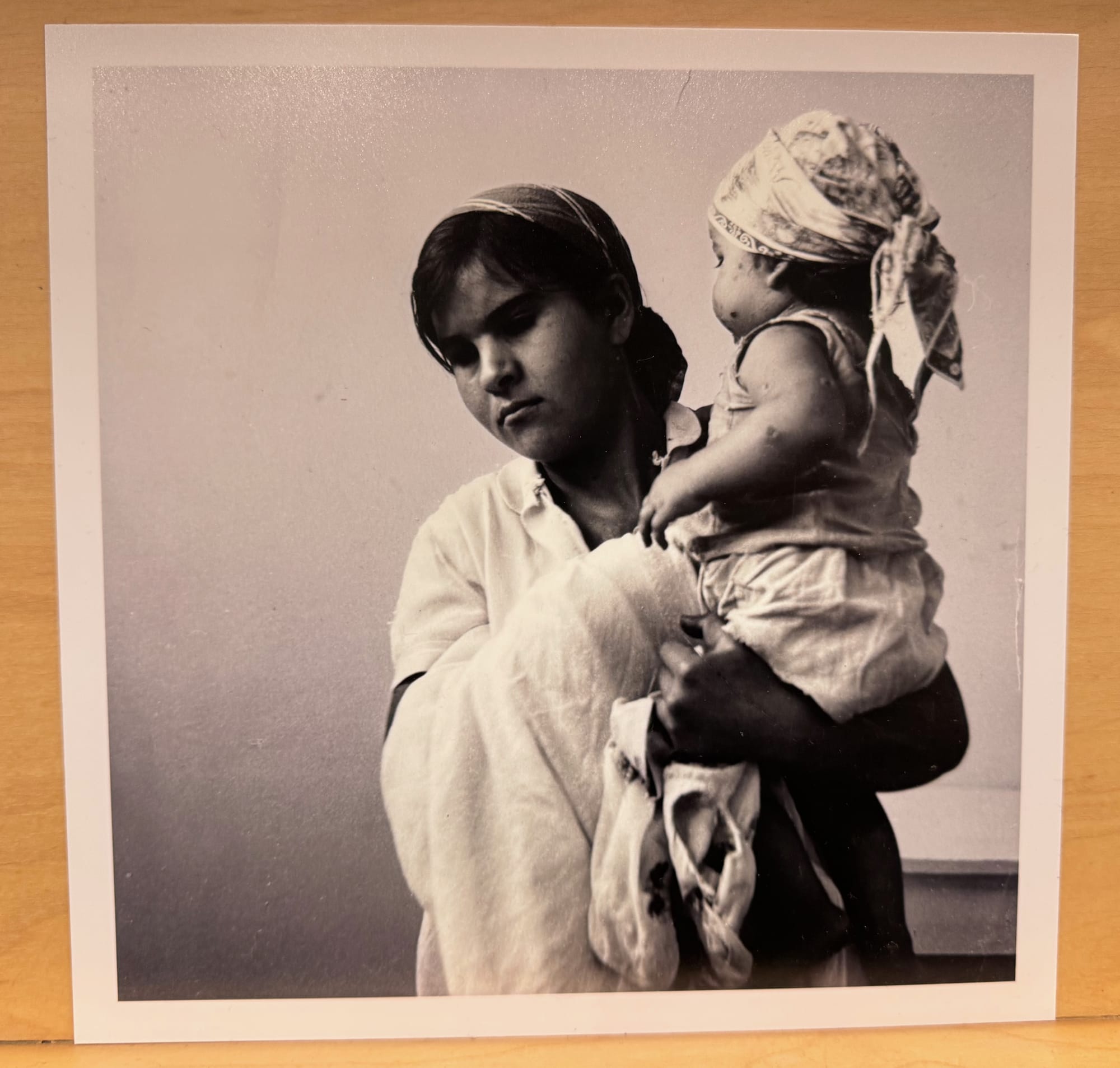
"ICP has exactly one photograph of the war in the collection," Young said as she opened the panel.
It is a Marc Riboud photograph from July 1962, she said. Robert Capa photographed Algiers briefly in 1943, and Young showed his picture of "a nervous Charles de Gaulle" at an Armistice Day celebration taken 83 years to the day before the panel.
Those pictures were not enough to anchor the evening, Young said, "or it is in the sense that we recognize ICP can do more."
All 14 photographers in The Concerned Photographer and The Concerned Photographer 2, books from 1968 and 1972 edited by Cornell Capa, were men, she said. Cornell, Robert's younger brother, founded ICP in 1974.
"That is what Cornell saw," Young said. "Of course, ICP has opened its horizons to many women photographers since 1974, but there remains a lacuna in the history of 20th century female pioneers of photojournalism. We move to correct this with the discussion tonight."
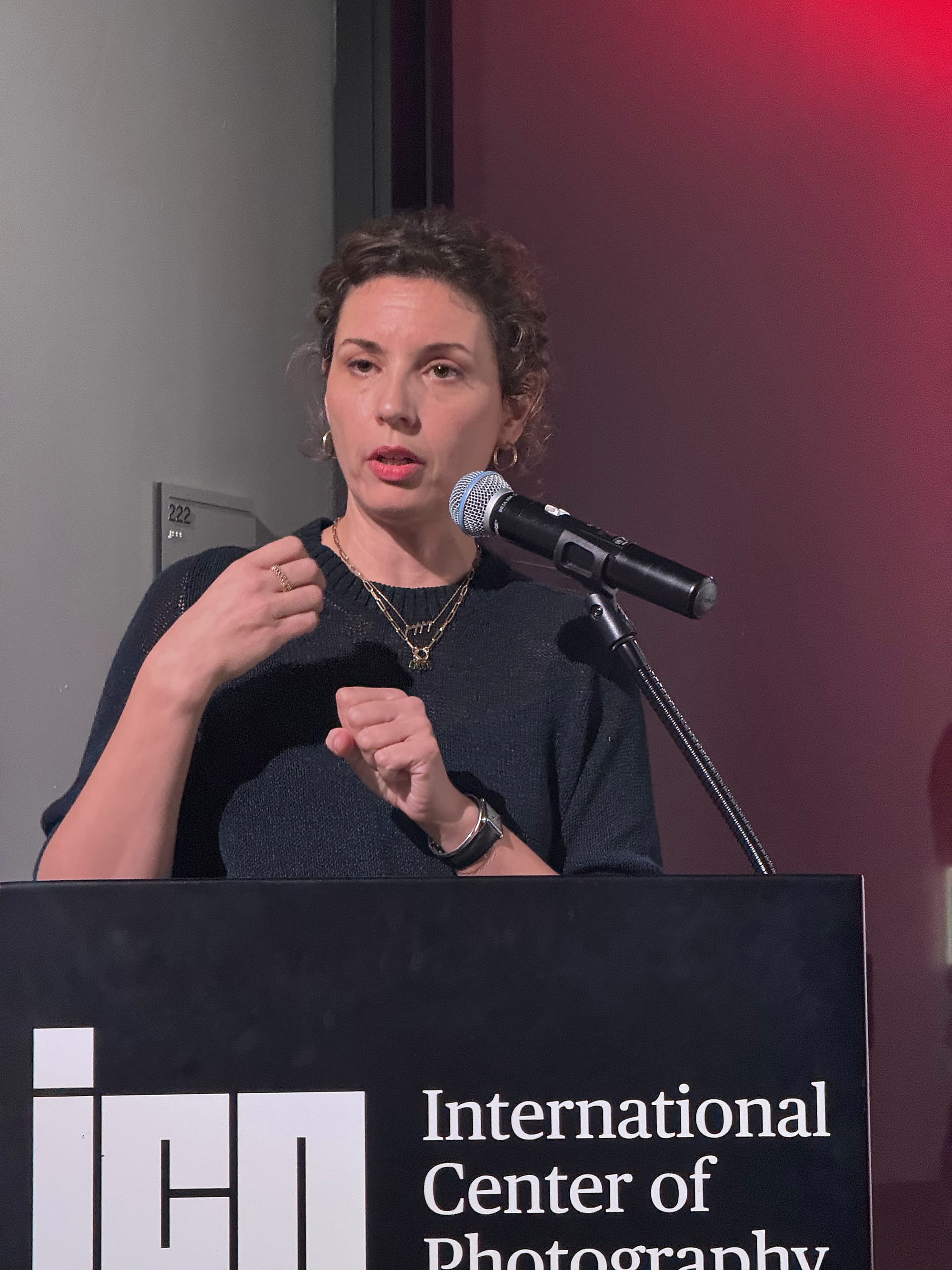
McCreight, ICP's partnerships and programs manager in open education, completed her dissertation at the CUNY Graduate Center in June.
Over seven and a half years of fighting that ended 132 years of French rule, "photography and gender became its own battleground," McCreight told the ICP audience.
French authorities circulated pictures of unveiled Algerian women in Western dress, some of them staged, to present colonial rule as freeing women from Islamic tradition, she said. The FLN answered with pictures of women in nurses' uniforms and military fatigues.
Describing a staged unveiling in an issue of the French photo magazine Paris Match from around May 1958, McCreight said, "They would coerce women who were potentially not even Muslim, not even veiled, into staging an unveiling ceremony."
French photographer Marc Garanger photographed about 2,000 women in 10 days for what McCreight described as a surveillance project. Many of the women were coerced into unveiling, exposing hair and facial tattoos that "would never see the light of day, especially in front of European men in public spaces," she said.
McCreight said she once believed a set of FLN photographs of women fighters had been seized by the French army. She later learned from Natalya Benkhaled-Vince, who sat on her dissertation committee, that the FLN had sold the photographs to the French press, "which is complicated," McCreight said.
"Images are powerful, and both sides do that, and they use them to their ideological advantage," she said.
The dissertation sorts wartime media images of Algerian women into three types: victim, terrorist and heroine. "I even kind of changed my thinking around that," McCreight said.
Kathryn Updegraff was a graduate student at the University of California, Berkeley, who wanted to photograph the war, McCreight said. FLN envoys in New York, including M'hamed Yazid and Abdelkader Chanderli, helped her reach the maquis, the guerrilla-held countryside, by crossing the border from Tunisia.
"I don't want to say safely, because she was getting bombed," McCreight said of the crossing. She said the planes and weapons France used "came from the United States."
McCreight wrote a 2025 essay with Mokhtefi for the French history site Histoire coloniale et postcoloniale. They wrote that Updegraff spent about a week in August 1957 with a battalion's medical unit of women soldiers. One of her pictures shows a nurse-soldier named Hadja teaching her to hold a grenade.
Updegraff later met Mokhtefi at the Algerian office in New York, and the two shared an apartment in Algiers in 1962. Her family kept her photographs after she died in 2018, and they turned up that year in a small envelope labeled "Algeria 1957," the essay says.
Mokhtefi was the one who showed McCreight the photographs, McCreight said. McCreight calls the collection an intimate archive.
"What I mean by intimate archive is that it's not institutionalized," she said. "There's no record of it anywhere."
Chapelle, a photojournalist from Wisconsin, photographed FLN fighters in 1957 and spent time with the rebels' Scorpion battalion in the Atlas Mountains, records at the Wisconsin Historical Society show. She was killed in Vietnam in 1965.
Mila Turajlić, a visiting professor at Swarthmore College, began her documentary with Mokhtefi in 2020, she said, and spent the last six years of Mokhtefi's life traveling with her. Its working title is Power, Elaine, a Sheffield DocFest listing shows.
"I filmed her going through her entire FBI file," Turajlić told Urgent Matter after the panel.
Mokhtefi requested the file while she was writing her memoir, Turajlić said. "Everything she did, her file began when she went to Cuba." She was sent to care for Fanon, her friend, in his last days at a U.S. hospital.
Turajlić said that while filming in Fanon's house, she and Mokhtefi realized it was December 6, the anniversary of his death. She filmed Mokhtefi upstairs in his bedroom.
McCreight said she has been looking for a photograph of Mokhtefi and Fanon dancing in Accra.
"Fanon really didn't want it to be published, and I can't seem to actually find this image, but when I do, then I'll talk about it properly," McCreight said.
When she started the film, Turajlić went looking for Mokhtefi in the archive. One picture she found shows Stokely Carmichael speaking to reporters in Algiers, with a woman translating.
"You need to know that it's Elaine to know who you're seeing in the image," Turajlić said. "And actually, it was that position she has in the archives that influenced the way I shot the film."
In Algiers, Mokhtefi did press work for liberation movements that set up in the city after independence, including Mozambique's FRELIMO, Turajlić said. She translated press conferences, wrote press releases and helped distribute their bulletins.
Mokhtefi had the most to say about images when it came to photos of the Black Panther Party, which opened an international section in Algiers in 1969, Turajlić said.
Turajlić came to Mokhtefi through Stevan Labudović, a Yugoslav cameraman who filmed with the FLN during the war and whose archive she spent three years working through with him before his death.
Women appear often in that footage because the films had two jobs, she said: recruiting local support, and "to present a moral argument to the international community for why this movement needs to be supported."
Mokhtefi was involved with the Palestine Liberation Organization when it was in exile in Algiers, Turajlić said.
"She is one of the people who was present when the Black Panther Party met with Yasser Arafat," she said.
Mokhtefi criticized Israel's war in Gaza during a December 2024 screening of a Turajlić documentary that McCreight organized at the CUNY Graduate Center, UPI reported at the time.
"I once asked her whether it was harder to be Mokhtefi in Paris or Klein in New York," Turajlić said. "And she told me that both were hard."
"The hardest thing for her was that there were lifelong friendships she could no longer maintain," Turajlić said of filming Mokhtefi after the war in Gaza began. "There were friends she could no longer have over for dinner or who would no longer have her over for dinner."
Turajlić said European audiences watched the siege of Sarajevo on television every night, and "it took three years for Western Europe to react."
"It's maybe sacrilege to be saying this in the ICP coming from a filmmaker,” she said. “But I'm not actually sure that it's the image that's going to solve the problem for us anymore.”
Urgent Matter is reader-supported. Please consider subscribing to support independent arts journalism.