Chazen adds lynching prints in traveling 'Pressing Issues' show of WPA-era art
The traveling show, organized by the Krannert Art Museum, focuses on prints that came from the Federal Art Project of the 1930s.

The traveling show, organized by the Krannert Art Museum, focuses on prints that came from the Federal Art Project of the 1930s.
The Chazen Museum of Art will show four prints condemning lynching in a cordoned-off corner of its galleries this fall, behind a panel warning visitors that the images may be disturbing, the curator installing the exhibition said.
The works will be included in “Pressing Issues: Printmaking as Social Justice in 1930s United States,” a traveling show on view at the Chazen Museum of Art at the University of Wisconsin–Madison from September 8 to December 13.
James Wehn, the Chazen’s curator of works on paper, said the museum added prints to the section on racial terror rather than paring it back, and will set those works apart so visitors can decide whether to see them.
“These images are violent in nature and disturbing,” Wehn said. “Over the past four years, the current situation and perception of racial issues in the United States have been volatile. Different institutions have made different decisions about whether to display them or how to display them.”
Wehn said the racial terror works will be in a small corner visitors cannot see into unless they enter. The section’s introductory panel will be placed outside. The panel will let people read about the subject first, Wehn said, “and let them choose whether to go in and look at it.”
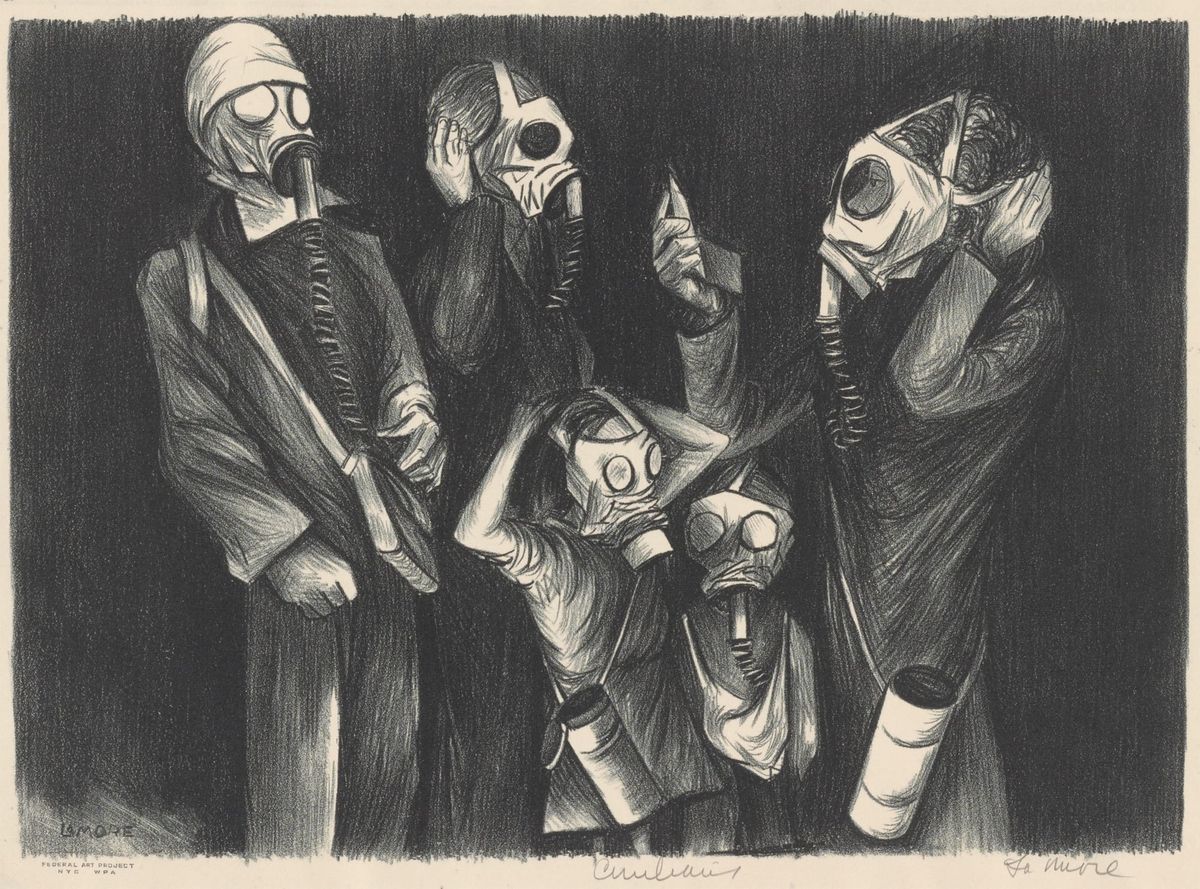
The exhibition was organized by the Krannert Art Museum at the University of Illinois Urbana-Champaign and curated by Kathryn Koca Polite. It presents about 40 prints from Krannert’s collection and six works from the Chazen, grouped into four themes: workers’ rights, women at work, denouncing fascism and condemning racial terror.
The prints came from the Federal Art Project, the New Deal program that put visual artists to work through relief efforts during the Great Depression. It was a subprogram of the Works Progress Administration.
Wehn said Koca Polite recommended using the Chazen’s own collection to strengthen the racial terror section. One addition is a lithograph by John Steuart Curry that appeared on the cover of a 1930s exhibition advocating against the lynching of Black Americans and for federal anti-lynching legislation.
Two prints by Hale Woodruff, a Black artist who also opposed lynching, are coming from Krannert for the same section, Wehn said.
The Chazen also holds work by Carl G. Hill, a Black artist who worked mainly in New York and died in 1942. Wehn said one Hill print concerns a U.S. anti-lynching bill that went before the Senate around 1937 and portrays the bill’s failure as a product of racism in the chamber.
Wehn said he added more of Hill’s work to fit the show’s themes and include more Black artists. The Chazen holds a large group of Hill’s work, and he called the artist underrepresented and understudied.
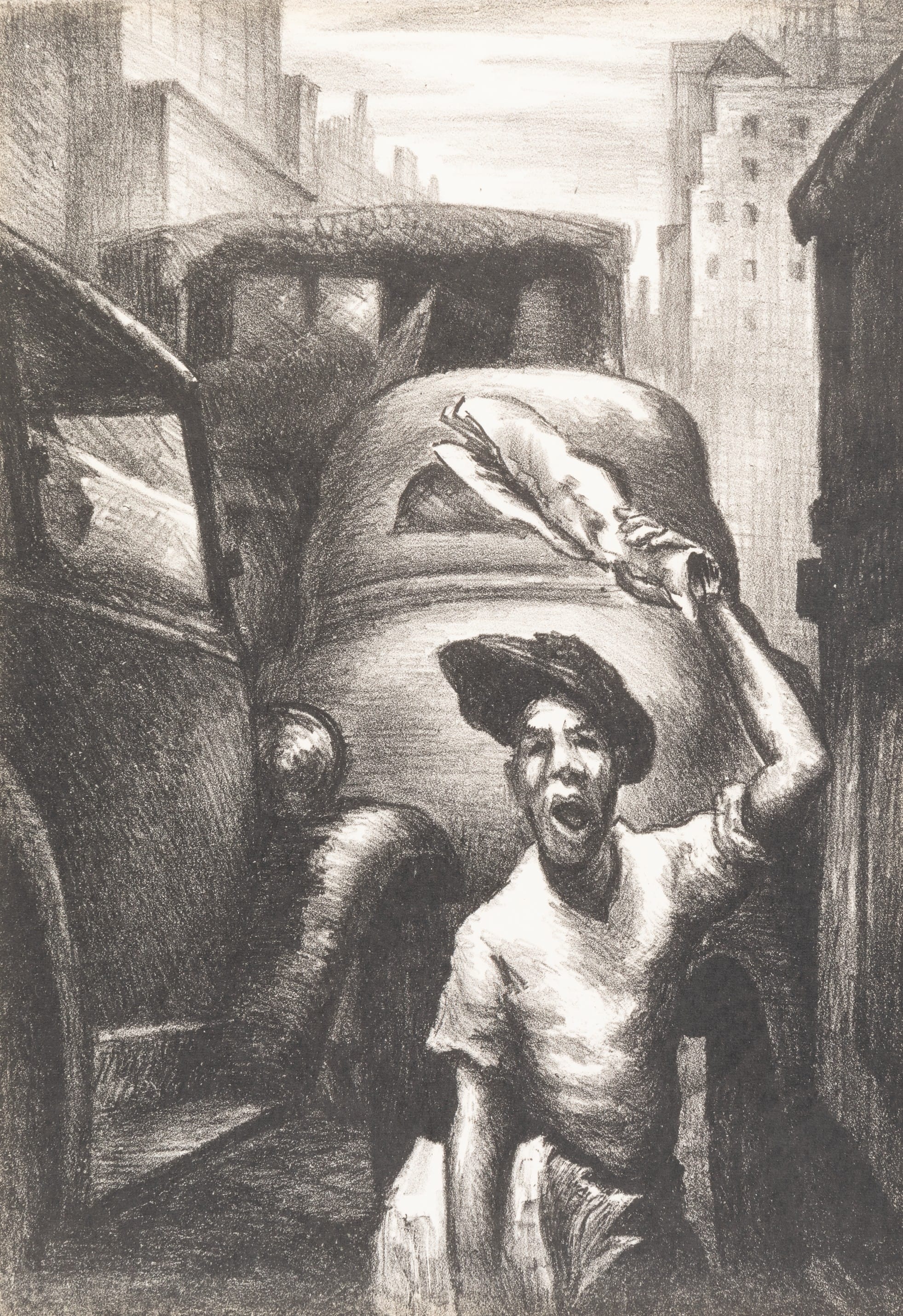
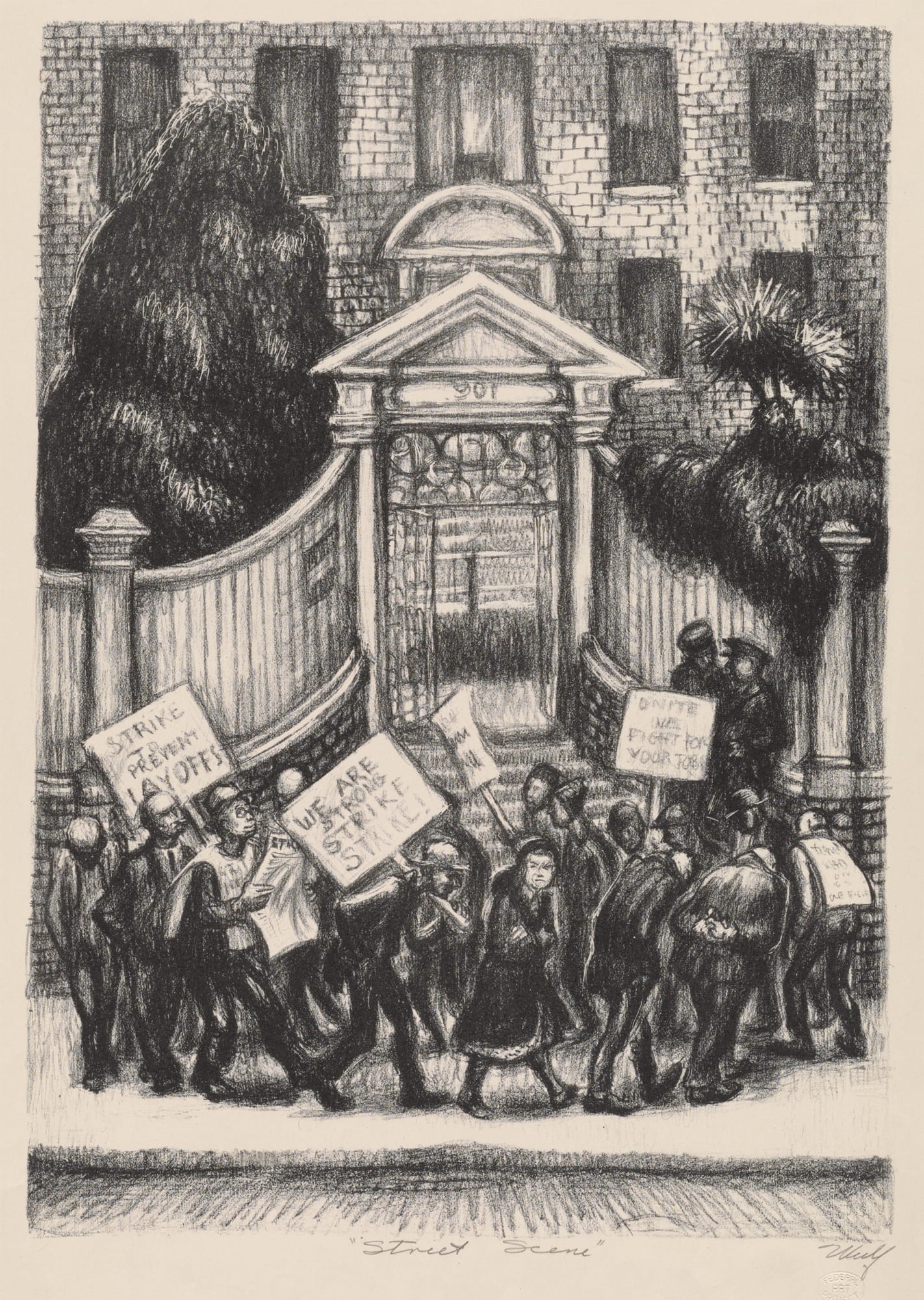
Those additions include Low Cotton, showing Black workers picking cotton under an armed supervisor on a Southern plantation; Newsboy, depicting a young Black boy selling newspapers in New York City; and CIO, which advocates for workers’ rights, Wehn said.
The CIO began in 1935 as the Committee for Industrial Organization within the American Federation of Labor. In 1938, after the AFL expelled the CIO unions, it became the independent Congress of Industrial Organizations. Wehn said the group organized unskilled laborers, women and ethnic minorities, and used tactics such as sit-down strikes. The two federations merged in 1955, becoming the AFL-CIO.
Wehn did not organize the show. He said the Chazen has relied on traveling exhibitions while its curatorial staff focuses on reinstalling the permanent collection galleries, set to debut this fall.
He said “Pressing Issues” opened at Krannert in 2020 and traveled to the Weisman Art Museum at the University of Minnesota in 2021 and the Rollins Museum of Art in Florida in 2023.
The show is one of several recent exhibitions focusing on WPA-era artwork. Asked why such work has drawn renewed attention from museums, Wehn said he could only speculate, pointing to “a sense of an echo in history.”
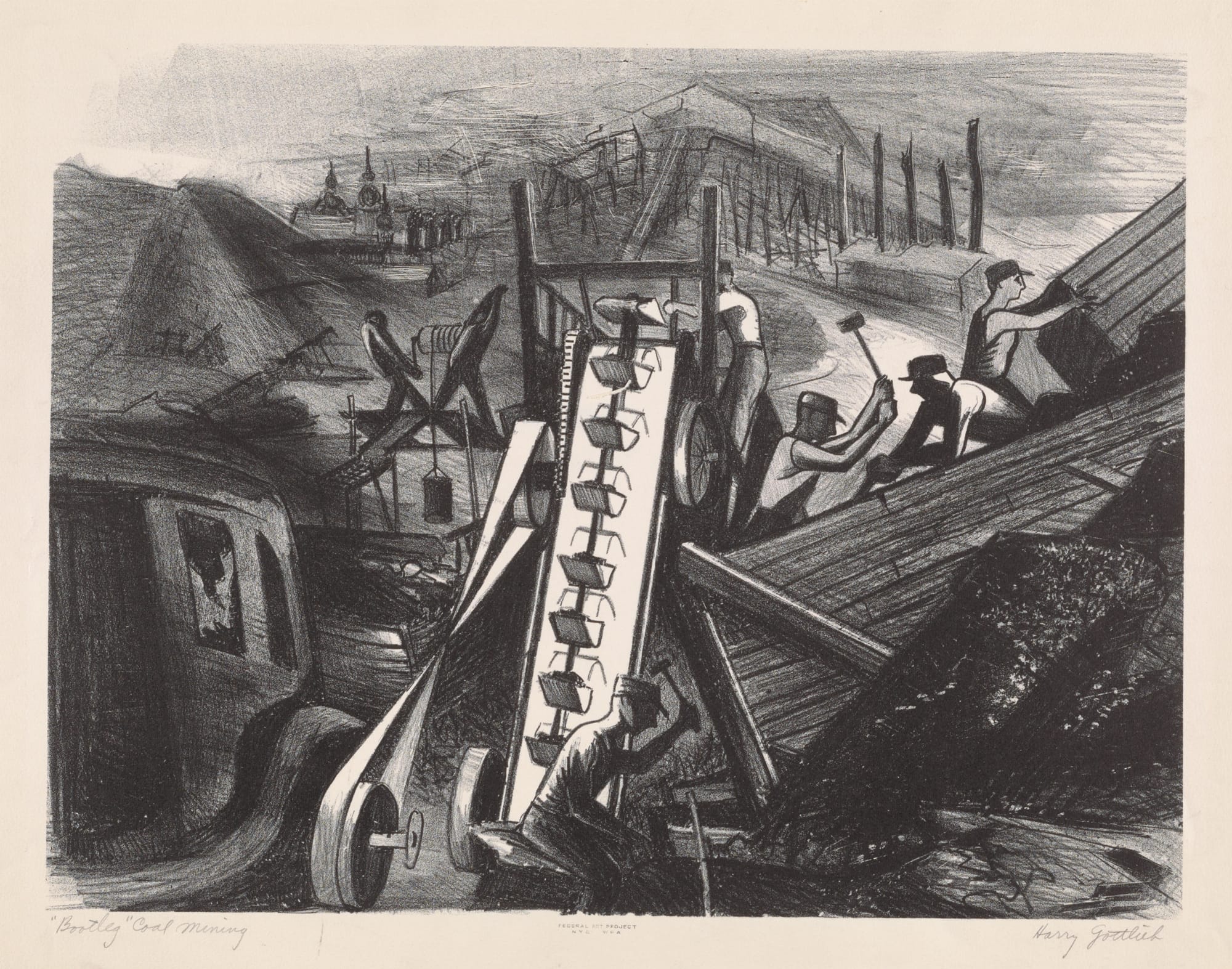
He said the decade was defined by economic instability, anxiety over jobs and conditions in coal mines and garment factories, and child labor — including children who walked railroad tracks picking up coal that had fallen from trains to help their families get by, a scene he said appears in one of the prints.
“That moment presents us with a lot of themes that echo in our own present moment,” Wehn said. “The periods are very different, but there are these themes that are just kind of basic concerns of humankind over time.”
He cited economic insecurity and job displacement from new technology, also pointing to the rise of fascism in Europe, Italy’s invasion of Ethiopia and the Spanish Civil War.
“I see this as a chapter in the United States, and we can look at it and learn from it as we consider our own situation in the present day,” Wehn said.
Wehn said he believes all the prints are lithographs, most in black and white, ranging in size from a paperback to a mid-sized television, with only one work in color.
He described the printmakers as “exceptional artists” who addressed social issues “in a really nuanced way, and doing it through incredible artistry.”
“Visitors who come will be able to engage with these issues, but also see how artists are translating those concerns into phenomenal works of art,” Wehn said.
He said little documentation survives on how many impressions of the Federal Art Project prints were made. Groups were allocated to institutions when the program ended in 1943, and many works at Krannert remain technically owned by the U.S. government, with the museum as steward, Wehn said.
Artists were allowed to keep some impressions, which entered the secondary market over time, he said.
“They’re not rare, but they’re not common,” Wehn said. “People who come to the museum to see this exhibition will encounter works they do not often see.”
Wehn said the Chazen’s collection, while “extraordinary,” has limits. Traveling shows allow it to present works and outside curators’ perspectives to the university and Madison public that it could not otherwise show.
Asked whether the federal government could produce work of the WPA’s caliber again, Wehn pointed to the Great Depression conditions that led Franklin D. Roosevelt to the New Deal.
He said the era reflected “a recognition that artists were workers in the United States, and that providing them jobs and economic relief would help bolster the U.S. economy.”
Describing the period, Wehn said, “the federal government is supporting the creation of art, as an important part of American culture.”
“To the extent that the United States might do that again, I can’t really say,” Wehn said.
Urgent Matter is reader-supported. Please consider subscribing to support independent arts journalism.