America's Tapestry stitches the Revolution's unsung figures
The show, titled "America's Tapestry," runs through September 6 in Williamsburg, Virginia, before touring the other participating states.

The show, titled "America's Tapestry," runs through September 6 in Williamsburg, Virginia, before touring the other participating states.
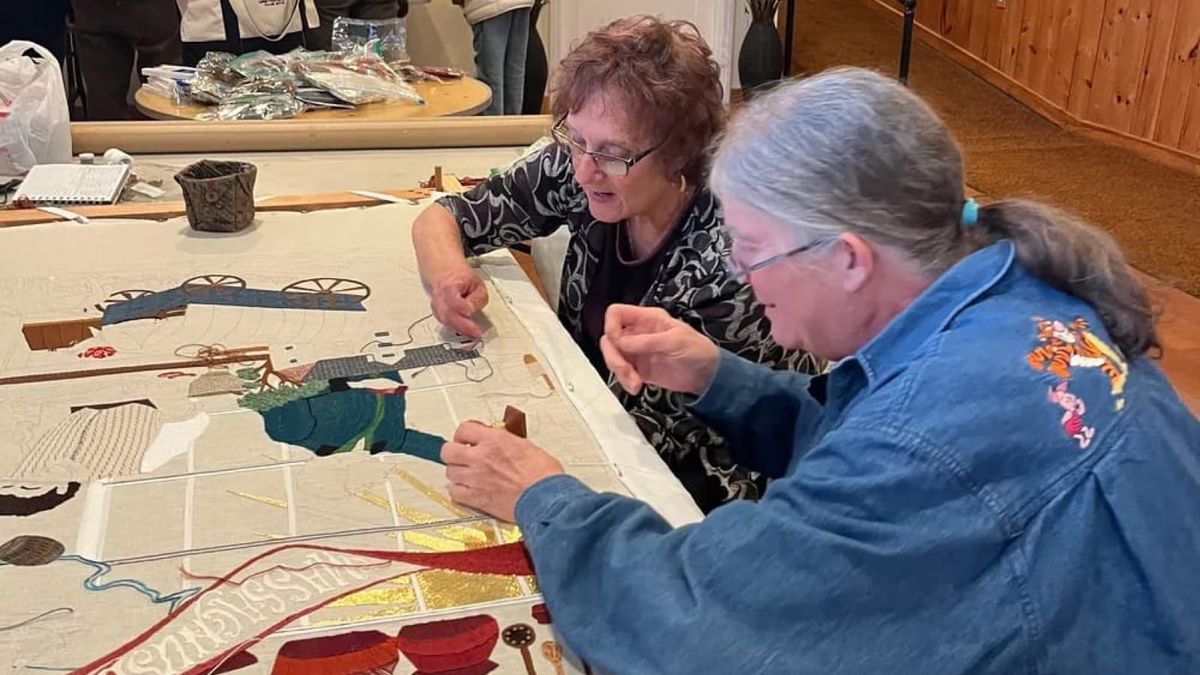
Thirteen hand-embroidered panels tracing lesser-known figures of the American Revolution go on public view Friday at the Muscarelle Museum of Art at William & Mary, the first stop for a project that enlisted roughly 2,000 volunteer stitchers across the original colonies.
The show, titled "America's Tapestry," opens Juneteenth and runs through September 6 in Williamsburg, Virginia, before touring the other participating states.
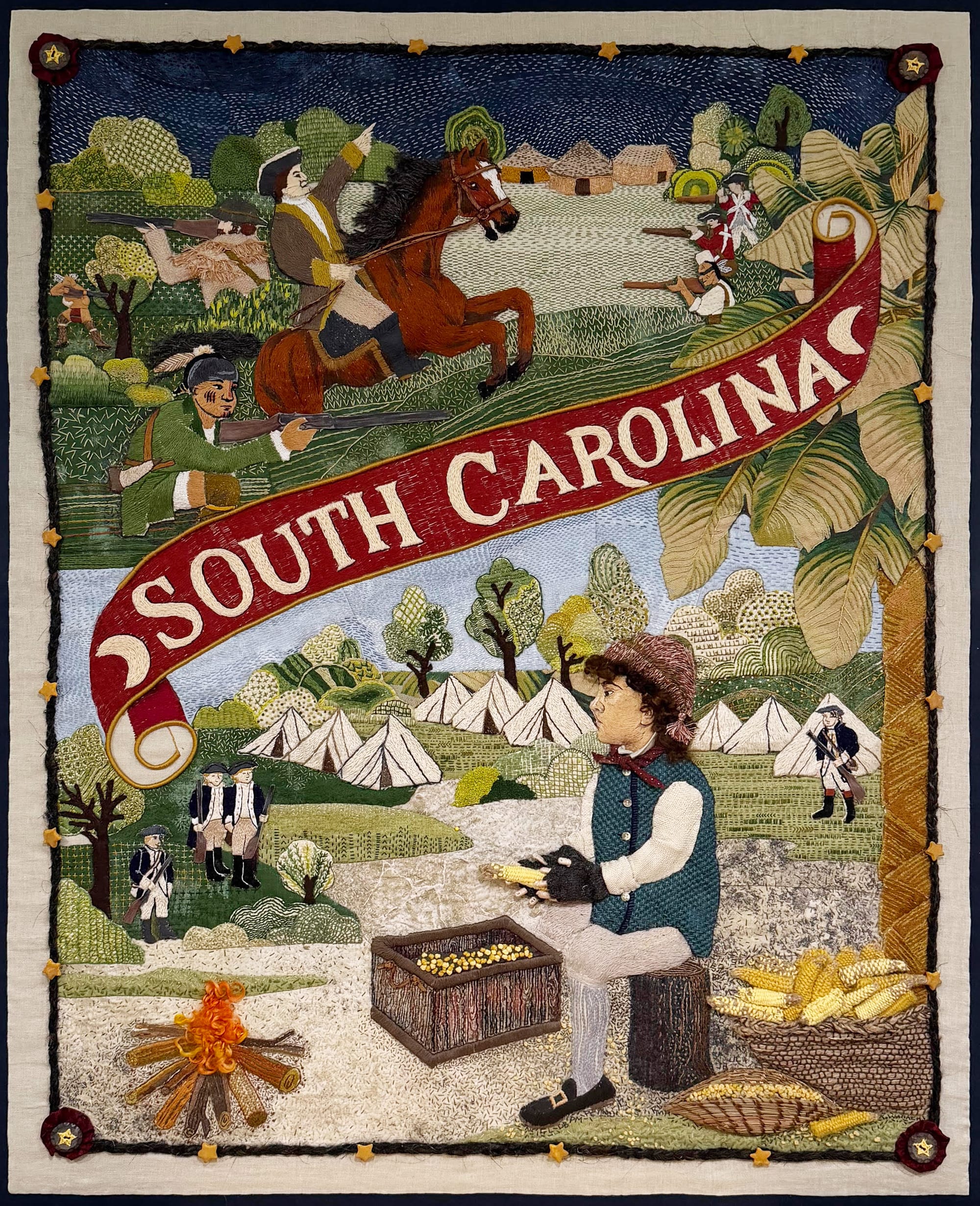
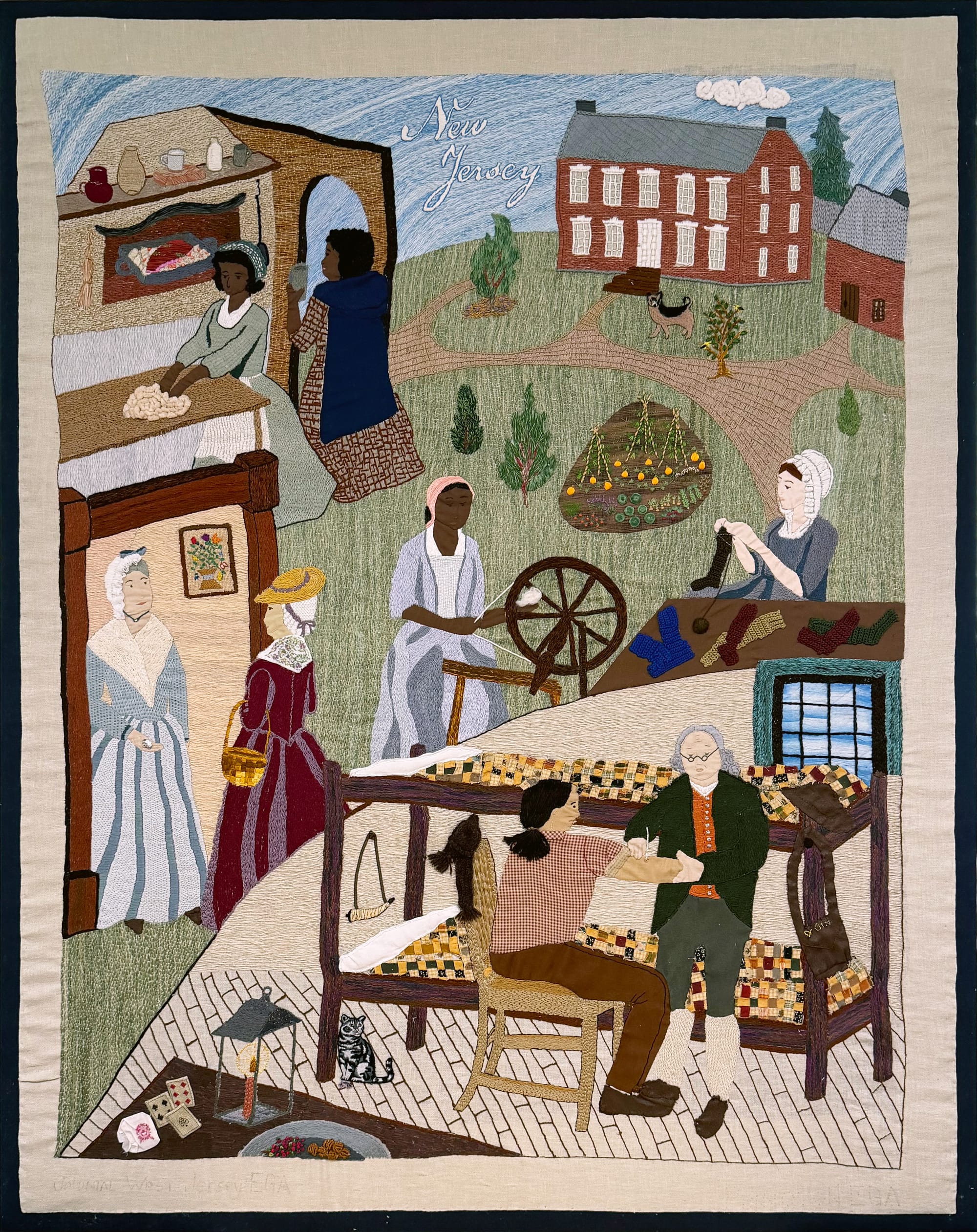
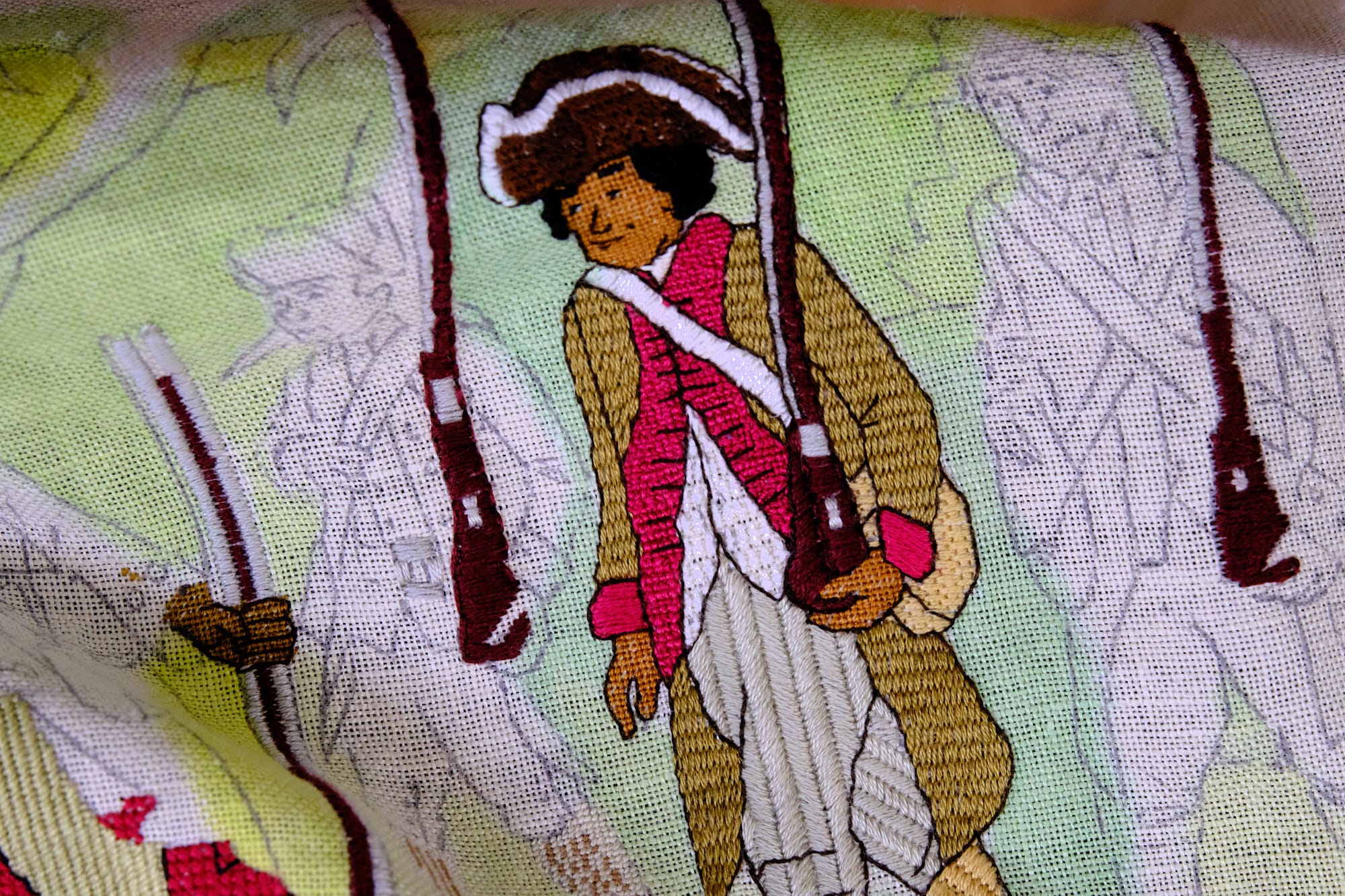
Each panel, one per colony and roughly 3 feet by 4 feet, depicts an individual, event, or group from a state's Revolutionary-era history, much of it absent from standard textbooks. The panels cover the period from about 1768 through the end of the Revolution.
The exhibition is the work of Stefan Romero, who conceived it in 2023 after visiting The Great Tapestry of Scotland, a community project of 160 hand-stitched panels depicting 12,000 years of Scottish history.
"’America's Tapestry’ is what I like to call a grassroots project," Romero said. "We received no institutional backing at first."
Romero is a costume designer by training, not an embroiderer — a distinction he raised himself. He argued that textiles carry history differently from paper.
"Things you see on a wall that have been hand-stitched with time, care and consideration can mean something very different than a historical document drafted and put on a museum wall," Romero said.
The Scottish panels invert that tradition. Embroidery has long recorded "well-known battles," Romero said, pointing to the Bayeux Tapestry's depiction of the Norman Conquest. Instead, the Scottish panels show "men, women, and children who don't often get that kind of representation through this medium," he said.
"Many people remember learning about the larger narratives of our history," David Brashear, the Muscarelle's director, said in announcing the exhibition. "But what makes 'America's Tapestry' exceptional is the way it reveals individual stories in a way that makes the struggle for independence feel more immediate and universal."
Romero said he has "always been deeply passionate about the American story," which he called "truly one of the most inspiring stories in the history of the world." He steered collaborators toward "the unsung heroes of the Revolution, people who we may not have heard of when we grew up and studied the American Revolution."
"You did not necessarily have to be a well-known person in your community to make a difference," Romero said.
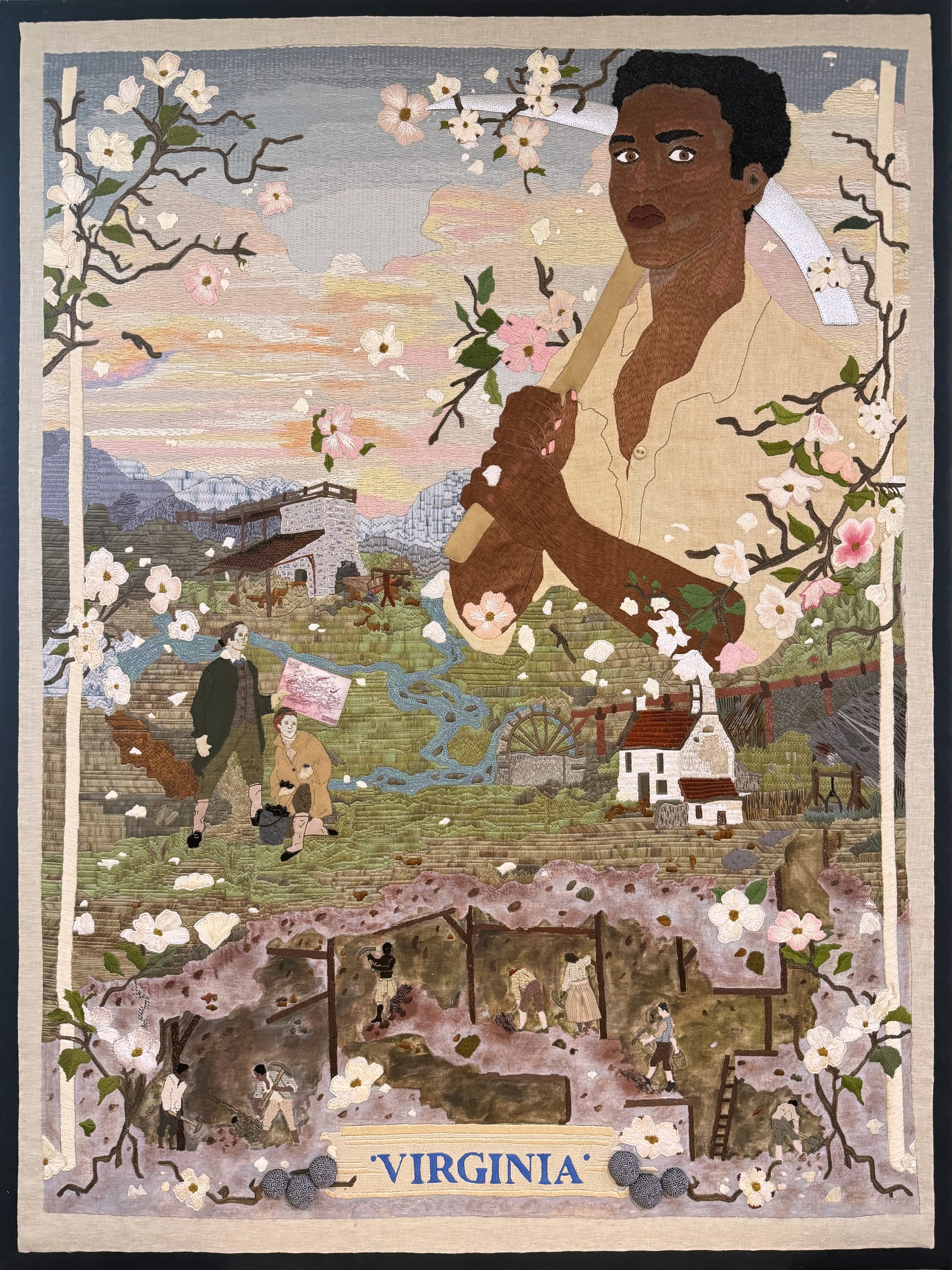
The Virginia panel tells the story of Aberdeen, an enslaved man forced to work for seven years in the Wythe County lead mines that supplied musket balls to the Continental Army. Aberdeen defied his Loyalist enslaver's order to join the British and instead enlisted with the Continental Army, which later granted him his freedom.
Georgia’s honors the Chasseurs Volontaires de Saint-Domingue, a militia of formerly enslaved and free soldiers from present-day Haiti, while New York’s depicts Black Loyalists who evacuated to Nova Scotia after the war.
Several states highlighted the role of women. North Carolina’s panel marks the Edenton Tea Party, an early documented act of political resistance by women. And Connecticut’s features Hannah Bunce Watson, the first female editor of the Hartford Courant, while Pennsylvania’s honors Rebecca Young, one of the first documented makers of an American flag.
Romero said at least 500 Haitian soldiers fought in the Battle of Savannah, a story surfaced by the Coastal Heritage Society of Savannah, one of the historical organizations that helped shape the panels.
Some panels braid multiple stories. The Maryland panel collages George Washington resigning his commission as commander in chief with the Battle of Brooklyn and the stand of the "Maryland 400," leaving it to the artist to make two separate events cohere.
Romero said he sent prospective partners a pitch deck of concepts and asked each organization if it had "any input into the image, the people, or the events that could be depicted" on its state's panel. Many chose subjects from their own collections, such as an upcoming exhibition, new research or a story they wanted to publicize.
Eleven young artists—current students or recent fine-arts graduates chosen through an open call on art-school job boards—created the digital designs that volunteers then embroidered. Romero said he imposed few constraints beyond panel size so each artist's identity would show.
"It is their 2026 interpretation of the past," Romero said, describing the designs as a way to fold a younger generation into a project about the nation's founding.
Thirteen panels, rather than Scotland's 160, was partly a matter of scale. Romero said the larger number "would not necessarily be applicable within the timescale," given roughly three years from conception to completion.
Chapters of the Embroiderers' Guild of America, which Romero called one of the largest embroidery organizations in the United States, spearheaded the work state by state. Stitching ran from June 2025 to April 2026 and was hosted publicly at museums and historical societies from the Millyard Museum in Manchester, New Hampshire, to the Atlanta History Center.
Patrons could watch the work progress and take up a needle themselves. Volunteers ranged from age 3 to 98 and numbered close to 2,000, Romero said.
"Back in the 18th century, embroidery was a very public act," Romero said. "Women would often gather together to stitch and to share their life experiences, and we have somewhat lost that today. It's become somewhat of an isolationary act."
In Williamsburg, the Virginia director, Catherine Theron, has taught total beginners ages 18 to 22. Some had never held a needle and knew the craft only "in a museum or on a YouTube video," Romero said.
"I can actually make something beautiful with my hands that is larger than myself," Romero said, describing what those students come to feel. "It's not just me working on this in isolation, but it's me in concert with so many different people."
"That has been a really exciting byproduct of this whole process, is to get the younger generation interested in a very ancient art form," he said.
The project arrives during a contested national commemoration. President Donald Trump established a White House task force to shape the 250th-anniversary celebration by executive order in January 2025.
The next month, the National Endowment for the Arts canceled Challenge America, its grant program for underserved communities, and shifted its grant priorities toward projects honoring the anniversary.
Asked whether “America's Tapestry” — built around underrepresented figures — was shaped by or responds to the administration's approach, Romero said the project has stayed independent.
"So it's always been an independent project of any institutional change," Romero said, "all guided by our shared passion for American history, the belief in our country's future, and the pride that we have, and how far we have come in 250 years."
"Something that we really need to remember in times of great change is how we can all come together with a shared mission," he said.
 Adam Schrader
Romero said the exhibition's NEA support was unaffected by the funding changes.
"We were not affected," he said. "We applied twice during the last two years, but we were not affected in any way. We received the funding that was offered to us."
The Coby Foundation, a New York needle-arts funder, also supported the project, as did William & Mary's Office of Strategic Cultural Partnerships.
Seton Hill University, a Catholic institution in Pennsylvania, owns the tapestry but Romero said a permanent home has not been determined.
After Williamsburg, he said, the panels will tour all 13 states over roughly three years, ending around 2030. The museum's announcement describes a two-year tour beginning with Pennsylvania, New Jersey and New Hampshire.
Stories like this take time, documents and a commitment to public transparency. Please support independent arts journalism by subscribing to Urgent Matter and supporting our work directly.