My arrest at Standing Rock, ten years later
One of more than 140 people arrested when police cleared the camp on October 27, 2016 — the reporter's felony charge was later dropped.

One of more than 140 people arrested when police cleared the camp on October 27, 2016 — the reporter's felony charge was later dropped.
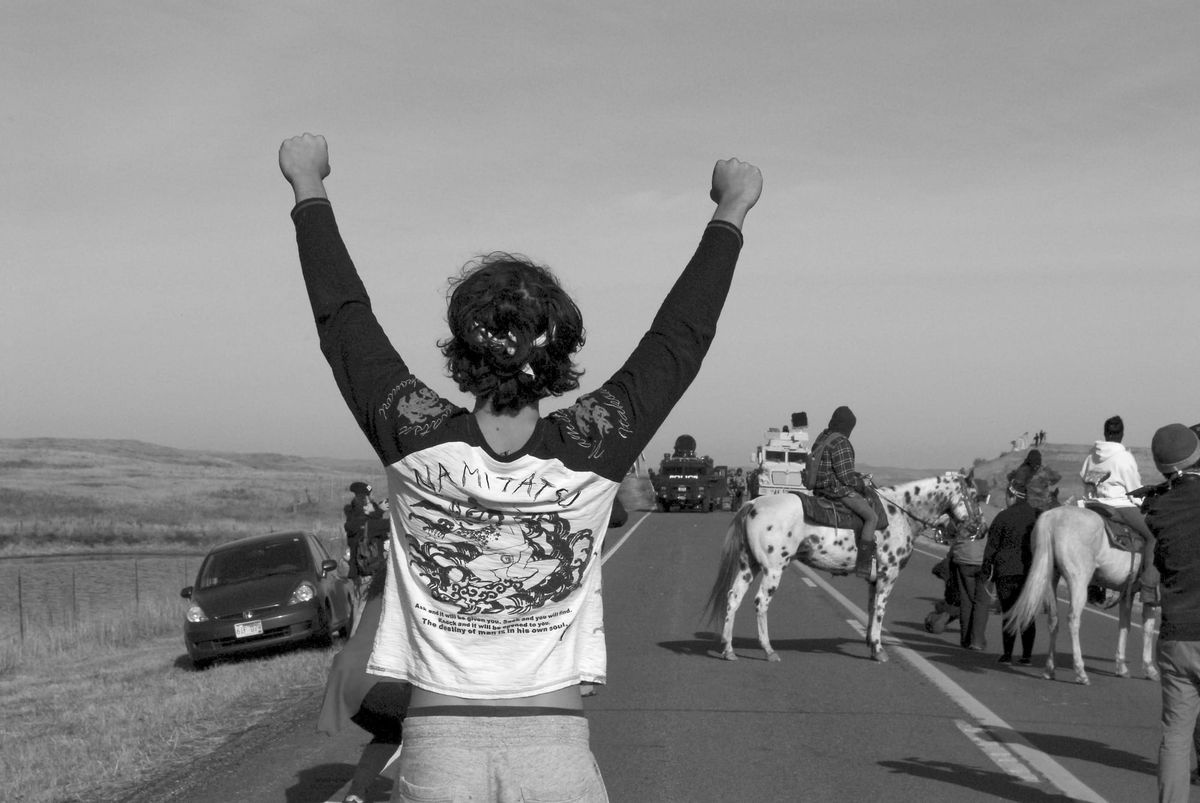
Editor's note: Adam Schrader covered the Standing Rock protests against the Dakota Access Pipeline in October 2016 on spec for the New York Daily News and for Wanderer News, a general-interest news site he ran that has since been placed on a permanent hiatus.
On October 27, 2016, he was arrested along with more than 140 others when police cleared the 1851 Treaty Camp. This is his account of that day and the two nights that followed, first published on Wanderer News in 2016 and republished here to mark ten years since the protests.
The text below appears as originally written, corrected only for grammar, tense and typographical errors; its terminology and framing reflect 2016. A note on what has happened since follows the piece.
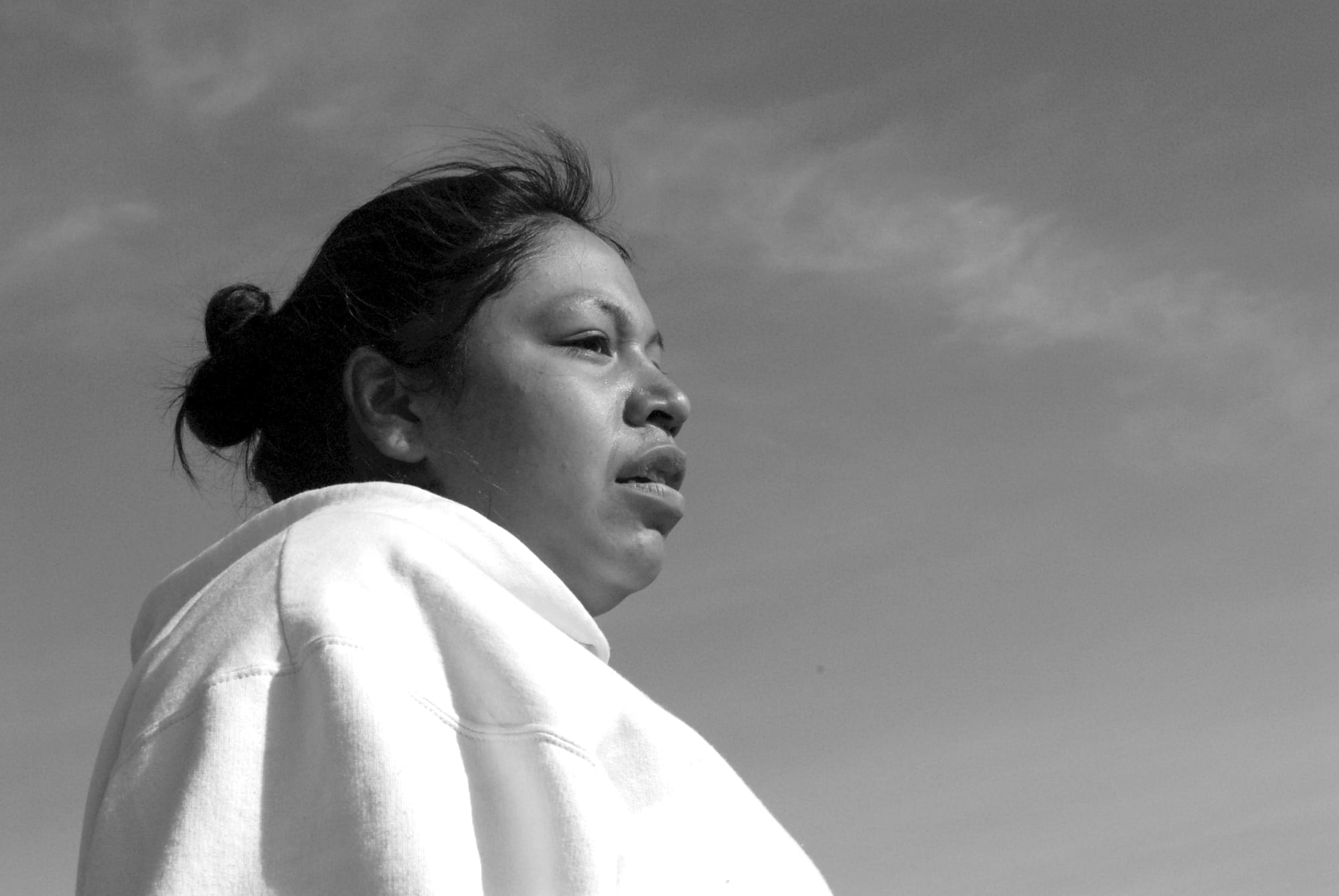
Police in riot gear knocked down and arrested Granny RedFeather less than 10 feet from me. They had already pointed guns, fingers on their triggers, and used ear-piercing sound cannons against protesters, who were prepared with earplugs.
It was October 27, my second day covering the Standing Rock protests, and I had been warned that police were arresting journalists and that I should be careful. Police were not issuing press cards. I thought having a recorder in my hand and identifying myself as press would be enough. It wasn't. This is the story of my arrest.
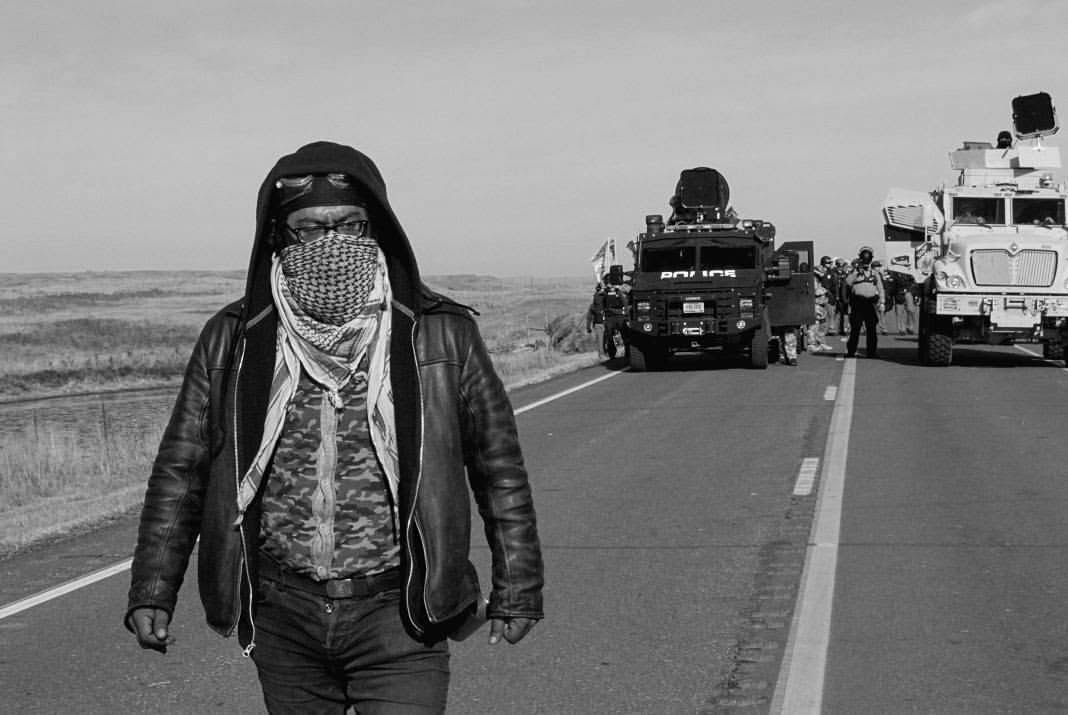
Police later charged me with engaging in a riot, maintaining a public nuisance and conspiracy to endanger by fire or explosives, a felony charge.
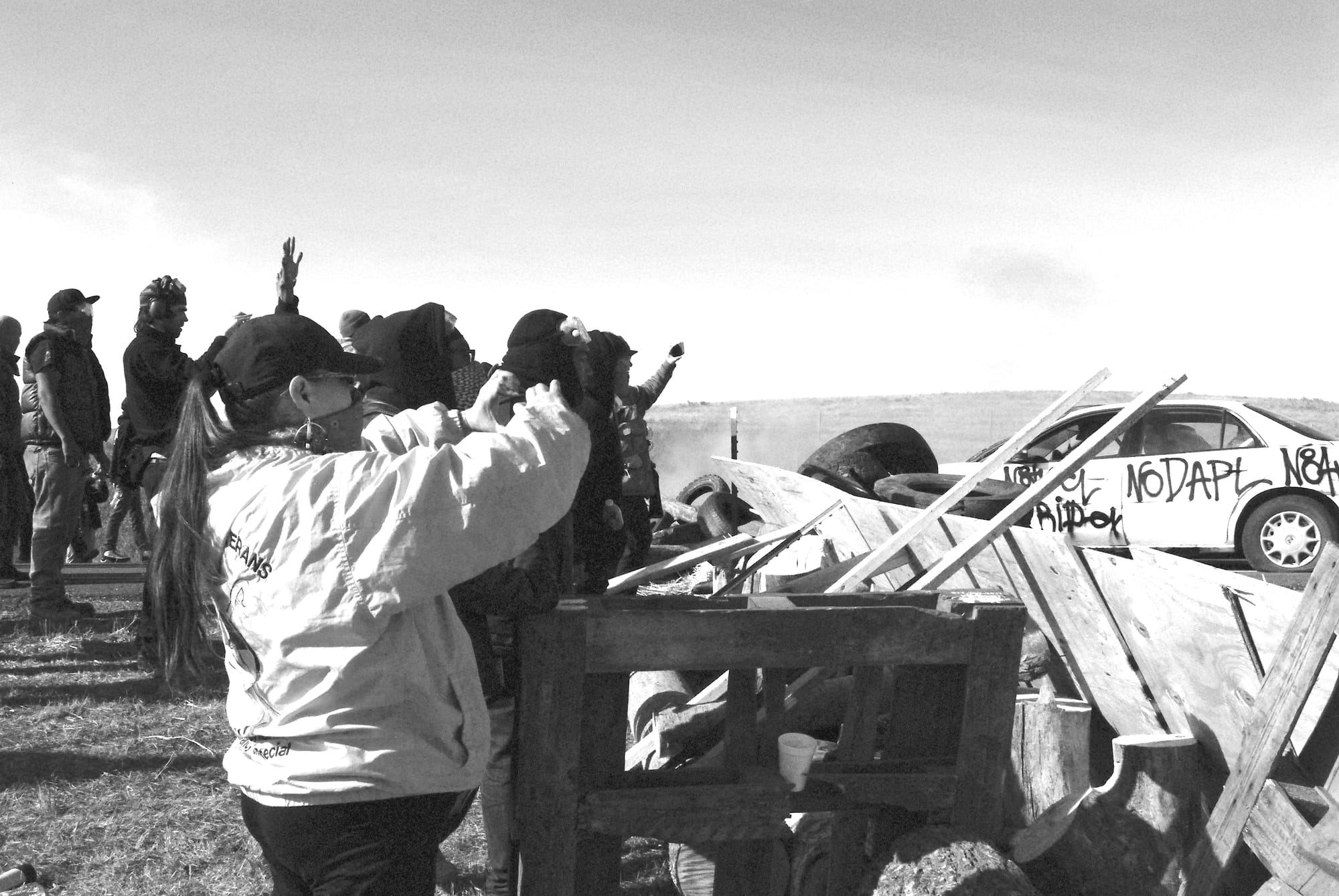
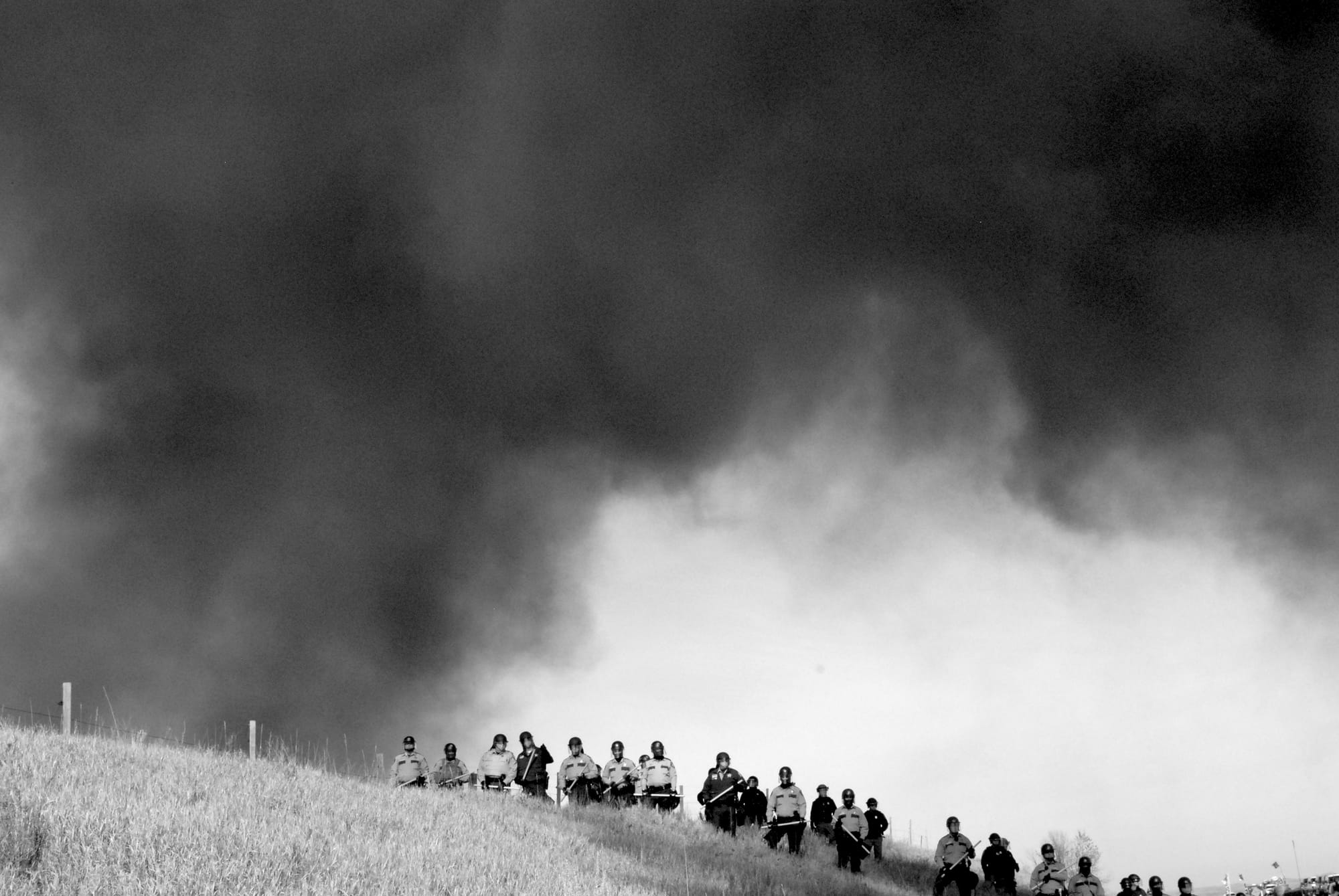
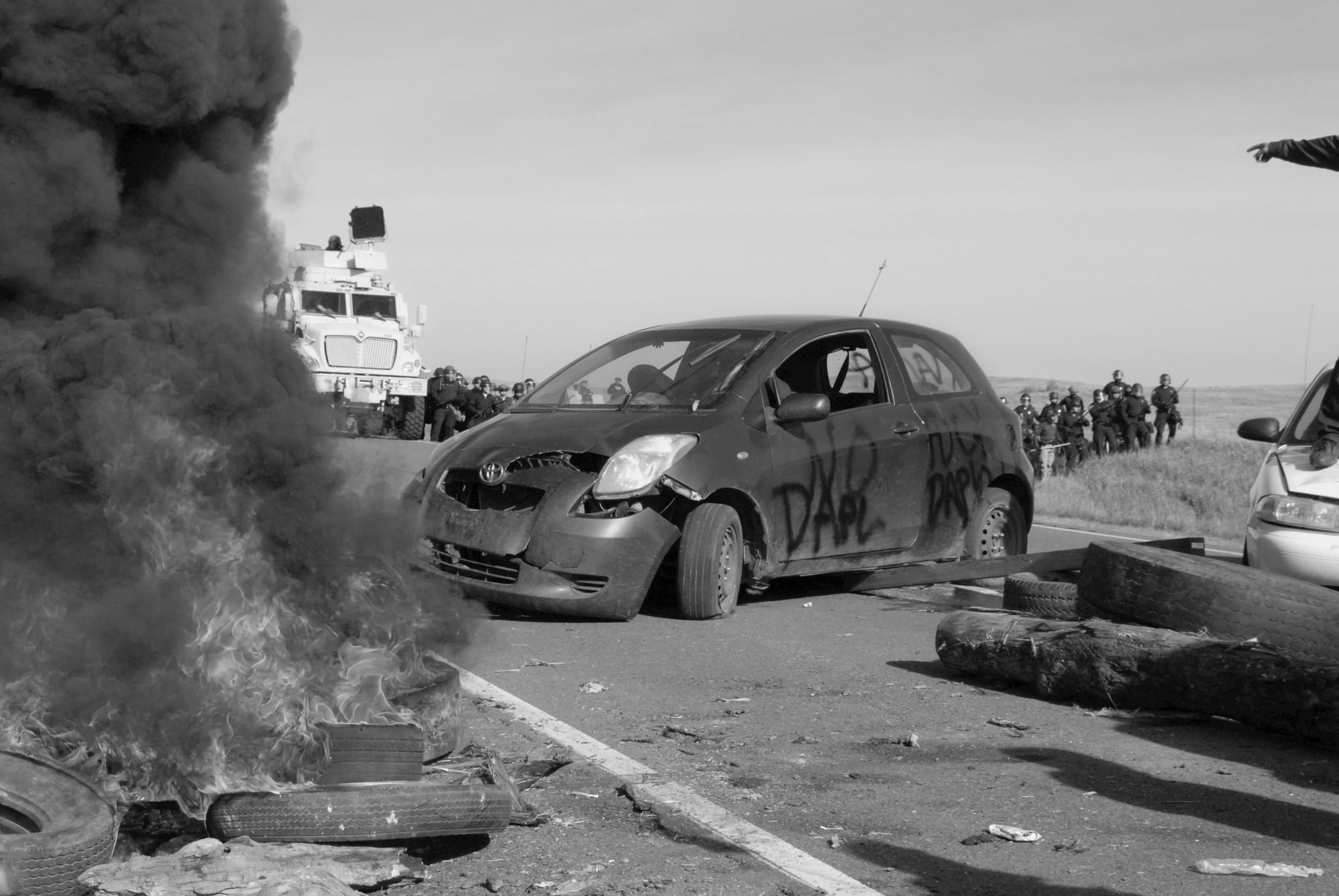
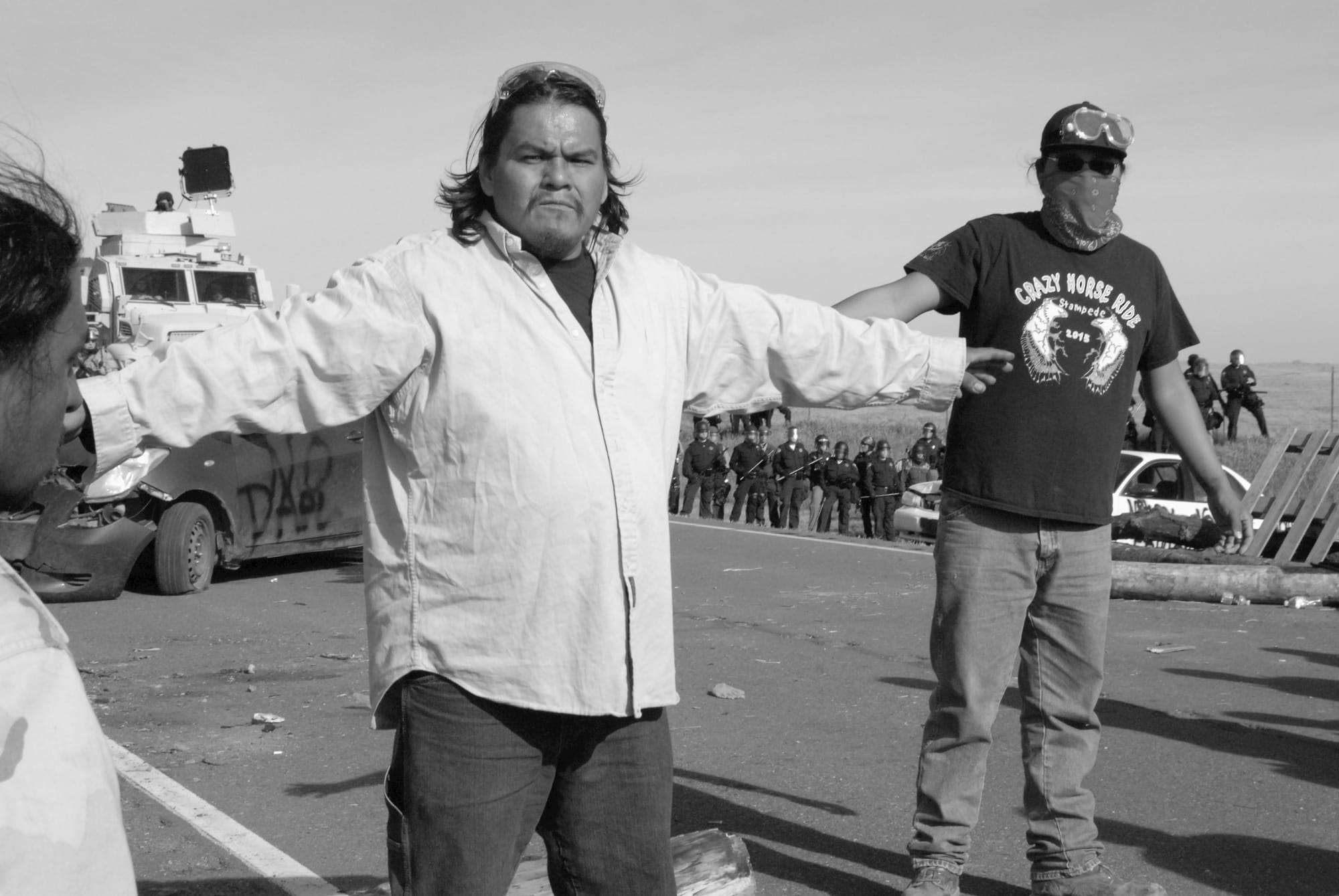
Many male protesters were shirtless in the warm rural North Dakota hills. The normally beautiful fields looked like a war zone. Snipers hid in the hills and Humvees moved toward the front-line camp, where Native Indians hoped to defend what they claimed as treaty land from development of the Dakota Access Pipeline.
Some officers laughed as they moved forward, knowing they were about to make more than 140 arrests. They wanted to clear the camp, a place many natives now called home. DAPL security flanked the West Hill as workers drilled, taunting the tired and passionate self-labeled "protectors."
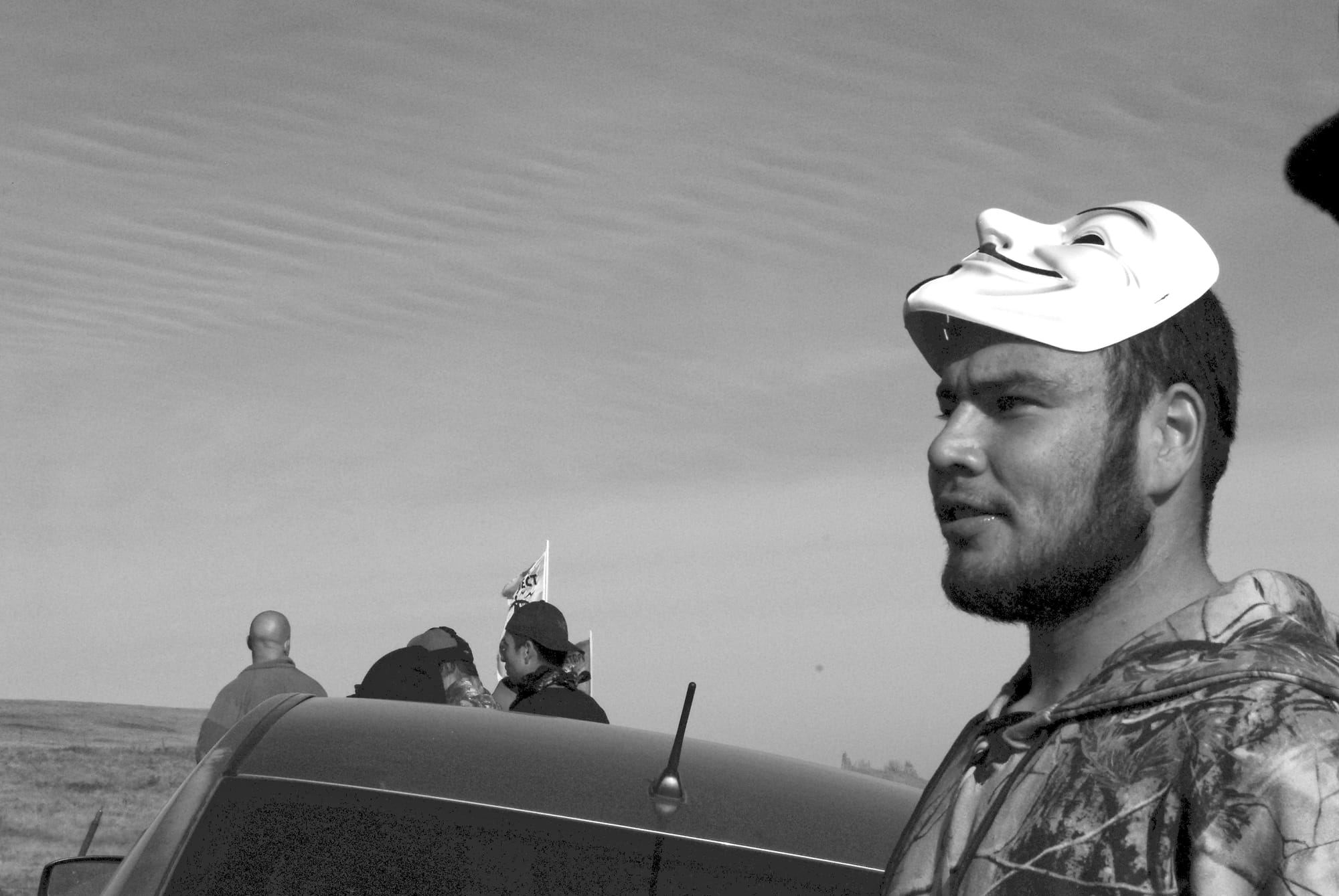
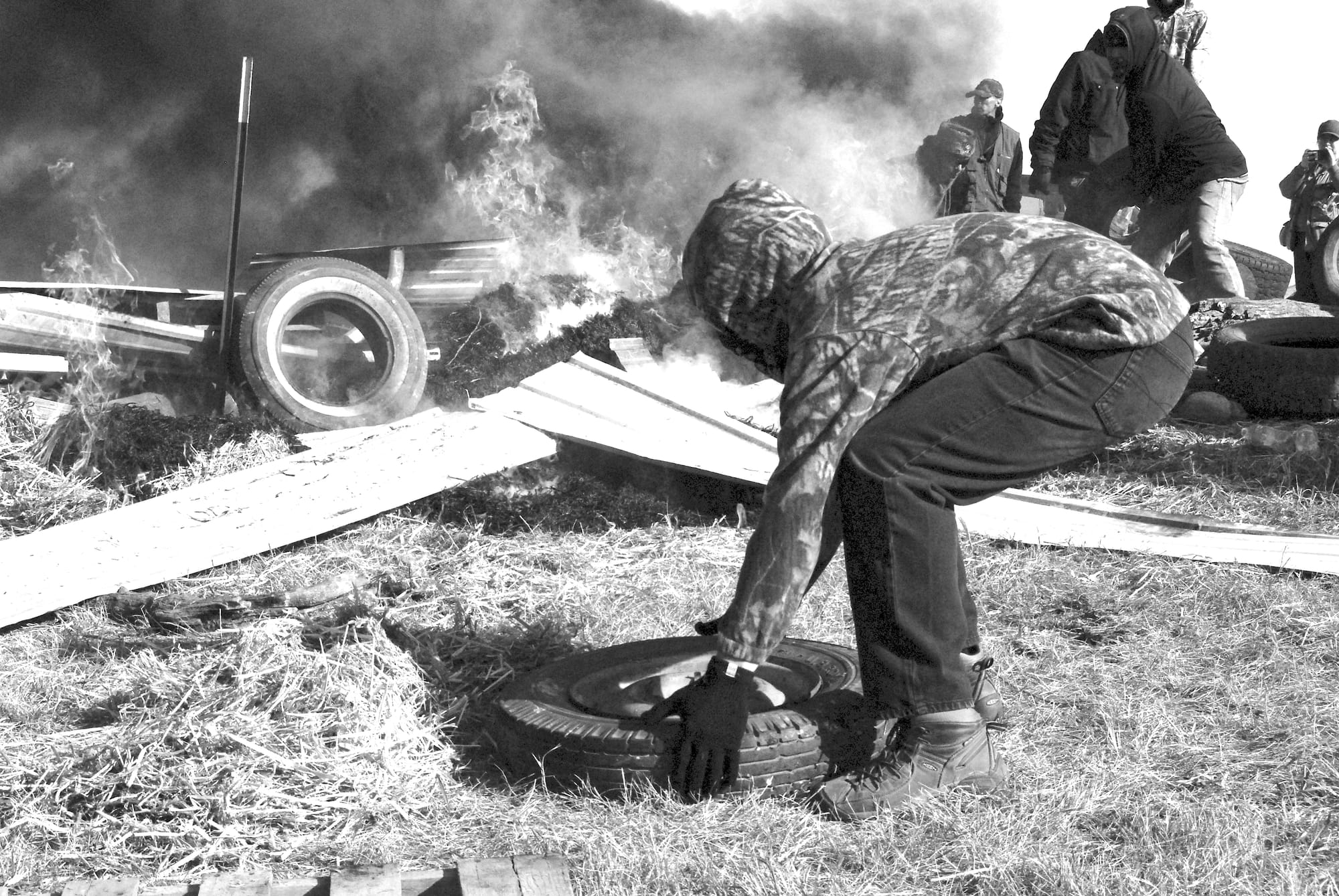
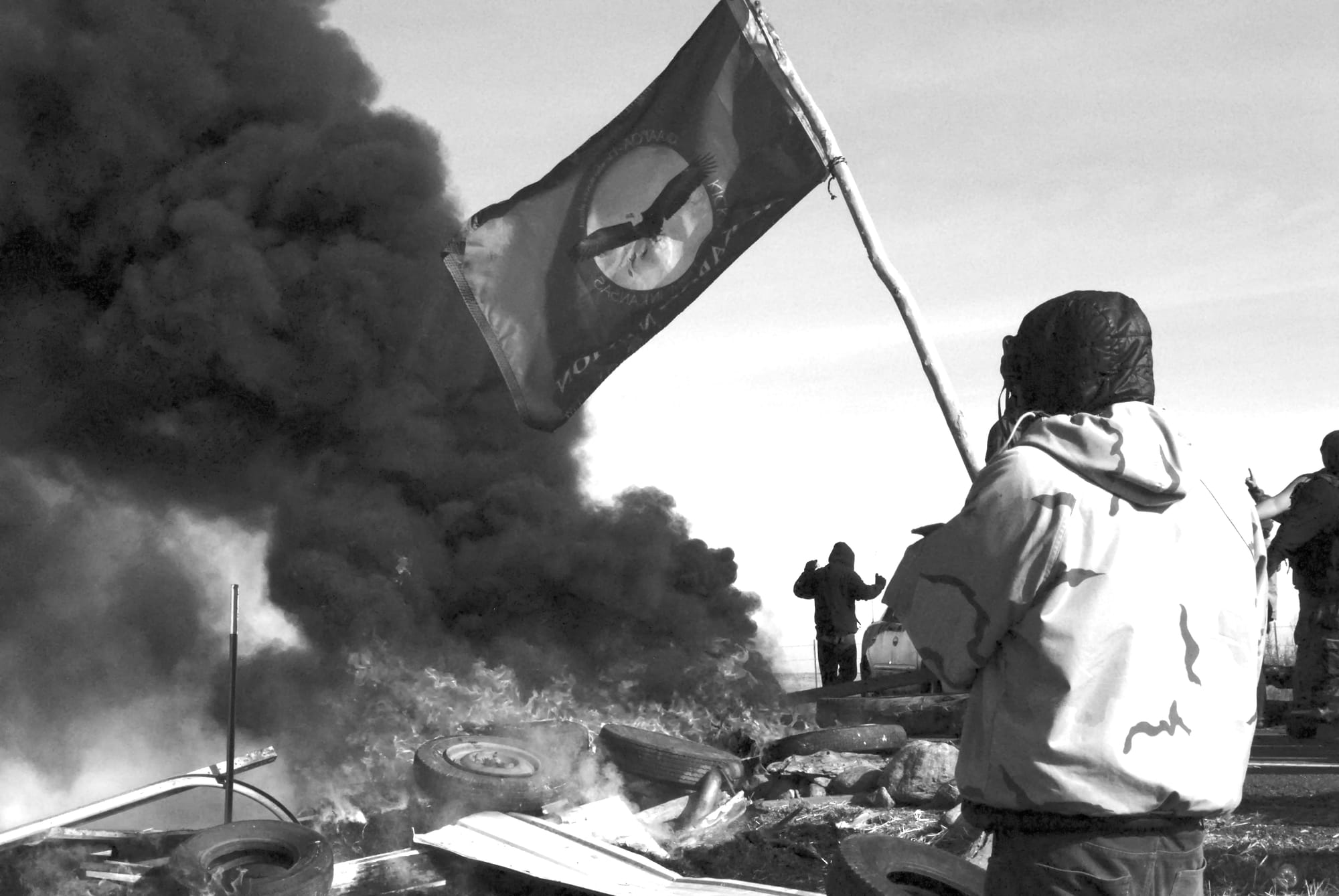
Black smoke stood starkly in contrast to the golden hills and blue sky. Protesters had set fire to hay bales, disabled vehicles and tires set up to form a barricade against police. I went to my car, where I had better reception, to live-tweet.
"If you have anyone that needs medical attention from smoke inhalation or anything else, bring them forward," police said into the bullhorn.
From there, I witnessed police holding large mace cans about to spray into the crowd. I sprinted back to document the aggression, leaving my $400 audio recorder on the driver's seat of my locked car. It was later discovered to be missing after the rental vehicle was impounded by police.
Another journalist turned to me and said she had covered Afghanistan.
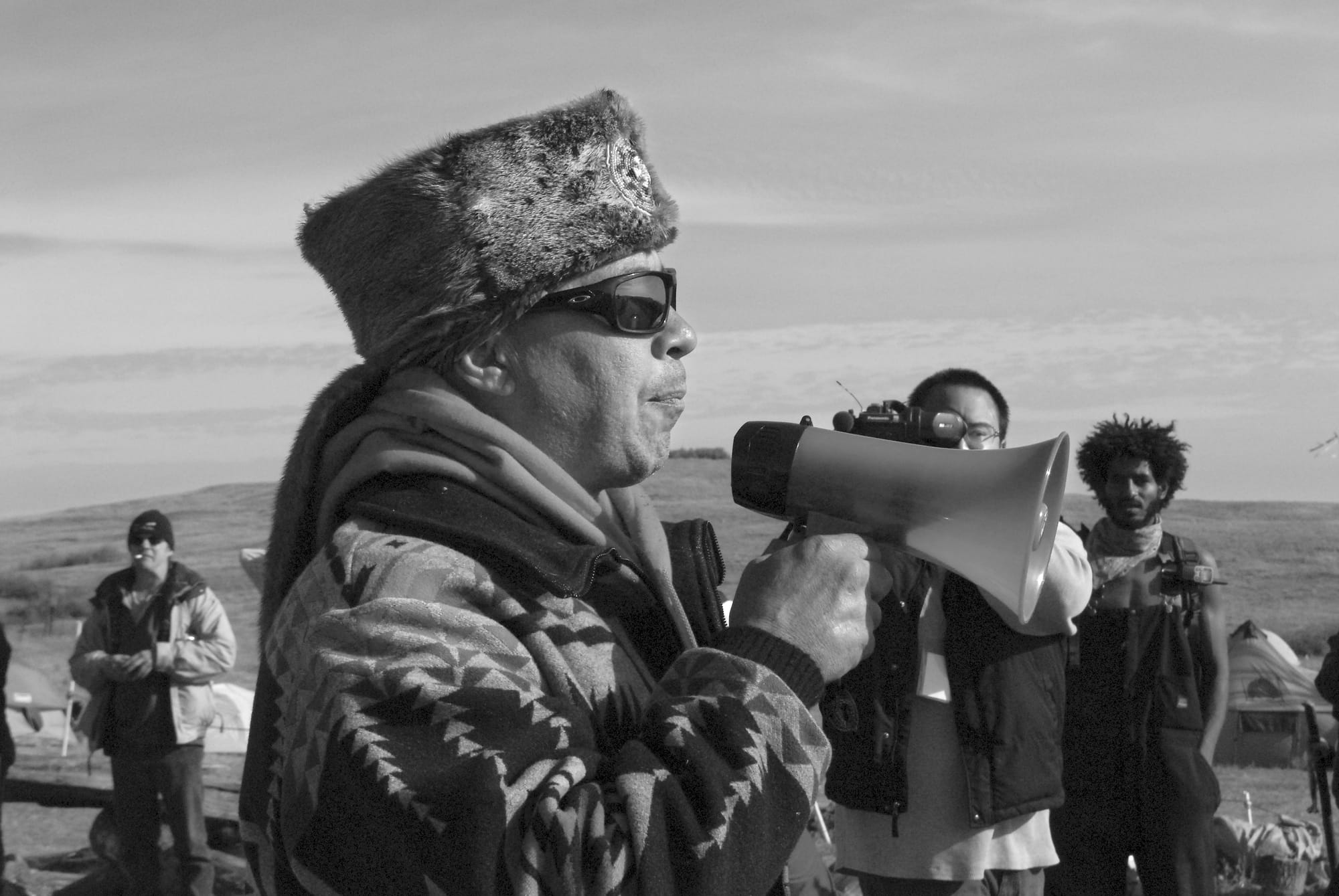
"This is about as crazy as the shit I saw out there. They're showing about as much military might as the U.S. armed forces," Antonia Juhasz said.
Voice recorder in hand, with both arms raised, I walked up to an officer holding a mace canister.
"Excuse me, I'm press. Why do you have the gas there? Why do you have the gas there?"
"Go back or you're going to get arrested. Come here. Hook him up," police responded.
"We told you to back up and what did you do?"
"I didn't back up!"
"Stop resisting. Don't resist!"
"I'm not resisting!"
I was never provided the opportunity to back up after police gave the order and immediately grabbed my arms to place me under arrest.
I gawked as he pressed the erase button on my recorder a couple of times and turned it off. One file was deleted but easily recovered.
Four officers worked as a team on my arrest, and all placed their hands on me as they took me behind the police line. They wrote illegible numbers on my left arm and wrote "#223" on my right in large black Sharpie.
"You never read me my Miranda Rights," I said.
"We haven't asked you any questions."
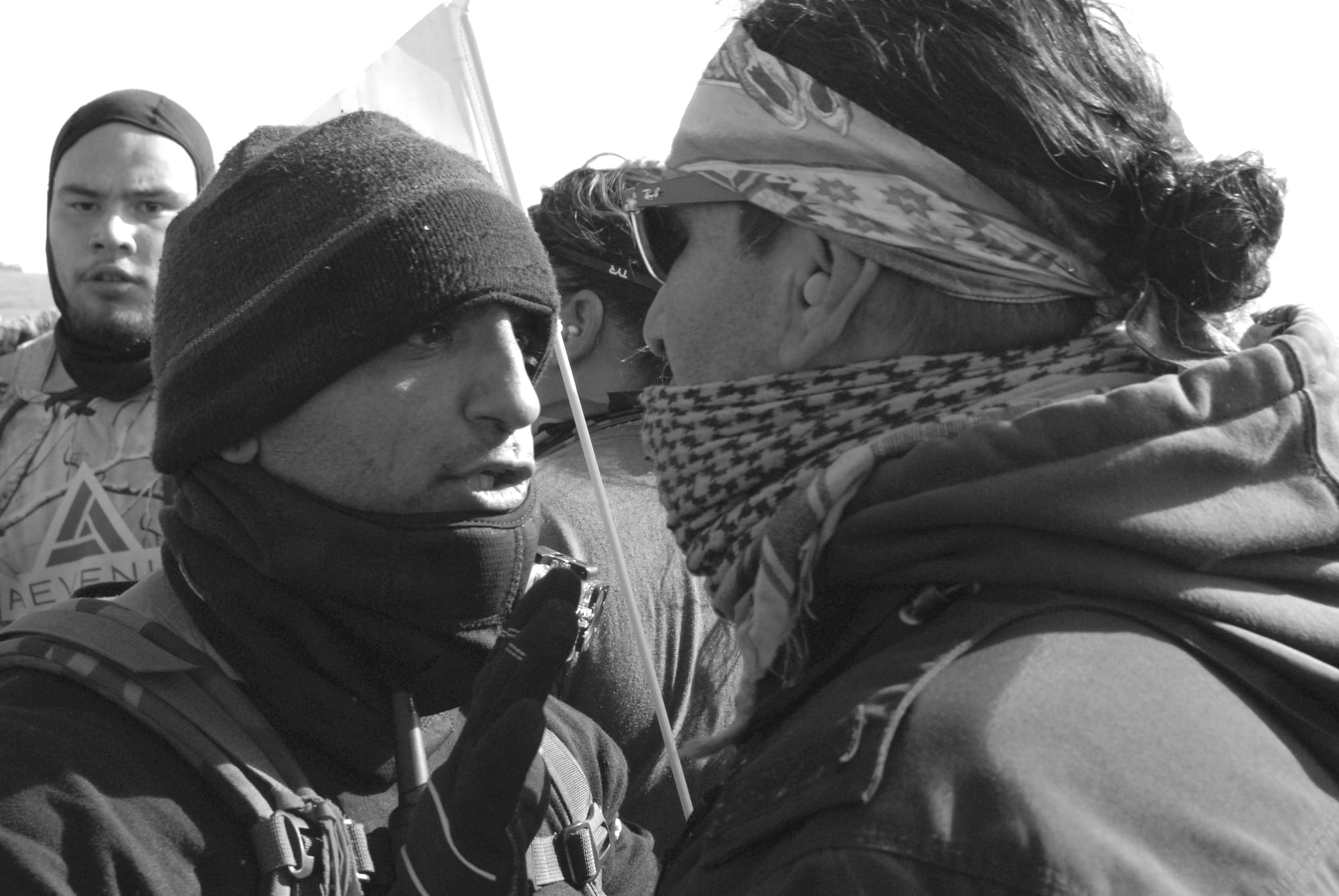
I sat with Ron His Horse Is Thunder, a wise elder with quiet anger who was arrested for sitting in a prayer circle, as police determined which transport vehicle they would put us in to take us to Morton County Jail. Police placed his wife, Deborah, into the vehicle before deciding to transport us in another van.
A young man in a Blackhawks jersey was adamant to police that the arresting officers promised to treat her and RedFeather, who were also in the van with me, well. They didn't.
Police watched Deborah fall out of the police van and hurt herself during the vehicle exchange. Police put us into this second transport vehicle without seatbelts and drove towards Morton County Jail, inmates recklessly flopping in the back seats like dead fish.
The natives sang prayer songs most of the drive. The rest was spent reciting the new phone number for the camp's legal team.
It's a number I'll remember for the rest of my life.
Ours was the first van to arrive at Morton County. Police took our possessions, including our shoes, and placed us into what looked like newly erected dog kennels. The chain-link holding cells were about 9 by 12 feet, with cold concrete floors, in a cold loading bay about a foot from where police coldly practiced shooting Tasers at targets. There were Taser pins in the walls and on the ground.
An officer asked if I needed to use the restroom, and I said that I did. He took me, shoeless, to a port-a-potty in the bay. I opened the door and saw urine on the floor and refused to go in. It took minutes of persuasion to convince him to return my shoes so I could cleanly use it. Others said they weren't as lucky, having to step into the vile makeshift restroom in their socks.
I returned to the cell. More vans and buses full of natives arrived. Each time, natives let out war whoops to rally the crowd and show support for each other. One man from Red Warrior camp, Bert Malcolm, led inspiring chants of "Black Snake Killah!"
"So noisy! Have some manners," a tall female police officer said.
"Where are my eagle feathers? You took my eagle feathers. I earned those," one dejected inmate said.
It took almost eight hours for police to organize the paperwork for all their new inmates. None of us were fed. Russell Eagle Bear is a diabetic and was not provided insulin either. The women were put in the same holding bay, but their cages were covered with blue tarps.
A woman collapsed from a panic attack in their cell and it reportedly took five minutes before a nurse could respond. A young native male with "broken ribs" told me he'd been shot off his horse with a beanbag cannon. Other protesters also had cuts and bruises.
Some police, however, were tearful while talking with protesters until one man, clearly in a position of authority, would tap them out and give them other duties. Guards even told us they wished they could hand in their badges but needed money to provide for their children.
Eventually, police started transporting inmates. The first to leave was Patrick Kinney, 19.
"Where are you moving me?" Kinney said without leaving the cell.
"I'm not telling you," she said.
"You're legally required to tell me."
A screaming match ensued before she finally caved and said, "Fine! Mercer County! Does it really matter?"
Police eventually told me they would transport me with Brandon Sazue, chairman of the Crow Creek Sioux Tribe, and another man, to Mercer. They put us into a tight police SUV. They didn't buckle the seatbelts and the visible speedometer showed more than 80 miles an hour down the highway.
When we arrived, we ate a Salisbury steak TV dinner. Guards strip-searched new inmates, who later made jokes of "Pick up your balls" and "Spread your cheeks" anytime a guard was cranky. I was placed in a cell with 11 other inmates, 10 of whom were from the protest camps.
The mostly empathetic Mercer County guards believed in keeping inmates safe and relatively comfortable. However, they were clearly overworked — often commenting on being understaffed — and even admitted that the jail was past capacity.
One inmate didn't receive shoes for more than 24 hours after his arrest. Per the inmate handbook: money we were booked with was also supposed to be entered into our commissary but wasn't; inmates were never asked their religious preferences; vegan [Kinney] and lactose-intolerant [Malcolm] diet restrictions were not fully honored as inmates were given milk, cheese, butter and macaroni-and-cheese; we never received more than one hour outside of our cell a day; and inmates were not notified when they missed a call.
When we expressed frustration, the guards would snap and yell expletives at inmates but quickly apologized.
"I've been in here a few times and I've never seen him act that way," said a man named Paul, who was in jail for a warrant served on a DUI. "He's a nice guy but he looked like he was about to cry when yelling at you."
We passed 36 hours in jail by watching news coverage, reading science fiction novels and discussing Thursday's events and the treatment of natives throughout history.
"Do you think they'll give me clothes when they release me since they yanked me in my boxers out of the sweat lodge to arrest me?" Trenton Joseph Casillas-Bakeberg said.
Another young man, a member of the Youth Council, said that he'd been trying to write and document the historic mistreatment of natives in a notebook he'd had at camp. He was worried he wouldn't get that notebook back.
Around 1:30 p.m. Friday, Mercer County guards finally told us that we'd have our bond hearing and know our charges in a courtroom with a Skype judge. Guards placed us in handcuffs and took us into the glorious fresh air for the brief and brisk walk.
We filed in and the judge called the first inmate to the stand to hear her charges. He told us he'd only read our rights once for speed because of how many were in the courtroom.
"You've been charged with three counts, one of which is a felony, so you will not be eligible for a plea deal at this time," the judge said.
The room gasped.
"A precedent has been here in the courtroom today for bail. The state is requesting a $1,500 cash-only bond," he said.
The judge called a few more inmates up, one by one, to read their charges and bond orders. Eventually, he told us what those charges were. Every protester received the charge of endangering with fire or explosives, maintaining a public nuisance and engaging in a riot — regardless of whether they participated in any of the day's more questionable activities.
One by one, each inmate received the same charges and bail. The outrage in the room was clearly felt. One officer sneaked a couple of smiles with the courtroom proceedings. The bailiff looked distraught and embarrassed.
I was one of the last called to the stand. I was furious when the judge told me I received the same charges, despite my indication to the courtroom that I was a member of the press.
It took more than 24 hours for us to receive our first phone calls. Most chose to call the legal number. I called my parents.
"Hi dad, I'm in Mercer County," I said.
"WHAAAAAAAT?!! I've called them all day trying to find you. They said you weren't there. They lied to us," he said, voice shaking.
I quickly told him to notify my good friend, photojournalist Angus Mordant, and work on my release. We continued to discuss my charges and strategies for my release until my phone call ended.
I returned to hang with the guys and watch Godzilla until we all went to bed. Around 5 a.m., the guard came into the cell and looked thrilled.
"All of you who had your hearings today made bail," the guard said with a smile.
Only my felony charge has been dropped. We reached out for comment on allegations and observations I make in this article, but neither Morton County Sheriff's Department nor North Dakota State Highway Patrol wished to respond.
It's a little funny to read about such a chaotic time of my life back ten years later. Like, I wrote that we memorized the number for the camp's legal team and I said I would remember it the rest of my life. I have since forgotten it.
The Dakota Access Pipeline has moved oil since June 2017 and carries roughly 5% of the country's daily oil production, The Associated Press reported. It crosses under Lake Oahe, upstream of the Standing Rock Sioux reservation — the crossing the tribe fought.
The felony charges brought over fires set on October 27 were later thrown out by the judge who heard the cases, the American Bar Association noted. Prosecutors dropped or lost most of the hundreds of cases filed during the protests.
All of my charges were dropped.
"My #StandingRock charges have all been officially dismissed, thanks to my badass court-appointed attorney," I wrote in August 2017. "Freedom of the press reigns."
I never got my $400 audio recorder back. I did file a police report at the time, but nothing came of it.
The camps became the largest gathering of Native nations in over a century and included members of more than 100 tribes, and the protests have had lasting cultural and artistic impacts.
Nick Estes's "Our History Is the Future," which sets the camp inside two centuries of Indigenous resistance, won a PEN Oakland literary award and was chosen as a statewide common read, its publisher notes.
The protests drew documentary crews to the front lines. Awake, a Dream from Standing Rock, executive produced by Shailene Woodley, streamed on Netflix; Shannon Kring's End of the Line: The Women of Standing Rock has toured festivals, alongside a wave of photography and reporting from the camps.
The movement also entered museums. Cannupa Hanska Luger, raised on the Standing Rock reservation, turned the camp's mirror-shield tactic into an artwork that has shown at the National Gallery of Art, the Metropolitan Museum of Art and the Peabody Essex Museum — with at least a dozen museum showings — and the shields have since turned up in protests elsewhere.
The protests have also had lasting legal impacts.
In March 2025, a Morton County jury ordered three Greenpeace organizations to pay Energy Transfer, the pipeline's developer, about $667 million, finding the group liable for its role in the protests.
A judge cut the award to about $345 million and entered final judgment in February, the North Dakota Monitor reported. Greenpeace has asked for a new trial and says it will appeal to the North Dakota Supreme Court, calling the suit an attempt to silence protest.
Energy Transfer says the verdict holds the group accountable for breaking the law.
In June, the federal government agreed to pay North Dakota nearly $28 million to settle the state's lawsuit over what it spent policing the protests, and to drop its appeals, the North Dakota Monitor reported. Attorney General Drew Wrigley announced the settlement at the state Capitol.
Since 2016, at least 19 states have passed "critical infrastructure" statutes raising the penalties for protesting near pipelines, laws that civil-liberties groups trace to Standing Rock.
Urgent Matter is reader-supported. Please consider subscribing to support independent arts journalism.