Feds revise New York State Museum report, removing reference to prosecution
The watchdog changed the report's disposition from a declined criminal prosecution to a declined civil-enforcement action on August 3.

The watchdog changed the report's disposition from a declined criminal prosecution to a declined civil-enforcement action on August 3.
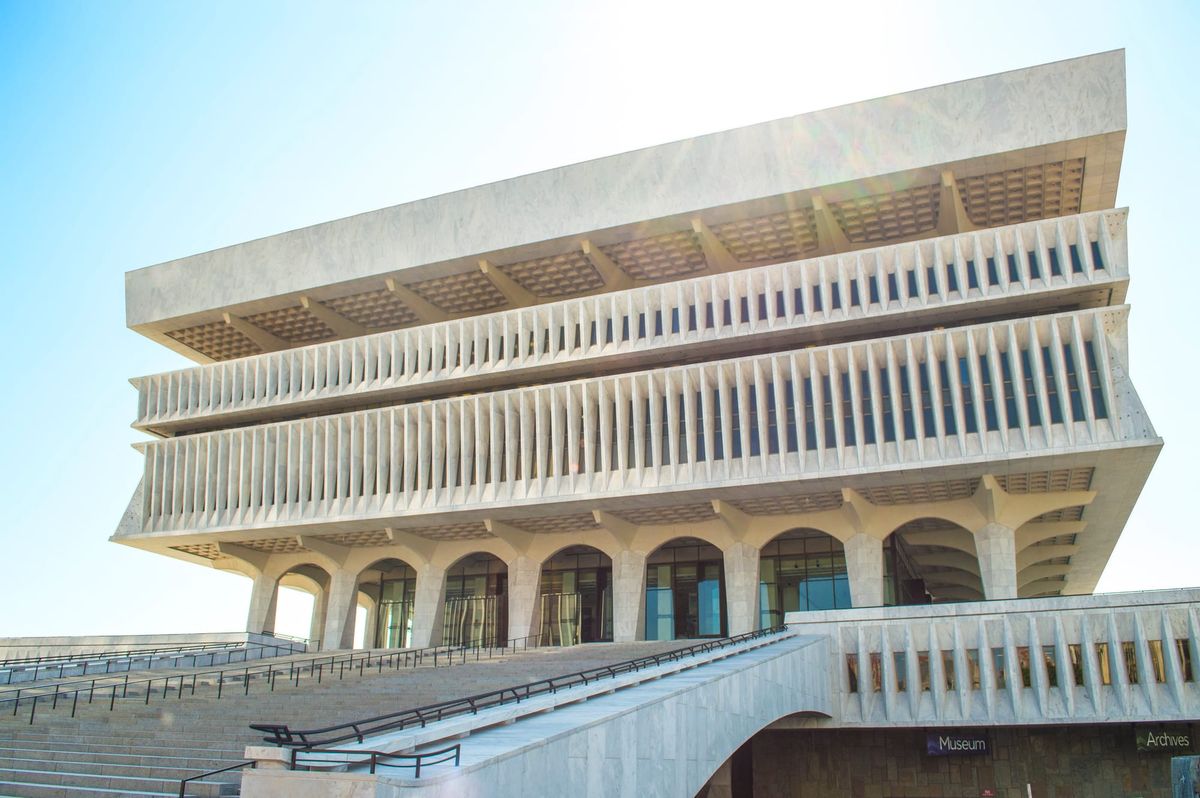
The U.S. Department of the Interior's inspector general revised its report on grant fraud at the New York State Museum days after the findings drew national coverage, replacing a reference to a declined criminal prosecution with one to a declined civil-enforcement action.
The revised summary, posted to the inspector general's website under a filename ending in "_revised," is identical to the original in every respect but one clause.
The report first said the U.S. Attorney's Office for the Northern District of New York "declined to prosecute in deference to administrative action and recovery by USGS." It now says the office "declined to intervene with civil enforcement in deference to administrative action and recovery by USGS."
The two versions describe different outcomes. A declined prosecution ordinarily refers to criminal charges. Declining to intervene in civil enforcement refers to a civil action, typically brought to recover money rather than to punish.
Both versions say the U.S. Attorney's office stepped aside in favor of USGS recovering the funds administratively.
The report carries a cover date of May 28. Its original PDF was finalized on July 8 and the revised PDF on August 3, according to dates embedded in each file. The cover date, report number and every figure and finding are otherwise unchanged, and the report's page on the inspector general's website does not note the revision.
The report does not explain why the language changed. It is unclear whether the original reference to prosecution reflected an actual consideration of criminal charges or was simply an error in the report.
The findings themselves did not change.
The report found administrators at the New York State Museum in Albany directed staff to falsify timesheets, letting the state improperly draw down $597,624 in federal geologic-mapping grants over three fiscal years.
The inspector general’s office substantiated the allegations in a summary report dated May 28, following a joint inquiry with State Comptroller Thomas P. DiNapoli’s office. The findings cover fiscal years 2020 through 2022.
The grants came through STATEMAP, the state component of the U.S. Geological Survey’s National Cooperative Geologic Mapping Program, which awards money for geologic mapping through annual competitive grants that recipients must match dollar for dollar.
In its budget narrative, the museum said its share would come from salaries of employees working on the projects, along with their travel and supply costs, records show.
Investigators found museum officials instructed employees to submit inaccurate timesheets showing inflated involvement in the mapping work. The museum also charged the grants for salaries of two employees who did not work under them and could not account for one employee’s federally funded salary, the report found.
The museum also violated the grant’s terms by changing the key personnel named in its proposal and shifting money budgeted for field expenses, including travel and office supplies, to pay staff salaries, records show. Both changes required advance approval from the USGS program office, which the museum did not obtain.
The museum did not meet its required state match for any of the three years, according to the report. A senior state official acknowledged the FY 2022 shortfall to investigators in April 2025, but the state’s later actions addressed only $40,511 of the improper drawdowns.
After the inspector general opened its investigation in July 2024, the state changed how staff accounted for and reported their time on the FY 2022 project, which ran on two-year funds still in use. The report said a review of the timesheets confirmed the change.
USGS told investigators the museum delivered all required technical reports, deliverables and final reports for the three projects.
The inspector general presented the matter to the U.S. Attorney's Office for the Northern District of New York, which "declined to intervene with civil enforcement in deference to administrative action and recovery by USGS," the report said.
Investigators referred their findings to the director of USGS for “the potential collection of lost revenues and any other action deemed appropriate.”
The New York Times first reported the fraud allegations in late 2024, when Brian Slater – reported to be a former payroll employee – said a manager had directed him to submit false timesheets and that high-ranking state officials had "supported" the scheme.
Matt Sweeney, a spokesman for the comptroller, told the Times last month that the joint investigation “found that the museum had illegitimately billed the grant for nearly $600,000 in hours spent by employees on other projects.”
The museum falls under the New York State Education Department, which oversaw its own review of the allegations and closed it after finding them unsubstantiated, records obtained by The Times show. “It is not possible to conclude that there is mismanagement or fraud,” the internal report said.
An Education Department spokesman, JP O’Hare, told The Times the agency was “fully transparent and cooperative throughout this process” and that officials were “prepared to reimburse any grant funding ultimately determined not to have been supported by the required state match.”
The findings land as the museum undergoes a $150 million renovation backed by Kathy Hochul and the Education Department, part of the governor’s $400 million Championing Albany’s Potential initiative for downtown Albany.
Under the renovation, the museum expanded its exhibition schedule, opening "Barbie: A Cultural Icon" in December 2025 and "Revolutionary New York," marking the nation's 250th anniversary, in June.
 Adam Schrader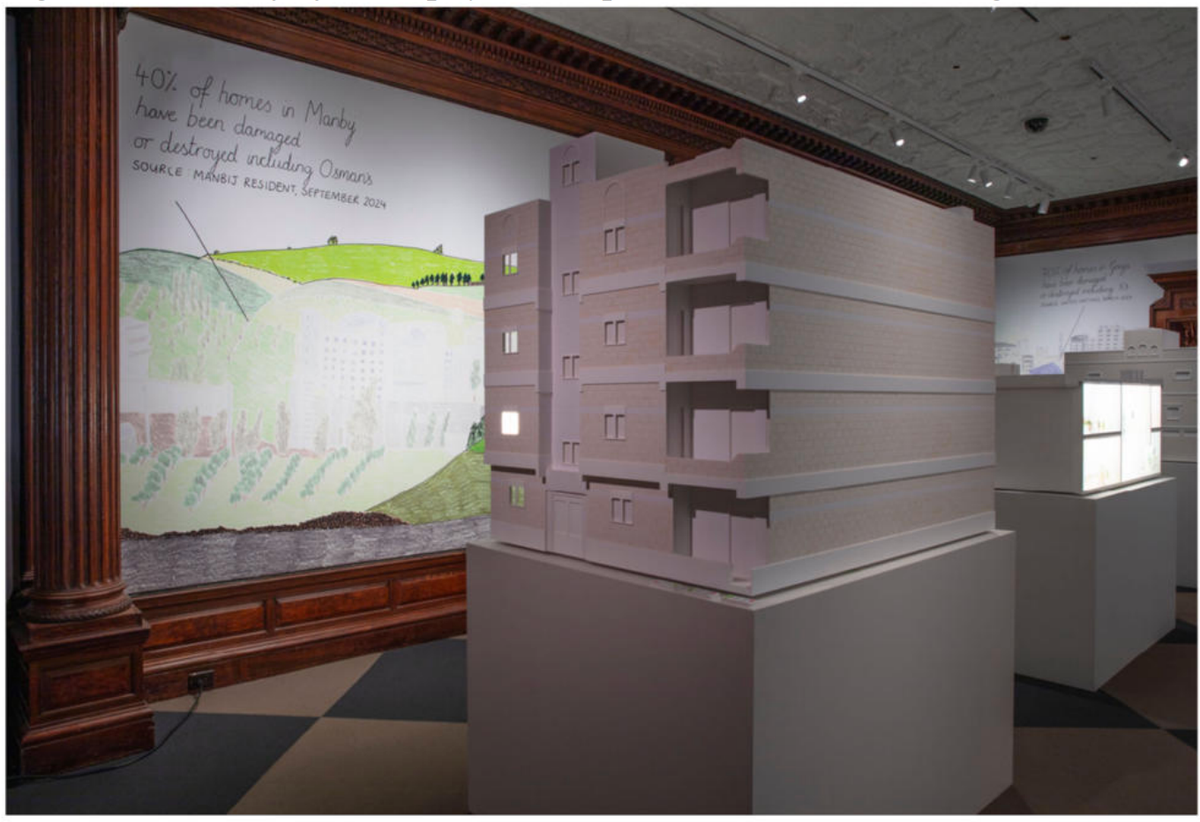
The period covered by the findings overlaps the tenure of Mark Schaming, then the museum’s director and the state’s deputy commissioner for cultural education, the Times Union reported. Schaming retired in July 2024 after he was diagnosed with cancer. The inspector general’s report does not name him or any other individual. Jennifer M. Saunders became director in 2025.
News of the report came as a Smithsonian inspector general report questioned $36,500 in federal money set aside for American women's history that the Cooper Hewitt, Smithsonian Design Museum used for an installation about homes destroyed by U.S.-made weapons.
Urgent Matter is reader-supported. Please consider subscribing to support independent arts journalism.