What We Skipped: Heritage fights, museum warnings and auction bets
A public edition of our subscriber newsletter on the art world stories we considered and abandoned or killed.

A public edition of our subscriber newsletter on the art world stories we considered and abandoned or killed.
What We Skipped is exactly what it sounds like—a list of stories Urgent Matter considered covering but never published.
Sometimes another publication already did the story well. Sometimes we could not get the documents. Sometimes we ran out of time. Sometimes the draft went off the rails. Sometimes we just changed our minds.
We normally send this newsletter only to subscribers, but we're making this edition public so potential subscribers can get a taste for what ends up getting cut.
If you enjoy the transparency into how Urgent Matter makes these decisions, consider signing up for a paid subscription today.
This article is provided free with the support of paying subscribers. Please consider signing up for a paid subscription today.
No spam. Unsubscribe anytime.
Posted by Palestine’s Ministry of Tourism and Antiquities
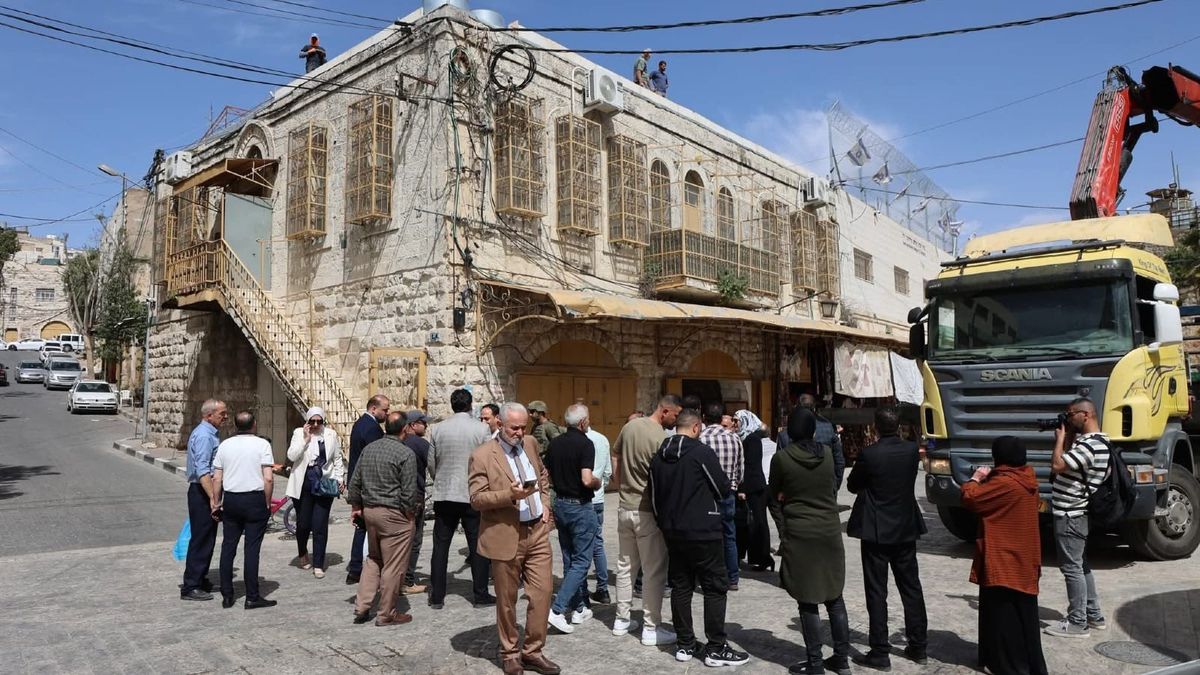
Why We Skipped It: The ministry published two posts we planned to write about together. One condemned what it described as illegal construction by Israeli occupation authorities on a historic municipal building in Hebron’s Old Town, which is listed by UNESCO as an endangered World Heritage Site.
The other condemned a draft Israeli Knesset decision to establish a so-called Heritage Board in the West Bank, which the ministry said would have the authority to confiscate land and to exercise exclusive supervision over archaeological sites and nature reserves.
I had an article rooted in both developments nearly written out, then fell asleep with the laptop in my lap sometime around 3 a.m. I thought I had published it. Apparently, I had not.
By the time I realized that about two weeks later, it felt too stale to publish cleanly without doing additional reporting and a structural update to the story, and I killed it instead of going back through the whole thing. I regretted that later.
This is not a recommended editorial workflow.
Published by El País
Why We Skipped It: The government of Spain’s Catalonia region has reopened a fight with the government of Aragón, another Spanish region, over 56 works from the Sijena monastery that Catalonia bought in the 1980s and 1990s, then was forced to return in 2017.
The Generalitat is now seeking €791,000 for the original purchases, adjusted for inflation, and the cost of conserving the works while they were in Catalan institutions.
We initially wanted to cover this but this particular development felt too procedural and regional to prioritize on its own.
We later tried to use it as part of a broader item on Spanish cultural-property and museum-governance disputes, but that created its own problem because the Sijena fight and the Reina Sofía story were not really the same story.
Eventually, we passed and moved on.
Spain’s parliament criticizes Reina Sofía over collection management
Published by Le Journal Des Arts
Why We Skipped It: Spain’s parliament has criticized Madrid’s Reina Sofía museum over alleged failures in managing its collection, and has gone so far as to warn that director Manuel Segade could be removed if the museum does not address the issues.
The Reina Sofía is a major global museum, so this story was worth covering. We initially tried to draft the article in a way that would also pull in the separate Sijena dispute mentioned above, but they were really two different stories, and the combined draft just was not working.
Eventually, we had spent too much time trying to make the combined draft work to then redo this story on its own and drop just the Sijena one. So we moved on and killed this one too. They really should have been tackled separately to begin with.
Published by the U.S. Government Accountability Office; covered by The Art Newspaper and ARTnews
Why We Skipped It: A federal report found that roughly 85% of U.S. museums have deferred maintenance or major repair needs, while about 77% reported at least one structural issue that could put collections at risk. The findings run counter to the public image of museums as grand, stable institutions and point to a field dealing with aging buildings and limited capital funding.
The report came out in March and was already covered by The Art Newspaper, then aggregated by ARTnews. We considered reviewing the full GAO report ourselves to extract additional data points or identify a sharper Urgent Matter angle. But that would have required more than the quick aggregation we had time for at the moment.
Rather than publish a third pass through essentially the same findings, we are linking to the original report here for readers who want to dig into it themselves.
Published by The New York Times
Why We Skipped It: This is an important story, and the federal guidelines involved could have real consequences for higher education, artists and creative fields.
But the Times piece was based largely on reactions from higher education professionals, artists and others to the guidelines. We did not feel the need to go out and collect comments that would likely mirror what had already been published by a much larger newsroom. The guidelines are still an important development, and we will be watching for their continued impact.
Published by ARTnews
Why We Skipped It: Open Restitution Africa has launched an open data platform that tracks African restitution cases through case histories, visualizations and interactive tools. The platform includes 25 case histories spanning 200 years, along with an A.I.-assisted feature that lets users query ORA’s own research data rather than the open internet.
ARTnews published its story in Q&A format, and we considered turning the material into a narrative article or seeking our own interview with the founders of Open Restitution Africa.
The story is important for Urgent Matter, especially since we recently launched our own restitution tracker. We were also impressed by the platform’s inclusion of artificial intelligence. Eventually, we decided we could skip writing the full article and include it in this list as something worth checking out.
Published by The Art Newspaper
Why We Skipped It: The Art Newspaper reported that Moscow’s Gulag Museum, which had focused on Stalin-era repression, is being remade as a Museum of Memory devoted to Nazi crimes against Soviet citizens. The article also connected the museum changes to other recent developments involving Russian institutions, historical memory and groups that have documented Soviet repression.
The version we started drafting began asking what a new World War II-focused museum in Moscow would add alongside existing institutions such as the Victory Museum, but that quickly became a bigger story than the museum rebrand itself.
The Art Newspaper piece also had a strong frame around Russia, memory and the war in Ukraine, and we did not want to carry that frame secondhand without doing more reporting of our own.
So the narrow version felt too thin, the broader version felt underreported, and we killed it.
Published by Artnet News and other outlets
Why We Skipped It: The arts publications were in an uproar over Kalshi prediction markets tied to art auctions. I am currently betting on some of these auctions and will report back on how I did when the betting periods close by the end of the year. So this is less “skipped” than “delayed until I have either useful insight or a humiliating personal anecdote.”
Published by The Art Newspaper
Why We Skipped It: The Art Newspaper had a thorough story on the fire that broke out during the dismantling of San Francisco’s Vaillancourt Fountain. It is the sort of public art story we normally like filled with civic controversy and mayhem. But the coverage was already strong, and we did not see a way to meaningfully advance it from here without original San Francisco reporting.
Published by Cultured
Why We Skipped It: Cultured revealed that Air de Paris was closing and published a significant interview with cofounder Florence Bonnefous about the gallery’s bankruptcy. The closure of a long-running gallery is notable, especially in the current market, but this was another case where the original outlet had the story and the interview. We considered aggregating it or seeking our own comment, then decided our time was better spent elsewhere.
Published by Le Monde via Greek City Times
Why We Skipped It: The Greek City Times headline, which initially drew us to the story, jumped a little too far ahead. France’s Parthenon fragments are not currently en route to Greece. The article was secondary reporting from a legal analysis in Le Monde about how France’s new restitution law might apply to certain Parthenon fragments at the Louvre.
The underlying argument in both publications was more careful than the headline suggested and speculated that the law may create a possible route for some looted antiquities in French public collections, while leaving major limits around dates, provenance and museum approval.
That argument is still speculative. Covering it well would have meant doing our own legal and provenance analysis, not just writing that France may someday return something.
Published by ARTnews
Why We Skipped It: ARTnews reported that a Lincoln Park condo owner sued collector and philanthropist Fred Eychaner over the planned expansion of Wrightwood 659, saying the project would rise near her windows and block the light and views around which she had renovated her home. Eychaner’s side said the project complies with zoning and does not require special approval from the alderman’s office.
We missed the timeliness of the original story, then saw there were later developments on the docket at the Cook County court clerk’s website.
The problem was that we could see the docket activity, but not the documents behind it. Without those filings, there was not much we could responsibly add. We could have reached out to the clerk’s office to ask for the documents, but at a certain point, this was still a fairly small lawsuit about a museum expansion, blocked views and neighborhood construction.
We considered whether it belonged in What We Skipped or our more specialized Below the Fold newsletter, and eventually it ended up here.
Published by Artnet News
Why We Skipped It: We considered writing about the launch of a new survey on museum collecting practices, because transparency around how museums acquire, classify and manage objects is important.
The issue is meaningful to museum professionals, but the results are not expected until 2027. Covering the beginning of the survey felt a little too inside baseball for our broader audience, especially with other stories competing for time. We will be more interested when the findings are published next year.
Published by Hyperallergic
Why We Skipped It: Hyperallergic published a smart trend piece about the return of painted book covers. We thought about doing an Urgent Matter version because it touches on art, publishing, licensing and taste. But Hyperallergic had the idea, executed it well and reported it out. We did not want to risk laundering someone else’s premise into our own “trend analysis.”
Published by ARTnews
Why We Skipped It: A recent study published in the journal Innovation in Aging found that engaging with art and culture can help slow the aging process. This was interesting and would have been a good fit for our Science and Technology section. While the story is art-related, it did not sufficiently address the mechanics of the art world for us to prioritize it. We eventually scrapped it for other stories.
Published by Artnet News
Why We Skipped It: Es Devlin is inviting people across the U.K. to submit selfies for a collective portrait project at London’s National Portrait Gallery. The work, made with Google Arts & Culture Lab, turns participants’ faces into digital drawings based on Devlin’s charcoal and chalk markings, then displays them in a stream inside the museum.
I had a lovely conversation with Devlin last year for The Art Newspaper and am a fan of her work, though I’ve still never seen it in person.
I considered reaching out to her about this for Urgent Matter, especially because the project touches on portraiture, national identity, artificial intelligence and who actually gets represented inside a national museum. But we’ve been heavy on shows and exhibition coverage lately, and I’m trying to prioritize other kinds of news when I can. So this one got skipped.
Published by Artnet News
Why We Skipped It: The vault-like space beneath the Lincoln Memorial is opening to the public as a 15,000-square-foot exhibition space about the monument’s construction and the role it has played in shaping the public image of Abraham Lincoln. The $69 million project also includes upgraded elevators, new restrooms and an expanded bookstore.
We started drafting this one, then decided the article would be better served by seeing the undercroft ourselves. That would mean making a trip to Washington, and we just didn’t want to do that right now.
Published by French media via Hyperallergic
Why We Skipped It: The film is based on an investigative book in the Louvre Museum heist by journalists at major French publications, and news of the adaptation was first reported by French media. We considered writing this for our Pop Culture section, then decided maybe we would just review the movie when it actually comes out.
Published by PetaPixel
Why We Skipped It: PetaPixel published a strong review of the new DaVinci Resolve release, which includes new photo-editing and AI tools, along with new color-grading options for photographers.
Urgent Matter uses DaVinci Resolve for editing our Cold Take podcast and other videos, so this was relevant to us personally as well as to artists and photographers more broadly. But we have not had time to test the latest release ourselves, and PetaPixel’s review is thorough. We are sending you there.
Published by Artnet News
Why We Skipped It: We considered writing this up, but could not quickly find the official statement behind the announcement. If the primary source is hard to locate and the story is not urgent enough to justify a deeper dig, it goes on the skipped pile.