Tina Spiro, key artist at Minimalism's advent, seeks to affirm her legacy
Tina Spiro, one of three women in 1966's "Primary Structures," recounts David Smith, Warhol and 50 years of Jamaican art.

Tina Spiro, one of three women in 1966's "Primary Structures," recounts David Smith, Warhol and 50 years of Jamaican art.
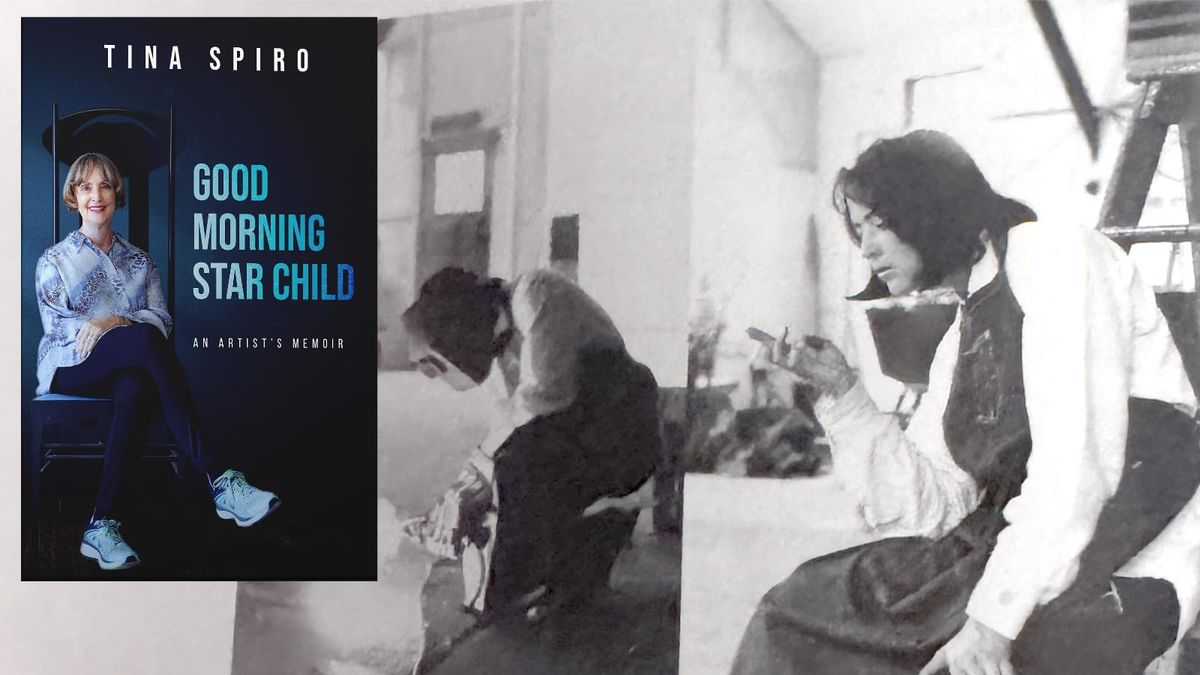
Tina Spiro, one of three women among the 42 sculptors in the Jewish Museum's 1966 exhibition "Primary Structures," has self-published a memoir that reasserts her place in the decade that produced Minimalism and documents the half century she spent afterward at the center of the Jamaican art world.
Her memoir Good Morning Star Child was released as an e-book through Amazon's Kindle platform in December, with a print edition expected to launch this month.
The American half of the book centers on her work in the studio of David Smith, the pioneering Abstract Expressionist sculptor.
Spiro writes that a Skidmore College professor drove her to Bolton Landing, New York, in 1963, where the sculptor told her, "I don't take students." She apprenticed at a machine shop on Route 9 outside Saratoga Springs and learned to weld farm equipment. Then she called Smith to say she was ready.
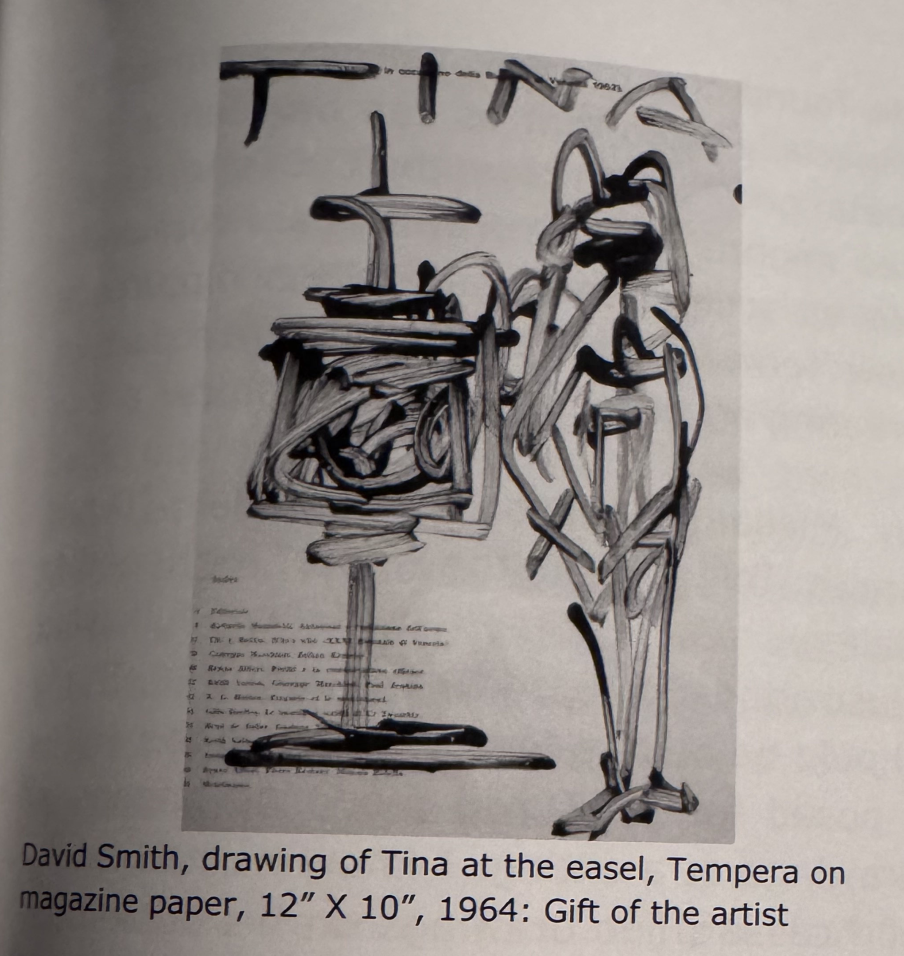
For about two years, she worked weekends in his studio, sleeping in a folding bed Smith set up in his daughters' spare room. She describes watching him plot the stainless-steel Cubi on the studio floor in cardboard and chalk.
She describes meeting Clement Greenberg, Kenneth Noland, Jules Olitski and Anthony Caro through his Bennington, Vermont, circle, and Robert Motherwell and Helen Frankenthaler at a New York dinner.
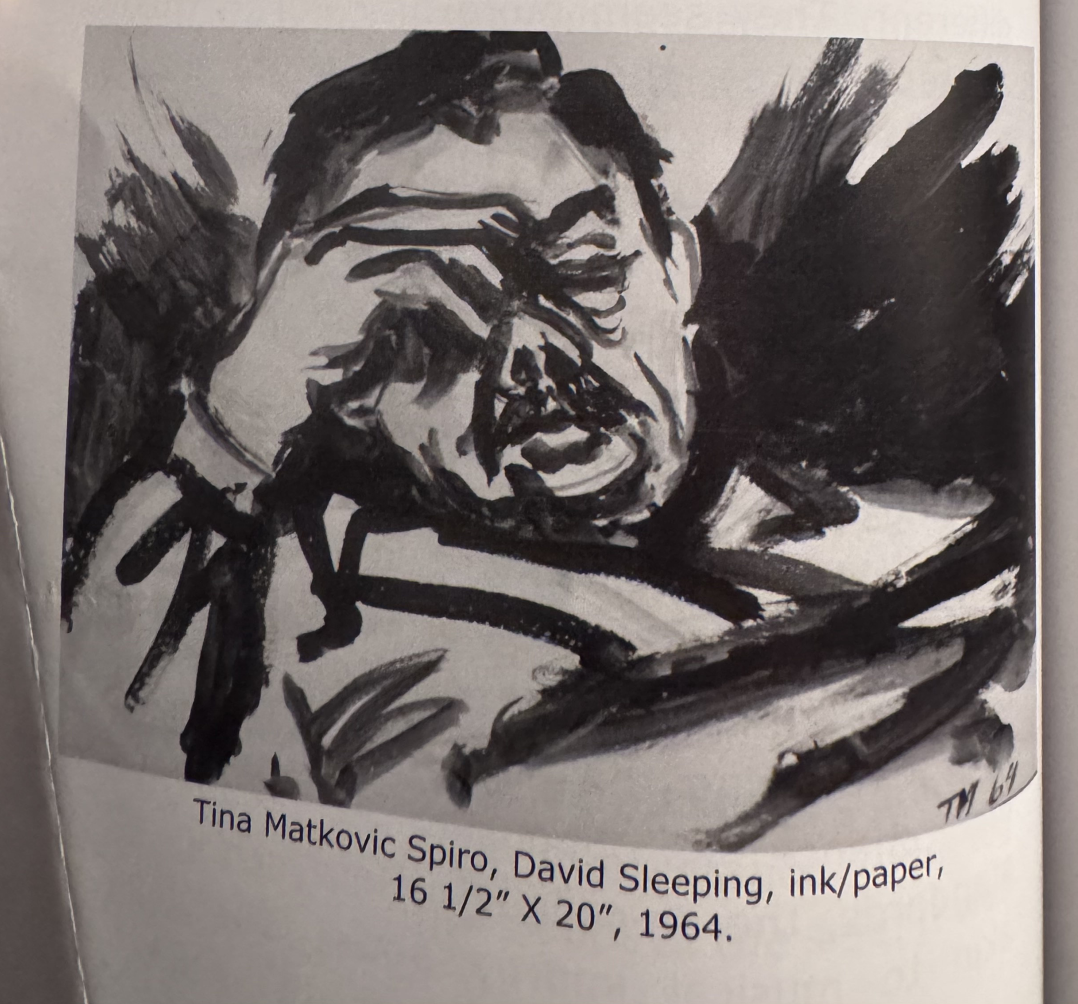
She modeled clothed for his drawings. The nude in the drawings of those years, she writes, was a Bennington College student she met once, in the summer of 1964 — and whose longer presence in Smith's life she discovered only in 2006, reading catalogs at the Knoedler library.
Spiro's relationship with him was never physical, she writes, and it broke when it threatened to become more. After she began seeing Noland, Smith sent her an angry note telling her to stay away.
Smith died on May 23, 1965, when his truck left the road. Court records show he was 59 and left 425 sculptures at Bolton Landing. Spiro writes that he and Noland were said to have been driving at high speed in separate vehicles. The steel I-beams Smith was hauling shot forward and struck his head.
At the funeral, Spiro writes, Noland cried on her shoulder.
"We did it to him," Noland said, according to the book. She told him no, she writes, "but have never been sure what he meant."
Warhol appears in the book as a friend outside the Factory's inner orbit. Spiro writes that he was first brought to her East 86th Street apartment by Sam Green, director of Philadelphia's Institute of Contemporary Art and a Warhol confidant, when the artist had just begun spraying his hair silver, before the wigs, carrying a quart of diet ice cream as his lunch.
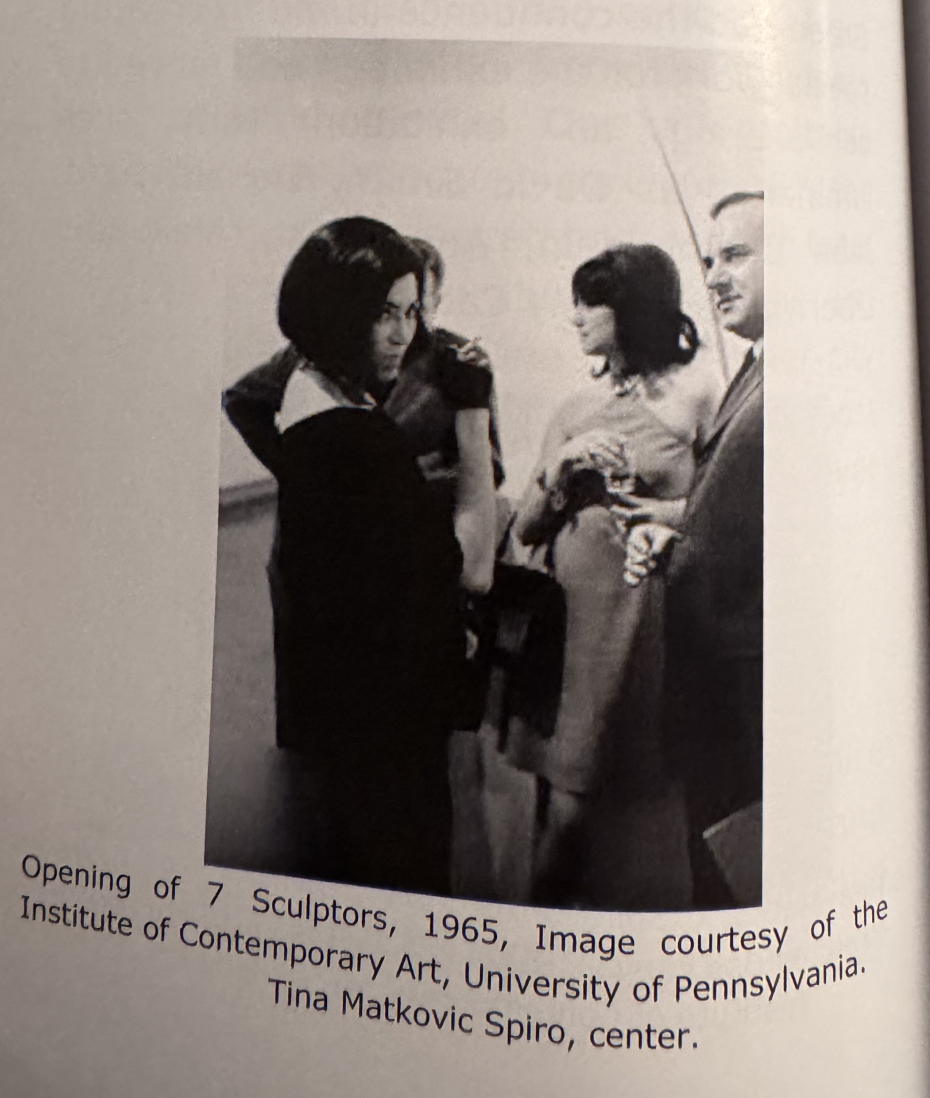
Her first museum exhibition was the ICA's "7 Sculptors," a show that placed her alongside Smith, Judd, John Chamberlain, Truitt and Caro while she was still in the master's program at Pratt Institute. Warhol's 1965 exhibition at the same museum, his first museum show, made him a celebrity.
Spiro describes the night a crowd chased Warhol, Green and Edie Sedgwick up a staircase at the opening on October 8, 1965. Sedgwick reached down to pull her along, but she decided to let go and disappear into the crush instead.
"I know now at that moment I made a choice," she writes.
Spiro also writes that she drove Warhol back to Manhattan the night of the November 1965 Northeast blackout, and that she sat for a Factory screen test.
The following year, she was included in "Primary Structures: Younger American and British Sculptors," which ran April 27 through June 12, 1966. The published checklist for the exhibit shows her work Projection under the name Tina Matkovic, among works by Donald Judd, Carl Andre, Dan Flavin, Sol LeWitt, Robert Morris and Robert Smithson.
The exhibition, curated by Kynaston McShine and reviewed at the time in The New York Times and ARTnews, is now treated as Minimalism's museum debut. Its three women were Anne Truitt, Judy Gerowitz — the artist later known as Judy Chicago — and Matkovic.
Spiro writes that she landed in the show through Green, who picked up the phone and called McShine.
"You have to have Tina in your show," Green said.
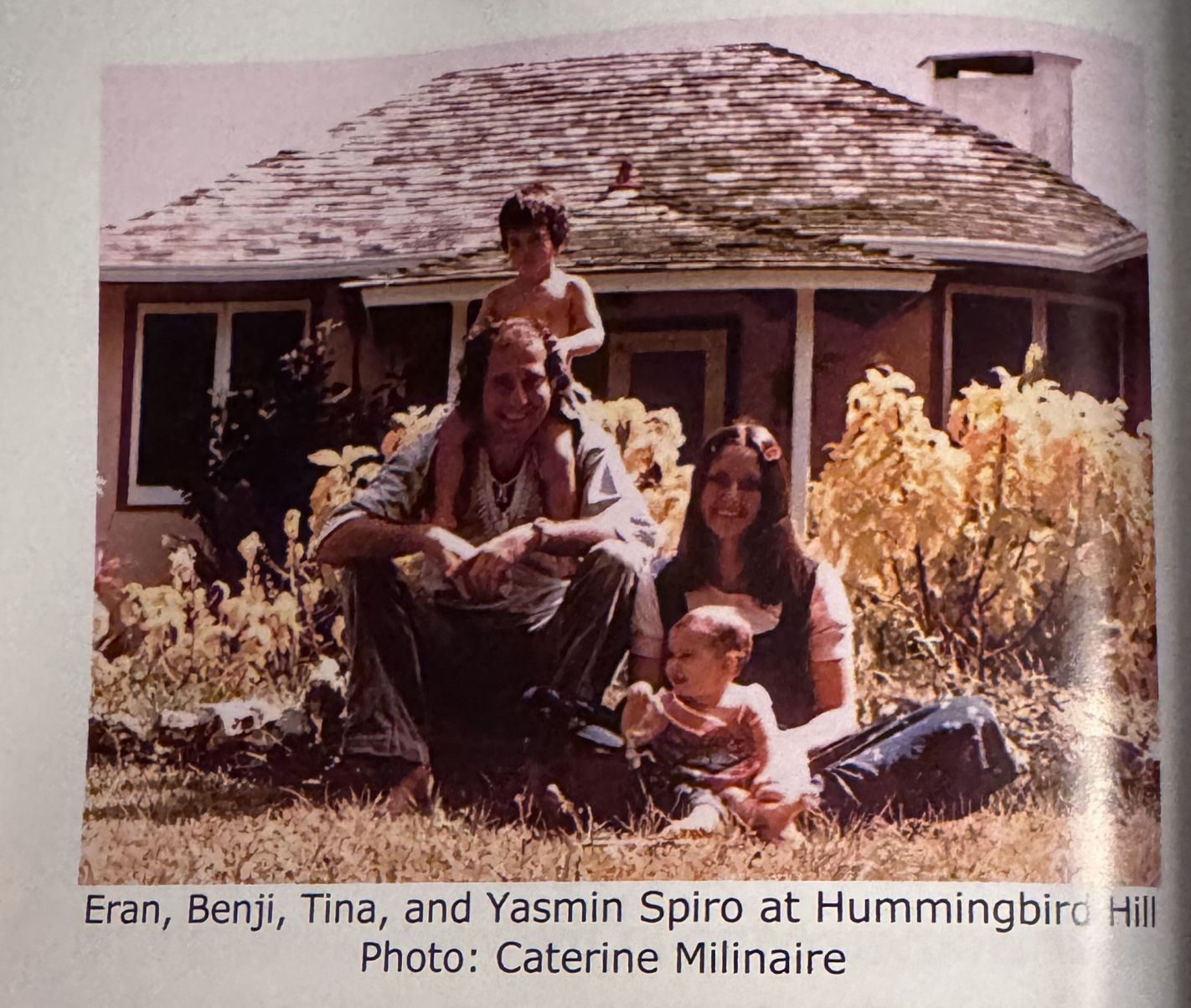
Just a few years later, she moved to Jamaica to join Eran Spiro, the Israeli-born urban planner and architect who became her husband.
Eran Spiro was recruited to the island by a man he met at a New York fundraiser, she writes.
"We need a guy like you in Jamaica," the man said. When asked what he did, he replied, "I'm the Prime Minister," according to the book. He was Hugh Shearer, Jamaica's prime minister from 1967 to 1972.
The book's title comes from her first morning on the island, when an elderly Rastafarian man stopped on a lawn, considered her for a moment and offered the greeting.
"Good morning star child," he said, she writes.
From a hilltop house the couple bought from actor Peter Finch, and later from a home and studio in Stony Hill, Spiro watched the country's history up close.
She writes that she attended the 1978 One Love Peace Concert, where Bob Marley pulled Michael Manley and Edward Seaga onstage, and the Kingston premiere of The Harder They Come at the Carib Cinema, where Sally Henzell, the filmmaker's wife, watched from her lap for want of a seat.
She recounts watching the Orange Lane Fire live on television with her toddler son on her hip. She prefaces the political-violence chapters with a disclaimer: "I can only relate what we saw and experienced without assigning blame," she writes.
Her anchor in Jamaican art history is David Boxer, the late director and chief curator of the National Gallery of Jamaica, whom she met in 1976. Boxer told her that two years' residence made her a Jamaican artist, she writes, and chose her painting Torch Lily for "Jamaican Art 1922-1982," the Smithsonian-organized traveling exhibition that opened at the Inter-American Development Bank in Washington.
After Hurricane Gilbert tore the roof off the Stony Hill house in September 1988 — her husband dashed out between gusts to carry her canvases to shelter, she writes — a colleague from the Institute of Jamaica climbed a road strewn with downed trees and power lines to reach her door.
"Where are the paintings?!" the woman demanded, according to the book. “I felt valued as a Jamaican artist," Spiro writes.
She founded Chelsea Galleries in Kingston in 1989 and ran it for a decade. She exhibited at the Havana Biennial in 1995 and showed three times in the Beijing biennial between 2010 and 2017, beginning with her painting Green Armada.
In Miami, her Paint the Town program repainted 12 square blocks of the Omni district, with the City of Miami covering the cost. Its redevelopment agency then asked her to produce OMNIART, a nonprofit that filled 60,000 square feet of donated warehouses during Art Basel Miami Beach week, co-curated with the art historian Carol Damian and including Tania Bruguera.
Her "Shekkinah Scrolls," an 80-foot painted-linen cycle built on the Hebrew alphabet and scribed entirely by women — among them two Palestinian sisters writing Quranic verses — lost its planned November 2001 New York debut after September 11 and opened instead during the first Art Basel Miami Beach, in December 2002.
The memoir is also plain about what the record cost her. She writes that in the 1980s Leo Castelli examined the maquettes she had crated and wheeled into his gallery and offered an exhibition on the spot. Then he asked whether she would move to New York. When she said her family and two small children were in Jamaica, he stood and walked off without another word beyond an apology.
"I am sorry, I cannot help you," Castelli said, according to the book.
"Although I did not catch the brass ring, I felt I may have dodged a bullet," she writes.
Spiro cites the Guerrilla Girls poster built on the Ingres odalisque — the same painting she parodied in a pastel that, she writes, hung unofficially for several years in a staff office at the Metropolitan Museum of Art.
"Although blocked from entry into the pantheon, I was not alone," she writes.
Spiro's memoir is self-published and lacks the significant hand of an editor. Entire sections should have been cut, starting with the first line: "The light at the end of the birth tunnel was my first glimpse of the world and events to come."
The book is insightful and worth reading despite its issues. And Spiro is a lovely woman. I enjoyed speaking with her in an honest discussion about her life and some of the book's issues over cake while watching my kids play at a playground near my apartment a few weeks ago.
Her memoir tells the story of a young, first-generation Jewish woman whose family fled the former Yugoslavia and of her inclusion in multiple groundbreaking exhibitions.
She is the kind of artist who should have become a household name and who reached the cusp of that success only for it to fade after she relocated to Jamaica and became a mother, though her practice continued.
Rather than mourn the New York career she left behind, Spiro shows readers why she embraced Jamaica and the five decades she lived there.
There are compelling moments the writing does not do justice — scenes worthy of Hollywood. The first chapter, on her family's flight from Split and a physically abusive father who also supported his daughter's art, is one she does not give the attention to make it read as cinematic.
An early anecdote about the Parthenon shows the cost of the missing editor.
Spiro writes that as an undergraduate, she solved an unresolved problem in art history: why the figures on the Parthenon pediments are draped from left to right, in what she calls the Phoenician manner, rather than right to left in the Greek manner. The question had been posed to students on an exam.
Having spent a childhood around her father's shipyards, Spiro writes, the answer came to her at once — that the marble was Phoenician, and that shipping it uncut to Athens would have added too much tonnage and cost, so Greek sculptors were sent to carve the pediments at the quarry from live models.
Her professor left a note in her blue book asking her to see him after class and inviting her to switch to an art history major. She declined, committed to being an artist.
But the Parthenon and its sculpture were carved from Pentelic marble, quarried on Mount Pentelicus about 17 kilometers northeast of Athens, not Phoenician stone. Some 22,000 tons of that marble were hauled from the mountain to the building site, which undercuts the shipping-cost logic she uses to argue the sculptors carved at a distant quarry.
For her part, Spiro does the work of reconstruction that an 83-year-old can, and she points readers to where the record sits. She writes that she appears in four illustrations — numbers 26, 29, 43 and 44 — of David Smith: To and From the Figure, the art critic Michael Brenson's 1995 catalog of Smith's drawings for Knoedler & Company.
She reproduces what she could find — a 1964 portfolio of her welding shot by the dealer Michael Reed, portraits from her years around New York's fashion photographers, images credited to Caterine Milinaire and Hans Namuth.
She is candid about what she cannot show. Some of her biographical material from that period went missing, she writes, and parts of her family's history are, in her telling, lost to time.
Urgent Matter is reader-supported. Please consider subscribing to support independent arts journalism.