The improbable math of art world attendance
David Zwirner says 26,000 people saw its Yoshitomo Nara show in a week, 4,000 of them at a two-hour opening. I did the math.

David Zwirner says 26,000 people saw its Yoshitomo Nara show in a week, 4,000 of them at a two-hour opening. I did the math.
The David Zwirner gallery claims 26,000 people saw its Yoshitomo Nara exhibition in Chelsea during the show's first week, November 5 through 11. More than 4,000 of them, it says, came to the opening reception on November 5.
The gallery announced the numbers Wednesday in an emailed press release but did not say how it counted, or whether someone who visited both of its buildings counted twice.
I spent years as a breaking news reporter, which meant covering a lot of protests. Editors always asked me how many people were there. I got good at crowd estimates.
I emailed David Zwirner's press office late Wednesday, asking how it got to 26,000. The gallery hasn't had time to respond yet. For now, the math doesn't make sense.
Let's start by visualizing what 26,000 people looks like.
This article is provided free with the support of paying subscribers. Not ready for a paid subscription? Sign up for a free account today.
No spam. Unsubscribe anytime.
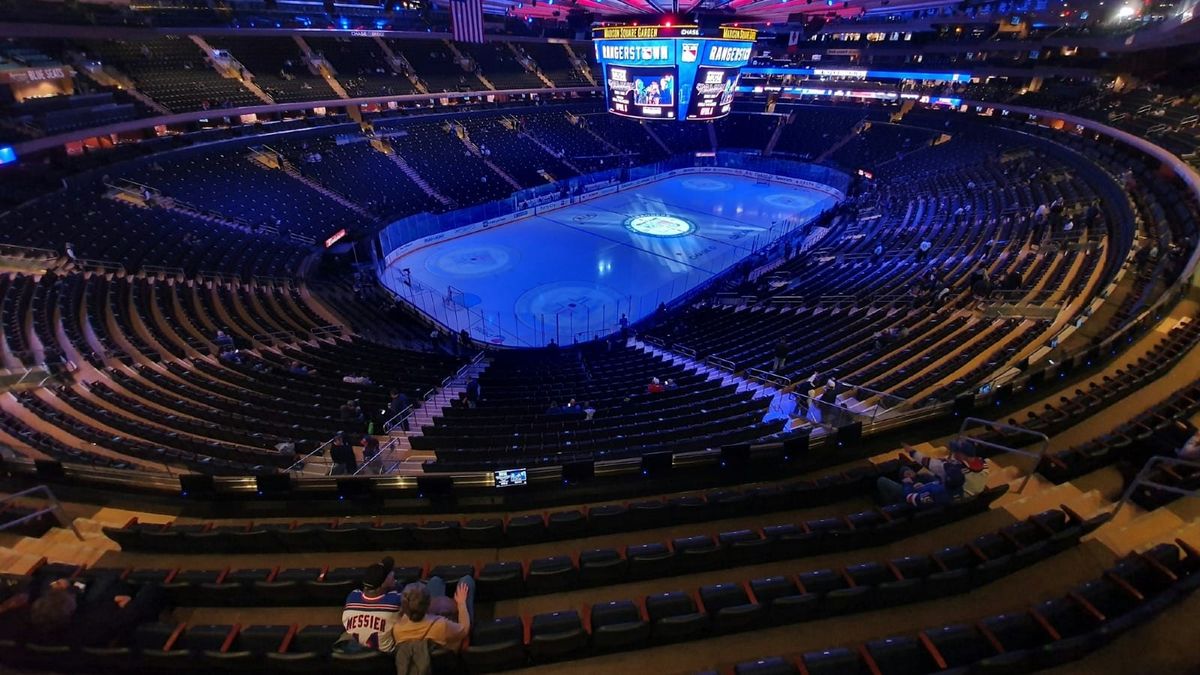
Twenty-six thousand is more than a full house at Madison Square Garden, which holds 19,500 people, its venue rental page says. The Garden fills up for one night. The gallery's number covers a week.
Nara, the Japanese artist known for paintings of wide-eyed children, is showing nearly 100 works across two buildings, at 537 West 20th Street and 533 West 19th Street. It's his first show with David Zwirner.
The opening reception ran from 6 to 8 p.m., the exhibition page says. That's 120 scheduled minutes.
Divide more than 4,000 people by 120 minutes and you get at least 33 people a minute. That's a new guest coming through the doors every two seconds, counting both buildings, for two hours.
The reception count alone is more than the 3,800 seats in the Metropolitan Opera House at Lincoln Center. Those seats fill all at once for a performance, while a reception crowd comes and goes.
Coming and going is the catch. To find how many people are inside at once, multiply the number arriving each minute by how many minutes each stays.
If arrivals were steady and the average guest stayed 30 minutes, that's 33 times 30, or about 1,000 people inside at any moment. If they stayed an hour, it's about 2,000.
Everyone who came in also had to leave. If all 4,000-plus were out by about 8 p.m., that’s at least 8,000 trips through the doors in two hours, or about 67 a minute across both buildings.
That's a revolving door turning about once a second.
Then there's the line. On opening night it ran two blocks, and fans waited close to an hour, some under umbrellas in the rain, CNN reported.
CNN didn’t say whether that was typical, or whether the line fed both buildings.
But the same math works for a line. For a line that keeps moving, the average number of people in it equals the number let in each minute times the average wait.
At 33 a minute and an average wait close to an hour, nearly 2,000 people would have been standing in line at any given time.
Reuters video from opening night shows long lines on the sidewalk outside the galleries. In two frames from that video, I count about 60 people in each. Neither shot shows the whole line.
But run the calculations backward, and even a line of 1,000 people with an hour’s wait means about 17 people getting in each minute. That’s half the pace the gallery’s number needs.
Now the space. In 2014, David Zwirner fought a city ruling that three of its buildings on West 19th Street were places of assembly, the label the city uses for indoor spaces where 75 or more people gather.
Using a 1968 building code formula of one person for every 10 square feet of exhibition space, the Department of Buildings calculated occupant loads of 460, 253 and 284 people for the buildings at 517-519, 521-525 and 531 West 19th Street, records show.
The buildings’ certificates of occupancy at the time allowed 35 people at 517, 128 in the gallery at 521 and 166 across two floors at 531, records show.
None of them is where the Nara sculptures are. David Zwirner opened a new building at 533 West 19th Street in May 2025, its website says, so the 2014 numbers don’t describe it.
But two of them, at 519 and 525, are still David Zwirner galleries on the same block. The case provides a historical look at how the city assessed occupancy at the gallery's Chelsea spaces.
In its appeal, the gallery estimated those buildings drew "five to ten persons for the entire site per day." The city's Board of Standards and Appeals ruled 4-0 against it on July 29, 2014.
The board cited evidence that the gallery "holds events and openings in which hundreds of persons are permitted to occupy the gallery at once."
The 20th Street building is bigger. The gallery's 2013 press release says it has about 30,000 square feet over five floors.
That figure covers the whole building, not just the gallery floors. Even if every square foot were open floor, 30,000 divided by 10 would put it at about 3,000 people. The 2014 case didn't cover this building, so that's my math using the 1968 formula the city applied in 2014.
The building's legal limit isn't online. City rules require each place of assembly to post a certificate near the entrance listing how many people can legally be inside.
Now for the 26,000 weekly visitors figure.
Both buildings are open 10 a.m. to 6 p.m., Tuesday through Saturday, the gallery's website says.
That's five open days in the first week. Add the reception and it's 42 hours, unless the gallery added time.
Divide 26,000 by 42 hours and you get about 620 people an hour. Divide that by 60 and it's about 10 people a minute, or a new visitor every six seconds the doors were open.
Take out the reception and the rest, just under 22,000 visitors, came in 40 regular hours, about 550 an hour. The reception's pace was 2,000 an hour.
David Zwirner has drawn big crowds before. Its website says Yayoi Kusama’s 2017 show “welcomed over 75,000 visitors.”
That fall, the gallery showed Kusama at two spaces at once, “Festival of Life” in Chelsea and “Infinity Nets” on East 69th Street, its press release says. The website doesn’t say which show the 75,000 covers.
“Festival of Life,” with two Infinity Mirror Rooms, ran from November 2 to December 16, 2017. That’s 33 Tuesday-through-Saturday days. Even if all 75,000 visitors saw that show during regular hours, it averaged about 2,300 people a day.
Nara's first week works out to 26,000 divided by five days, or 5,200 a day. That's more than twice that.
The gallery's FAQ for its 2023 Kusama show said earlier Kusama shows at the gallery and elsewhere had waits "from thirty minutes to over two hours." But the wait times aren't very useful without knowing how many people were in line.
Those Kusama shows also had a bottleneck. The gallery limited each visitor's time inside the Infinity Mirror Rooms, its FAQs say.
The gallery did not sell tickets for Kusama's 2019 show. Its visitor FAQ called that show "first come, first entry," so there were no ticket scans to count.
The gallery sent four photos with its Nara announcement. Three show the 20th Street galleries with visitors. I count 12 people in one, nine in another and three in the third, with plenty of open floor.
The fourth shows Nara with a small group around one of his sculptures on 19th Street. None of the four shows a line, and the release doesn't say when they were taken.
Other galleries post attendance numbers, too. None of the claims I found on the websites of Gagosian, Hauser & Wirth, White Cube or Perrotin say how the visitors were counted.
Gagosian's website says the Picasso shows John Richardson organized for it in New York and London were attended by the vague "hundreds of thousands of visitors." Was it 200,000 or 900,000? How many exhibitions does that figure include? How were they counted?
White Cube's website says its Bermondsey gallery in London "counts many hundreds of thousands of visitors a year." Same vagueness.
Hauser & Wirth uses two different words for the same number. Its gallery page says its Menorca gallery has welcomed "more than 404,000 visits" since 2021. The Menorca site calls it "over 404,000 visitors."
A visit and a visitor are not the same thing. One visitor who comes back five times is five visits.
Urgent Matter gets about 11,000 visitors a month. Count visits instead, and I could say "tens of thousands."
Perrotin posts a count on each show page, with a separate number for opening night. Daniel Arsham's 2018 show "3018" at its Lower East Side gallery drew 2,548 people to the opening and 21,860 over 32 days, Perrotin's page says.
That's fewer people over a whole run than David Zwirner says saw Nara in one week. Perrotin's page puts that show's daily average at 683. Nara's 5,200 a day is more than seven times that.
Art fairs sell tickets, which should make counting easier. Art Basel said its fair in Basel drew 90,000 visitors across six VIP and public days in June.
Divide 90,000 by six and that's 15,000 a day, spread across 290 galleries. David Zwirner's number works out to 5,200 a day for one artist, more than a third of Art Basel's daily crowd.
As they say, the math ain't mathing.
Urgent Matter is reader-supported. Please consider subscribing to support independent arts journalism.